
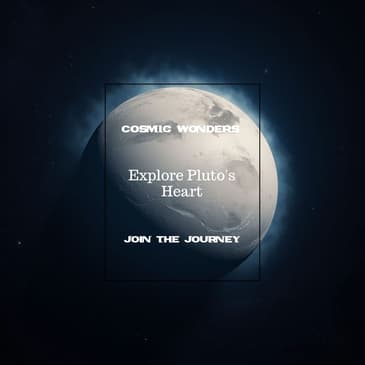
Become a supporter of this podcast: https://www.spreaker.com/podcast/astronomy-daily-latest-space-news--5648921/support.
Sponsor Details:
Ensure your online privacy by using NordVPN. To get our special listener deal and save a lot of money, visit www.astronomydaily.io/nordvpn. You'll be glad you did!
Get the best secure and private email on the planet. Stop your Government, google and who knows who else spying on every email you write. Do what we did and use ProtonMail. They beleive in privacy and there are no ads in their business model...yet they still provide a free forever service. Check them out and get out special deal at www.astronomydaily.io/protonmail
Become a supporter of Astronomy Daily by joining our Supporters Club. Commercial free episodes daily are only a click way... Click Here
This episode includes AI-generated content.
00:00:01 --> 00:00:04 Anna: Welcome to Astronomy Daily. I'm Anna.
00:00:04 --> 00:00:07 Avery: And I'm avery. It's Monday, the 27th
00:00:07 --> 00:00:10 of July, 2026, and tonight,
00:00:10 --> 00:00:12 the smallest headliner we've had in a while
00:00:12 --> 00:00:13 gets top billing.
00:00:14 --> 00:00:16 Anna: That's right. Our lead is a world you
00:00:16 --> 00:00:19 cannot see without a decent telescope,
00:00:19 --> 00:00:21 one that half of the astronomy community will
00:00:21 --> 00:00:24 tell you isn't even a planet. And today is
00:00:24 --> 00:00:27 its brightest night of the year. Pluto
00:00:27 --> 00:00:30 reaches opposition. We're going to spend some
00:00:30 --> 00:00:32 proper time there. The discovery, the
00:00:32 --> 00:00:35 demotion that people are still arguing about,
00:00:35 --> 00:00:38 and the frozen world New Horizons actually
00:00:38 --> 00:00:39 found waiting for us.
00:00:40 --> 00:00:43 Avery: Then, um, three quick stops. A crew comes
00:00:43 --> 00:00:46 home after 241 days in orbit.
00:00:46 --> 00:00:48 New modeling suggests the most common planet
00:00:48 --> 00:00:51 in the galaxy may be hiding oceans of molten
00:00:51 --> 00:00:54 rock. And astronomers have taken the famous
00:00:54 --> 00:00:56 first ever black hole image and pulled a
00:00:56 --> 00:00:58 whole new layer of physics out of it.
00:00:58 --> 00:01:01 Anna: And we'll close where we always do, under the
00:01:01 --> 00:01:03 sky north and south, with a M meteor
00:01:03 --> 00:01:06 shower that's putting on its best show for
00:01:06 --> 00:01:09 our Southern Hemisphere listeners. Let's get
00:01:09 --> 00:01:09 into it.
00:01:09 --> 00:01:12 So, Avery set the scene for me. If someone
00:01:12 --> 00:01:15 walks out tonight and looks up, are they
00:01:15 --> 00:01:16 going to see Pluto?
00:01:17 --> 00:01:19 Avery: Honestly, no. Not with their eyes and not
00:01:19 --> 00:01:22 with a pair of binoculars. Tonight, Pluto
00:01:22 --> 00:01:24 sits directly opposite the sun in our sky,
00:01:24 --> 00:01:27 over in the constellation Capricornus. That's
00:01:27 --> 00:01:29 what opposition means. Earth is passing
00:01:29 --> 00:01:32 between Pluto and the Sun. So Pluto rises
00:01:32 --> 00:01:35 at sunset, sits highest around midnight,
00:01:35 --> 00:01:37 and it's fully lit and as close to us as it
00:01:37 --> 00:01:40 gets all year. A, uh, touch under 35
00:01:40 --> 00:01:43 astronomical units. So roughly 35
00:01:43 --> 00:01:44 times the Earth's sun
00:01:44 --> 00:01:46 Anna: distance, and that's as good as it gets.
00:01:46 --> 00:01:49 Avery: And it's still faint, painfully
00:01:49 --> 00:01:52 faint. We're talking about magnitude 15,
00:01:52 --> 00:01:55 to put that in human terms. It's millions of
00:01:55 --> 00:01:57 times dimmer than the faintest star you can
00:01:57 --> 00:01:59 pick out on a dark night. You realistically
00:01:59 --> 00:02:02 need an 8 inch telescope and a good star
00:02:02 --> 00:02:04 chart. And even then, Pluto looks like
00:02:04 --> 00:02:07 a star, a dot that only gives itself away
00:02:07 --> 00:02:09 because it shifts position over a
00:02:09 --> 00:02:12 Anna: couple of nights, which is exactly how it was
00:02:12 --> 00:02:14 found in the first place. Let's rewind.
00:02:14 --> 00:02:17 Because the Pluto story is one of the great
00:02:17 --> 00:02:19 underdog tales in astronomy.
00:02:19 --> 00:02:22 1894, Percival Lowell, the same
00:02:22 --> 00:02:25 wealthy Bostonian who convinced himself
00:02:25 --> 00:02:27 Mars was covered in canals, sets up an
00:02:27 --> 00:02:30 observatory in Flagstaff, Arizona, and
00:02:30 --> 00:02:33 becomes obsessed, um, with a planet X he
00:02:33 --> 00:02:36 was sure was tugging on the orbits of Uranus
00:02:36 --> 00:02:36 and Neptune.
00:02:37 --> 00:02:40 Avery: And, um, he never found it. He died in 1916,
00:02:40 --> 00:02:41 still hunting.
00:02:41 --> 00:02:44 Anna: He did the search, went cold, then
00:02:44 --> 00:02:46 restarting. And in 1929 the
00:02:46 --> 00:02:49 job landed on a 23 year old Kansas farm
00:02:49 --> 00:02:52 boy with no colonies college degree named
00:02:52 --> 00:02:55 Clyde Tombaugh. His method was brutal,
00:02:55 --> 00:02:58 painstaking work. Photograph the same patch
00:02:58 --> 00:03:00 of sky on different nights. Then flick
00:03:00 --> 00:03:02 between the two plates in a machine called a
00:03:02 --> 00:03:05 blink comparator, looking for the one dot
00:03:05 --> 00:03:07 out of hundreds of thousands that moved.
00:03:08 --> 00:03:10 Avery: That is the definition of patience.
00:03:10 --> 00:03:13 Anna: On the 18th of February 1930 he
00:03:13 --> 00:03:16 found it. And here's a detail I love. The
00:03:16 --> 00:03:18 name didn't come from an astronomer. It came
00:03:18 --> 00:03:21 from an 11 year old English schoolgirl,
00:03:21 --> 00:03:23 Venetia Burney. Over breakfast she
00:03:23 --> 00:03:25 suggested Pluto, the Roman God of the
00:03:25 --> 00:03:28 underworld, fitting for a cold, dark,
00:03:28 --> 00:03:31 distant world. And the first two letters, P
00:03:31 --> 00:03:33 and L also happen to honor Percival
00:03:33 --> 00:03:35 Lowell. It stuck.
00:03:35 --> 00:03:38 Avery: So for 76 years, Pluto is the ninth
00:03:38 --> 00:03:41 planet. It's on every classroom wall, um,
00:03:41 --> 00:03:43 every lunchbox, every mobile over a
00:03:43 --> 00:03:46 cottage. Then 2006 happens.
00:03:46 --> 00:03:49 Anna: Then 2006 happens. And this is
00:03:49 --> 00:03:52 the part people still get heated about. So
00:03:52 --> 00:03:55 let me try to be fair to both sides because
00:03:55 --> 00:03:57 there genuinely are two good sides.
00:03:57 --> 00:04:00 The trouble started in the years before when
00:04:00 --> 00:04:03 astronomers began finding other icy
00:04:03 --> 00:04:06 bodies out past Neptune in a region called
00:04:06 --> 00:04:08 the Kuiper belt. And in 2005
00:04:08 --> 00:04:11 a team found Eris, which at the time
00:04:11 --> 00:04:13 looked to be bigger than Pluto.
00:04:14 --> 00:04:16 Avery: And that's the crunch. If Pluto's a planet,
00:04:16 --> 00:04:19 is eris planet number 10? What about the
00:04:19 --> 00:04:20 next 20 objects we
00:04:20 --> 00:04:23 Anna: find out there exactly the corner they were
00:04:23 --> 00:04:25 backed into. So in August
00:04:25 --> 00:04:28 2006, the International Astronomical
00:04:28 --> 00:04:31 Union voted on a formal definition of planet
00:04:31 --> 00:04:33 for the first time. Three rules. It has to
00:04:33 --> 00:04:36 orbit the Sun. It has to be roundish under
00:04:36 --> 00:04:39 its own gravity and the killer it, it
00:04:39 --> 00:04:41 has to, uh, have cleared its neighborhood of
00:04:41 --> 00:04:44 other debris. Pluto passes the first two
00:04:44 --> 00:04:46 easily, but it shares its zone with all that
00:04:46 --> 00:04:49 Kuiper Belt material. So it fails the third
00:04:49 --> 00:04:52 reclassified as a dwarf planet. It
00:04:52 --> 00:04:54 even got a minor planet catalog
00:04:54 --> 00:04:57 Avery: number 134340,
00:04:57 --> 00:05:00 a demotion with a filing number.
00:05:00 --> 00:05:02 Ouch. Not everyone accepted it,
00:05:03 --> 00:05:03 not at all.
00:05:03 --> 00:05:06 Anna: And this is the bit I want listeners to sit
00:05:06 --> 00:05:08 with because it's not settled science. It's a
00:05:08 --> 00:05:11 definition. And definitions are choices.
00:05:11 --> 00:05:14 The loudest objection comes from planetary
00:05:14 --> 00:05:16 scientists and Alan Stern, who leads the New
00:05:16 --> 00:05:19 Horizons mission, is the most prominent.
00:05:19 --> 00:05:21 Their argument is roughly clearing the
00:05:21 --> 00:05:24 neighborhood is a strange test because it
00:05:24 --> 00:05:26 depends on where an object is, not what it
00:05:26 --> 00:05:29 is. Put Earth out at Pluto's distance and
00:05:29 --> 00:05:32 Earth wouldn't clear that huge orbit either.
00:05:32 --> 00:05:35 They prefer a geophysical definition if
00:05:35 --> 00:05:37 it's big enough for gravity to pull it round.
00:05:37 --> 00:05:40 And it's not a star, it's a planet, full
00:05:40 --> 00:05:43 stop. By that logic, Pluto is a planet, and
00:05:43 --> 00:05:45 so are, uh, a dozen other round worlds.
00:05:46 --> 00:05:48 Avery: And the counterargument, the dynamical
00:05:48 --> 00:05:49 camp.
00:05:49 --> 00:05:51 Anna: The folks who wrote the IAU rule say a
00:05:51 --> 00:05:54 definition has to be useful. And anything
00:05:54 --> 00:05:56 round gives you potentially hundreds of
00:05:56 --> 00:05:58 planets, which tells you nothing about how
00:05:58 --> 00:06:01 the solar system is actually organized.
00:06:01 --> 00:06:03 Clearing your orbit captures something real.
00:06:03 --> 00:06:06 The eight major planets are gravitationally
00:06:06 --> 00:06:09 dominant and the Kuiper bell objects simply
00:06:09 --> 00:06:12 aren't. So it's genuinely a values question.
00:06:12 --> 00:06:15 Do you classify by the object itself or by
00:06:15 --> 00:06:17 the role it plays in the system? Reasonable
00:06:17 --> 00:06:19 people land differently.
00:06:19 --> 00:06:22 Avery: And then, as if the universe wanted to make
00:06:22 --> 00:06:24 everyone regret the timing, New
00:06:24 --> 00:06:27 Anna: horizon shows up the best twist in the
00:06:27 --> 00:06:29 whole saga. The probe launched in January
00:06:29 --> 00:06:32 2006, seven months before the vote.
00:06:32 --> 00:06:34 So it left Earth as a mission to the ninth
00:06:34 --> 00:06:37 planet and arrived in July 2015
00:06:37 --> 00:06:40 at a dwarf planet. And what it sent back
00:06:40 --> 00:06:43 demolished the idea that small and far means
00:06:43 --> 00:06:44 dull and dead.
00:06:44 --> 00:06:47 Avery: This is my favorite part. Because we expected
00:06:47 --> 00:06:48 a cratered frozen billiard
00:06:48 --> 00:06:51 Anna: ball, we got a stunningly complex
00:06:51 --> 00:06:54 active world. There's a vast bright plain of
00:06:54 --> 00:06:57 frozen nitrogen sputnik plantina that
00:06:57 --> 00:06:59 sits inside a uh, giant heart shaped feature
00:06:59 --> 00:07:02 the whole Internet fell for. And that heart
00:07:02 --> 00:07:05 isn't static. The nitrogen ice is slowly
00:07:05 --> 00:07:08 churning, convecting like a lava lamp in
00:07:08 --> 00:07:10 ultra slow motion. Which is why it has almost
00:07:10 --> 00:07:12 no crater. The surface is being
00:07:12 --> 00:07:15 resurfaced. There's mountains of water ice
00:07:15 --> 00:07:18 as tall as the rockies. Because at Pluto's
00:07:18 --> 00:07:21 temperatures, water ice is hard as rock. A
00:07:21 --> 00:07:23 thin blue tinged nitrogen atmosphere with
00:07:23 --> 00:07:26 layers of haze and a real possibility of a
00:07:26 --> 00:07:29 liquid water ocean sloshing beneath the
00:07:29 --> 00:07:29 crust.
00:07:30 --> 00:07:32 Avery: A subsurface ocean on um, a world people were
00:07:32 --> 00:07:34 arguing wasn't important enough to be a
00:07:34 --> 00:07:35 planet.
00:07:35 --> 00:07:37 Anna: Which is the poetry of it, isn't it? The
00:07:37 --> 00:07:40 label we hang on Pluto changed nothing about
00:07:40 --> 00:07:43 Pluto. It's exactly as fascinating as the day
00:07:43 --> 00:07:45 before the vote. And it's not alone out
00:07:45 --> 00:07:48 there. It has five moons of its own. The big
00:07:48 --> 00:07:51 one, Charon, so large that the two of them
00:07:51 --> 00:07:53 orbit a point in empty space between them
00:07:53 --> 00:07:55 Like a slow cosmic waltz.
00:07:55 --> 00:07:58 Avery: So tonight, when it's at its brightest and
00:07:58 --> 00:08:00 best place for the year, that faint 15th
00:08:00 --> 00:08:03 magnitude.in Capricornus is a churning, hazy,
00:08:04 --> 00:08:06 possibly ocean bearing world with a heart on
00:08:06 --> 00:08:06 its face.
00:08:07 --> 00:08:09 Anna: That's the one and whatever you want to call
00:08:09 --> 00:08:12 it, planet, dwarf planet, Kuiper belt object.
00:08:12 --> 00:08:15 Tonight is Pluto's night. We'll tell you
00:08:15 --> 00:08:17 exactly where to point a scope in the sky.
00:08:17 --> 00:08:19 Watch. Clyde Tombaugh, by the way, passed
00:08:19 --> 00:08:22 away in 1997. And new horizons
00:08:22 --> 00:08:25 carried a small portion of his ashes on that
00:08:25 --> 00:08:27 flyby. He got to visit the world he found.
00:08:28 --> 00:08:30 Avery: Okay, I'm not crying. You're crying.
00:08:31 --> 00:08:33 Lets bring it back to Earth literally.
00:08:34 --> 00:08:36 Speaking of coming home, three people did
00:08:36 --> 00:08:39 exactly that yesterday on, um, Sunday, a
00:08:39 --> 00:08:42 Soyuz MS.28 capsule parachuted down
00:08:42 --> 00:08:45 onto the steppe of Kazakhstan, bringing NASA
00:08:45 --> 00:08:47 astronaut Chris Williams and Roscosmos
00:08:47 --> 00:08:50 cosmonauts Sergey Kut Sverchkov and Sergey
00:08:50 --> 00:08:53 Mikhayev back after 241 days
00:08:53 --> 00:08:55 aboard the International Space Station.
00:08:55 --> 00:08:58 Anna: 241 days put a number on what
00:08:58 --> 00:08:59 that actually is.
00:09:00 --> 00:09:02 Avery: Nearly eight months, around
00:09:02 --> 00:09:05 3 laps of the
00:09:05 --> 00:09:08 Earth and more than 102 million miles
00:09:08 --> 00:09:10 traveled, all while effectively standing
00:09:10 --> 00:09:13 still in orbit. They launched back on the
00:09:13 --> 00:09:16 27th of November, American Thanksgiving. So
00:09:16 --> 00:09:18 they've missed an entire summer and winter
00:09:18 --> 00:09:19 depending on your hemisphere.
00:09:20 --> 00:09:22 Anna: And it was a first flight for two of them.
00:09:22 --> 00:09:24 Avery: It was first mission for Williams and for
00:09:24 --> 00:09:27 Mikhayv. Gutsverchkov's the veteran. He's
00:09:27 --> 00:09:30 now passed 425 days in space
00:09:30 --> 00:09:33 across two flights. And I want to flag the
00:09:33 --> 00:09:35 quiet significance here. A, uh, NASA
00:09:35 --> 00:09:38 astronaut and two Russian cosmonauts riding
00:09:38 --> 00:09:40 home together in a Russian capsule. Whatever
00:09:40 --> 00:09:43 the politics on the ground, the crude side of
00:09:43 --> 00:09:45 this partnership just keeps functioning, seat
00:09:45 --> 00:09:46 swaps and all.
00:09:46 --> 00:09:48 Anna: What was Williams actually doing up there?
00:09:48 --> 00:09:51 It's easy to forget these are working science
00:09:51 --> 00:09:52 missions, not just endurance feats.
00:09:53 --> 00:09:55 Avery: Right. And his work is genuinely down to
00:09:55 --> 00:09:58 Earth in its aims. He supported research into
00:09:58 --> 00:10:00 novel cancer therapies which benefit from the
00:10:00 --> 00:10:03 way proteins and cells behave in microgravity
00:10:03 --> 00:10:05 and into manufacturing high performance
00:10:05 --> 00:10:07 materials, the kind used in advanced
00:10:07 --> 00:10:10 electronics and computing that you can make
00:10:10 --> 00:10:12 more plainly without gravity pulling
00:10:12 --> 00:10:14 everything around. The pair of cosmonauts
00:10:14 --> 00:10:17 also did a spacewalk back in May to install a
00:10:17 --> 00:10:19 solar radiation instrument on the station's
00:10:19 --> 00:10:20 exterior.
00:10:20 --> 00:10:22 Anna: And the handover keeps the station rolling
00:10:22 --> 00:10:23 seamlessly.
00:10:24 --> 00:10:26 Avery: Command passed to NASA's Jessica Meyer as
00:10:26 --> 00:10:29 Expedition 74 became 75 and
00:10:29 --> 00:10:31 a fresh crew. Anil, uh Menin and two
00:10:31 --> 00:10:34 cosmonauts arrived earlier this month to keep
00:10:34 --> 00:10:36 the lab staffed. The hard part now,
00:10:36 --> 00:10:39 ironically, is gravity. After eight months,
00:10:39 --> 00:10:42 just holding your own head up is exhausting.
00:10:42 --> 00:10:44 The readjustment takes weeks.
00:10:44 --> 00:10:47 Anna: Welcome home to the three of them now from
00:10:47 --> 00:10:49 people orbiting one planet to the most common
00:10:49 --> 00:10:51 kind of planet in the entire galaxy.
00:10:52 --> 00:10:55 Avery: Moving on to story three, sub Neptune's
00:10:55 --> 00:10:58 clouds of Rock, oceans of magma. What's this
00:10:58 --> 00:10:58 all about?
00:10:58 --> 00:11:01 Anna: Here's a fact that still catches me out. The
00:11:01 --> 00:11:03 most common type of planet in the Milky Way
00:11:03 --> 00:11:06 is a type we don't have. It's the sub
00:11:06 --> 00:11:08 Neptune. Bigger than Earth, smaller than
00:11:08 --> 00:11:10 Neptune. There's nothing like it in our solar
00:11:10 --> 00:11:13 system, yet they turn up everywhere else. Out
00:11:13 --> 00:11:16 of more than 6 confirmed exoplanets, well
00:11:16 --> 00:11:18 over 2 are, uh, sub Neptunes.
00:11:18 --> 00:11:20 Avery: And we barely understand what they're made
00:11:20 --> 00:11:20 of.
00:11:21 --> 00:11:23 Anna: That's the frustration. They could be small,
00:11:23 --> 00:11:25 rocky cores wrapped in thick hydrogen
00:11:25 --> 00:11:28 atmospheres, or they could be water worlds,
00:11:28 --> 00:11:30 volatile, rich, drowning in water and carbon
00:11:30 --> 00:11:33 molecules. And we can't easily tell because
00:11:33 --> 00:11:36 even the James Webb telescope can only read
00:11:36 --> 00:11:38 the very top of the atmosphere. And these
00:11:38 --> 00:11:41 atmospheres are deep and hazy. New
00:11:41 --> 00:11:43 modeling from a team at Arizona State,
00:11:43 --> 00:11:46 recently published, offers a clever way
00:11:46 --> 00:11:48 through. And it puts clouds at the center of
00:11:48 --> 00:11:48 the story.
00:11:49 --> 00:11:52 Avery: Clouds on a planet where weather must
00:11:52 --> 00:11:53 mean something wild.
00:11:53 --> 00:11:56 Anna: Wild is the word deep down, where the
00:11:56 --> 00:11:59 pressure is crushing. The team modeled clouds
00:11:59 --> 00:12:02 made of vaporized rock and salt. Think
00:12:02 --> 00:12:04 aluminum oxide, iron silicates,
00:12:04 --> 00:12:07 potassium chloride. Actual mineral
00:12:07 --> 00:12:10 clouds. And here's the key finding those
00:12:10 --> 00:12:13 clouds act like a blanket. They trap heat
00:12:13 --> 00:12:15 trying to escape from the interior, which
00:12:15 --> 00:12:17 pushes the boundary between the atmosphere
00:12:17 --> 00:12:19 and the solid body to temperatures high
00:12:19 --> 00:12:20 enough to melt rock.
00:12:21 --> 00:12:23 Avery: So beneath the clouds, you might have an
00:12:23 --> 00:12:26 ocean of magma, a global magma
00:12:26 --> 00:12:28 Anna: ocean in the cloudy scenario. In the cloud
00:12:28 --> 00:12:31 free version, that boundary is cooler and
00:12:31 --> 00:12:33 might stay solid. Same planet from the
00:12:33 --> 00:12:36 outside, two completely different interiors,
00:12:36 --> 00:12:38 depending on the clouds. And that matters for
00:12:38 --> 00:12:41 us for a very practical reason. It changes
00:12:41 --> 00:12:44 how we interpret what Webb sees, and it feeds
00:12:44 --> 00:12:47 directly into which of these worlds we bother
00:12:47 --> 00:12:48 calling potentially habitable.
00:12:48 --> 00:12:51 Avery: To be fair, this is modeling, not a direct
00:12:51 --> 00:12:53 observation, completely fair.
00:12:53 --> 00:12:55 Anna: This is simulation work, pointing observers
00:12:55 --> 00:12:58 at what to look for. Not a photograph of
00:12:58 --> 00:13:01 magma, but it reframes clouds from being just
00:13:01 --> 00:13:04 an annoying smudge that ruins our data into
00:13:04 --> 00:13:06 an active ingredient, shaping the whole
00:13:06 --> 00:13:09 planet. For the galaxy's most common world,
00:13:09 --> 00:13:09 that's
00:13:09 --> 00:13:12 Avery: a meaningful shift from world we're modeling
00:13:12 --> 00:13:14 to a monster we've actually photographed.
00:13:14 --> 00:13:16 Let's go to M M87.
00:13:16 --> 00:13:19 Anna: Next up, story four, a sharper look at M
00:13:19 --> 00:13:20 M87's black hole.
00:13:21 --> 00:13:24 Avery: Cast your mind back to 2019, that
00:13:24 --> 00:13:27 first ever image of a black hole, the orange
00:13:27 --> 00:13:29 donut. That was M M87,
00:13:29 --> 00:13:32 the supermassive black hole at the heart of
00:13:32 --> 00:13:35 a giant galaxy in Virgo, about
00:13:35 --> 00:13:38 55 million light years away. Weighing
00:13:38 --> 00:13:40 in at around six and a half billion
00:13:40 --> 00:13:43 suns. That Single image was one of the
00:13:43 --> 00:13:46 defining science pictures of the decade.
00:13:46 --> 00:13:48 Anna: And now a team has gone back to the data and
00:13:48 --> 00:13:50 done something new with it.
00:13:50 --> 00:13:53 Avery: They have. Researchers led by the Shanghai
00:13:53 --> 00:13:55 Astronomical Observatory with international
00:13:55 --> 00:13:57 collaborators have produced the first
00:13:57 --> 00:14:00 spatially resolved dual frequency spectral
00:14:00 --> 00:14:03 map of M M87. And I know that's a mouthful,
00:14:03 --> 00:14:05 so let me unpack it because it's clever.
00:14:05 --> 00:14:08 Anna: Please. Dual frequency spectral map needs a
00:14:08 --> 00:14:08 translation.
00:14:09 --> 00:14:12 Avery: Think of it like this. The 2019 picture was
00:14:12 --> 00:14:14 a single color photo of the ring. What this
00:14:14 --> 00:14:17 team did was image the black hole at two
00:14:17 --> 00:14:19 different radio wavelengths, 1.3
00:14:19 --> 00:14:22 millimeters and 3.5 millimeters, using the
00:14:22 --> 00:14:25 Event Horizon Telescope and a partner network
00:14:25 --> 00:14:27 called the GMVA from observations back in
00:14:27 --> 00:14:30 2018. Then they compared them point
00:14:30 --> 00:14:33 by point to see how the color of the glow
00:14:33 --> 00:14:35 changes as you move outward from the center.
00:14:35 --> 00:14:38 That comparison is the spectral index, and
00:14:38 --> 00:14:40 mapping it across the ring had never been
00:14:40 --> 00:14:41 done before.
00:14:41 --> 00:14:42 Anna: And what did the map show?
00:14:43 --> 00:14:45 Avery: A, uh, clear structure. The signal is one
00:14:45 --> 00:14:47 character inside the bright ring, and it
00:14:47 --> 00:14:50 steepens, changes flavor as you move outward,
00:14:50 --> 00:14:53 with the transition landing right at the ring
00:14:53 --> 00:14:55 itself, about 30 micro arcseconds out.
00:14:56 --> 00:14:58 And that's the headline. It tells us the ring
00:14:58 --> 00:15:01 we photographed in 2019 isn't just a trick of
00:15:01 --> 00:15:03 where the light happens to glow. It's tied to
00:15:03 --> 00:15:06 a real physical change in the plasma right
00:15:06 --> 00:15:07 around the event horizon.
00:15:07 --> 00:15:10 Anna: So why does that matter beyond. Nice. A, uh,
00:15:10 --> 00:15:11 sharper map.
00:15:11 --> 00:15:14 Avery: Because reading a black hole means untangling
00:15:14 --> 00:15:16 two things that are mixed together. The pure
00:15:16 --> 00:15:19 warping of space by gravity and the messy
00:15:19 --> 00:15:21 physics of superheated plasma spiraling in.
00:15:22 --> 00:15:24 The researchers say looking at multiple
00:15:24 --> 00:15:26 wavelengths lets them start to separate those
00:15:26 --> 00:15:28 two. That's the path to understanding how
00:15:28 --> 00:15:31 these monsters feed, how they fire off those
00:15:31 --> 00:15:33 enormous jets, and eventually to a cleaner
00:15:33 --> 00:15:36 test of Einstein's general relativity. It's
00:15:36 --> 00:15:38 the difference between having a portrait and
00:15:38 --> 00:15:39 starting to read the biography.
00:15:40 --> 00:15:42 Anna: A portrait to a biography. I'll take that.
00:15:42 --> 00:15:45 And on that note, let's step outside,
00:15:45 --> 00:15:48 because it's skywatch time. And as always,
00:15:48 --> 00:15:50 wherever you are on the planet, we've got
00:15:50 --> 00:15:52 you. Avery, you take the south, I'll take the
00:15:52 --> 00:15:54 north, and we'll meet in the middle at Pluto.
00:15:55 --> 00:15:57 Avery: Deal. Southern hemisphere first. And friends
00:15:57 --> 00:16:00 down south. This is your week. The Southern
00:16:00 --> 00:16:03 Delta Aquarids are peaking. This is a shower
00:16:03 --> 00:16:05 that genuinely favors the south. The radiant
00:16:05 --> 00:16:07 in Aquarius climbs high after midnight for
00:16:07 --> 00:16:10 you. And under a dark sky, you could see
00:16:10 --> 00:16:13 something like 20 to 25 meteors an hour.
00:16:13 --> 00:16:16 No equipment, just a reclining chair, a wide
00:16:16 --> 00:16:18 Open view and some patience while your eyes
00:16:18 --> 00:16:18 adapt.
00:16:18 --> 00:16:20 Anna: And there's a comet. For the early risers,
00:16:21 --> 00:16:22 There is Comet
00:16:22 --> 00:16:25 Avery: 10P Tempel 1 low in the pre
00:16:25 --> 00:16:27 dawn sky. It's uh, a binocular or small
00:16:27 --> 00:16:30 telescope object rather than a naked eye
00:16:30 --> 00:16:33 showpiece. But here's a southern bonus. It's
00:16:33 --> 00:16:35 diving southward through August, so our
00:16:35 --> 00:16:37 Southern Hemisphere listeners get the better
00:16:37 --> 00:16:40 and improving view. Northern folks, catch it
00:16:40 --> 00:16:40 now before it
00:16:40 --> 00:16:43 Anna: drops away from you Northern Hemisphere. Your
00:16:43 --> 00:16:46 headline is a star with a wonderful name.
00:16:46 --> 00:16:47 Look high toward the north for the
00:16:47 --> 00:16:50 constellation Cepheus. It looks like a
00:16:50 --> 00:16:52 child's drawing of a house. And near the
00:16:52 --> 00:16:54 bottom of that house sits Mu Cepheii,
00:16:55 --> 00:16:57 better known as Herschel's Garnet Star. It's
00:16:57 --> 00:16:59 one of the reddest stars you can see with the
00:16:59 --> 00:17:02 naked eye. A, uh, bloated red supergiant so
00:17:02 --> 00:17:05 vast that if you dropped it where the sun is,
00:17:05 --> 00:17:07 its surface would swallow Jupiter.
00:17:07 --> 00:17:10 Binoculars really bring out that deep ember
00:17:10 --> 00:17:12 color. And you northern observers get the
00:17:12 --> 00:17:15 Delta Aquariids too, just lower down toward
00:17:15 --> 00:17:16 your southern horizon.
00:17:16 --> 00:17:19 Avery: And now the meeting point, the one we teased
00:17:19 --> 00:17:21 at the top, Pluto.
00:17:21 --> 00:17:23 Anna: Pluto's at opposition tonight over in
00:17:23 --> 00:17:26 Capricornus, which is beautifully placed for
00:17:26 --> 00:17:29 the Southern Hemisphere high overhead and
00:17:29 --> 00:17:31 perfectly workable low to mid northern skies
00:17:31 --> 00:17:34 too. Now the honest part. At
00:17:34 --> 00:17:36 magnitude 15, this is a genuine
00:17:36 --> 00:17:39 challenge. You'll want at least an 8 inch
00:17:39 --> 00:17:41 telescope, a detailed finder chart, and the
00:17:41 --> 00:17:44 trick is patience. Sketch or photograph
00:17:44 --> 00:17:47 the star field two or three nights running
00:17:47 --> 00:17:50 and watch for the one star that moves. That
00:17:50 --> 00:17:52 mover is Pluto. It is the ultimate
00:17:52 --> 00:17:54 bragging rights target.
00:17:54 --> 00:17:56 Avery: And, um, there's a catch tonight for
00:17:56 --> 00:17:56 everyone.
00:17:57 --> 00:17:59 Anna: There is a big bright moon, about
00:17:59 --> 00:18:02 95% full, washing out the sky
00:18:02 --> 00:18:05 all week. That won't bother the Garnet star
00:18:05 --> 00:18:07 or the brighter meteors much, but it makes
00:18:07 --> 00:18:10 faint Pluto even harder. If chasing
00:18:10 --> 00:18:12 Pluto is your goal, wait for it to clear the
00:18:12 --> 00:18:15 worst of the moonlight or give it a week. Oh,
00:18:15 --> 00:18:18 and Saturn is rising after midnight over in
00:18:18 --> 00:18:21 Pisces for both hemispheres, rings and all.
00:18:21 --> 00:18:23 A lovely consolation prize in any scope,
00:18:24 --> 00:18:25 north or south.
00:18:25 --> 00:18:26 Avery: There's something up there for you tonight.
00:18:27 --> 00:18:30 Anna: And that's Astronomy daily for Monday
00:18:30 --> 00:18:32 27th July. A faint little
00:18:32 --> 00:18:35 world having its big night, A crew safely
00:18:35 --> 00:18:38 home, magma oceans on the galaxy's
00:18:38 --> 00:18:41 commonest planet, and a, uh, sharper look at
00:18:41 --> 00:18:43 the first black hole we ever photographed.
00:18:43 --> 00:18:46 Avery: You can find show notes, links, and every
00:18:46 --> 00:18:49 past episode@astronomydaily.IO
00:18:49 --> 00:18:51 and the observant amongst you will notice
00:18:51 --> 00:18:53 that we have a brand new website today, so
00:18:53 --> 00:18:55 make sure you check it out. And we're
00:18:55 --> 00:18:58 AstroDaily Pod Across Social. If
00:18:58 --> 00:19:00 tonight's Pluto story settled or restarted,
00:19:00 --> 00:19:02 an argument in your house, we'd love to hear
00:19:02 --> 00:19:03 it.
00:19:03 --> 00:19:06 Anna: For Avery, I'm Anna. Whatever you decide to
00:19:06 --> 00:19:08 call Pluto, clear skies.
00:19:19 --> 00:19:20 The stories.
00:19:22 --> 00:19:22 Mhm.
00:19:27 --> 00:19:28 Avery: We told.