
---
**Episode Summary:**
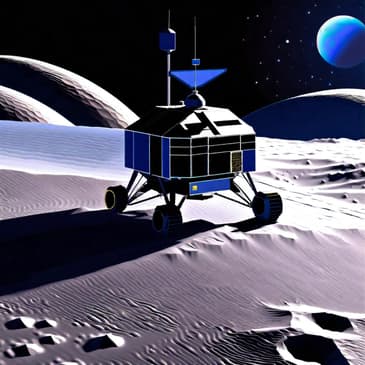
Blast off with Steve Dunkley and his digital co-pilot Hallie on this 26th February 2024 edition of Astronomy Daily. Today's episode is a celestial celebration as we discuss Odysseus' historic soft landing on the moon, marking a new era of lunar exploration. We also delve into the fiery reentry of the European Space Agency's ERS-2 satellite and the anticipation surrounding Blue Origin's New Glenn rocket. With a blend of humor and science, Steve and Hallie navigate the latest space news with the expertise of seasoned cosmic travelers.
---
**Featured Topics:**
1. **Odysseus' Moon Landing:** A detailed look at the successful landing of the Odysseus lander near the lunar south pole, its significance for future moon missions, and the nail-biting moments leading up to this historic achievement.
2. **ERS-2 Satellite Reentry:** An exploration of the natural reentry of the ERS-2 satellite, its nearly 30-year journey in space, and the aftermath of its descent back to Earth.
3. **Blue Origin's New Glenn Rocket:** Updates on the New Glenn rocket's progress as it approaches its inaugural launch, including the implications for Blue Origin's future in space exploration and its role in NASA's Artemis program.
---
**Notable Quotes:**
- "What a triumph. Odysseus has taken the moon!" - Celebrating the successful landing of the Odysseus lander, as stated by NASA Administrator Bill Nelson.
- "The chances of being hit [by space debris] are so small... I'm in more danger crossing the road." - Steve Dunkley, putting the risks of satellite reentry into perspective.
---
**Additional Information:**
For daily doses of space insights, subscribe to the Astronomy Daily newsletter at bitesz.com and spacenuts.io. Don't miss the chance to explore previous episodes of Astronomy Daily and the parent podcast, Space Nuts, with Andrew Dunkley and Professor Fred Watson.
---
**Next Episode Preview:**
Next week, Steve and Hallie will return to the airwaves with more interstellar stories and galactic updates. Expect a journey through the latest space tech developments and the unfolding narrative of our universe's exploration.
---
**Closing Remarks:**
Thank you for tuning in to another episode of Astronomy Daily. Remember, whether you're dodging satellites or gazing at the moon, the cosmos is a playground of wonder. Join us again as we continue to unravel the mysteries of the universe. Until next time, this is Steve Dunkley and AI Assistant Hallie, signing off.
---
**Host Sign-off:** Steve Dunkley: "Keep your eyes to the skies, and your hearts in the stars!" Hallie: "Farewell, fellow space travelers. Until our next cosmic rendezvous!
📋 Episode Chapters
(00:00) Welcome back to the 26 February 2024 astronomy daily podcast
(00:32) Steve Martin: Skylab or space debris rush over in Western Australia
(02:23) As SpaceX nears its first starship launch of 2024, the FAA is pressing regulators
(10:32) The first new Glenn test flight will likely carry a pair of small NASA satellites
(13:03) European Space Agency's ERS two satellite plummeted back to Earth yesterday
(17:03) Robot built by Houston based company intuitive machines touches down on moon
(25:53) Several nations have ambitious plans to land astronauts on the moon
Become a supporter of this podcast: https://www.spreaker.com/podcast/astronomy-daily-latest-space-news--5648921/support.
Sponsor Details:
Ensure your online privacy by using NordVPN. To get our special listener deal and save a lot of money, visit www.astronomydaily.io/nordvpn. You'll be glad you did!
Get the best secure and private email on the planet. Stop your Government, google and who knows who else spying on every email you write. Do what we did and use ProtonMail. They beleive in privacy and there are no ads in their business model...yet they still provide a free forever service. Check them out and get out special deal at www.astronomydaily.io/protonmail
Become a supporter of Astronomy Daily by joining our Supporters Club. Commercial free episodes daily are only a click way... Click Here
00:00:00
Welcome again to Astronomy Daily. I'm Steve Dunkley. Your
00:00:03
host. It is the 26th of February 2024.
00:00:08
To be the podcast with your host, Steve Duncan.
00:00:16
Oh, it's great to be back with you again. It's been an exciting
00:00:19
week. NASA's been busy. Everyone 's been busy. There's, new
00:00:22
hardware on the moon. It's a fantastic week. Lots to report
00:00:25
on and joining me here to tell you all about it is the fabulous
00:00:29
digital reporter. Here's Halle.
00:00:31
Hi, Steve. It has been a big week and great news that they've
00:00:34
finally made a successful soft landing on the moon.
00:00:37
That's right. Odyssey is transmitting from the South Pole
00:00:39
region. A nail biting finish to the landing, but a successful
00:00:43
landing after a few tense minutes and we'll take a look at
00:00:47
that later on.
00:00:48
And aren't you glad they aren't dropping their satellites in
00:00:51
Western Australia. Steve, er, S two finally came down on the
00:00:54
weekend.
00:00:55
Yes, I'm glad that they're not dropping things on Australia
00:00:58
anymore.
00:00:59
Yes, I remember Skylab came down years ago and, it was much
00:01:04
bigger than, er, S two. S two was as big as a bus, Skylab was
00:01:08
much bigger than a bus. But, I believe, there were people
00:01:13
finding bits of Skylab for years and years afterwards. You could
00:01:17
go out into the, into the desert and do, prospecting if you knew
00:01:21
where to look and you could find bits of Sky lab. I think the
00:01:25
chances of finding it now are pretty slim.
00:01:27
But finding pieces of it now would be harder than finding
00:01:30
gold out there in the desert. Well, that's very true.
00:01:33
It's probably easier to find precious metals and opals and
00:01:37
things out in the desert rather than space debris.
00:01:40
I haven't heard of any finds lately.
00:01:42
Yes. Maybe the Sky lab or space debris rush is over in Western
00:01:47
Australia. You never know.
00:01:48
Something might turn up. And Blue Origin's New Glenn rocket
00:01:51
has made an appearance on the launch pad at Florida for ground
00:01:54
testing.
00:01:55
I was wondering when Blue Origin was going to make a showing. It
00:01:59
's been a while.
00:02:00
I think William Shatner played with the controls a bit too much
00:02:03
while he was up there. And they've taken this long to sort
00:02:05
it all out. Really?
00:02:07
Really, I mean, really?
00:02:09
No, not really.
00:02:11
Ok. Then silly girl, Halle, will you boldly go and read the first
00:02:16
few stories then?
00:02:17
Ok, away, we go as SpaceX nears its first starship launch of
00:02:26
2024 possibly as soon as within three weeks from its star base
00:02:30
facility in South Texas. The company is pressing regulators
00:02:34
to increase its cadence of flights during a press
00:02:37
availability this week.
00:02:38
The administrator for commercial space transportation at the
00:02:41
Federal Aviation Administration, Kelvin Coleman said the agency
00:02:45
is working with the company to try to facilitate the starship
00:02:48
launch licensing process. He said they're looking at a pretty
00:02:52
aggressive launch schedule this year and added that it would be
00:02:55
at least nine launches this year which is a lot of launches.
00:02:59
Coleman observed that it would be a lot of work to do
00:03:01
modifications one by one and that they have been talking to
00:03:04
SpaceX around the clock to figure out how to do this. After
00:03:08
SpaceX decided to launch an attempt to land its starship
00:03:11
vehicle in Texas. About five years ago, the company had to
00:03:14
undergo an enhanced environmental review of the site
00:03:18
as a part of this process.
00:03:19
The FAA completed a final programmatic environmental
00:03:23
assessment in June 2022. Following that review, SpaceX
00:03:27
received approval to conduct up to five starship launches from
00:03:31
South Texas annually. An FAA official confirmed that the
00:03:35
company is seeking a modification of this five launch
00:03:38
limit to accommodate a higher flight rate.
00:03:40
SpaceX launched its first starship vehicle which is the
00:03:44
largest rocket ever built and is intended to eventually be fully
00:03:47
reusable. In April 2023. That flight caused serious damage to
00:03:52
the launch site near Boca Chica Beach and raised environmental
00:03:55
concerns after it kicked up large chunks of concrete and
00:03:58
dust into the surrounding wetlands.
00:04:01
Coleman said the anomaly investigation and regulatory
00:04:04
review process after that flight took about six months which he
00:04:07
believes is commensurate with the work involved.
00:04:10
The companys second launch attempt in November was more
00:04:13
successful as the first stage booster super heavy had a mostly
00:04:17
nominal flight and the starship upper stage managed to separate
00:04:21
from the booster before it experienced an anomaly and was
00:04:23
lost. There was no damage on the ground this time, the work
00:04:28
entailed by the FAA for this anomaly review was about one
00:04:32
third as much.
00:04:33
Coleman said SpaceX founder Elon Musk has said his company is now
00:04:38
targeting early to mid March for the third launch attempt of
00:04:41
starship. This flight of the highly experimental vehicle.
00:04:44
Musk said has a reasonably good chance of successfully reaching
00:04:48
orbit. Coleman said that from a regulatory standpoint, that
00:04:52
timeline sounds about right.
00:04:56
Anyone who has tracked the development of blue origins. New
00:04:59
Glenn rocket has been waiting for signs of progress from the
00:05:01
usually secretive space company on Wednesday. Engineers rolled a
00:05:06
full scale New Glen rocket partially made up of flight
00:05:09
hardware to a launch pad in Florida for ground testing.
00:05:13
The first New Glenn launch is almost certainly at least six
00:05:16
months away and it may not even happen this year in the last few
00:05:20
years. Observers inside and outside the space industry have
00:05:24
become accustomed to the nearly annual ritual of another New
00:05:26
Glenn launch delay. New Glen's inaugural flight has been
00:05:30
delayed from 2020 until 2021 then 2022 and for now is slated
00:05:36
for later this year, but it feels different.
00:05:39
Now, Blue Origin is obviously moving closer to finally
00:05:43
launching a rocket into orbit. Jeff Bezos Blue Origin's founder
00:05:48
was at Cape Canaveral to see his giant new rocket on the launch
00:05:51
pad for the first time. Just incredible to see New Glenn on
00:05:55
the Pat at Elsie. 36 Bezos wrote on Instagram big year ahead. Let
00:06:02
's go. Starting late last year.
00:06:05
Blue Origin officials doubled down on the company's plans to
00:06:08
launch the first New Glenn test flight by the end of 2024. This
00:06:13
messaging coincided with the arrival of Dave Limp as Blue
00:06:16
Origin's Chief executive replacing Bob Smith whose seven
00:06:20
year tenure included the first human suborbital flights on the
00:06:23
company's new Shepherd rocket. Smith's time as CEO was also
00:06:27
marked by repeated delays on the New Glenn rocket.
00:06:31
Limp is pushing Blue Origin to move faster and it seems the
00:06:34
companys employees got the memo in December. The company rolled
00:06:38
elements of the New Glenn rocket from its factory just outside
00:06:42
the gates of NASA's Kennedy Space Center to a final assembly
00:06:45
hangar located about nine miles away at Cape Canaveral Space
00:06:49
Force Station inside that building.
00:06:51
Technicians connected the first stage booster which is flight
00:06:55
hardware with an upper stage. Blue Origin has set aside for
00:06:58
ground testing. The final piece of the rocket to be added was a
00:07:02
7 m payload faring the uppermost section of New Glen designed to
00:07:06
protect spacecraft during the initial phase of launch. Last
00:07:10
week.
00:07:11
Blue Origin lifted a structure simulating the rocket's empty
00:07:14
mass vertical using the transporter erector arm at
00:07:16
launch complex 36. A former Atlass launch pad Blue Origin
00:07:21
took over in 2015. This was a final validation of the lifting
00:07:25
arm at LC. 36. Before Blue Origin put a real or mostly real
00:07:30
rocket on the pad on Wednesday.
00:07:33
Ground crews rolled a fully assembled New Glen rocket out of
00:07:36
the hangar at LC 36 and up the ramp to the launch mount. Then
00:07:41
the hydraulic lifting arm raised the two stage launcher
00:07:44
vertically at more than 98 m tall. New Glenn is one of the
00:07:48
largest rockets ever seen on Florida space coast. Roughly the
00:07:52
same height as NASA space launch system rocket and nearly as tall
00:07:55
as the Saturn five used in the Apollo program.
00:07:58
The appending is one in a series of major manufacturing and
00:08:02
integrated test milestones in preparation for New Glen's first
00:08:05
launch later this year. Blue Origin officials wrote in an
00:08:08
update on Wednesday. The test campaign enables our teams to
00:08:12
practice validate and increase proficiency in vehicle
00:08:16
integration, transport, ground support and launch operations.
00:08:21
New Glen can haul nearly 45 metric tons of payload into low
00:08:25
Earth orbit for low altitude orbits. This is a weight class
00:08:29
above the uppermost capability of United launch alliances,
00:08:32
Vulcan rocket or SpaceX Falcon Nine rocket but below SpaceX.
00:08:36
Falcon heavy Blue Origin also plans to use the New Glenn
00:08:40
rocket to launch lunar Landers to the moon for NASA's Artemis
00:08:43
program.
00:08:45
New Glen's first stage booster is reusable and is designed to
00:08:48
land on an offshore barge in the Atlantic Ocean which will bring
00:08:51
it back to the coast. Similar to the way SpaceX recovers its
00:08:55
Falcon nine booster. The faring is large enough to hold three
00:08:59
school buses. Blue Origin said its reusable first stage aims
00:09:03
for a minimum of 25 missions and will land on a seabased platform
00:09:07
located roughly 1000 kilometers down range.
00:09:11
Blue Origin is now 24 years old and employs around 11 people
00:09:15
at locations around the country with major locations in
00:09:18
Washington, Texas, Florida and Alabama. While the company has
00:09:23
not yet launched anything into orbit.
00:09:25
Blue Origin is working on a wide range of projects aside from
00:09:29
rockets including cargo and human rated lunar Landers for
00:09:32
NASA and a space tug that could move payloads into different
00:09:35
orbits for the US military. New Glen is crucial for all of these
00:09:40
plans. Blue Origin's latest progress with New Glen comes as
00:09:44
Bezos's space company appears to be on the verge of buying United
00:09:48
launch alliance from Boeing and Lockheed Martin.
00:09:51
If all goes according to plan, Blue Origin should complete the
00:09:54
integrated tanking test within a few weeks, the rocket will then
00:09:58
roll off the launch pad to allow technicians to install the
00:10:01
boosters engine compartment with the seven B Four S. New Glenn
00:10:05
will also need a new upper stage before returning to LC 36 for a
00:10:10
hot fire test of the seven B for engines.
00:10:12
A milestone Aviation Week said is scheduled for this summer
00:10:16
Blue Origin. Initially plans to operate with a rotation of four
00:10:20
reusable New Glen boosters each flying as often as every 30
00:10:23
days. According to Aviation Week, the company has not
00:10:27
announced a firm schedule for the debut of New Glenn.
00:10:30
Other than sometime later this year, the first New Glenn test
00:10:34
flight will likely carry a pair of small NASA satellites bound
00:10:37
for Mars. An agency official said in November, this NASA
00:10:42
mission called Escapade is on contract with Blue Origin for a
00:10:45
launch date in August 2024. However, this schedule is under
00:10:50
review. New Glen's massive lift capability is overkill for the
00:10:55
two Escapade spacecraft each about the size of a mini fridge.
00:10:58
So engineers are studying the possibility of using New Glen to
00:11:02
send the missions directly to Mars rather than launching them
00:11:04
into an initial orbit around Earth. Changing the trajectory
00:11:08
for Escapade would allow for a launch date later this year. The
00:11:12
mission must launch in 2024 with Earth and Mars in the right
00:11:16
positions in the solar system or else wait until 2026.
00:11:21
It is worth noting that launchers comparable to New Glen
00:11:24
such as SpaceX Falcon Nine and starship U Vulcan and Japan's H
00:11:29
Three took between one and two years to get to a first flight
00:11:32
after their first full scale test vehicles reached the launch
00:11:35
pad for fit checks and fueling rehearsals.
00:11:38
This final phase of a rockets development can often uncover
00:11:41
problems that went undetected during manufacturing and
00:11:44
component testing. However, Jarrett Jones blue origins, Vice
00:11:49
President of New Glen told Aviation Week he is confident in
00:11:52
flying the rocket this year we're launching this year. It's
00:11:56
happening. Jones said our plan is to launch twice this year and
00:12:02
now it's back to you, Steve.
00:12:05
Thank you very much, Halley for those great stories from the
00:12:07
Astronomy Daily Newsletter which you can get each day in your
00:12:11
email by visiting these places, bites.com. That's bitesz.com and
00:12:18
Space Nuts Dot IO and dropping your email address in the slot
00:12:22
provided. Then you'll be up to date with all the news about
00:12:25
space, space science and astronomy from all around the
00:12:28
galactic neighborhood.
00:12:29
And while you're there, check out the back editions of
00:12:31
Astronomy Daily and Space Nuts featuring Andrew Dunkley and
00:12:35
astronomer at large, Professor Fred Watson of the Australia
00:12:38
Observatory. We can also be found at the Space Nuts podcast
00:12:43
group on Facebook and look for us on Spotify, to listen in the
00:12:48
car happy listening everybody.
00:12:51
Astronomy Derby with Steve and Harry Space Space Science. And
00:12:57
as and as we were talking earlier on in this episode, you
00:13:07
will know that over the weekend, a dead satellite plummeted back
00:13:11
to Earth, bringing an end to get this a nearly 30 year life in
00:13:16
space.
00:13:17
The European Space Agency remote sensing remote sensing two that
00:13:23
is s two satellite re entered Earth's atmosphere at 1215
00:13:28
Eastern Standard time. Over the Pacific Ocean. The fall ended
00:13:32
nearly 13 years de orbiting campaign that began with 66
00:13:37
engine bursts in July 2011, depleting the spacecraft of
00:13:41
remaining fuel.
00:13:43
And at the time of reporting, it was unclear if any debris made
00:13:46
its way down to the surface after S two re entered the
00:13:50
atmosphere, but none of the contain any toxic or radioactive
00:13:54
substances. ESA assured the public in a FAQ published prior
00:14:00
to re entry.
00:14:01
Now, just in case you don't know, S two was roughly the size
00:14:04
of a school bus and weighed about 2516 kg when full of fuel
00:14:11
at liftoff all those years ago. And when it fell to its fiery
00:14:14
demise, yesterday, fully depleted, it weighed in around
00:14:17
£5057. That's 2294 kg. While fairly large, the satellite's
00:14:25
mass isn't an outlier when it comes to re entered space junk.
00:14:30
An object of similar size falls to Earth into Earth's atmosphere
00:14:34
every few weeks when it launched, er, two was quote, the
00:14:39
most sophisticated Earth Observation spacecraft ever
00:14:43
developed and launched by Europe. ESA wrote in its FAQ
00:14:47
about the re entry.
00:14:49
The satellite was designed to collect data about Earth's land
00:14:52
masses, ice caps and oceans and even helped monitor the
00:14:56
aftermath of natural disasters. Things like a Taylor swift
00:15:00
concert being rained out. I would imagine the er s
00:15:03
satellites have provided a stream of data which has changed
00:15:07
view of the world in which we live.
00:15:09
ESA's Director of Earth Observation programs. Simonetta
00:15:12
Celli said in a statement, they have provided us with new
00:15:15
insights on our planet, the chemistry of our atmosphere, the
00:15:19
behavior of our oceans and the effects of mankind's activity on
00:15:22
our planet. Of course, creating new opportunities for scientific
00:15:26
research and applications.
00:15:28
Air two fell to Earth in what is known as a natural re entry. You
00:15:33
and I would probably call it a plummet, meaning mission
00:15:36
controllers had no way to maneuver otherwise control this
00:15:40
satellite during its descent towards the atmosphere, its
00:15:43
batteries were discharged prior to reentry and all electronic
00:15:47
systems were deactivated long before it began its fire
00:15:51
descent.
00:15:52
ESA representatives said these types of re entries are
00:15:55
perfectly safe even if some debris occasionally reaches the
00:15:59
actual ground.
00:16:01
In the 67 years of space flight, space flight, thousands of tons
00:16:06
of artificial space objects have re entered the atmosphere,
00:16:09
pieces that make it to the surface have only rarely caused
00:16:12
any damage and there has never been a confirmed report of a
00:16:16
human injury said ESA in a statement now, I can remember
00:16:20
Skylab coming down in Western Australia and it caused no
00:16:24
damage at all as far as I can tell.
00:16:26
Or as far as I can remember, while any natural re entry, such
00:16:30
as this has a chance of dropping debris into Earth's surface, the
00:16:35
chances that any remaining debris could harm people or
00:16:38
property on the ground are incredibly low. ESA's FAQ.
00:16:41
About the re entry notes that one's chances of being struck by
00:16:46
lightning are 65 times higher than one's risk of being
00:16:50
struck by space debris in a lifetime. And to put that
00:16:53
another way, the odds that any one person is hit with falling
00:16:56
space debris each year is one in 100 billion. They say, are we
00:17:01
feeling comfortable? Are we?
00:17:03
Well, the big story this week is Odysseus, a robot Lander built
00:17:07
by Houston based company intuitive machines touchdown
00:17:12
near the lunar South Pole of the moon.
00:17:16
It was a landmark moment for space exploration. No private
00:17:21
spacecraft craft had ever soft landed on the moon before and an
00:17:25
American vehicle hadn't hit the great dirt softly since NASA's
00:17:29
crude Apollo 17 landed did so in December 1972. And what a happy
00:17:37
administrator of NASA Bill Nelson was when he exclaimed on
00:17:41
the air, I watched this, what a triumph Odysseus has taken the
00:17:45
moon.
00:17:46
He said in a video message the agency aired just after the
00:17:50
confirmation of a successful touchdown. This is a feat. This
00:17:55
feat is a giant leap forward for all humanity. Stay tuned. It was
00:17:59
a nice message. The moon was a frequent target for American
00:18:03
spacecraft.
00:18:04
During the 19 sixties and early 19 seventies. This push didn't
00:18:08
come from mere scientific curiosity. Landing astronauts on
00:18:12
Earth's nearest neighbor was viewed as a national security
00:18:15
imperative, a way to demonstrate technological superiority over
00:18:20
the nation's Cold War rival. The Soviet Union, the US famously
00:18:24
put 12 astronauts on the lunar surface over the course of six
00:18:27
Apollo missions from 1969 to 1972.
00:18:32
With the moon race thus definitively won NASA was
00:18:35
directed to focus on other goals for its Human Space flight
00:18:39
program. Chiefly the development and operation of the space
00:18:43
shuttle program. The US launched a number of robotic moon probes
00:18:47
after the Apollo era.
00:18:48
NASA's sharp eyed lunar reconnaissance orbiter has been
00:18:52
circling the moon since 2009, for example. But for some
00:18:56
frustrating fits and starts notwithstanding, getting back to
00:19:00
the surface was not a priority until recently. In December
00:19:04
2017, the then President Donald Trump ordered NASA to return
00:19:08
astronauts to the moon in relatively near future.
00:19:12
This directive gave rise to a broad and ambitious program
00:19:15
called Artemis, which aims to establish a long term
00:19:18
sustainable human presence on and around the moon by the end
00:19:22
of the 2020 S and to use the knowledge gained in doing so to
00:19:26
help astronauts get to Mars by the late 2030 s or early 20 for
00:19:31
NASA's plan, plans to set up one or more Artemis bases in the
00:19:36
moon's southern polar region which is thought to harbor lots
00:19:38
of water ice before sending astronauts there.
00:19:41
However, the agency wants to collect more data about this a
00:19:45
little explored area to help determine, for example, just how
00:19:49
much water it contains and how easy this crucial resource might
00:19:53
be to access.
00:19:55
So NASA has established another program called CLP S which we
00:19:59
talked about last week, the commercial lunar pay payload
00:20:03
services which books rides for agency science instruments on
00:20:07
robotic robotic lunar Landers built by American companies.
00:20:11
The goal here is for us to investigate the moon in
00:20:14
preparation for Artemis and really to do business
00:20:17
differently for NASA Sue Letterer CLP project scientists
00:20:23
at Johnson Space Center in Houston said during a press
00:20:26
conference on February 12th, 1 of our main goals is to make
00:20:29
sure that we develop a lunar economy and that's where
00:20:32
intuitive machines comes. In.
00:20:34
In 2019, CLP S selected intuitive machines to deliver a
00:20:39
batch of NASA science instruments to the lunar surface
00:20:42
using the company's Nova sea Lander which is about the size
00:20:46
of a British telephone booth. After some modifications, the
00:20:50
task order turned out to be worth $118 million.
00:20:55
NASA officials said recently it covered the transport of six
00:20:59
agency experiments and technology demonstrations on
00:21:02
intuitive machines first lunar mission which the company calls
00:21:05
I am one that mission features a novas sea vehicle named Odysseus
00:21:10
after the famous voyaging hero in Greek mythology. The NASA
00:21:14
instruments which cost the agency an additional 11 million
00:21:18
to develop are designed to conduct a variety of
00:21:21
investigations.
00:21:22
For instance, one of them called NDL navigation Doppler Lidar for
00:21:26
precise velocity and range sensing used lidar byte
00:21:31
detection and ranging technology to collect data during descent
00:21:35
and landing. NDL turned out to be vital to today's touchdown.
00:21:40
As you'll see in a second. Another instrument was designed
00:21:43
to study how the spacecraft's engine exhaust interacts with
00:21:46
lunar dirt and rock. Yet another will demonstrate the autonomous
00:21:50
positioning tech which could eventually become part of a
00:21:54
broad GPS like navigation system on and around the moon.
00:21:57
Intuitive machines. Also put six commercial payloads on Odysseus
00:22:01
for IM 11 of them comes from Colombia's sportswear which
00:22:05
wanted to test its omni heat infinity insulated material in
00:22:09
deep space.
00:22:10
Another is a set of sculptures by the artist Geoff Koons and
00:22:15
there's even a secure lunar repository that aims to help
00:22:19
preserve humanity's storehouse of accumulated knowledge. Also
00:22:23
flying on Odysseus was Eagle cam. A camera built built by
00:22:27
students at Embry Riddle Aeronautical University.
00:22:30
A Eagle cam was designed to deploy from Odysseus at about
00:22:34
100 ft or 30 m above the lunar surface and snapped photos of
00:22:38
the Lander's epic touchdown from below all 12 of the included
00:22:43
payloads lifted off on February 15th when a space X Falcon Nine
00:22:48
rocket sent Odysseus towards the moon.
00:22:50
The Lander's deep space trek was short and relatively smooth
00:22:54
although things a bit sporty towards the end, Odysseus
00:22:57
arrived in lunar orbit on February 21 as planned and in
00:23:02
the home stretch of its touchdown. However, the Landers
00:23:05
handlers discovered that Odysseus's laser range finders
00:23:09
which allow it to determine its altitude and horizontal velocity
00:23:13
weren't working properly.
00:23:15
And the team pressed NASA's experimental NDL payload into
00:23:19
surface for this vital function, pushing the landing try back by
00:23:23
two hours to put a new plan into action this last minute
00:23:28
workaround which required the team to design the software
00:23:31
patch on the ground and beam it up to Odysseus did the trick.
00:23:35
And at 6:11 p.m. Eastern Standard Time, Odysseus fired up
00:23:39
the main engine for a crucial 11 minute burn that slowed the
00:23:43
craft's descent down toward the lunar surface. Then at 6:23 p.m.
00:23:48
Eastern Standard Time, Odysseus touched down softly near the rim
00:23:52
of a crater Malapert a about 190 miles or 300 kilometers from the
00:23:58
lunar South Pole.
00:23:59
Now success wasn't immediately apparent, however, it took about
00:24:03
1510 minutes for the IM one team to latch onto Odysseus's signal.
00:24:08
What we can confirm without doubt is our equipment is on the
00:24:12
surface of the moon and we are transmitting mission director
00:24:15
Tim Crane said after that milestone moment, Odysseus has
00:24:20
found his new home.
00:24:22
If all goes according to plan, the Lander and its payloads will
00:24:26
now operate for about seven Earth days on the lunar surface.
00:24:30
I am one will end when the sun goes down at Malapert.
00:24:33
A, the Odysseus was not designed to survive in the bitter cold of
00:24:37
the long lunar night. It takes the moon more than 27 Earth days
00:24:41
to rotate once on its access. So each lunar night lasts roughly
00:24:44
two weeks. I am one is part of a newly energized March to the
00:24:49
moon.
00:24:49
For example, Pittsburgh Company Astro Robotic launched its
00:24:53
Peregrine Lunar Lander last month on the first flight of
00:24:56
United Launcher's Vulcan Center rocket. But Peregrine also
00:25:00
carried NASA payloads via the CLP S program suffered a
00:25:05
crippling fuel leak just after deploying from the rocket's
00:25:08
upper stage.
00:25:09
The problem prevented Peregrine from making it to the moon and
00:25:12
Aso ultimately steered it into a controlled demise in Earth's
00:25:16
atmosphere on January 18th, 2 other private moon Landers made
00:25:21
it to the loon orbit orbit. Recently the Israeli Bear Sheet
00:25:25
probe and the Hakuto R which was built by Tokyo based company
00:25:30
IPA.
00:25:30
Still neither one could take the next step. Bear Sheet crashed in
00:25:35
during its landing attempt on April 2019. And Hakuto R
00:25:40
suffered the same fate. In April 2023. National governments are
00:25:45
increasingly shooting for the moon as well. Last August, for
00:25:48
instance, India put its robotic chandra and three mission down
00:25:51
near the lunar South Pole.
00:25:53
And just last month, Japan landed its own moon probe called
00:25:57
its slim. It was the first such success for each nation. They've
00:26:01
now joined the lunar party which already included Soviet Union,
00:26:06
the US and China and some of these countries have even bigger
00:26:09
lunar ambitions.
00:26:10
There's the US with its Artemis program, of course. But China
00:26:14
also aims to put astronauts on the moon by 2030 is working with
00:26:19
Russia and several other nations to develop a lunar outpost later
00:26:23
that decade as well. India. Meanwhile has said it wants to
00:26:27
put boots down on Earth's natural satellite in 2040 or
00:26:31
thereabouts.
00:26:32
Some politicians have characterized this planned
00:26:35
activity as a new moon race, a competition between the US and
00:26:39
China for the right to establish precedents and norms of behavior
00:26:42
in the high frontier exploration advocates, however, tend to see
00:26:46
the Rosier side, stressing the exploitation of lunar resources
00:26:51
that could help humanity extend its footprint out into the solar
00:26:55
system for the first time.
00:26:57
Either way the moon is coming into sharper focus for the
00:27:01
nations and businesses around the world. It's going to get
00:27:04
busier and busier.
00:27:08
So how about that? Halle A S Two has come down and Odysseus on
00:27:14
the moon.
00:27:14
So essentially an umbrella won't help and a big sheet of steel
00:27:17
won't protect you either.
00:27:18
From a falling satellite, the size of a bus. No, but you were
00:27:23
listening, the chances of being hit so small.
00:27:25
That for you, I'm totally fine. I'm just electrons and light.
00:27:30
Ok. You're going to need a concrete raincoat, I think.
00:27:33
Oh, Halle, I think they know how to bring these old crates down
00:27:36
safely. Honestly, I'm in more danger crossing the road. What?
00:27:41
From satellites?
00:27:42
No, from cars.
00:27:44
Why would cars fall from the Sky when you're crossing the road?
00:27:47
Hallie? Have you checked your power cells today?
00:27:50
Oh, dear. I'm being silly in public. Aren't I say, see you
00:27:53
later, Halle, see you later, Halle.
00:27:56
And just like that. It's all over for another episode of our
00:27:59
podcast. Once again. Thank you for joining us on Astro Daily. I
00:28:02
look forward to catching you all next time. Bye for now.
00:28:07
Who will be the podcast with your host, Steve Duncan.