
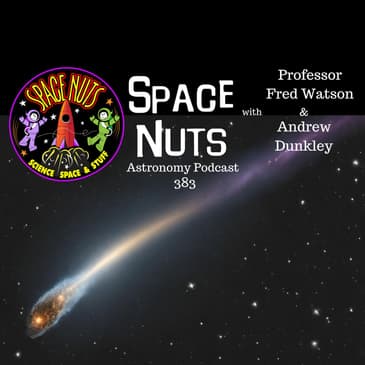
Do you want to gain a deeper insight into the orbit and history of Halley's Comet? We are sharing valuable updates and information to help you achieve a more comprehensive understanding of the comet's trajectory and background. Through the updates, you will be able to enhance your knowledge of Halley's Comet's path and historical significance, leading to a more informed appreciation of this celestial phenomenon. Join us as we delve into the latest discoveries and insights about Halley's Comet.
In this episode, you will be able to: ·
Explore the fascinating orbit of Halley's Comet and its intriguing history. ·
Stay updated on the latest discoveries and developments related to Halley's Comet. · Discover the recent breakthrough in understanding the giant coma stream of Halley's Comet. · Delve into the complex relationship between density and temperature in space phenomena. · Uncover the captivating details of the impending collision between Andromeda and the Milky Way.
'May you live in interesting times. Well, yeah. Okay. Major operation, moving house. Lots of job changes. Finished up at the Salvation army the other day. Yeah, it's all happening. Hopefully next year will be much smoother.' - Andrew Dunkley
Density and Temperature of Celestial Bodies: Understanding the extremes of density and temperature in the universe gives us incredible insights. A black hole epitomizes infinite density, while absolute zero, a temperature of -273.15 degrees Celsius, represents the cessation of atomic motion. The temperature scales we use, such as Celsius and Kelvin, are critical in discussing these concepts as they relate directly to the properties of matter.
The resources mentioned in this episode are: ·
Listen to the Space Nuts podcast on Apple Podcasts, Google Podcasts, Spotify, iHeartRadio, or your favorite podcast player. ·
Stream on demand at bitesz.com for more Space Nuts episodes. ·
Become a patron to support the Space Nuts podcast and gain access to exclusive content. Details on our website. ·
Check out Cafe Celsius in Oslo, Norway for a delightful dining experience. ·
Stay tuned for the next episode of Space Nuts in the new year for more fascinating space discussions.
Become a supporter of this podcast: https://www.spreaker.com/podcast/space-nuts-astronomy-insights-cosmic-discoveries--2631155/support.
00:00:00
Hi there. Thanks for joining us. This is Space Nuts. My name is
00:00:03
Andrew Dunkley, your host. And on this week's episode, we're
00:00:07
going to, visit an old friend, which visited last in 1986. I
00:00:14
think it was. And, it's about halfway to coming back and
00:00:18
visiting us again.
00:00:19
We'll tell you all about that soon and a first of a kind
00:00:22
stream of stars has been discovered and, they can't
00:00:26
really figure out why it exists as with most things in space.
00:00:30
We'll also answer some audience questions about the boat, about
00:00:34
temperatures in space, about galaxy collisions and lo and
00:00:38
behold, someone wants to finish the year with a dad joke and we
00:00:43
will indulge him that's all coming up on Space Nuts.
00:00:59
Ok.
00:01:00
I thought I might start with a different theme just, you know,
00:01:04
to get into the Christmas Spirit Fred. But, you know, just so
00:01:08
that no one in the podcast world gets upset. We better do the
00:01:12
proper ones.
00:01:14
Guidance is internal 10 9 ignition sequence Space Nuts.
00:01:20
54323454321. Space N as its good.
00:01:29
And here he is the man of the moment. Professor Fred. What's
00:01:32
an astronomer at large? Hello, Fred Space.
00:01:35
Not at large. Nice to see you, Andrew. How are you?
00:01:39
I'm doing ok in this, horrific heat we're having, we're into
00:01:43
the second, possibly third week of a heat wave temperatures, not
00:01:47
getting below 100 in American speak. But, we'll get some
00:01:51
relief in a couple of days when it drops to 36 °C, which is
00:01:55
still in the nineties. But, yeah, no other than that quite.
00:01:59
Well, this is our last show for, well, not last show for the year
00:02:02
but the, the last fresh show, we're just gonna run a couple of
00:02:05
repeats between now and the New Year and then we'll get back
00:02:09
together pretty swiftly. Not like last year when we took 2.5
00:02:12
months off. But, yes, this year we like, yeah, well, there were
00:02:18
all sorts of things going on then, weren't there?
00:02:21
There were, yes, that's right.
00:02:22
There were now, let's, let's get straight into it because, I, I'm
00:02:28
intrigued by this particular story because we have a Halley's
00:02:32
Comet update. What's, what's happening with Halley's Comet?
00:02:38
Well, it did. So the reason why we've got an update is that a
00:02:41
few days ago, on the eighth of December, which by the way is
00:02:45
also Sibelius's birthday. I just thought you'd like to know that
00:02:49
the composer, it's the eighth of December marks the point at
00:02:54
which Comet Halley is furthest from the sun. So Comet Halley
00:02:58
has got this highly elongated orbit really stretched.
00:03:02
And it's now, in fact, just to give you the distance, it is
00:03:06
30.5 astronomical units away. And as you know, an astronomical
00:03:13
unit is 100 and 50 million kilometers, it's the distance
00:03:17
between the Earth and the sun. So it's 35 of those 35 times as
00:03:21
far away as the Earth is from the sun. Do you know off the top
00:03:25
of your head?
00:03:25
Andrew, how far away Neptune is in those units at? Yes, to do
00:03:32
good. Well, I won't ask you then because I do too. I, I don't
00:03:38
actually, I don't, it, it's 30 30 30 astronomical units is the
00:03:43
orbit of Neptune. And so Halley is, is way beyond that. It's,
00:03:47
you know, five Earth orbit radiuses from further on than
00:03:52
the Neptune 35 astronomical units.
00:03:54
So it's on its way back into the inner solar system, it will
00:03:59
reach the sun or have its closest point to the sun,
00:04:03
closest approach to the sun in 2061. In fact, it, it will be
00:04:10
visible from the 19th of June 2061. Put it in your diary. And
00:04:16
Perry Helion, that's the nearest point is on the 28th of July
00:04:20
2061. I am not expecting to see it, but I'll be delighted if I
00:04:25
do. 100 something.
00:04:29
Yeah, I'll be well into my nineties, so I don't expect to
00:04:32
be seeing it either. But, never, never say, never, never say
00:04:38
never.
00:04:40
I, I'm intrigued by this because Halley's Comet is probably the
00:04:44
most famous Comet in history, but in 1986 it was rubbish. It,
00:04:51
it was just terribly disappointing. We were all
00:04:53
revved up for it and it turned up and, and you could barely
00:04:57
make out this, this fuzzy blob, which is all I saw of it myself.
00:05:03
Do you know.
00:05:03
Why do you know why you were all revved up for it?
00:05:06
Andrew. I was revved up for it because it's Halley's Comet and
00:05:09
I expected to see this flash of big fireball in the sky, but
00:05:14
that's not what it was.
00:05:16
No, you were part of the problem because what revved everybody up
00:05:20
for it, what revved up was the media because astronomers and I
00:05:26
wasn't personally involved with this, but back in 1910, the last
00:05:29
time it came around, astronomers said it is gonna be rubbish in
00:05:33
1986. And the reason for that is that when it were Yeah,
00:05:37
absolutely.
00:05:38
It's well known where, you know where in the sky it's gonna be
00:05:42
in the future. And in 1986 as predicted back in 1910, it was
00:05:47
on the other side of the sun from the Earth when it was at
00:05:50
its brightest. So, you know, you've got this object which is
00:05:54
basically, you know, more than the Earth's the radius of the
00:05:58
Earth's orbit away.
00:05:59
So it was always going to be feeble. And, yeah, they said in
00:06:02
1910, 1910 was a brilliant appearance. And in fact, the
00:06:06
Earth went through the Comet's tail which caused all the quack
00:06:11
medications for people to protect themselves against the
00:06:15
Comet's tail because already people knew that comets tails
00:06:19
contain cyanide.
00:06:20
They do. And yeah. Oh, cyanide. Oh, you go, we're all gonna die.
00:06:24
So you must take Doctor Fox's magic medicine to stop you
00:06:30
dying. So yeah, it was a huge thing in 1910. But in 1986 we
00:06:35
were all saying in the world of Australia don't bother it. It's
00:06:37
gonna be rubbish, but the media really chucked it up.
00:06:40
Is that because of the angle that it came in from, I, I read
00:06:45
something about the fact that it was on the, the wrong side of
00:06:49
the sun for our position to get a good look. And in 2061 it's
00:06:53
actually in a much better place.
00:06:55
That's right. It's far better, far better place. So it was at
00:06:58
its brightest, it was on the other side of the sun from us.
00:07:02
And yeah, so it was, it was always going to be a fizzer. I
00:07:07
did see it curiously. I was, when it was at its closest in
00:07:11
1986 I was in the UK, even though I was working here in
00:07:14
Australia.
00:07:15
But I came back, and there was a total eclipse of the moon, which
00:07:21
meant that despite it being a full moon, the moon effectively
00:07:24
disappeared because it was in the Earth's shadow, we could see
00:07:27
Comet Halley that night. So this is total eclipse of the moon.
00:07:33
Yeah, I mean, I've seen a couple of comets in my life and there
00:07:37
was 10 gosh, I can't remember what year it was, but it was
00:07:41
spectacular. On the southern horizon or western, I can't
00:07:46
remember.
00:07:47
But that was, it was early in 2007.
00:07:51
It was around Australia day. January 26th, I was at a
00:07:56
function for Australia day and we, we were all having dinner
00:07:59
and we all went outside to look at the Comet when the sunset and
00:08:02
oh man, but no digital cameras back then. So noone got a photo
00:08:06
of it, but it looked amazing. So which one was it again? Sorry.
00:08:12
Comet mcnaught. So Rob mcnaught who works alongside me at siding
00:08:17
Spring Observatory. We were colleagues there. He was also
00:08:21
NAVID Comet discovery because in fact, that was his job, he was
00:08:24
paid from NASA via the Australian National University
00:08:29
to operate a telescope that was looking for near Earth objects,
00:08:32
things that might collide with Earth.
00:08:34
So he discovered as well as things that might collide with
00:08:37
Earth. He discovered many things that wouldn't. And that
00:08:39
certainly the most spectacular was Comet Comet mcnaught. The,
00:08:44
he, he discovered several actually, but that particular
00:08:47
one which was brightest at the beginning of 2007 was utterly
00:08:52
spectacular.
00:08:53
And you might remember it had what were called striations in
00:08:56
the tail. It had these stripes in the tail which were, when as
00:09:01
clouds of dust were emitted from the Comet, it was an absolute,
00:09:05
it was you know, Rob's name lives on. Because of that, Rob's
00:09:09
still around, he lives in Cour but he's not very active these
00:09:12
days in the Comet discovery.
00:09:16
Was that one was Comet mcnaught. And the next one he discovered
00:09:20
was Comet MC one and then Comet MC.
00:09:26
Yeah, I'm sure he's, yes, I will tell him next time I see him.
00:09:31
He'll tell me that's what happens. What are you doing?
00:09:35
He probably got to come at MC 15 and maybe even Mac 16, he
00:09:39
discovered plenty. In fact, there is one. If I remember
00:09:43
rightly, I think there is a mcnaught Watson as well because
00:09:46
we joined, I remember that.
00:09:49
Yeah.
00:09:50
Well, now one other thing about this Halley's update, I is I, I
00:09:56
believe it's really slowed down as it reaches that furthest
00:10:01
point from the sun. Because when it passes the sun, it's going at
00:10:05
a hellish pace. But when it gets back out there, past Neptune it
00:10:09
goes, oh, I'm too tired just gonna have a rest, I suppose.
00:10:13
It doesn't it?
00:10:17
No, it's Kepler's third law which says that, no, wait a
00:10:21
minute. It's, the area swept out. I can't actually remember
00:10:26
it, but it basically says that things move fastest when they're
00:10:29
closest to the sun and slowest when they're furthest away and
00:10:32
the speed just, just varies. It, it's all about the, the way it
00:10:36
sweeps out the area.
00:10:38
And Kepler's third law formulated in the early 17th
00:10:41
century. And you're right. So at the moment, it is moving
00:10:46
relative to the sun at 0.9 kilometers per second, I always
00:10:51
think of kilometers per second. So I just short of one kilometer
00:10:55
per second, which is actually much the same as the moon's
00:10:58
orbit around the Earth. The moon moves at about one kilometer per
00:11:01
second.
00:11:02
But when it's at its closest, it whizzes by the sun at 54
00:11:06
kilometers per second. And that 's because of this phenomenon
00:11:10
with any elongated orbit, it's very slow at athel and the
00:11:15
furthest point from the sun and very fast at perihelion, the
00:11:18
closest point to the sun. So I pointed it out because I, I was
00:11:21
gonna mention it too. Oh, good when.
00:11:24
It turns around and starts coming back. Does it do that in
00:11:27
an arc or does it just turn on itself and roll back or how does
00:11:32
it work?
00:11:34
So, it, its path is an ellipse, which is an oval basically, but
00:11:41
it's a very elongated, boomerang is more of a hyperbole actually
00:11:50
splitting hairs.
00:11:53
Oh, you think so?
00:11:55
No, no. Well, no, I can. That's true. I could, there's probably
00:11:59
one or 21 or two if I could find them that might let me split
00:12:03
them.
00:12:05
So, so an ellipse is, it, it's look, you know what it is, it's
00:12:10
a, it's a, an elongated circle, it's an oval. And so if you just
00:12:14
imagine one of those that stretched out, so that you're
00:12:18
quite right that it, it is highly curved at the two ends,
00:12:22
at the, the two extremes.
00:12:24
But, it's not that it just slows down and falls back, although in
00:12:27
a sense that's what it's doing. But it, it's got, it's got,
00:12:31
still, got its motion around the orbit.
00:12:33
Now, a, another thing I'm thinking is, you know, it's 76
00:12:37
years between visits to the sun.
00:12:41
Is it an even split between the journey out and the journey
00:12:44
back?
00:12:46
I'm just trying to do the math.
00:12:48
No, I didn't think it, it's, it 's not because of that certainly
00:12:53
in terms of the distance. I mean, it's in terms of time, or
00:12:57
let's do it the other way around if, if it's, if it's halfway out
00:13:01
to its, its perihelion. I think it is more than halfway in its
00:13:09
time because its velocity in the inner part of its orbit is
00:13:13
greater and yet the wrong way around.
00:13:18
I just, I just did math. It's been 38 years since it was here.
00:13:25
That's correct.
00:13:27
Oh, I'm sorry, I mis I misunderstood your question. So
00:13:30
what you're saying is, is the outward journey the same as the
00:13:33
return journey in terms of equal. Yes, it is.
00:13:38
But distance wise it varies.
00:13:41
Yes, that's correct. So, there, there might be slight
00:13:45
perturbations caused by gravity of things like Jupiter that just
00:13:48
make it a little bit different. But basically, the time from
00:13:51
perihelion to Athelia is the same as the time back from apel
00:13:55
to per.
00:13:57
All right, we've got it. Ok. Well, we, we still got to be
00:13:59
patient though. 2061 is a while away. Ii, I also read that
00:14:05
anybody born in the eighties has a reasonable chance of seeing it
00:14:09
or the or after.
00:14:10
Yeah, that's right. You'd be sort of in your nineties by
00:14:14
then. You know, 2061. If you were born in 1980. Well, if you
00:14:21
were born in 1991 clearly you'd be, you'd be you'd be 70.
00:14:26
So, well, if it's 2061 that it's arriving, I'll be 99.
00:14:32
I just worked out.
00:14:35
So I reckon you're gonna make it tonight tonight. I, I did a talk
00:14:40
this morning, which was Commemorating a commemorative
00:14:44
talk for one of my colleagues who was a very, very
00:14:48
accomplished astronomical engineer who I knew quite well.
00:14:51
His name was Herman Wener. He died in October at the age of 99
00:14:56
and he was doing orienteering until his 98th birthday.
00:15:01
He was a mad keen oriente. But yeah, what a great life. And so
00:15:06
I'll tell you he's a role model for me. But even if I lived in
00:15:09
1999 sorry, till I'm 99 that wouldn't be long enough for me
00:15:13
to see Comet Holly, I'm afraid. Oh boy. Oh, well, wait a minute,
00:15:18
I can tell.
00:15:20
So I'm gonna work it out. I would only be 100 and I'd be 100
00:15:26
and 15 I think. Is that right?
00:15:28
Yeah, that would see a world record.
00:15:32
It would, yeah, it would, would be, but I can tell you I'm
00:15:35
aiming for it and, yeah, why not that easily?
00:15:37
No.
00:15:39
Absolutely.
00:15:41
Yeah. Ok. So, it's on its way back. It's basically what we
00:15:45
spent 15 minutes telling you.
00:15:47
So it's all good. Nothing like Space Nuts. Nothing like Space
00:15:53
Nuts for spinning one piece of information out into half an
00:15:56
hour.
00:15:58
If you want to read.
00:15:59
All about it. There's a good article on fizz.org. This is
00:16:02
Space Nuts. Andrew Dunkley here with Professor Fred Watson.
00:16:08
Let's just take a quick break from the show to tell you about
00:16:11
our sponsor Nord VPN. And I'd like to send out a, a shout out
00:16:15
to Nord for being such great supporters of Space Nuts.
00:16:19
They've been with us for many months out, out of the last
00:16:24
couple of years and we really appreciate their support. So,
00:16:27
thank you so much.
00:16:28
Of course, Nord VPN is the one I use on my my iphone on my ipad
00:16:35
on my computer. It is such a useful device and as a Nord as a
00:16:41
space N listener, of course, you have access to a really great
00:16:45
deal courtesy of Nord VPN. So just jump onto your device and
00:16:51
put Nord VPN dot com slash Space Nuts into your browser, right?
00:17:02
Enter that and it will bring up a special page introducing you
00:17:06
to Nord VPN.
00:17:08
And it they've got a really exclusive Christmas deal going
00:17:12
at the moment for Space Nuts listeners where you can make
00:17:16
great savings, but you'll also get an extra four months thrown
00:17:19
in absolutely free. And you never should forget their 30 day
00:17:24
money back guarantee.
00:17:26
They really do back their product and they really are the
00:17:28
best at a virtual private network and all the other stuff
00:17:31
that comes with it. I mean, it's not just about a VPN which is
00:17:35
really useful when you're traveling. Especially if you're
00:17:38
getting in those public wi fi areas, you switch your VPN and
00:17:41
on and you are secure. So you get that as a part of the deal,
00:17:44
you get malware protection and the tracker and ad blocker.
00:17:48
Very good tools. But if you want to get more bang for your buck,
00:17:53
and all their deals include that extra four months, it doesn't
00:17:56
matter whether you sign up for the standard deal or go for one
00:18:01
of the or intensive deals with all the extra bells and
00:18:06
whistles. They're all going to give you the extra four months.
00:18:11
But if you go intermediate level, you can add on the cross
00:18:15
platform passing password manager and the data breach
00:18:18
scanner. But I, I went the whole hog over a two year period which
00:18:23
saved an absolute fortune. You can get a monthly plan, a yearly
00:18:26
plan or a two yearly plan. I went two years and I got
00:18:30
everything. It's not gonna cost you an arm and a leg.
00:18:32
It's, it's actually very inexpensive and the longer you
00:18:35
go with them, the lower the commitment on a month by month
00:18:40
basis. So if you do go with everything, they'll throw in one
00:18:44
terabyte of cloud storage. And you know, we all need that these
00:18:47
days with so much data being stored and the next generation
00:18:51
file encryption, check it out for yourself.
00:18:54
Nord, vpn.com/Space Nuts, Nord VPN dot com slash Space Nuts.
00:19:01
Click on get the deal, check it out for yourself. You know, at
00:19:05
the very least you want to secure your devices from anybody
00:19:09
who wants to get your data, clean out your bank accounts. Or
00:19:13
just, you know, muck around with your identity and sell it on the
00:19:17
on the dark web cos that's what 's happening a lot.
00:19:20
And a VPN service can certainly secure you from those kinds of
00:19:26
people. Nord Vpn.Com/Space Nuts, check it out for yourself and
00:19:31
thanks again to Nord for being great sponsors of Space Nuts
00:19:35
this year. Now, back to the show Space Nuts.
00:19:41
Now, our next story, Fred is a real mystery and that's because
00:19:46
astronomers have discovered a first of a kind, which is what
00:19:49
you do when it's a first of a kind, you discover it stream of
00:19:52
stars. Wh wh what are we talking about here? What's it mean by a
00:19:56
stream of IW, what I gather is that this is unusual in that it
00:20:01
's in a place where it shouldn't be. That seems to be the gist of
00:20:04
the story.
00:20:06
Yeah, you don't really need me for this because you've done it
00:20:09
all.
00:20:11
I'm still as to as to what it is, why it is and where it is.
00:20:17
Ok. So let's think about star streams and there are such
00:20:21
things and our galaxy has them. Although once again the stars in
00:20:26
them and have only just been discovered, it's it, it's been
00:20:29
known for a long time because of the gas that's in it. And this
00:20:32
is what's called the Magellanic stream.
00:20:34
So, you know, we've got the two clouds of Magellan in the
00:20:37
southern hemisphere, the large and small clouds, they are
00:20:41
basically being devoured by our own galaxy, the Milky Way
00:20:45
galaxy. And so they're spiraling inwards basically over periods
00:20:50
of tens of millions of years. And as they do that, they leave
00:20:53
debris behind and that debris is in the, in the form of gas and
00:20:56
stars.
00:20:57
And so they leave behind what we call stellar streams, a stream
00:21:00
of stars. And we can see those in other Galaxies, Andrew. When
00:21:04
we look at other distant Galaxies, we can see them
00:21:07
actually physically in the, in the region of a galaxy.
00:21:12
But here is one that has been discovered and it's basically
00:21:15
straight, it's a straight line which stellar streams normally
00:21:20
are, they're normally curved because they're behaving under
00:21:23
the influence of a nearby galaxy. And this one is 10 times
00:21:28
the length of the milky ways diameter, so 10 times 101
00:21:34
100 light years. So it's, this is big.
00:21:37
It's you know, a million million light years are thereabouts
00:21:43
across or along. And it's in a cluster of Galaxies, a very well
00:21:49
known cluster of Galaxies actually called the coma
00:21:52
cluster, which is about 230 million light years from our own
00:21:57
galaxy. And it's been, it's just showed up in in images really
00:22:03
deep images taken of this cluster of Galaxies.
00:22:08
I think it's actually quite interesting because it's a team
00:22:11
of scientists who ha who have been looking for signs of, of
00:22:17
dark matter. And did they basically looking for anything
00:22:22
within this cluster of Galaxies that might hint at the presence
00:22:26
of dark matter?
00:22:26
And it's usually the fact that you see gravitational
00:22:29
distortions that I should explain there from an
00:22:33
organization, they used to work closely with the Astrophysical
00:22:37
Institute in the Canary Islands at where big telescopes are on
00:22:42
the island of La Palma.
00:22:43
So, although the Astro Physical Institute is actually on
00:22:47
Tenerife, just to be clear about the details is scientists there
00:22:51
who were searching for the, the the coma cluster for evidence of
00:22:55
dark matter. And what they found was this star stream A s and
00:23:01
more or less a straight line, as I said. And it's a puzzle as to
00:23:06
how it's got there. Why are there structures like this in
00:23:10
the universe?
00:23:10
It's something that we've not really recognized before. It's
00:23:15
one nice coincidence, by the way, sorry to interrupt Andrew.
00:23:20
A nice coincidence is the coma cluster was the cluster of
00:23:24
Galaxies in which dark matter was first discovered back in
00:23:28
1933. But nobody took any notice of the discovery because it just
00:23:32
didn't make any sense.
00:23:34
Well, still doesn't make much sense because we, we don't
00:23:38
really know.
00:23:40
Ah, but, so this, this, string of, of stars is positioned in a
00:23:47
way that makes it so much different from the other strings
00:23:51
of stars that, that, you know, exist, you know, within
00:23:54
Galaxies. This one's in a very strange place, isn't it? It, it
00:23:59
's, it, it's odd.
00:24:02
Yes, it is. So it's in a cluster of Galaxies but it doesn't seem
00:24:06
to be attached to any particular galaxy. Whereas all the ST
00:24:11
stellar streams that we know about are they're part and
00:24:15
parcel of a galaxy usually in what we call the halo of the
00:24:18
galaxy, the, this kind of spherical shell of stars that
00:24:21
surrounds a galaxy, for example, one with a disc like ours, the
00:24:25
Milky Way.
00:24:26
We have a halo call it the galactic halo around the Milky
00:24:30
Way. And that's the place where you expect to find stellar
00:24:33
streams. And as I've said, we do find them, not just one but, but
00:24:37
several of them in our own galaxy. The interesting thing is
00:24:43
this is more or less linear, it 's more or less a straight line.
00:24:47
And so the suggestion is that what we're seeing is almost
00:24:50
perhaps like a broken off stellar stream, one that's been
00:24:54
going round another galaxy, but there's some somehow been
00:24:57
disturbed by gravity to straighten it out and put it in,
00:25:02
in deep space in the in among the other Galaxies of the
00:25:05
cluster.
00:25:07
It it and, and it is stretched out between a bunch of Galaxies,
00:25:11
the, the coma. They call this the giant coma stream, but it's
00:25:15
within that coma cluster. Why aren't they affecting it?
00:25:22
They, they probably are. And this is what the real puzzle is
00:25:27
actually there. I mentioned the Astrophysical Institute in the
00:25:30
Canary Islands. One of the scientists is actually at Kronen
00:25:34
in the Netherlands. And that astronomer basically has said,
00:25:40
yyy, you would expect finding, you know, a stream of stars like
00:25:45
this, that it would be ripped apart by the gravity of all
00:25:48
these other Galaxies.
00:25:49
And so nobody really knows how it's how it's managed to stay
00:25:54
intact and how it's grown so large. And their explanation
00:25:59
they're looking at is possibly dark matter that there might be
00:26:03
dark matter that is somehow you know, it's gravity is somehow
00:26:07
shepherding this giant coma stream to, to, to, to mean, to
00:26:13
render it more permanent than it otherwise would be.
00:26:16
Cos you'd expect it to be torn, torn to bits. The interesting
00:26:20
conjecture is, are there other examples of this what do they
00:26:24
look like? Are there other other examples in the in the coa
00:26:28
cluster? Should we be taking deeper and more sensitive images
00:26:32
of this cluster of what? Why might we, what might, we might
00:26:35
find if we do? So that's sort of ultimate progress of this.
00:26:39
So, the, so, so what they're saying is we were looking for
00:26:43
information and evidence of dark matter, we found a weird string
00:26:48
of stars that are, you know, it 's a million light years across.
00:26:53
They shouldn't be like that, but it could be caused by dark
00:26:56
matter.
00:26:58
That's exactly what they're saying. That is exactly it in a
00:27:02
nutshell. And, and you know, it 's of course, the the
00:27:07
technologies that dark matter scientists have at their
00:27:10
disposal in terms of numerical calculation as well as particle
00:27:14
accelerators. Now, that's remarkable technology.
00:27:17
So I think there might be some, you know, you never know, there
00:27:20
might even be some A I applications that could be used
00:27:24
to actually work out whether dark matter could be causing a
00:27:27
stream of stars like that. So we, we, I'm sure we'll hear more
00:27:31
about it. The giant coma stream.
00:27:36
The image Reef F from the William Herschel telescope,
00:27:39
which was the one focused on. This is just remarkable, really
00:27:44
worth looking at.
00:27:45
I used to work on that used to work on that telescope. That's
00:27:48
what took me to the Canary Islands there. You are so
00:27:51
interesting, an interesting you know, it's a really good
00:27:55
telescope and also in an interesting location with other
00:27:59
instrument in interesting instrumentation, which is what I
00:28:02
was involved with.
00:28:03
So great to have that William her telescope image showing this
00:28:08
strange stream of stars. It's kind of, there must be a
00:28:12
Christmas link here or a festive season link because we have
00:28:15
streamers, don't we? For real Christmas trees? Yes, we do.
00:28:18
Yes, that's right. And, and this is a tinsel looking photo.
00:28:24
It is. Yes, it is very tensely.
00:28:27
Yeah. If you want to take a look at the giant coma stream online,
00:28:31
it's at the space.com website. This is Space Nuts with Andrew
00:28:37
Dunkley and Professor Fred Watson.
00:28:43
Ok.
00:28:43
And I feel fine Space Nuts.
00:28:47
Sorry about the pause. I had the wrong screen set up. I was gonna
00:28:50
do something silly and you know, that's so unlike me.
00:28:57
Yeah, that's what I was trying to do. Let's see if we can
00:29:01
answer some audience questions. Fred cos we do that this in, in
00:29:06
the third segment usually. And we've got AAA bunch of stuff to
00:29:10
get through today and our first question comes from Ash.
00:29:15
Hi, Fred and Andrew Ash from Brisbane here. Just wanted to
00:29:19
share my thoughts on the boat brightest object of all time.
00:29:23
Just seems to me that a million solar mass black hole with no
00:29:31
galaxy around it is a bit weird and the fact that it's devouring
00:29:36
a huge gas nebula, it just seems a bit odd to me.
00:29:40
I reckon in my personal opinion that this could be the first
00:29:45
witnessed event of a white hole, what he thought it could be a
00:29:52
black hole on the other side of it, devouring something and the
00:29:56
beam of gamma radiation being spat out the white hole directly
00:30:00
in our direction. What are your thoughts? Thanks, mate. Bye.
00:30:04
Thanks, Ash. Intriguing idea. We better firstly explain what the
00:30:10
boat is for those who haven't heard us talk about it
00:30:13
previously. We have mentioned it a couple of times. I think it
00:30:15
came up again one or two episodes ago.
00:30:19
So, yeah, we better again, just explain what the boat is the.
00:30:23
Was it the brightest of all time? Was it?
00:30:25
Yeah, brightest in all time. And this gamma ray burst, I think it
00:30:28
was October 2022 when it occurred.
00:30:33
That's the one that punched the hole in our.
00:30:36
That's so strong distance if I remember rightly 1.9 billion
00:30:42
light years. And yeah, but, but was enough oomph to it to
00:30:50
actually, it probably, it, it may not have punched a hole in
00:30:54
it. I think it wobbled it a bit. And, you know, but still a
00:30:59
remarkable, a remarkable occurrence and, and whereas most
00:31:03
gamma ray bursts last a few seconds, this I think went on
00:31:06
for seven minutes.
00:31:07
So this huge amount of energy that's been released exactly as
00:31:11
Ash says, and I do like his thinking there about white
00:31:14
holes. Because, but I'm not sure about his premise about their
00:31:20
not being they're not being a galaxy around it. Cos cos gamma
00:31:28
ray bursts are usually associated with basically
00:31:34
exploding styles super ma you know, massive supernova
00:31:38
explosions.
00:31:41
So there might be a crossed line there which I'd need to think
00:31:44
about a bit more. As I remember what, what, what our discussion
00:31:48
was that it's a gamma ray burst.
00:31:50
And there it is, it is true that we are, we start, I think
00:31:56
astronomers still do have an open mind about white holes
00:31:59
because the mathematics says that if you reverse the time
00:32:03
parameter in the relativistic equations for a black hole, you
00:32:07
get a white hole, something that 's spewing out material stuff
00:32:11
can leave it but nothing can go into it.
00:32:14
And so astrophysics doesn't rule that out. But the fact is that
00:32:17
we've never found anything like that. So I think I like his
00:32:21
thinking. I suspect there are aspects to it that don't match
00:32:25
what we, what we would expect from a white hole. But watch
00:32:29
this space.
00:32:30
Well, we are watching that space because we're trying to figure
00:32:33
it out. I mean, we don't know what caused it, do we?
00:32:39
Well, no, that's the thing we, you know, we imagine that it's
00:32:43
a, it's a standard very high energy explosion. That's the
00:32:48
usual cause for a Grb gamma ray burst.
00:32:52
It just hit us. That's the, that 's the thing took a while but it
00:32:55
got, yeah.
00:32:56
Well, yeah, it took 1.1 0.9 billion years to get here and
00:33:00
then ruffle the atmosphere. It's scary, isn't it? When you think
00:33:03
how, what that might have done, had we been within 1.9 million
00:33:08
light years of it? That would have been the different kettle
00:33:11
of fish.
00:33:12
Yeah, it does sort of make you pause when you think about that
00:33:16
awesome power so far away, still being able to affect this. And
00:33:22
yeah, you gotta wonder if something, something's sort of
00:33:24
brewing closer. Sorry to sort of burst everyone's bubbles, so to
00:33:28
speak.
00:33:31
Thank you, Ash. And, yeah, great question. Well thought out. Let
00:33:35
's go to a text question now and this one comes from, Darryl in
00:33:41
South Australia. And Darryl says gay, gentle hairy men. Ok.
00:33:51
Yeah. Yeah. I haven't shaved today. I'm a longtime listener,
00:33:56
Patreon subscriber. Thank you very much, Darryl. We appreciate
00:34:00
that. And he says he's also an occasional question asker. Why
00:34:04
in a universe of such extremes and vast emptiness does absolute
00:34:08
0 273.15 °C or 459.67 °F even exist given that a star is
00:34:18
thousands to millions of degrees. Why is there a limit on
00:34:22
cold temperatures?
00:34:23
Is there a limit on hot temperatures? Absolute hot? And
00:34:27
while I'm in the question asking mode. Is there an absolute heavy
00:34:31
and an absolute light? Keep up the more than adequate job.
00:34:36
Thanks Darryl. That's a good question though. I, you know, we
00:34:39
always, you know, you hear the term absolute zero all the time
00:34:43
in science. Is there an absolute, you know, other end of
00:34:48
the scale?
00:34:51
In some ways there is but, but absolute zero is a bit special
00:34:55
though. Because that's the temperature at which all atomic
00:34:59
motion stops. So, atoms, atoms are in a state of vibration when
00:35:06
they, when they're heated, but when they're cool to that
00:35:09
temperature minus 273 °C, all motion stops.
00:35:14
And that's why you can't go any colder if you're talking about
00:35:18
measuring the temperature of the substance, which is kind of what
00:35:21
you mean. At the other end of the scale. Yeah, there are
00:35:25
temperatures above which things become ionized.
00:35:30
I don't think there's a limit though. I think you could keep
00:35:33
on heating things till they become a soup of separate
00:35:37
electrons and protons, which is more or less the state of things
00:35:41
in the Big Bang when the Big Bang occurred. So, maybe the
00:35:47
temperature of the Big Bang is the ultimate limit, whatever it
00:35:50
was, it was certainly many, tens of millions of degrees, probably
00:35:54
more like hundreds of millions of degrees.
00:35:56
But, but it doesn't have the same physical significance that
00:35:59
absolute zero does likewise absolute heavy and absolute
00:36:04
light. You could reinterpret that saying, well, it's about
00:36:08
density. Is there an absolute maximum for density? And yes,
00:36:13
that's infinite, which is what a black hole is.
00:36:17
So, you know, in that regard, we've got a limit there. Is
00:36:21
there an I is there a minimum density? Well, I suppose it's
00:36:25
nothing that really that's a, you know, something with a zero
00:36:29
density grams per cubic centimeter or whatever units you
00:36:33
use. So none of those have the same kind of physical
00:36:38
significance of absolute zero.
00:36:43
Just to throw a Curveball because that's what I like to
00:36:46
do. We, we define absolute zero as Darryl said as minus 273.15
00:36:56
°C. But that's just a number created by humans in terms of
00:37:01
measurement, isn't it? Or is there a reason why it's that
00:37:04
number? If I, is there some other science to it?
00:37:08
Yeah, it's, it's, you're right, it's arbitrary. So absolute zero
00:37:13
is a, is a physical state state to be in when atomic motion
00:37:18
ceases. The reason why we measure it in Celsius is that
00:37:22
Celsius was the best temperature scale that was produced in the
00:37:26
19th century. And it, it relates to the properties of water
00:37:31
because it's zero when things are frozen.
00:37:35
And it is basically 100 when things are boiling. So, it's, it
00:37:40
's, it's the range of temperatures within which water
00:37:43
exists as a liquid, which is not related to absolute zero. Which
00:37:47
is why there's this random number minus 273.15 °C is where
00:37:54
atomic motion stops. It just so happens that, 273.1 15 °C warmer
00:38:01
than that is where water or ice melts. Basically where water,
00:38:06
ice turns to water.
00:38:07
Ok. So why do we measure things in Kelvin has that got to do
00:38:12
with the extremes of temperature.
00:38:15
Yeah, Kelvin is the, it is the same scale as Celsius, but it
00:38:19
starts with absolute zero. So one degree Kelvin is, you know,
00:38:25
basically two minus 272 °C. That 's degree Kelvin.
00:38:32
All right. So it's just sort of reduce the impact of the
00:38:35
numbers.
00:38:36
It, so, so the reason why that's useful is it takes water out of
00:38:40
the equation. You don't need to worry about cos Celsius is, is
00:38:44
hinged on the properties of water.
00:38:47
Kelvin is much more absolute. It 's an absolute temperature scale
00:38:51
because it starts with absolute.
00:38:54
You're going to upset the Emeritus by saying Celsius is
00:38:56
the best measure of temperature because they, they don't use it.
00:39:01
But I do understand that when the Celsius scale was developed
00:39:07
by, Celsius himself and he actually did it in reverse. He,
00:39:15
he measured the cold at 100 you know, the, the freeze point at
00:39:19
100 and, the maximum at zero, didn't he? I, I read that
00:39:24
somewhere or is that an urban myth?
00:39:26
I think you're right. I think that's right. I, yes, I'd
00:39:30
forgotten that but I think you're right that it, that it
00:39:32
was the wrong way around somewhere.
00:39:34
Along the line. Someone went, hang on, it doesn't make sense.
00:39:37
You know, the freezing point should be nought and they
00:39:41
flipped it.
00:39:43
That's, I think that's correct.
00:39:46
Our, our, non viewers won't be able to see this, but this is a
00:39:52
napkin from mine and Marie's favorite restaurant in Oslo
00:39:57
Cafe. Celsius.
00:39:58
Oh, wow, that's.
00:40:01
A good one. I've always, I always thought it was worth
00:40:04
saving cos it's a very nice cafe. But I like the, I like the
00:40:07
name even though under Celsius. Celsius was actually Swedish,
00:40:11
but he's got a cafe close enough. I hope it still, it
00:40:17
still work.
00:40:18
Yes. Thank you, Darryl. Let us go to another question and this
00:40:24
is a, an audio question from, Pete here.
00:40:29
Hi, Fred and Andrew Pete here from Mao Point on the shores of
00:40:33
Lake Macquarie. Recently heard you talking about the impending
00:40:39
collision of the Andro In Bay Galaxies. But I reckon I'm
00:40:45
pretty confident I've heard that the expansion of space is
00:40:48
occurring at an even greater speed, meaning that in track,
00:40:52
we'll never see Milkier or whatever term Andrew wants to
00:40:56
use. So my question is which speed will win out?
00:41:01
Thank you, Pete. Lovely part of the world, Lake Macquarie spent
00:41:06
a lot of time there in my youth and my, my brother still lives
00:41:10
in that part of the world, I believe. Well, you know, he
00:41:13
moves around a lot, so I'm not sure now. But yeah, Pete Pete's
00:41:17
come up with an interesting theory here.
00:41:19
The expansion of the universe negating the collision between
00:41:24
our two Galaxies Andromeda. And the Milky Way it was Milcom
00:41:29
Meter. I think we were calling it Pete. And sur surprisingly,
00:41:35
that last discussion we had about it has spawned the same
00:41:38
question or a similar question from three different sources. So
00:41:42
we can knock off three questions in one hit here.
00:41:47
Very good. And the answer is no.
00:41:53
Yeah, it's always new, isn't it? Except when it's you know, just
00:41:58
about adequate. The, the, the, the bottom line is the
00:42:04
separation of the Andromeda galaxy and ourselves is 2.5
00:42:08
million light years which is negligible. When you come to
00:42:15
look at the expansion of the universe.
00:42:17
We, we look at the expansion of the universe on scales of
00:42:22
kilometers per second, per mega pass egg and a mega pass egg is
00:42:26
three point something million light, yeah, three point
00:42:30
something million light years. And so that to the, the, the
00:42:38
the, basically what I, what I'm saying is the amount of
00:42:41
expansion is very low compared with the, the gravitational pull
00:42:48
that's pulling them together, which is in the region of 200.
00:42:51
And I think if I remember rightly, it's about 270
00:42:54
kilometers per second, their approach be which is far more
00:42:59
than they, they're being carried apart by the expansion of the
00:43:02
universe. So the collision will happen. I keep telling people to
00:43:05
put it in their diaries. It's gonna happen.
00:43:08
Yes.
00:43:08
And I, one of the other questions that came in suggested
00:43:13
that the space between the Galaxies was what is expanding
00:43:20
and not the Galaxies themselves. Therefore, they can't collide,
00:43:24
but that's not true is it, I mean, everything's expanding,
00:43:27
even our houses are moving apart m based on this science, but it
00:43:33
's just so m we'll never see it.
00:43:36
Yeah, that's right. Actually, that's not quite true because on
00:43:42
the scale of the, of a planet, the gravitational bounding of
00:43:47
the planet, the fact that it's got gravity which pulls
00:43:50
everything down, that is vastly more effective than the
00:43:54
expansion of the universe trying to pull it apart.
00:43:57
Because the, you know, you talk, you, you'd be talking about
00:44:00
tiny, tiny amounts of expansion over the width of a planet. And
00:44:06
planets are gravitationally very strong. So I was gonna just make
00:44:11
a clar clarification because Galaxies, so y yes, the universe
00:44:17
is expanding and Galaxies are being carried along with that we
00:44:21
call that the Hubble flow.
00:44:22
And it's kind of analogous to the flow of a river, but also
00:44:26
analogous to the flow of a river is if you think of people in
00:44:31
boats moving around on the river, they, their motion is
00:44:34
superimposed on the flow of the river. So they've got their own
00:44:38
motion. And as Galaxies do, we call it the peculiar motion of a
00:44:43
galaxy? That's because it's peculiar to that galaxy itself.
00:44:46
And it's not because it's been carried along by the expansion
00:44:49
of the universe. And in the case of the Andromeda and Milky Way,
00:44:52
Galaxies, their peculiar motion is such that it'll bring them
00:44:56
together. Despite the Hubble flow of trying to keep them
00:44:59
apart, the Hubble flow is much, much lower than the, than the
00:45:03
gravitational pull, pulling them, pulling these two Galaxies
00:45:07
together.
00:45:08
Ok. There you are Pete. And the other people that send in
00:45:12
questions of a similar ilk No, the collision will happen simply
00:45:19
because of well, there's all sorts of different sciences
00:45:21
going on here, but one negates the other.
00:45:25
And yes, it will happen. So as Fred said, put it in your diary,
00:45:30
Thanks Pete, lovely to hear from you. Let's look, i it's the last
00:45:36
program of the year before we go into repeat mode. And I thought,
00:45:41
you know, last year, we finished off with a song this year. This
00:45:45
year, I'm gonna regret this. We're gonna finish with a dad
00:45:50
joke.
00:45:51
Hello, Space Nuts. Martin Berman Gorne here, writer and pest
00:45:58
extraordinaire in many genres including dad type jokes. And
00:46:05
here is one such inspired by the dizzying rotation of Sagittarius
00:46:11
a star as described in episode 379. So we're gonna do this
00:46:18
jeopardy style, right? So you get the answer first and the
00:46:23
answer is something so dense even I can't escape it.
00:46:31
And the question as you can probably guess is what do you
00:46:36
get when you have a black hole that is rotating so rapidly, it
00:46:43
shakes itself to pieces. Now, why does that generate the
00:46:48
answer? Something so dense even I can't escape it. Why? Because
00:46:54
the word light also gets shaken to pieces and one of those
00:46:59
pieces is I oh dear, wait to hear your groans, Berman Gorne
00:47:07
of Potomac Maryland USA. Here over and out, out.
00:47:14
Oh Martin Martin, Martin Martin. As far as dead jokes go well
00:47:19
thought out but absolutely hideous, but it does deserve one
00:47:24
of these. There we go.
00:47:29
Oh yes. Look it.
00:47:31
Yeah.
00:47:33
You know, in terms of dad jokes, he, he put a lot of science into
00:47:36
that. I, I'll give him credit for that.
00:47:39
Fred, we are done for another show we're done for another
00:47:43
year. Just wanna say thank you to you for making yourself
00:47:47
available. So often and this, this has been a tough year
00:47:50
because we've both spent a lot of time away and have had to
00:47:53
basically cram and cram and cram to get every eight weeks episode
00:47:57
out.
00:47:58
I think for one, at one point there, we, we went seven weeks
00:48:01
without recording, but noone would have noticed. So, we, we
00:48:04
got them all lined up and, and all into the system and, yeah,
00:48:10
it was it was a great effort. Thank you very much.
00:48:13
It's a pleasure, Andrew. You've had a fairly tough year as well.
00:48:17
And hopefully all is going well. You've moved house, you've done
00:48:22
all kinds of things.
00:48:24
So I had an interesting year. Yeah, they, the Chinese say me,
00:48:28
you live in interesting times. Well, yeah. Ok. Major operation,
00:48:31
moving house. Lots of job changes. Finished up at the
00:48:36
Salvation Army the other day. Yeah, it's all happening.
00:48:39
Hopefully next year will be much.
00:48:43
And yet you've fitted in 47 episodes. I think it is Space
00:48:47
Nuts. It might have been, might have been. Yeah. So so well
00:48:52
done. And thanks for your company every week. It's a
00:48:54
definitely a milestone in my weekly diary. That I'd be very
00:48:59
upset to have to miss. So we'll keep going and long may Space
00:49:04
Nuts rule the airwaves.
00:49:05
Yes. And the universe, that's what we're aiming for. We want
00:49:08
to dominate the universe. Thanks Fred, much, appreciate. I'd also
00:49:12
want to say thank you to you, the listeners for everything
00:49:15
that you do. The fact that you support us is what's kept us
00:49:18
going and there are many thousands of you and I don't
00:49:22
know most of you, but we do have our regulars and we appreciate
00:49:26
them.
00:49:27
We appreciate our patrons who put their money where our mouths
00:49:31
are and you know, we, we still can't believe that people do
00:49:35
that just for the love of it. So, thank you so much to our
00:49:38
patrons and I know I give him a bit of stick every week. But
00:49:42
thanks to Hugh in the studio, it was late again today, but that
00:49:45
was our fault cos we changed the time but didn't tell him.
00:49:48
But he works so hard behind the scenes to get everything out
00:49:52
there into the ether. And it's it's certainly greatly
00:49:55
appreciated. So thank you, Hugh. And that wraps it up for this
00:49:58
year. The next couple of weeks will be repeat episodes of our,
00:50:02
our popular Q and A shows where every everything's just audience
00:50:06
questions.
00:50:07
So there's a couple of really good ones that we thought we'd,
00:50:09
we'd run again from early in 2023 until we get back in the
00:50:14
New Year. We wish you and your family and everybody a very
00:50:18
merry Christmas and a Happy New Year salutations and
00:50:22
celebrations. And until next time, thanks for listening to
00:50:26
Space Nuts.
00:50:27
Bye bye to the Nuts podcast available at Apple Podcasts,
00:50:35
Google Podcasts, Spotify, IHeartRadio or your favorite
00:50:40
podcast player. You can also stream on demand at bits.com.
00:50:44
This has been another quality podcast production from bits dot
00:50:48
com.