
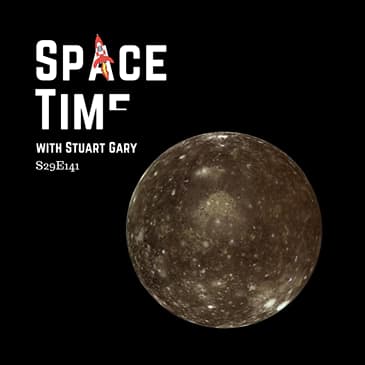
China to land a spacecraft on the Jovian Moon Callisto
China has officially unveiled plans to attempt humanity’s first-ever landing on one of Jupiter’s moons, targeting the ice world of Callisto. Astronomers watch as stellar supergiant cannibalizes a Sun like star For the first time ever, astronomers have observed a stellar supergiant consuming a smaller Sun like star. The Euclid Space Telescope’s first data release The Euclid space telescope has just dropped its first data release containing an astonishing amount of information including images covering an area of sky almost 10,000 times the size of the full moon, around 900 million galaxies, 60 million quasars and 15,000 strong gravitational lens candidates. The Science Report Exercise by doing several short walks throughout the day may be better than doing a single long walk. A new weapon in the fight against deadly superbugs. Hundreds of rock-art engravings dating back more than 25,000 years discovered hidden in plain sight. Claims cutting back on social media use may reduce the symptoms of depression. Alex on Tech the danger of Tech debt.
Become a supporter of this podcast: https://www.spreaker.com/podcast/spacetime-with-stuart-gary--2458531/support.
00:00:00 --> 00:00:02 Stuart Gary: This is space Time Series 29 Episode
00:00:02 --> 00:00:05 141 for broadcast on 25
00:00:05 --> 00:00:08 November 2026 coming up on
00:00:08 --> 00:00:11 Space China to land a spacecraft on
00:00:11 --> 00:00:14 the Jovian moon Callisto. Astronomers
00:00:14 --> 00:00:16 watch in awe as a stellar supergiant
00:00:16 --> 00:00:19 cannibalises a smaller sun like star.
00:00:19 --> 00:00:22 And the first data release from Europe's
00:00:22 --> 00:00:24 Euclid Space Telescope. All that and
00:00:24 --> 00:00:27 more coming up on, uh, Space Time.
00:00:28 --> 00:00:31 Stuart Gary: Welcome to Space Time with Stuart
00:00:31 --> 00:00:31 Gary.
00:00:47 --> 00:00:49 Stuart Gary: China has officially unveiled plans to
00:00:49 --> 00:00:52 attempt humanity's first ever landing on one
00:00:52 --> 00:00:54 of Jupiter's moons. Two targeting the ice
00:00:54 --> 00:00:56 world of Callisto Beijing says its
00:00:56 --> 00:00:59 Tianwen 4 mission will attempt to orbit
00:00:59 --> 00:01:01 Jupiter and then enter orbit around Callisto,
00:01:01 --> 00:01:04 deploying a small lander craft down to its
00:01:04 --> 00:01:07 surface. The landers plan to carry scientific
00:01:07 --> 00:01:08 instruments to study the moon's surface
00:01:08 --> 00:01:10 composition and magnetic environments,
00:01:10 --> 00:01:12 potentially helping to determine whether
00:01:12 --> 00:01:14 Callisto contains a long suspected
00:01:15 --> 00:01:17 subsurface ocean. Callisto
00:01:17 --> 00:01:20 is one of Jupiter's four Galilean moons,
00:01:20 --> 00:01:22 so cool because they were first detected by
00:01:22 --> 00:01:25 Galileo Galilei using a telescope in the
00:01:25 --> 00:01:28 1600s. It's long been considered a
00:01:28 --> 00:01:30 promising destination for exploration because
00:01:30 --> 00:01:33 it experiences significantly less radiation
00:01:33 --> 00:01:35 than moons closer to Jupiter such as IO,
00:01:35 --> 00:01:38 Europa and Ganymede. Callisto is the
00:01:38 --> 00:01:41 outermost Galilean moon. It's covered
00:01:41 --> 00:01:43 in an ancient, heavily created, geologically
00:01:43 --> 00:01:46 quiet surface of mixed rock and ice.
00:01:46 --> 00:01:49 Measuring roughly 4 kilometres
00:01:49 --> 00:01:52 wide, it's nearly the same size as the planet
00:01:52 --> 00:01:54 Mercury and holds the oldest known surface in
00:01:54 --> 00:01:57 the solar system. Unlike its inner
00:01:57 --> 00:01:59 neighbours, Callisto's interior was never
00:01:59 --> 00:02:01 fully melted and differentiated into distinct
00:02:01 --> 00:02:04 layers, leaving a largely uniform mix of
00:02:04 --> 00:02:07 rocks and ice beneath its crust. Data from
00:02:07 --> 00:02:09 NASA's Galileo mission back in the 1990s
00:02:09 --> 00:02:12 revealed small shifts in Callisto's magnetic
00:02:12 --> 00:02:15 field that suggests a salty
00:02:15 --> 00:02:18 liquid water ocean. Roughly 150 to 200
00:02:18 --> 00:02:20 kilometres below its frozen icy surface,
00:02:21 --> 00:02:23 Callisto is surrounded by a very faint
00:02:23 --> 00:02:26 exosphere composed mostly of carbon dioxide
00:02:26 --> 00:02:28 and molecular oxygen. The Tianwen 4
00:02:28 --> 00:02:31 spacecraft will include a Jupiter Callisto
00:02:31 --> 00:02:33 orbiter carrying 10 scientific instruments
00:02:33 --> 00:02:35 including wide and medium angle cameras, a
00:02:35 --> 00:02:37 laser altimeter, spectrometers, particle
00:02:37 --> 00:02:40 detectors and a magnetometer. It will study
00:02:40 --> 00:02:42 Jupiter's atmosphere, plasma environment and
00:02:42 --> 00:02:45 irregular moons before entering a 300
00:02:45 --> 00:02:48 kilometres mapping orbit around Callisto. It
00:02:48 --> 00:02:50 will also carry and eventually deploy a
00:02:50 --> 00:02:52 Callisto lander which will carry a surface
00:02:52 --> 00:02:55 composition analyzer and another magnetometer
00:02:55 --> 00:02:57 that will allow the mission to conduct the
00:02:57 --> 00:03:00 first ever surface measurements on any Jovian
00:03:00 --> 00:03:03 moon. Pairing the lander's magnetometer with
00:03:03 --> 00:03:04 the orbiter's magnetometer will help
00:03:04 --> 00:03:07 scientists confirm whether a salty subsurface
00:03:07 --> 00:03:09 ocean really does exist below Callisto's
00:03:09 --> 00:03:12 crust. If all goes well,
00:03:12 --> 00:03:14 Tianwen 4 will launch aboard a heavy lift
00:03:14 --> 00:03:16 long March 5 rocket from the Wenchang
00:03:16 --> 00:03:18 Satellite launch centre on Henan island in
00:03:18 --> 00:03:21 September 2029, arriving in the Jovian
00:03:21 --> 00:03:24 system in December 2035 and landing on
00:03:24 --> 00:03:26 Callisto sometime around February
00:03:26 --> 00:03:29 2038. Needless to say, we'll
00:03:29 --> 00:03:32 keep you informed. This is space
00:03:32 --> 00:03:35 time still to come Astronomers
00:03:35 --> 00:03:37 watch in awe as a stellar supergiant
00:03:37 --> 00:03:40 cannibalises a smaller sun like star
00:03:40 --> 00:03:43 and the European Space Agency's Euclid Space
00:03:43 --> 00:03:46 Telescope releases its first batch of data.
00:03:46 --> 00:03:49 All that and more still to come on space
00:03:49 --> 00:03:49 time.
00:03:58 --> 00:04:00 For the first time ever, astronomers have
00:04:00 --> 00:04:03 observed a stellar supergiant actually
00:04:03 --> 00:04:05 consuming a smaller sun like star.
00:04:06 --> 00:04:08 The discovery, reported in the journal
00:04:08 --> 00:04:10 Nature, was detected by NASA's Webb Space
00:04:10 --> 00:04:13 Telescope. The authors watched in awe
00:04:13 --> 00:04:16 as a star slightly less massive than our sun
00:04:16 --> 00:04:18 spiralled into and was consumed by the
00:04:18 --> 00:04:20 supergiant on the outskirts of our big
00:04:20 --> 00:04:23 neighbouring galaxy Andromeda. The combined
00:04:23 --> 00:04:25 merged star has now been catalogued as at
00:04:25 --> 00:04:28 2025abao, or simply
00:04:28 --> 00:04:30 nicknamed Bao for short. Prior to the
00:04:30 --> 00:04:33 merger, Bayo's primary star, the supergiant
00:04:33 --> 00:04:36 dwarfed its smaller sun like companion star,
00:04:36 --> 00:04:37 being some seven times as mass,
00:04:38 --> 00:04:40 350 times bigger in radius and
00:04:40 --> 00:04:43 18 times brighter, making Big
00:04:43 --> 00:04:45 Bayo an appropriate nickname.
00:04:46 --> 00:04:48 The study's lead author, Vraj Karambilka from
00:04:48 --> 00:04:51 Columbia University, says stellar mergers are
00:04:51 --> 00:04:53 difficult to observe in real time because
00:04:53 --> 00:04:55 they're hard to predict. However, Karambilka
00:04:55 --> 00:04:57 and colleagues noticed something unusual was
00:04:57 --> 00:05:00 going on way back in 2023, and so they
00:05:00 --> 00:05:02 continued to monitor the system to see what
00:05:02 --> 00:05:04 it was going to do. Then in
00:05:04 --> 00:05:07 2025, all hell broke loose. The whole thing
00:05:07 --> 00:05:09 erupted. Webb observed Bayer just 47
00:05:09 --> 00:05:12 days after the star's eruption peaked, the
00:05:12 --> 00:05:15 earliest ever follow up to such an event. The
00:05:15 --> 00:05:16 telescope's data helped the authors
00:05:16 --> 00:05:18 characterise what the system would have
00:05:18 --> 00:05:20 looked like before, during and immediately
00:05:20 --> 00:05:23 after the merger. Before their
00:05:23 --> 00:05:25 transformation, the two stars would have
00:05:25 --> 00:05:27 spent millennia orbiting each other in a
00:05:27 --> 00:05:30 binary system. But eventually the
00:05:30 --> 00:05:32 smaller star came into contact with the
00:05:32 --> 00:05:34 surface of the giant star. Their
00:05:34 --> 00:05:36 unification, if that's the right word,
00:05:36 --> 00:05:38 happened in only seven short orbits.
00:05:39 --> 00:05:41 Previously known binary star mergers
00:05:41 --> 00:05:43 featuring two smaller stars usually happen
00:05:43 --> 00:05:45 over thousands of orbits, so this was quite
00:05:45 --> 00:05:48 special. In this case, the binary
00:05:48 --> 00:05:50 brightness suddenly started rising and within
00:05:50 --> 00:05:53 a week it had peaked. When a companion
00:05:53 --> 00:05:55 star begins to interact with the outer
00:05:55 --> 00:05:57 surface of the primary star, it produces a
00:05:57 --> 00:06:00 subtle effect, a sort of slow brightening,
00:06:00 --> 00:06:03 which clearly show up in the Bayer data. As
00:06:03 --> 00:06:05 the companion star continued its orbit, it
00:06:05 --> 00:06:07 peeled off the primary star's outer layers,
00:06:07 --> 00:06:09 with that matter flowing away into the
00:06:09 --> 00:06:12 surrounding space. The gas between the two
00:06:12 --> 00:06:14 stars at this stage is known as a common
00:06:14 --> 00:06:16 envelope. That's because the outer layer is
00:06:16 --> 00:06:19 literally shared between both of them. In the
00:06:19 --> 00:06:21 Bayer system, the primary star engulfed the
00:06:21 --> 00:06:23 smaller star and the companion then
00:06:23 --> 00:06:25 plummeted, spiralling in through the bloated
00:06:25 --> 00:06:27 gas envelope of the supergiant as it was
00:06:27 --> 00:06:30 robbed of its orbital energy by dragging in
00:06:30 --> 00:06:33 other systems. Both stars have survived this
00:06:33 --> 00:06:35 process, shedding lots of mass along the way
00:06:35 --> 00:06:38 but remaining independent in tight orbits.
00:06:38 --> 00:06:41 Over time, such surviving pairs can
00:06:41 --> 00:06:43 transform into neutron stars or black holes,
00:06:44 --> 00:06:46 explode as supernovae, produce ripples in
00:06:46 --> 00:06:49 spacetime known as gravitational waves and
00:06:49 --> 00:06:51 create millisecond pulsars.
00:06:52 --> 00:06:54 To get a better picture of what's going on,
00:06:54 --> 00:06:55 the authors reconstructed what happened to
00:06:55 --> 00:06:58 Bayer using computer simulations designed to
00:06:58 --> 00:07:01 match the Webb observations. They found the
00:07:01 --> 00:07:03 model that matched Webb's mid infrared
00:07:03 --> 00:07:05 observations best detailed dust being shed by
00:07:05 --> 00:07:08 the more massive primary star over centuries.
00:07:08 --> 00:07:11 Their model also showed that little Beyer was
00:07:11 --> 00:07:13 dragged into Big Beyer's core, exploding like
00:07:13 --> 00:07:15 a bomb inside the supergiant.
00:07:16 --> 00:07:18 Bayer first caught the author's attention
00:07:18 --> 00:07:20 back in February 2023, when they saw an
00:07:20 --> 00:07:23 unusual variable star in data from NASA's
00:07:23 --> 00:07:25 NEOWISE near Earth Object Wide Field
00:07:25 --> 00:07:28 Infrared Survey explorer mission. Before
00:07:28 --> 00:07:31 2018, the object had a consistent luminosity.
00:07:31 --> 00:07:33 Then, observations from the Palomar
00:07:33 --> 00:07:36 Observatory's Wide Field Infrared Transit
00:07:36 --> 00:07:39 Explorer instrument in September 2024 showed
00:07:39 --> 00:07:40 that Bayer was not only beginning to
00:07:40 --> 00:07:42 brighten, but also spewing more and more
00:07:42 --> 00:07:45 dust. When NASA's Earth orbiting Spheric
00:07:45 --> 00:07:48 Space Telescope serendipitously saw Bayer
00:07:48 --> 00:07:50 fade rapidly in visible light and then
00:07:50 --> 00:07:52 brighten in infrared during a routine survey
00:07:52 --> 00:07:55 in July 2025, the authors knew it was an
00:07:55 --> 00:07:58 indicator of some unusual activity. The
00:07:58 --> 00:08:00 Zwicky Transient Facility, also at the
00:08:00 --> 00:08:02 Palomar Observatory, then detected the
00:08:02 --> 00:08:05 eruption on October 17, 2025,
00:08:05 --> 00:08:07 when the stars rapidly brightened and
00:08:07 --> 00:08:10 radically heated up, an amazing
00:08:10 --> 00:08:12 stellar spectacle never seen before.
00:08:13 --> 00:08:16 This is space time still to come.
00:08:16 --> 00:08:18 The European Space Agency's Euclid Space
00:08:18 --> 00:08:21 Telescope releases its first UH data packet
00:08:21 --> 00:08:23 and later in the science report, a new weapon
00:08:23 --> 00:08:26 in the ongoing fight to try and beat deadly
00:08:26 --> 00:08:29 superbugs. All that and more still to come
00:08:29 --> 00:08:30 on, um, space time.
00:08:46 --> 00:08:48 The European Space Agency's Euclid Space
00:08:48 --> 00:08:51 Telescope has just dropped its first data
00:08:51 --> 00:08:53 release. This first major data set
00:08:53 --> 00:08:55 contains an astonishing amount of
00:08:55 --> 00:08:57 information, including images covering an
00:08:57 --> 00:08:59 area of the sky almost ten thousand thousand
00:08:59 --> 00:09:01 times the size of the Full Moon and includes
00:09:01 --> 00:09:04 around 900 million galaxies, 60
00:09:04 --> 00:09:06 million quasars, uh, and 15
00:09:06 --> 00:09:09 strong gravitationally lensed candidates.
00:09:10 --> 00:09:12 The release marks an important milestone.
00:09:12 --> 00:09:14 With some 20 scientific papers already
00:09:14 --> 00:09:17 published and dozens more in the pipeline.
00:09:17 --> 00:09:19 The next major step will be to combine the
00:09:19 --> 00:09:22 observations into detailed cosmological
00:09:22 --> 00:09:24 analyses. That's expected to be released by
00:09:24 --> 00:09:27 2027. The European
00:09:27 --> 00:09:29 Space Agency launched the Euclid Space
00:09:29 --> 00:09:31 Telescope into the Lagrangian L2 position on
00:09:31 --> 00:09:34 the Earth's night side on July 1,
00:09:34 --> 00:09:37 2023. Its mission is to create the
00:09:37 --> 00:09:38 largest and uh, most detailed three
00:09:38 --> 00:09:41 dimensional map of the universe ever made.
00:09:41 --> 00:09:43 Leiden University astronomer Cohen Kushkin
00:09:43 --> 00:09:46 says Euclid is a wide field high resolution
00:09:46 --> 00:09:49 telescope. It's equipped with a 1.2 metre
00:09:49 --> 00:09:52 primary mirror, a 600 megapixel camera and
00:09:52 --> 00:09:55 a near infrared spectrometer and photometer.
00:09:55 --> 00:09:58 It sees more than 100 times as much of the
00:09:58 --> 00:10:00 sky in each image as either the Hubble or
00:10:00 --> 00:10:02 Webb space telescopes and produces around 20
00:10:02 --> 00:10:05 new images every day. Over its
00:10:05 --> 00:10:08 six year mission, Euclid will map a third of
00:10:08 --> 00:10:11 the entire sky. In total, the newly
00:10:11 --> 00:10:14 released Data set comprises 2.5 trillion
00:10:14 --> 00:10:16 pixels and UH takes up 1.7 million
00:10:16 --> 00:10:19 gigabytes. These observations will
00:10:19 --> 00:10:22 allow astronomers to look far back in time.
00:10:23 --> 00:10:25 Some of the galaxies in this data set existed
00:10:25 --> 00:10:27 when the universe was only 700 million years
00:10:27 --> 00:10:29 old, just 5% of its current age.
00:10:30 --> 00:10:32 While science can describe the overall
00:10:32 --> 00:10:34 history of the universe remarkably well, it
00:10:34 --> 00:10:37 still doesn't understand what 95% of the
00:10:37 --> 00:10:39 cosmos is actually made of. Invisible
00:10:39 --> 00:10:42 substances like dark matter and strange
00:10:42 --> 00:10:44 forces like dark energy remain mysterious
00:10:44 --> 00:10:47 questions needing answers. Dark matter
00:10:47 --> 00:10:50 makes up roughly 27% of the universe.
00:10:50 --> 00:10:53 We can't see it directly, but we know it's
00:10:53 --> 00:10:55 there because its gravity helps keep galaxies
00:10:55 --> 00:10:57 from falling apart and its mass allows
00:10:57 --> 00:10:59 distant background objects to be
00:10:59 --> 00:11:02 gravitationally lensed. Dark energy
00:11:02 --> 00:11:04 accounts for about 68% and appears to drive
00:11:04 --> 00:11:07 the accelerated expansion of the universe. By
00:11:07 --> 00:11:09 understanding dark energy, we'll have a
00:11:09 --> 00:11:11 better understanding of the universe's
00:11:11 --> 00:11:14 ultimate fate. Will it continue expanding
00:11:14 --> 00:11:17 forever, resulting in a dark, cold universe?
00:11:17 --> 00:11:20 Or will its outward expansion eventually slow
00:11:20 --> 00:11:22 down and stop, resulting in a universe in a
00:11:22 --> 00:11:24 steady state looking much like it does now?
00:11:25 --> 00:11:27 Or will the force of gravity eventually take
00:11:27 --> 00:11:30 over from dark energy, causing the universe
00:11:30 --> 00:11:32 to ultimately start collapsing on itself,
00:11:32 --> 00:11:34 resulting in a Big Crunch, which could in
00:11:34 --> 00:11:36 turn be followed by another Big Bang?
00:11:36 --> 00:11:39 Euclid will also try to provide a better
00:11:39 --> 00:11:41 understanding of gravity itself by testing
00:11:41 --> 00:11:44 the laws of physics on the cosmic scale. The
00:11:44 --> 00:11:46 first results of these tests will be
00:11:46 --> 00:11:48 published next year, around June.
00:11:49 --> 00:11:51 Euclid helps cosmologists investigate the
00:11:51 --> 00:11:53 universe in two ways. It maps the positions
00:11:53 --> 00:11:56 of billions of galaxies to reveal how cosmic
00:11:56 --> 00:11:58 structures have evolved. It also measures
00:11:58 --> 00:12:00 tiny distortions in their shapes caused by
00:12:00 --> 00:12:02 gravity bending light. That's the effect
00:12:02 --> 00:12:05 called gravitational lensing. That would
00:12:05 --> 00:12:06 reveal the invisible matter, including dark
00:12:06 --> 00:12:09 matter. A single galaxy can't tell us much
00:12:09 --> 00:12:11 about dark, uh, energy or the laws of
00:12:11 --> 00:12:14 gravity. But billions of galaxies can.
00:12:14 --> 00:12:17 And by studying patterns in their positions
00:12:17 --> 00:12:19 and shapes, astronomers can reconstruct how
00:12:19 --> 00:12:21 the universe has evolved. They can test the
00:12:21 --> 00:12:24 physics behind it. This report on
00:12:24 --> 00:12:27 Euclid's first data release from ESA tv.
00:12:27 --> 00:12:30 Stuart Gary: The European Space Agency's Euclid telescope
00:12:30 --> 00:12:33 is scanning the sky to build an enormous map
00:12:33 --> 00:12:34 of the universe.
00:12:36 --> 00:12:38 Now it reveals the biggest piece of that map
00:12:38 --> 00:12:41 map yet. The newly revealed areas. This
00:12:41 --> 00:12:44 enormous 500 gigapixel mosaic
00:12:44 --> 00:12:47 captures millions of stars and galaxies.
00:12:47 --> 00:12:50 Blue clouds in the foreground belong to our
00:12:50 --> 00:12:53 own home galaxy. But
00:12:53 --> 00:12:56 Euclid is looking through and far beyond it.
00:12:57 --> 00:13:00 When we zoom in further out to nearly
00:13:00 --> 00:13:03 12 million light years away from us, we
00:13:03 --> 00:13:06 encounter the Messier 81 group of galaxies.
00:13:06 --> 00:13:09 We also pass a loose group of M blue stars, a
00:13:09 --> 00:13:12 dwarf irregular galaxy. Euclid's camera is
00:13:12 --> 00:13:15 so sensitive that we can see the individual
00:13:15 --> 00:13:18 stars of Messier 81. We can spot
00:13:18 --> 00:13:20 countless red galaxies in the background.
00:13:20 --> 00:13:22 Some of these are billions of light years
00:13:22 --> 00:13:25 away. Euclid's new mosaics contain
00:13:25 --> 00:13:27 light from more than a billion objects,
00:13:28 --> 00:13:31 including, including stars, galaxies,
00:13:31 --> 00:13:34 quasars, and, um, gravitational lenses.
00:13:34 --> 00:13:36 These observations lay the foundation for
00:13:36 --> 00:13:38 euclid's best ever 3D map of the
00:13:38 --> 00:13:41 cosmos. Scientists will use this
00:13:41 --> 00:13:44 map to explore some of the universe's
00:13:44 --> 00:13:45 biggest mysteries.
00:13:46 --> 00:13:47 Stuart Gary: This is space time,
00:13:55 --> 00:13:55 Foreign.
00:14:04 --> 00:14:06 Look at some of the other stories making news
00:14:06 --> 00:14:08 in Science this week with a Science report.
00:14:09 --> 00:14:11 A new study claims getting exercise by doing
00:14:11 --> 00:14:14 several short walks throughout the day may be
00:14:14 --> 00:14:16 better for you than doing a single long walk
00:14:16 --> 00:14:17 when it comes to controlling your blood
00:14:17 --> 00:14:20 sugar. The findings, reported in the journal
00:14:20 --> 00:14:22 Obesity, are based on a trial of 30 adults
00:14:22 --> 00:14:24 showing that people who broke their exercise
00:14:24 --> 00:14:27 up into short bouts rather than one the long
00:14:27 --> 00:14:28 run, had greater improvements in glucose
00:14:28 --> 00:14:31 regulation, increased time spent within the
00:14:31 --> 00:14:34 target glucose range, and reduced glycemic
00:14:34 --> 00:14:37 variability during daily living. The authors
00:14:37 --> 00:14:39 say the findings suggest that how we
00:14:39 --> 00:14:40 distribute physical activity throughout the
00:14:40 --> 00:14:43 day may be just as important as how much
00:14:43 --> 00:14:44 activity we actually do.
00:14:46 --> 00:14:48 Scientists have discovered an unlikely weapon
00:14:48 --> 00:14:51 in the fight against deadly superbugs. As,
00:14:51 --> 00:14:53 uh, superbugs become harder to treat and
00:14:53 --> 00:14:55 antibiotic resistance continues to rise
00:14:55 --> 00:14:57 worldwide, researchers at Flinders University
00:14:57 --> 00:15:00 have found a way to prevent infections before
00:15:00 --> 00:15:03 they take hold. A report in the journal Small
00:15:03 --> 00:15:06 Structures claims a flexible antimicrobial
00:15:06 --> 00:15:08 coating that uses microscopic surface cracks
00:15:08 --> 00:15:10 and a small electrical charge from a standard
00:15:10 --> 00:15:13 9 volt battery was able to kill more than 80%
00:15:13 --> 00:15:16 of antibiotic resistant bacteria within three
00:15:16 --> 00:15:19 hours. Archaeologists
00:15:19 --> 00:15:21 have discovered hundreds of ancient rock art
00:15:21 --> 00:15:24 engravings dating back more than 25 years
00:15:24 --> 00:15:26 which were hidden in plain sight in a cave
00:15:26 --> 00:15:28 frequently visited by tourists in the
00:15:28 --> 00:15:30 Catalonia region of northeastern Spain.
00:15:31 --> 00:15:33 The findings, reported in the journal
00:15:33 --> 00:15:35 Antiquity, claims the area was thought to be
00:15:35 --> 00:15:37 almost completely devoid of Palaeolithic art
00:15:37 --> 00:15:40 prior to this new discovery. The cave system
00:15:40 --> 00:15:42 has already been open to the public for
00:15:42 --> 00:15:45 decades, becoming a museum in the 1990s.
00:15:45 --> 00:15:48 But these newly discovered motifs were missed
00:15:48 --> 00:15:50 until now because they were difficult to see
00:15:50 --> 00:15:52 and only became visible because of a play
00:15:52 --> 00:15:54 with light from different directions
00:15:54 --> 00:15:55 highlighting the depressions
00:15:57 --> 00:15:59 A new study claims that cutting back on
00:15:59 --> 00:16:02 social media use may reduce the symptoms of
00:16:02 --> 00:16:04 depression and anxiety among struggling young
00:16:04 --> 00:16:07 adults. The findings, reported in the Journal
00:16:07 --> 00:16:09 of the American Medical association, examined
00:16:09 --> 00:16:12 2 people who were experiencing depression
00:16:12 --> 00:16:14 or anxiety and were also frequent users of
00:16:14 --> 00:16:17 social media. They found those who curbed
00:16:17 --> 00:16:20 their social media use saw improvements in
00:16:20 --> 00:16:21 their symptoms.
00:16:22 --> 00:16:24 Uh, you may remember last month the British
00:16:24 --> 00:16:26 government wanted citizens to ensure that
00:16:26 --> 00:16:29 they had at least 72 hours worth
00:16:29 --> 00:16:31 of essential supplies in their homes just in
00:16:31 --> 00:16:34 case everyday services are uh, disrupted by
00:16:34 --> 00:16:36 cyber or security threats causing supply
00:16:36 --> 00:16:39 chain and infrastructure disruptions. That
00:16:39 --> 00:16:41 came in the wake of a string of cyber attacks
00:16:41 --> 00:16:43 targeting commercial fridges and freezers
00:16:43 --> 00:16:44 across Europe which were remotely switching
00:16:44 --> 00:16:47 evaporators to defrost mode, raising
00:16:47 --> 00:16:49 temperatures by up to 50 degrees Celsius and
00:16:49 --> 00:16:51 spoiling millions of euros worth of food.
00:16:52 --> 00:16:55 Then there was Microsoft's Global 365
00:16:55 --> 00:16:57 outage caused by a three month old locked
00:16:57 --> 00:17:00 contention bug in its networking gateway
00:17:00 --> 00:17:03 servers. The next day America grounded all
00:17:03 --> 00:17:05 FAA controlled airspace flight departures due
00:17:05 --> 00:17:08 to a telecommunications failure linked to a
00:17:08 --> 00:17:10 router fibre upgrade malfunction which caused
00:17:10 --> 00:17:12 communications and radar instability across
00:17:12 --> 00:17:15 multiple air traffic control centres.
00:17:15 --> 00:17:17 In fact, that was only the third time in
00:17:17 --> 00:17:20 history this has happened. The first was the
00:17:20 --> 00:17:23 911 Islamic terrorist attacks in 2001
00:17:23 --> 00:17:25 and the second was a NOTAM system failure in
00:17:25 --> 00:17:28 2023. And it doesn't end there.
00:17:28 --> 00:17:31 Hot on the HEELS of that, 16 major American
00:17:31 --> 00:17:33 banks including JP Morgan Chase experienced
00:17:33 --> 00:17:36 widespread technical outages caused by a
00:17:36 --> 00:17:38 software bug in on premises hardware systems.
00:17:39 --> 00:17:42 At the same time, United Airlines experienced
00:17:42 --> 00:17:44 a major glitch due to computer disruptions in
00:17:44 --> 00:17:46 legacy flight planning, crew communications
00:17:46 --> 00:17:48 and aircraft weight and balance data
00:17:48 --> 00:17:51 calculations needed for takeoff the next
00:17:51 --> 00:17:53 day. Apple and Google experienced long
00:17:53 --> 00:17:55 outages for Apple, Play, iCloud and some
00:17:55 --> 00:17:58 Gmail accounts. Meanwhile, a supply
00:17:58 --> 00:18:00 chain attack injected millions of malicious
00:18:00 --> 00:18:03 JavaScript into a third party website tool,
00:18:03 --> 00:18:06 compromising 178 major global
00:18:06 --> 00:18:08 websites including Zoom, HSBC,
00:18:09 --> 00:18:11 CNN, Salesforce, IKEA and the
00:18:11 --> 00:18:14 BBC, allowing hackers to steal valuable
00:18:14 --> 00:18:17 financial data. And then Australian
00:18:17 --> 00:18:19 gamers reported widespread login download and
00:18:19 --> 00:18:21 purchasing failures in the hours leading up
00:18:21 --> 00:18:24 to the local release of GTA 6, which by the
00:18:24 --> 00:18:26 way is rumoured to have cost northward of $2
00:18:26 --> 00:18:29 billion to produce globally. The game has
00:18:29 --> 00:18:31 broken all Internet download records.
00:18:32 --> 00:18:34 So what's actually going on?
00:18:35 --> 00:18:37 Cybersecurity experts say AI tools are
00:18:37 --> 00:18:39 uncovering software vulnerabilities at an
00:18:39 --> 00:18:42 unprecedented pace, forcing companies to push
00:18:42 --> 00:18:44 out rapid frequent patches that occasionally
00:18:44 --> 00:18:47 break live systems. With the details, we're
00:18:47 --> 00:18:49 joined by technology editor Alex Zaharov
00:18:49 --> 00:18:51 Vroith from TechAdvice Live.
00:18:52 --> 00:18:54 Jonathan Nally: Well look, everyone is uh, coming out and
00:18:54 --> 00:18:55 saying, oh, it must be some sort of cyber
00:18:55 --> 00:18:57 attack because it's all too incidental, it's
00:18:57 --> 00:18:59 all happening at the same time. But the
00:18:59 --> 00:19:02 reality, according to the various people
00:19:02 --> 00:19:04 in charge, is that this wasn't a cyber
00:19:04 --> 00:19:06 attack. But I guess we could call it a series
00:19:06 --> 00:19:09 of unfortunate, you know, coincidences based
00:19:09 --> 00:19:12 upon what is called tech debt, where
00:19:12 --> 00:19:14 companies have added that equipment that
00:19:14 --> 00:19:16 you're trying to run the latest AI stuff on
00:19:16 --> 00:19:17 and the machines are three or four or five
00:19:17 --> 00:19:19 years old, designed for it. But also tech
00:19:19 --> 00:19:21 debt in the sense that with the FAA's ground
00:19:21 --> 00:19:24 stop, it was a copper connection that had
00:19:24 --> 00:19:25 been upgraded to fibre and a new
00:19:25 --> 00:19:27 misconfigured router that effectively started
00:19:28 --> 00:19:29 broadcasting the wrong signals and
00:19:29 --> 00:19:31 multiplying across the network. And we had
00:19:31 --> 00:19:33 united with some sort of a, uh, tech upgrade
00:19:33 --> 00:19:34 that went wrong. We had Apple with some sort
00:19:34 --> 00:19:36 of tech upgrade that went wrong. Google was
00:19:36 --> 00:19:39 claimed to also be affected by this. And
00:19:39 --> 00:19:42 uh, we had five banks in the US that had
00:19:42 --> 00:19:44 outages. And so all those particular outages
00:19:44 --> 00:19:47 were said to be from misconfigurations and
00:19:47 --> 00:19:50 not actually from some sort of cyber. Now we
00:19:50 --> 00:19:52 did have a bunch of other websites, including
00:19:53 --> 00:19:56 Apple in this case and people like Zoom and a
00:19:56 --> 00:19:58 bunch of other organisations that were part
00:19:58 --> 00:20:00 of a cyber attack with the optimizely
00:20:00 --> 00:20:03 package that allows companies to do SEO but
00:20:03 --> 00:20:06 also to optimise display of their websites.
00:20:06 --> 00:20:08 And it's a third party tool that someone had
00:20:08 --> 00:20:10 hacked into and they put some code into a
00:20:10 --> 00:20:13 custom section that allowed all of these
00:20:13 --> 00:20:15 websites to be affected at once. And they
00:20:15 --> 00:20:17 were then trying to effectively skim your
00:20:17 --> 00:20:20 credit card details, but also install malware
00:20:20 --> 00:20:22 on older iPhones and iPads that didn't have
00:20:22 --> 00:20:25 the latest updates. So there were some not AI
00:20:25 --> 00:20:27 driven attacks, but cyber attacks. But the
00:20:27 --> 00:20:29 big ones that affected everybody were claimed
00:20:29 --> 00:20:32 to be tech debt. All of this
00:20:32 --> 00:20:35 showcases the fragility and the connectedness
00:20:35 --> 00:20:38 of modern life of the world that we now live
00:20:38 --> 00:20:40 in. And um, look, that's a pretty serious
00:20:40 --> 00:20:42 thing. I've always said that civilization
00:20:42 --> 00:20:44 hangs by a thread. Well now it hangs by a
00:20:44 --> 00:20:46 stretched out piece of fibre optic cable that
00:20:46 --> 00:20:48 could snap at any time.
00:20:48 --> 00:20:50 Stuart Gary: That's Alex Zaharov Freud from Tech Advice
00:20:50 --> 00:20:53 Dark Life. And this is Space
00:20:53 --> 00:20:54 Time.
00:21:09 --> 00:21:12 And that's the show for now. Space Time
00:21:12 --> 00:21:14 is available every Monday, Wednesday and
00:21:14 --> 00:21:17 Friday through bytes.com soundcloud,
00:21:17 --> 00:21:19 YouTube, your favourite podcast download
00:21:19 --> 00:21:20 provider, and from
00:21:20 --> 00:21:23 spacetimewithstuartgarry.com
00:21:23 --> 00:21:25 spacetime's also broadcast through the
00:21:25 --> 00:21:27 National Science foundation on Science Zone
00:21:27 --> 00:21:30 Radio and on both iHeartradio and
00:21:30 --> 00:21:33 TuneIn radio. And you can help to support our
00:21:33 --> 00:21:36 show by visiting the Space Store for a range
00:21:36 --> 00:21:38 of promotional merchandising goodies, or by
00:21:38 --> 00:21:41 becoming a Space patron, which gives you
00:21:41 --> 00:21:43 access to triple episode commercial free
00:21:43 --> 00:21:45 versions of the show as well as lots of bonus
00:21:45 --> 00:21:48 audio content which doesn't go to air, access
00:21:48 --> 00:21:50 to our exclusive Facebook group, and other
00:21:50 --> 00:21:52 rewards. Just go to
00:21:52 --> 00:21:54 spacetimewithstuartgarry.com for full
00:21:54 --> 00:21:55 details.
00:21:56 --> 00:21:57 Stuart Gary: You've been listening to Space Time with
00:21:57 --> 00:22:00 Stuart Gary. This has been another quality
00:22:00 --> 00:22:03 podcast production from bytes.com.