
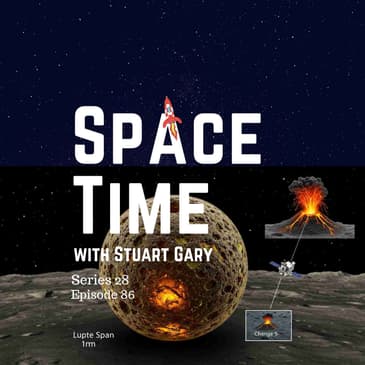
The Youngest Basaltic Lunar Meteorite
Scientists have uncovered a 2.35 billion-year-old lunar meteorite, Northwest Africa 16286, which fills a significant gap in our understanding of the Moon's volcanic history. This meteorite, distinct in its chemical profile, suggests that volcanic activity on the Moon persisted longer than previously thought, unveiling new insights into its internal heat generation processes. Lead author Joshua Snape from the University of Manchester explains how this rare sample enhances our knowledge of lunar geology without the costs associated with space missions.
Hypothetical Dark Dwarfs and Dark Matter
A new study proposes the existence of hypothetical objects called dark dwarves, which could help unravel the mystery of dark matter—an invisible substance that constitutes approximately 80% of the universe's mass. Researchers suggest that these low-mass objects could interact with dark matter in ways that produce observable effects, providing a potential pathway to understand this elusive component of the cosmos. The study highlights the importance of identifying markers, such as lithium-7, to confirm the existence of dark dwarfs and advance our understanding of dark matter.
Adaptive Optics and the Carina Nebula
Using adaptive optics, astronomers have achieved unprecedented clarity in imaging the western wall of the Carina Nebula, revealing intricate structures previously hidden by dust and gas. This breakthrough allows for a deeper investigation into star formation processes in this massive stellar nursery. The enhanced images showcase how massive young stars influence their surroundings and contribute to the cycle of stellar life, offering a glimpse into the conditions that may have shaped our own solar system.
www.spacetimewithstuartgary.com
✍️ Episode References
Journal of Cosmology and Astroparticle Physics
https://www.journalofcosmology.com/
Nature Journal
https://www.nature.com/nature
Become a supporter of this podcast: https://www.spreaker.com/podcast/spacetime-space-astronomy--2458531/support.
00:00 00:49 04:51 09:17 15:16 17:08
00:00:00
This is Space Time, Series 28, Episode 86, for broadcast on the
00:00:04
18th of July, 2025. Coming up on Space Time, the youngest
00:00:09
basaltic lunar meteorite ever found on Earth. Could
00:00:13
hypothetical objects called dark dwarves be lurking at the center
00:00:17
of our galaxy, and could they help explain dark matter? And
00:00:20
astronomers use adaptive optics to get a new view of the
00:00:24
spectacular Carina Nebula.
00:00:26
All that and more coming up on Space Time.
00:00:30
Welcome to Space Time with Stuart Gary.
00:00:49
Scientists studying a 2.35 billion year old meteorite have
00:00:53
filled a billion year gap in the Moon's volcanic history. The
00:00:57
ancient space rock, catalogued as Northwest Africa 16286, was
00:01:01
purchased from a dealer in Algeria back in February 2023.
00:01:06
Its providence before that remains uncertain. What is known
00:01:09
is that the 311-gram specimen has a unique chemical signature.
00:01:14
The findings of its examination, presented at the Goldschmidt
00:01:17
Conference in Prague, are offering fresh insights into how
00:01:20
the Moon's interior evolved, highlighting the long-lived
00:01:23
nature of its volcanic activity.
00:01:25
The analysis lends weight to the hypothesis that the Moon
00:01:28
retained internal heat generating processes which
00:01:31
powered lunar volcanic activity in several distinct phases. A
00:01:35
lead isotope analysis dates the rock's formation to around 2.35
00:01:39
billion years ago, and that's during a period in which few
00:01:42
lunar samples exist.
00:01:44
And that also makes this the youngest basaltic lunar
00:01:47
meteorite ever discovered on Earth. In fact, its rare
00:01:50
geochemical profile sets it apart from those returned by
00:01:53
previous Moon missions. With chemical evidence indicating it
00:01:56
likely formed from a lava flow that solidified after emerging
00:01:59
from deep within the lunar interior.
00:02:02
The study's lead author Joshua Snape from the University Of
00:02:05
Manchester says lunar rocks from sample return missions provide
00:02:08
fantastic insights, but they're limited to the immediate areas
00:02:12
surrounding the mission's landing site. By contrast, lunar
00:02:15
meteorites can potentially be ejected by impact cratering
00:02:18
occurring anywhere on the Moon's surface.
00:02:20
As such, there's some serendipity surrounding this
00:02:23
sample. As it reveals secrets about lunar geology without the
00:02:26
massive expense of a space mission. The meteorite contains
00:02:29
relatively large crystals of the mineral olivine. The rock's a
00:02:33
type of lunar volcanic basalt known as olivine pyrrhic basalt.
00:02:37
It contains moderate levels of titanium and high levels of
00:02:40
potassium. In addition to the unusual age of the sample, the
00:02:43
study also found that the lead isotope composition of this
00:02:46
rock, that is the geochemical fingerprint retained from when
00:02:49
the rock first formed, points to it originating from a source in
00:02:52
the Moon's interior with an unusually high uranium-to-lead
00:02:55
ratio.
00:02:56
And these chemical clues may help identify the mechanisms
00:02:59
that have enabled periods of ongoing internal heat generation
00:03:02
on the Moon.
00:03:03
Snape says the age of the sample is especially interesting
00:03:06
because it fills an almost billion-year gap in science's
00:03:09
understanding of lunar volcanic history. It's younger than the
00:03:12
basalts collected by the Apollo, Luna and Chang'E 6 missions, but
00:03:16
it's older than the much younger rocks brought back by Chang'e 5.
00:03:20
He says its age and composition showed that volcanic activity
00:03:23
continued on the Moon throughout this time span. And the analysis
00:03:27
suggests an ongoing heat generation process within the
00:03:30
Moon, potentially from radiogenic elements decaying and
00:03:33
producing heat over long periods. Moon rocks are rare.
00:03:37
This particular rock provides new constraints about when and
00:03:40
how volcanic activity occurred on the Moon.
00:03:43
This meteorite is one of only 31 lunar basalt meteorites
00:03:46
officially identified on Earth. Its distinct composition with
00:03:50
melted glassy pockets and veins, suggests that it was likely
00:03:53
shocked by an asteroid and meteorite impact on the Moon's
00:03:56
surface before being ejected into space and eventually
00:03:59
falling to Earth.
00:04:01
Of course, this shock event also makes it more challenging to
00:04:03
interpret the date obtained for the rock, but the researchers
00:04:06
have estimated its age with a margin of plus or minus 80
00:04:10
million years. This is space-time.
00:04:14
Still to come, a new study suggests that hypothetical
00:04:17
objects known as dark dwarves exist at the centre of the
00:04:20
galaxy and could reveal the true nature of that mysterious
00:04:23
substance known as dark matter. And astronomers use adaptive
00:04:27
optics to undertake a new study of the western wall of the
00:04:30
Korean nebula in unprecedented detail. All that and more still
00:04:34
to come on Space Time.
00:04:51
A new study suggests that hypothetical objects which would
00:04:54
be named dark dwarves could reveal the true nature of that
00:04:58
mysterious substance known as dark matter. Dark matter is an
00:05:01
invisible material that makes up around 80% of all the matter in
00:05:05
the universe. Scientists have no idea what it is, but they know
00:05:08
it exists because they can see its gravitational influence on
00:05:11
so-called normal or baryonic matter.
00:05:14
For example, it prevents galaxies from flying apart as
00:05:16
they revolve, and it acts as a magnifying lens to amplify light
00:05:20
coming from more distant objects behind it. But working out a way
00:05:24
to identify what dark matter is has been problematic. Now, a
00:05:28
report in the Journal Of Cosmology and Astroparticle
00:05:31
Physics come up with a hypothetical object which may
00:05:34
well provide an answer.
00:05:36
They've named these objects dark dwarves, not because they're
00:05:39
dark bodies, but because of their special link with dark
00:05:41
matter. One of the study's authors, Jeremy Saxton from the
00:05:45
University Of Hawaii, says that among the best-known dark matter
00:05:48
candidates are what are called weakly interacting massive
00:05:51
particles, better known as WIMPs.
00:05:54
These are very massive particles that interact very weakly with
00:05:57
ordinary matter. They pass through things unnoticed, don't
00:06:00
emit light, and don't respond to electromagnetic forces. So they
00:06:04
don't reflect light and therefore remain invisible,
00:06:06
revealing themselves only through their gravitational
00:06:08
effects. Now this type of dark matter would be necessary in
00:06:13
order for Dark Dwarfs to exist.
00:06:15
The thing is, because dark matter interacts
00:06:17
gravitationally, it could also be captured by stars, which have
00:06:20
powerful gravitational fields. And therefore it could
00:06:23
accumulate inside them. Now, if that happens, dark matter might
00:06:27
also interact with itself, resulting in annihilation.
00:06:30
Annihilation would release energy, and that would heat the
00:06:33
star up.
00:06:34
Studies like the one Saxton and colleagues are now doing are
00:06:37
important because they offer concrete tools in order to break
00:06:40
the deadlock on discovering what dark matter really is.
00:06:44
So, what are dark dwarves? Well, ordinary stars like our Sun, for
00:06:49
example, shine because of nuclear fusion processes which
00:06:52
occur in their cores, generating huge amounts of heat and energy.
00:06:56
Fusion happens when a star's mass is large enough so that
00:06:59
gravitational forces compress matter towards the centre of the
00:07:02
star, and they do that with such intensity they trigger reactions
00:07:05
between atomic nuclei.
00:07:07
This is nuclear fusion. And the process releases huge amounts of
00:07:12
energy, which we see as light. Sexteen says dark dwarves also
00:07:16
emit light, but not because of nuclear fusion. They don't have
00:07:19
enough mass to do that. In fact, they're very low-mass objects,
00:07:22
less than about 8% the mass of the Sun. And that's not
00:07:25
sufficient to trigger fusion reactions.
00:07:28
The answer are brown dwarves. They fill a gap between the
00:07:32
largest planets and the smallest red dwarf stars. And they do
00:07:36
emit a faint light, energy produced by their relatively
00:07:39
small gravitational contraction.
00:07:41
The idea of this new hypothesis is that if brown dwarves are
00:07:44
located in regions where dark matter is especially abundant,
00:07:47
such as for example the centre of our galaxy, then they could
00:07:50
transform into something else, what Sextine describes as a dark
00:07:54
dwarf.
00:07:55
Sextine explains that the more dark matter you have around, the
00:07:58
more you can capture. And the more dark matter ends up inside
00:08:01
the star, the more energy will be produced through the
00:08:04
annihilation of dark matter.
00:08:06
Other candidates propose to explain what dark matter is, are
00:08:09
hypothetical particles such as axions or sterile neutrinos. But
00:08:14
all these lack the mass needed to produce the expected effect
00:08:17
needed for dark dwarves.
00:08:19
Only massive particles capable of interacting with each other
00:08:22
and annihilating into visible energy could power a dark dwarf.
00:08:26
Of course, this entire hypothesis would have little
00:08:28
value if there wasn't a concrete way to identify a dark dwarf if
00:08:31
you saw it.
00:08:33
Saxton and colleagues propose a distinctive marker. He says
00:08:36
while there'd be several markers available, he believes the
00:08:39
isotope lithium-7 would be the best because it would have a
00:08:42
unique effect. See, lithium-7... Burns very easily and is quickly
00:08:47
consumed in ordinary stars.
00:08:49
So if you were able to find an object which looked like a dark
00:08:52
dwarf, you could look for the presence of lithium-7 in its
00:08:54
spectra, because it wouldn't be there if it was a brown dwarf or
00:08:58
a similar object. This is space-time.
00:09:01
Still to come, astronomers use adaptive optics to study the
00:09:05
spectacular western wall of the Korean nebula in unprecedented
00:09:08
detail. And later in the science report. A new study is mapping
00:09:13
killer whale populations in Australian waters for the very
00:09:16
first time. All that and more still to come on Space Time.
00:09:35
Astronomers using the International Gemini South
00:09:37
Observatory have captured the western wall of the spectacular
00:09:41
Korean nebula in unprecedented detail. The amazing new image
00:09:45
uses the process of adaptive optics, resulting in a tenfold
00:09:49
improvement in sharpness in order to reveal a number of
00:09:51
unusual structures within this amazing nebula.
00:09:54
For astronomers, looking through the Earth's atmosphere is a lot
00:09:58
like looking at the sky from the bottom of a swimming pool full
00:10:00
of water. The atmosphere's density, temperature, inversion
00:10:04
layers, turbulence and composition all cause photons to
00:10:07
bounce around. It's what makes stars twinkle in the night sky,
00:10:12
which is great for romance, but not so good for astronomers.
00:10:15
Adaptive optics works by using lasers to measure changes in the
00:10:19
atmosphere directly above the observatory's telescopes. It
00:10:22
then corrects for these changes using actuators to constantly
00:10:26
change the shape of the telescope's mirror, effectively
00:10:28
compensating for the atmosphere.
00:10:31
With the help of adaptive optics on the 8.1-metre Gemini South
00:10:34
telescope in Chile, astronomers have been able to state the
00:10:37
Carina Nebula with new eyes. The brilliant Carina Nebula, located
00:10:41
in the Southern Hemisphere sky, is some 500 times larger than
00:10:44
the better-known Orion Nebula, making it an ideal candidate for
00:10:48
investigating star formation.
00:10:50
The astronomers' use of adaptive optics allowed them to
00:10:53
significantly improve upon previous observations of Carina
00:10:56
's western wall, the nebula's world-defined edge. The thing
00:11:00
is, Star-forming regions are shrouded in dust and gas. These
00:11:04
are normally impenetrable to optical telescopes.
00:11:07
But by looking through the infrared part of the spectrum,
00:11:10
astronomers can see through this gas and dust. These latest
00:11:14
observations by Patrick Hartigan from Rice University utilised
00:11:17
the Gemini South's Adaptive Optics Imager and their Infrared
00:11:20
Adaptive Optics Camera to peer through the outer layers of dust
00:11:23
to reveal a huge wall of gas and dust glowing with the intense
00:11:27
ultraviolet light from nearby massive young stars.
00:11:31
Astronomers examined this region with the infrared wavelength of
00:11:34
molecular hydrogen, 2120 nanometers. And molecular
00:11:38
hydrogen is the best way to trace these structures because
00:11:40
they'd otherwise be rendered invisible by dust blocking them
00:11:43
at optical and ultraviolet wavelengths, which is where the
00:11:46
Hubble Space Telescope operates.
00:11:48
With a resolution 10 times higher than it would be without
00:11:51
adaptive optics from the ground, these new images are twice as
00:11:54
sharp as those from the Hubble Space Telescope at this
00:11:57
wavelength. And they reveal a wealth of detail never observed
00:12:00
before. The western wall is a mountainous section of the
00:12:03
nebula, with a long series of parallel ridges that may be
00:12:06
being produced by a magnetic field.
00:12:08
There's a remarkable, almost perfectly smooth wave, and there
00:12:12
are fragments that appear to be in the process of being sheared
00:12:14
off the cloud by a strong stellar wind. There's also
00:12:17
evidence of a jet of material being ejected from a newly
00:12:20
formed star.
00:12:22
Hartigan says the data in this new image provides the sharpest
00:12:25
view to date of how massive young stars affect their
00:12:28
surroundings and how they influence the star and planetary
00:12:31
formation process.
00:12:33
He says it's possible that the Sun and its planetary system
00:12:35
formed in exactly the same sort of environment. If so, radiation
00:12:40
and winds from any nearby massive stars would also have
00:12:43
affected the masses and atmospheres of our solar system
00:12:46
's outer planets.
00:12:47
Gemini South is a large telescope. It is eight meters in
00:12:50
diameter. And it sits atop of a mountain in the Andes in Chile.
00:12:56
And what this instrument does is it allows you to get very, very
00:13:01
sharp images of objects because what it does is it actually
00:13:06
distorts the shape of the mirror. So that compensates for
00:13:11
any sort of shimmering in the Earth's atmosphere. And the
00:13:13
other reason for going down there where you have to take the
00:13:16
images in the Southern Hemisphere is that there are
00:13:18
some parts of the sky that just are never... Visible from the
00:13:21
north.
00:13:25
Well, Karina is a very interesting area of star
00:13:28
formation because it's probably the nearest star-forming region
00:13:32
to us that has really, really massive stars. And that's very
00:13:36
important because what it does, what the massive stars do, is
00:13:41
they emit a lot of radiation and that can actually affect the
00:13:45
surrounding cloud out of which other stars are form.
00:13:49
These images really show clearly for the first time how star
00:13:53
formation proceeds in regions that have massive stars, and an
00:13:56
awful lot of stars form in those kind of regions.
00:14:00
Ultimately, this is the story of creation, because what you're
00:14:04
doing is you're looking at regions that are actually
00:14:07
forming new stars and planets. So a couple million years from
00:14:11
now, there will be new stars and planets there that don't exist
00:14:14
now.
00:14:15
And those will go through their lives and will be shining long
00:14:18
after the Earth and the Sun have disappeared. In the meantime,
00:14:22
the Sun will have thrown off its outer layers back into the
00:14:26
interstellar medium, and then those provide new gases for new
00:14:30
clouds, which then in the future form new stars. So there's this
00:14:34
really large cycle of stellar life that is occurring.
00:14:39
And what we're doing here is we're actually seeing into the
00:14:42
stellar nurseries. In very high detail through the dust, which
00:14:46
is what the infrared light gives you, and you can really begin to
00:14:50
see what's happening right at the beginning when stars and
00:14:53
planets are forming.
00:14:54
That's Rice University's Professor Patrick Hartigan, and
00:14:57
this is Space Time.
00:15:15
And time now to take another brief look at some of the other
00:15:18
stories making news in science this week with a science report.
00:15:21
A new study has found significant levels of
00:15:24
nanoplastics in water samples taken across the Atlantic Ocean.
00:15:28
Nanoplastics are fragments of plastic less than a thousandth
00:15:31
of a millimetre in size. A report in the journal Nature
00:15:34
analysed samples taken from the top 10 metres of Atlantic
00:15:37
coastal waters at a dozen separate locations.
00:15:40
The authors found that all these samples contained high
00:15:43
concentration of nanoplastics. Particles. They say the average
00:15:47
nanoplastic concentration at a depth of 10 metres was around
00:15:50
18.1 milligrams per cubic metre of water. Samples taken from the
00:15:54
sea floor had an average concentration of 5.5 milligrams
00:15:58
per cubic metre.
00:15:59
And samples taken from near coastlines in Europe had
00:16:02
concentrations of around 25 milligrams per cubic metre. The
00:16:05
authors estimate that nanoplastic pollution in the top
00:16:08
10 metres of water in the North Atlantic is probably around 27
00:16:12
million tonnes. And that was previously thought to be the
00:16:14
amount polluting the Earth's entire ocean system.
00:16:18
Australians have one of the longest life expectancies on
00:16:21
Earth, with the average Aussie living for around 83.92 years.
00:16:26
But there are some steep socio-economic differences. Now,
00:16:30
a report in the Lancet Medical Journal claims Australia has
00:16:33
made progress in reducing some of those socio-economic
00:16:36
equalities in life expectancy, which were widening up until the
00:16:39
late 2010s.
00:16:41
However, the findings by the Australian National University
00:16:44
show that although there was a narrowing of the gap in life
00:16:46
expectancy across socioeconomic groups from the late 2010s
00:16:50
onwards, the impact of the COVID-19 pandemic on women
00:16:53
reversed that positive trend. In fact, overall, the authors found
00:16:57
that the socioeconomic gap in life expectancy was larger in
00:17:01
the period 2020-2022 compared to what it was between 2013 and
00:17:06
2015.
00:17:08
Well, although they're well documented in the Northern
00:17:10
Hemisphere and around Antarctica, much less is known
00:17:13
about killer whales in Australian waters. That's a bit
00:17:17
puzzling because orcas are actually commonly sighted
00:17:19
year-round in all coastal waters around Australia.
00:17:22
So now a new study by Flinders University has been mapping
00:17:25
these tooth cetaceans in local waters in order to model their
00:17:29
distribution and shed light on the local habitat preferences in
00:17:33
the process uncovering ecological distinctions between
00:17:36
different killer whale populations.
00:17:39
The Trump administration has followed through on the
00:17:41
president's election promise, releasing tens of thousands of
00:17:45
documents and records related to the assassination of President
00:17:48
John F. Kennedy.
00:17:49
And that public disclosure has now forced the CIA, America's
00:17:53
main spy agency, to admit for the first time that an officer
00:17:56
specializing in psychological warfare ran an operation that
00:18:00
came into contact with Lee Harvey Oswald before the Dallas
00:18:03
killing. The importance of this discovery is that the
00:18:05
confirmation shows the CIA had lied for decades about its role
00:18:10
both before and after the assassination.
00:18:13
The previously hidden January 17, 1963 document is a CIA memo
00:18:18
showing that George Gernades, the deputy chief of the CIA's
00:18:21
Miami branch, used the alias Howard Griebler. Until now, the
00:18:26
agency had denied that Griebler was a cover name used for an
00:18:29
operative working with an anti-Communist group opposed to
00:18:32
Cuban dictator Fidel Castro.
00:18:34
In fact, for decades, the spy agency falsely claimed that it
00:18:37
had nothing to do with this group, which was instrumental in
00:18:40
having Oswald's Pro-Castro stances publicised soon after
00:18:43
the shooting. Cheney's oversaw all aspects of political action
00:18:48
and psychological warfare, including covertly funding and
00:18:51
directing the Anti-Castro activists commonly referred to
00:18:54
as DRE.
00:18:56
In fact, it was four DRE activists who got into that
00:18:58
now-famous scuffle with Oswald in New Orleans when he was
00:19:02
passing out Pro-Castro Fair Play for Cuba Committee pamphlets.
00:19:06
Interestingly, the Fair Play For Cuba Committee was yet another
00:19:08
CIA-inspired operation.
00:19:11
It was also the DRE who debated Castro on local New Orleans
00:19:14
television in August 1963, which provided more media attention,
00:19:18
setting him up and showing him to be a Communist. A year
00:19:22
earlier, the Pentagon had formulated a plan called
00:19:25
Operation Northwoods. It was designed to stage a false flag
00:19:28
attack on the United States. Blame Cuba for the attack and
00:19:32
then use that as an excuse to attack the Communist nation.
00:19:35
These new documents still don't shed any fresh light on whether
00:19:39
Oswald acted alone when he used his manly Kakano rifle to shoot
00:19:43
the president from the Texas schoolbook depository on
00:19:46
November 22, 1963.
00:19:49
Or if the CIA hired a mafia contract hitman to act as a
00:19:52
second shooter, so as to ensure Kennedy was neutralized to
00:19:56
prevent him from undertaking two of his stated aims. Breaking up
00:19:59
the CIA and limiting American involvement in the Vietnam War.
00:20:03
The thing is, these new documents do confirm that the
00:20:06
CIA knew Oswald before the assassination. Tim Mendham from
00:20:10
Strand Skeptics says the huge document release and the
00:20:13
discoveries being made will keep conspiracy theorists, both those
00:20:17
steeped in reality and the others, going for years.
00:20:20
People are still looking for them and they're still trying to
00:20:21
find the smoking gun, as we talk about.
00:20:24
Yes, so there's still no evidence of a second gunman on
00:20:26
the grassy knoll then? None.
00:20:27
No one's aware of it. There's an article that came out recently
00:20:30
by... Someone named Rebecca Watson, who's a known long-term
00:20:33
skeptic, looking into a lot of the information there,
00:20:36
especially looking into the film JFK. It came out 20 years ago,
00:20:39
whatever. Looking at the JFK assassination, it had a lot of
00:20:42
conspiracy stuff in it and a lot of false information in it that
00:20:45
was being presented as fact, despite how many years is it
00:20:48
now?
00:20:49
November 1963, was it?
00:20:51
That's right, yes. I'm old enough to remember it.
00:20:52
A friend of mine was actually a student in Dallas at the time.
00:20:56
And she remembers exactly what happened on that day. The
00:20:59
classes were stopped and they were all told about it and they
00:21:02
were all very sad and the whole town sort of shut down, the
00:21:04
whole city. And this is a... Even back then, Dallas was a big
00:21:07
city.
00:21:07
The one conspiracy you might get, this is sort of going on a
00:21:11
tangent, if you could get out of the Kennedy assassination was
00:21:13
the rise of British pop popularity in the US because, as
00:21:17
people have said, the Beatles first arrived soon after their
00:21:20
big tour. It was the first time they were in the US performing
00:21:22
Ed Sullivan's show.
00:21:23
It was early 64 and... Their sense of jollity and joy and
00:21:28
excitement etc. Contrasted with a very gloomy US. And it's been
00:21:32
written that a lot of young people therefore were very
00:21:34
attracted to the Beatles because they were offering an
00:21:36
alternative emotion to the doom and gloom that was sort of in a
00:21:39
lot of parts of the US.
00:21:41
And the Beatles come out, jolly mop tops, hair going ooo, etc.
00:21:44
And that led to the whole British invasion of music bands
00:21:47
and it changed the world of pop music, changed the world of
00:21:50
music and probably changed society a lot. So there is quite
00:21:53
an amazing sort of, you can follow a social thread that
00:21:56
might be an impact of the JFK assassination, apart from a lot
00:21:59
of conspiracy thinking about how terrible governments are.
00:22:02
They have found stuff which indicates the CIA were pretty
00:22:04
crap at preventing it, that they had some information, but they
00:22:07
didn't do a very good job of acting upon it. So they kept it
00:22:10
back for that reason, so as not to be embarrassing.
00:22:11
That's Tim Mendham from Australian Skeptics.
00:22:30
And that's the show for now. Space Time is available every
00:22:33
Monday, Wednesday and Friday through Apple Podcasts, ITunes,
00:22:37
Stitcher, Google Podcasts, Pocket Casts, Spotify, Acast,
00:22:42
Amazon Music, Bytes.Com, SoundCloud, YouTube, your
00:22:46
favorite podcast download provider and from
00:22:48
spacetimewithstuartgarry.com.
00:22:51
Space Time is also broadcast through the National Science
00:22:54
Foundation on Science Zone Radio and on both IHeart Radio and
00:22:58
TuneIn Radio.
00:22:59
And you can help to support our show by visiting the Space Time
00:23:02
store for a range of promotional merchandising goodies, or by
00:23:06
becoming a Space Time patron, which gives you access to triple
00:23:09
episode commercial free versions of the show, as well as lots of
00:23:13
bonus audio content which doesn't go to air, access to our
00:23:16
exclusive Facebook group and other rewards. Just go to
00:23:20
spacetimewithstuartgary.com for full details.
00:23:24
You've been listening to Space Time with Stuart Gary.
00:23:27
This has been another quality podcast production from
00:23:30
Bytes.Com.