
Our Guests This Week: Mars Perseverance Rover Deputy Project Scientist Katy Stack Morgan NASA JPL Mars Perseverance Rover project Scientist Ken Farley NASA JPL Mars Perseverance Rover Deputy Project Manager Matt Wallace NASA JPL Mars Perseverance Rover Chief Engineer Adam Steltzner NASA JPL Mars Perseverance Rover Mobility Team Member Farah Alibay NASA JPL And our regular guests: Alex Zaharov-Reutt from techadvice.life Tim Mendham from Australian Skeptics 🌏 Get Our Exclusive NordVPN deal here ➼ www.bitesz.com/nordvpn . The discounts and bonuses are incredible! And it’s risk-free with Nord’s 30-day money-back guarantee! ✌ If you’d like to support the podcast and gain access to bonus content by becoming a SpaceTime crew member, you can do just that through The Big Bang editions on Patreon, Spotify and Apple Podcasts. Details on the Support page on our website https://www.bitesz.com/show/spacetime/support/
00:00:00 --> 00:00:02 Stuart Gary: This is space Time Series 29, episode 87
00:00:03 --> 00:00:05 for broadcast on 22 July
00:00:05 --> 00:00:08 2026. Coming up on Space
00:00:08 --> 00:00:11 Ancient Impacts displaying the Red Planet's
00:00:11 --> 00:00:13 past history, understanding the Moon's
00:00:13 --> 00:00:15 regolith in preparation for future human
00:00:15 --> 00:00:18 missions to the lunar surface. And we
00:00:18 --> 00:00:21 cheque out the strange goings on on Pluto's
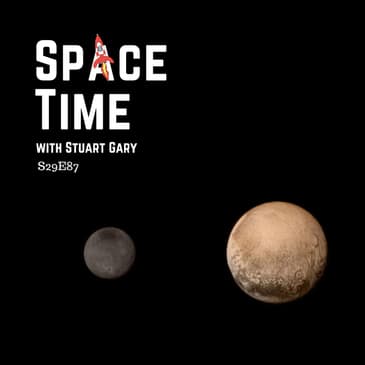
00:00:21 --> 00:00:23 binary partner Sharon out in the Kuiper Belt.
00:00:24 --> 00:00:26 All that and more coming up, uh, on Space
00:00:26 --> 00:00:29 Time. Welcome to
00:00:29 --> 00:00:31 Space Time with Stuart Gary.
00:00:47 --> 00:00:50 A new study has shown how ancient Martian
00:00:50 --> 00:00:52 rocks exposed on the rim of Jezero Crater are
00:00:52 --> 00:00:55 preserving a 3.9 billion year old weather
00:00:55 --> 00:00:57 report from the solar system's most dynamic
00:00:58 --> 00:01:01 era. NASA's Mars Perseverance Rover
00:01:01 --> 00:01:03 has uncovered evidence that a 75 metre
00:01:03 --> 00:01:06 thick stack of debris around the Jezero
00:01:06 --> 00:01:08 crater rim, known as the Broom Point member,
00:01:08 --> 00:01:11 was built up by repeated asteroid impacts.
00:01:11 --> 00:01:13 The sequence of layered bedrock is likely
00:01:13 --> 00:01:16 more than 3.9 billion years old, making
00:01:16 --> 00:01:18 it among the oldest terrain ever examined on
00:01:18 --> 00:01:21 the Red Planet. The findings, reported in the
00:01:21 --> 00:01:23 Journal of Geophysical Research Planets,
00:01:23 --> 00:01:25 offers a new window into one of the most
00:01:25 --> 00:01:27 tumultuous chapters in the history of the
00:01:27 --> 00:01:30 solar system. Mars Perseverance Rover project
00:01:30 --> 00:01:32 scientist ken Farley from NASA's Jet
00:01:32 --> 00:01:34 Propulsion Laboratory in Pasadena, California
00:01:34 --> 00:01:36 says that since leaving the crater,
00:01:36 --> 00:01:38 Perseverance has been exploring a chapter of
00:01:38 --> 00:01:41 Martian time that predates the crater itself.
00:01:42 --> 00:01:44 Planet Earth's earliest geological history
00:01:44 --> 00:01:47 has been fundamentally broken up, deformed
00:01:47 --> 00:01:49 and arrays, partly thanks to plate tectonics.
00:01:50 --> 00:01:52 But because Mars lacks plate tectonics to
00:01:52 --> 00:01:55 recycle its crust, this ancient record
00:01:55 --> 00:01:57 remains intact, giving scientists a rare
00:01:57 --> 00:02:00 opportunity to glimpse geological time time
00:02:00 --> 00:02:02 period that doesn't exist on Earth. After
00:02:02 --> 00:02:05 ascending the western rim of Jezero crater in
00:02:05 --> 00:02:07 early 2025, Perseverance began
00:02:07 --> 00:02:10 examining Broome Point. The data has
00:02:10 --> 00:02:12 revealed six distinct rock types, including
00:02:12 --> 00:02:14 breccias, I.e. rocks built up from angular
00:02:14 --> 00:02:16 fragments alternating with layers of fine
00:02:16 --> 00:02:19 grained pulverised rock dust. The rock
00:02:19 --> 00:02:21 fragments within the breccias, uh, are pocked
00:02:21 --> 00:02:23 with glass bubble cavities, indicating they
00:02:23 --> 00:02:26 were once molten. The presence of tiny
00:02:26 --> 00:02:28 dark glassy beads within these layers offers
00:02:28 --> 00:02:31 an important clue about how the rocks were
00:02:31 --> 00:02:33 form. See, while volcanoes can produce
00:02:33 --> 00:02:36 similar glassy droplets, they rarely occur in
00:02:36 --> 00:02:38 such high abundance that points to an
00:02:38 --> 00:02:41 asteroid impact instead. In fact, the largest
00:02:41 --> 00:02:43 of these beads rivals those flung up by the
00:02:43 --> 00:02:45 dinosaur killing Chicxulub asteroid impact on
00:02:45 --> 00:02:48 Earth 66 million years ago. Because
00:02:48 --> 00:02:50 these distinct rock types repeat multiple
00:02:50 --> 00:02:52 times throughout the thick sequence of rock,
00:02:52 --> 00:02:55 it indicates that high energy impact events
00:02:55 --> 00:02:57 happened again and again across this region
00:02:57 --> 00:03:00 of early Mars. The different rock layers
00:03:00 --> 00:03:02 provide a record of different impact sizes
00:03:02 --> 00:03:04 and different distances. From the Jezero
00:03:04 --> 00:03:07 crater rim, several of the layers look like
00:03:07 --> 00:03:09 they may have been formed by fast ground
00:03:09 --> 00:03:12 hugging debris flows. On Earth, these
00:03:12 --> 00:03:14 powerful fluid like surges can occur when
00:03:14 --> 00:03:17 molten rock hits water or ice that instantly
00:03:17 --> 00:03:20 flashes into steam. Some of Broom Point's
00:03:20 --> 00:03:22 layers tilt at angles exceeding 80 degrees
00:03:22 --> 00:03:25 nearly vertical. And that's far too steep
00:03:25 --> 00:03:27 because by the impact that created Jezero
00:03:27 --> 00:03:30 Crater itself. Instead, scientists
00:03:30 --> 00:03:32 suspect a cosmic one two punch shaped its
00:03:32 --> 00:03:35 landscape long ago. First, a colossal
00:03:35 --> 00:03:37 asteroid impact created the 1900 kilometre
00:03:37 --> 00:03:39 wide Odysseus basin, one of the largest
00:03:39 --> 00:03:42 impact basins on Mars. Upending and tilting
00:03:42 --> 00:03:45 the once flat rock layers. Later, a
00:03:45 --> 00:03:48 second asteroid hit, likely forming the 45
00:03:48 --> 00:03:49 kilometre wide Jezero crater, uh, where
00:03:49 --> 00:03:52 Perseverance landed. This second impact
00:03:52 --> 00:03:54 fractured and uplifted the already tilted
00:03:54 --> 00:03:56 rocks into the dramatic formations which the
00:03:56 --> 00:03:59 rovers ceased today. To pin
00:03:59 --> 00:04:02 down exactly when these events took place,
00:04:02 --> 00:04:04 Perseverance mission managers collected two
00:04:04 --> 00:04:06 core samples dubbed Bell island and Main
00:04:06 --> 00:04:09 River. Uh, if a future sample return mission
00:04:09 --> 00:04:12 to Mars takes place, those samples could be
00:04:12 --> 00:04:14 brought back to Earth for dating in order to
00:04:14 --> 00:04:16 determine when and how often impacts were
00:04:16 --> 00:04:19 striking early Mars and then by extension how
00:04:19 --> 00:04:21 those impacts would have affected the early
00:04:21 --> 00:04:23 Earth, where the early impact record has been
00:04:23 --> 00:04:26 erased thanks to billions of years of plate
00:04:26 --> 00:04:28 tectonics and wind and water erosion.
00:04:29 --> 00:04:32 These are just the latest finding by the KSI
00:04:32 --> 00:04:34 six wheel Perseverance rover since it arrived
00:04:34 --> 00:04:37 on the Red planet back in February 2021.
00:04:37 --> 00:04:39 This report from NASA TV.
00:04:39 --> 00:04:42 Ken Farley: You know, Mars is the closest place that we
00:04:42 --> 00:04:45 can reach with robotic exploration that we
00:04:45 --> 00:04:46 think had a really good chance of having
00:04:46 --> 00:04:47 ancient life.
00:04:47 --> 00:04:50 Katie Stack Morgan: Jezero Crater is a very interesting place.
00:04:50 --> 00:04:53 It's a crater that once held a lake.
00:04:53 --> 00:04:54 Ken Farley: There are a lot of craters on, um, the
00:04:54 --> 00:04:57 surface of Mars that could have once hosted
00:04:57 --> 00:04:59 ancient lakes. But not every crater that we
00:04:59 --> 00:05:02 think had a LA actually preserves evidence
00:05:02 --> 00:05:03 that that lake was there.
00:05:03 --> 00:05:05 Katie Stack Morgan: It had an inflow channel and it had an
00:05:05 --> 00:05:07 outflow channel. That means it was filled,
00:05:07 --> 00:05:09 the crater was filled with water.
00:05:09 --> 00:05:12 Ken Farley: In Jezero, we have probably one of the most
00:05:12 --> 00:05:15 beautifully preserved delta deposits on
00:05:15 --> 00:05:16 Mars in that crater.
00:05:17 --> 00:05:19 Katie Stack Morgan: This is a wonderful place to live for
00:05:19 --> 00:05:21 microorganisms and it is also a wonderful
00:05:21 --> 00:05:24 place for those microorganisms to be
00:05:24 --> 00:05:27 preserved so that we can find them now, so
00:05:27 --> 00:05:28 many billions of years later.
00:05:28 --> 00:05:30 Ken Farley: There is no other place on Mars that has the
00:05:30 --> 00:05:33 unique combination of a LA setting, a
00:05:33 --> 00:05:35 beautifully preserved delta and the diverse
00:05:35 --> 00:05:37 mineralogy that we have in Jezero Crater. So
00:05:37 --> 00:05:39 it's truly a special landing site.
00:05:40 --> 00:05:43 Katie Stack Morgan: The major goal of the Perseverance mission
00:05:43 --> 00:05:45 is to investigate
00:05:45 --> 00:05:48 astrobiology on Mars and in particular to
00:05:48 --> 00:05:50 address the question of whether life ever
00:05:50 --> 00:05:53 existed on Mars. The Perseverance
00:05:53 --> 00:05:54 rover starts with a design that's very
00:05:54 --> 00:05:57 similar to Curiosity but we've added to it a
00:05:57 --> 00:05:59 whole new set of science instruments. And
00:05:59 --> 00:06:01 these science instruments were purposefully
00:06:01 --> 00:06:04 selected to help us in the search for
00:06:04 --> 00:06:07 biosignatures. Perseverance carries with
00:06:07 --> 00:06:10 her a uh, grand experiment in space faring
00:06:10 --> 00:06:13 technology, a helicopter ingenuity.
00:06:13 --> 00:06:16 Ken Farley: One of the major upgrades that Perseverance
00:06:16 --> 00:06:19 has from Curiosity is that it's able to self
00:06:19 --> 00:06:21 drive for a distance of up to 200
00:06:21 --> 00:06:24 metres per day as the rover is driving
00:06:24 --> 00:06:27 it's literally building the map of the road
00:06:27 --> 00:06:29 it's driving on on Mars.
00:06:30 --> 00:06:32 Katie Stack Morgan: Scientists for years have told us that to
00:06:32 --> 00:06:35 really unlock the secrets of Mars
00:06:35 --> 00:06:37 we have to bring samples from Mars back to
00:06:37 --> 00:06:40 Earth. Drill samples, put them in
00:06:40 --> 00:06:43 small tubes, we set them on the surface
00:06:43 --> 00:06:45 to provide a target for the second two
00:06:45 --> 00:06:47 missions which hopefully will get in
00:06:47 --> 00:06:49 development in the next several years and
00:06:49 --> 00:06:51 could potentially get the samples back to
00:06:51 --> 00:06:53 Earth by 2031.
00:06:54 --> 00:06:57 Perseverance is a very, very profound
00:06:57 --> 00:07:00 first step in both our
00:07:00 --> 00:07:02 understanding and of our place in
00:07:02 --> 00:07:05 the universe and a, ah, stepping stone
00:07:05 --> 00:07:07 towards human exploration on Mars.
00:07:12 --> 00:07:15 Stuart Gary: And in that report from NASA TV we heard from
00:07:15 --> 00:07:16 Mars Perseverance rover deputy project
00:07:16 --> 00:07:19 scientist Katie Stack Morgan from NASA jpl,
00:07:19 --> 00:07:22 Mars Perseverance rover project scientist Ken
00:07:22 --> 00:07:25 Farley also from NASA jpl, Mars
00:07:25 --> 00:07:27 Perseverance rover deputy project manager
00:07:27 --> 00:07:29 Matt Wallace, another JPL representative
00:07:29 --> 00:07:32 Mars Perseverance rover chief engineer Adam
00:07:32 --> 00:07:35 Steltzner, also from jpl and another
00:07:35 --> 00:07:37 JPL scientist, Mars Perseverance rover
00:07:37 --> 00:07:40 mobility team member Farrah Alabay.
00:07:40 --> 00:07:43 This is space time still to come.
00:07:43 --> 00:07:45 Understanding the Moon's regolith in
00:07:45 --> 00:07:47 preparation for future human missions to the
00:07:47 --> 00:07:50 lunar surface. And we cheque out the strange
00:07:50 --> 00:07:53 goings on on Pluto's binary partner
00:07:53 --> 00:07:55 Sharon out in the Kuiper Belt. All that
00:07:55 --> 00:07:58 and more still to come on space time.
00:08:14 --> 00:08:16 Scientists have mapped out the thickness of
00:08:16 --> 00:08:19 the Moon's regolith, a layer of loose dust
00:08:19 --> 00:08:21 and rock that covers the entire lunar
00:08:21 --> 00:08:23 surface, finding it averages around 6 metres
00:08:23 --> 00:08:25 in the Highlands and around 4 metres on the
00:08:25 --> 00:08:28 maria. The data reported in the
00:08:28 --> 00:08:30 Planetary Science Journal are uh, based on
00:08:30 --> 00:08:32 the analysis of more than 300 small and
00:08:32 --> 00:08:34 freshly formed impact craters across the
00:08:34 --> 00:08:36 lunar surface. Together with data collected
00:08:36 --> 00:08:38 from lunar missions dating all the way Back
00:08:38 --> 00:08:40 to the 1970s Apollo era,
00:08:41 --> 00:08:44 the Study's lead author, Andrea Razik from
00:08:44 --> 00:08:46 Brown University, says understanding the
00:08:46 --> 00:08:48 lunar surface is important for future manned
00:08:48 --> 00:08:51 missions to the Moon. Our moon is under
00:08:51 --> 00:08:53 constant bombardment from meteorites and
00:08:53 --> 00:08:55 other impactors, which are the main drivers
00:08:55 --> 00:08:58 creating the lunar regolith layer. The
00:08:58 --> 00:09:01 authors looked at 346 relatively fresh
00:09:01 --> 00:09:03 lunar craters, examining the blanket of
00:09:03 --> 00:09:06 debris surrounding each crater. Impacts that
00:09:06 --> 00:09:08 penetrate through the regular fillet or reach
00:09:08 --> 00:09:10 bedrock eject massive boulders onto the
00:09:10 --> 00:09:12 surface, which are clearly visible in um,
00:09:12 --> 00:09:15 satellite images. Once Razek and colleagues
00:09:15 --> 00:09:17 determined which craters exposed bedrock and
00:09:17 --> 00:09:19 which did not, they used known relationships
00:09:19 --> 00:09:22 between crater diameter and depth to estimate
00:09:22 --> 00:09:24 regular thickness regionally right across the
00:09:24 --> 00:09:27 lunar surface. And the findings resulted in
00:09:27 --> 00:09:29 revealing patterns in lunar regular
00:09:29 --> 00:09:32 thickness. The lunar highlands were found to
00:09:32 --> 00:09:34 average around 6 metres deep, while the
00:09:34 --> 00:09:35 lowlands where the maria, uh, are were
00:09:35 --> 00:09:38 thinner, around four metres. That matches
00:09:38 --> 00:09:40 previous hypotheses. Scientists have long
00:09:40 --> 00:09:42 thought that regolith is likely to be thicker
00:09:42 --> 00:09:45 in more ancient terrains such as the lunar
00:09:45 --> 00:09:47 highlands, compared to the maria, the large
00:09:47 --> 00:09:49 volcanic plains visible as the dark patches
00:09:49 --> 00:09:52 on the lunar near side. Depending on
00:09:52 --> 00:09:54 the objectives of a given Artemis mission,
00:09:54 --> 00:09:56 landing where there's more or less regolith
00:09:56 --> 00:09:58 could be an important factor in mission
00:09:58 --> 00:10:01 planning. Razak says. In a situation where
00:10:01 --> 00:10:03 you want to build a lunar base, thinner
00:10:03 --> 00:10:05 regolith could make it easier to reach more
00:10:05 --> 00:10:07 competent material for foundations, depending
00:10:07 --> 00:10:09 on the construction method. On the other
00:10:09 --> 00:10:10 hand, if you're thinking about resource
00:10:10 --> 00:10:12 utilisation, there may be a lot of useful
00:10:12 --> 00:10:14 things trapped in the regolith, like water
00:10:14 --> 00:10:17 ice and helium 3. This is
00:10:17 --> 00:10:20 space time. Still to come, a new
00:10:20 --> 00:10:23 study finds the rotation of Pluto's binary
00:10:23 --> 00:10:25 partner Charon is slowing down. And later in
00:10:25 --> 00:10:28 the Science report, a new study has revealed
00:10:28 --> 00:10:30 that heart disease can be linked to nine
00:10:30 --> 00:10:32 specific molecules produced by your gut
00:10:32 --> 00:10:34 biota. Ah, all that and more. Still to come
00:10:35 --> 00:10:36 on, um, space time.
00:10:52 --> 00:10:54 A new study has found that the rotation of
00:10:54 --> 00:10:56 Pluto's binary partner Charon is slowing
00:10:56 --> 00:10:59 down. The findings reported in the journal
00:10:59 --> 00:11:01 Nature Communications, are, uh, based on new
00:11:01 --> 00:11:03 computer simulations of this distant Kuiper
00:11:03 --> 00:11:06 Belt world beyond Neptune. The study's
00:11:06 --> 00:11:08 authors say Charon spins around every
00:11:08 --> 00:11:11 153.3 hours. That's
00:11:11 --> 00:11:13 much slower than its original spin cycle of
00:11:13 --> 00:11:16 around 14.3 hours, suggesting a gradual
00:11:16 --> 00:11:18 slowing down or despinning of its
00:11:18 --> 00:11:21 rotation. The authors say celestial bodies
00:11:21 --> 00:11:23 across the solar system are thought to
00:11:23 --> 00:11:25 undergo some degree of despinning in which
00:11:25 --> 00:11:28 tidal forces slow their rotational rate,
00:11:28 --> 00:11:30 altering their shape and temperature.
00:11:31 --> 00:11:33 Although this same process had long been
00:11:33 --> 00:11:35 theorised to occur on Charon Clear evidence
00:11:35 --> 00:11:38 has been lacking, but Charon is a promising
00:11:38 --> 00:11:41 candidate for such evidence as its 4 billion
00:11:41 --> 00:11:43 year old surface has experienced relatively
00:11:43 --> 00:11:45 limited resurfacing compared to other icy
00:11:45 --> 00:11:48 bodies. The new findings are based on a
00:11:48 --> 00:11:50 detailed study of variations in the
00:11:50 --> 00:11:53 orientations and types of tectonic features
00:11:53 --> 00:11:55 of mountain ranges in the Oz terra region of
00:11:55 --> 00:11:58 Sharon's northern hemisphere. These features
00:11:58 --> 00:12:01 extend over more than 200 kilometres and show
00:12:01 --> 00:12:04 asymmetric slopes consistent with compression
00:12:04 --> 00:12:07 rather than extension. The study's computer
00:12:07 --> 00:12:10 simulations suggest a uh, 30 to 36 kilometre
00:12:10 --> 00:12:12 thick ice shell cloaked Charon when it was
00:12:12 --> 00:12:14 formed and that the crust near the equator is
00:12:14 --> 00:12:17 shrunk by about 1% with the compression
00:12:17 --> 00:12:19 absorbed along existing fault lines and
00:12:19 --> 00:12:22 creating ridges as the frozen world aged.
00:12:22 --> 00:12:24 This is spacetime.
00:12:30 --> 00:12:30 Foreign.
00:12:41 --> 00:12:43 Look at some of the other storeys making news
00:12:43 --> 00:12:45 in Science this week with a Science report.
00:12:46 --> 00:12:48 A new study warns that having heart disease
00:12:48 --> 00:12:50 could be linked to nine specific molecules
00:12:50 --> 00:12:53 that are produced by your gut biota. A report
00:12:53 --> 00:12:55 in the General PLOS Medicine analysed the
00:12:55 --> 00:12:58 blood of several thousand people and found
00:12:58 --> 00:13:00 Several gut micrometabolites, I.e.
00:13:00 --> 00:13:02 compounds created by gastrointestinal biota,
00:13:02 --> 00:13:04 uh, that were associated with the risk of
00:13:04 --> 00:13:07 developing coronary heart disease. The
00:13:07 --> 00:13:09 authors then used that data to validate and
00:13:09 --> 00:13:11 refine the link, accounting for other factors
00:13:11 --> 00:13:13 that could be associated to heart disease,
00:13:13 --> 00:13:16 such as age, family health history and diet.
00:13:17 --> 00:13:20 They say the nine gut microbiota found in the
00:13:20 --> 00:13:21 blood could be used to determine whether a
00:13:21 --> 00:13:23 patient has a higher or lower chance of
00:13:23 --> 00:13:25 developing heart issues and it could be a
00:13:25 --> 00:13:27 promising avenue for the development of new
00:13:27 --> 00:13:29 treatments to help prevent coronary heart
00:13:29 --> 00:13:32 disease. A new study
00:13:32 --> 00:13:34 has found that more than a billion people
00:13:34 --> 00:13:36 around the world now face at least one day of
00:13:36 --> 00:13:39 extreme heat stress every year compared with
00:13:39 --> 00:13:42 the 1970s. The findings, reported in
00:13:42 --> 00:13:44 the journal Nature Climate Change, analysed a
00:13:44 --> 00:13:46 global data set of human heat stress from
00:13:46 --> 00:13:49 1950 to 2024 and found that feels
00:13:49 --> 00:13:50 like temperatures have risen on the warmest
00:13:50 --> 00:13:53 days and nights since the 1970s, with nights
00:13:53 --> 00:13:56 warming up faster than days. The authors
00:13:56 --> 00:13:58 say extreme feels like temperatures are now
00:13:58 --> 00:14:01 more frequent on every continent and exposure
00:14:01 --> 00:14:03 to at least 1 of extreme heat stress has
00:14:03 --> 00:14:05 risen from 16 to 22% of the global
00:14:05 --> 00:14:08 population. That's around a billion people.
00:14:09 --> 00:14:12 A new study claims consuming an avocado every
00:14:12 --> 00:14:14 day lowers the risk of heart disease in
00:14:14 --> 00:14:17 people with obesity. The findings reported
00:14:17 --> 00:14:19 in the Journal of Clinical Lipidology are uh,
00:14:19 --> 00:14:22 based on a six month study. The authors found
00:14:22 --> 00:14:24 that people with obesity who ate an avocado
00:14:24 --> 00:14:26 every day reduced their blood levels of low
00:14:26 --> 00:14:28 density lipoprotein particles, which
00:14:28 --> 00:14:30 transport low density lipoproteins, the so
00:14:30 --> 00:14:33 called or bad cholesterol. The authors found
00:14:33 --> 00:14:35 that regular avocado consumption was
00:14:35 --> 00:14:37 associated with an approximate 4% reduction
00:14:37 --> 00:14:40 in heart disease risk. The risk posed by
00:14:40 --> 00:14:42 low density lipoprotein particles is
00:14:42 --> 00:14:45 typically higher in people with abdominal
00:14:45 --> 00:14:47 obesity. Mind you, it's worth pointing out
00:14:47 --> 00:14:50 that this study was supported by the Avocado
00:14:50 --> 00:14:51 Nutrition Centre.
00:14:52 --> 00:14:55 A new study has shown that just like people,
00:14:55 --> 00:14:57 monkeys appear to dislike artificial
00:14:57 --> 00:14:59 intelligence avatars that look like them but
00:14:59 --> 00:15:01 uh, are just a little bit wrong, an effect
00:15:01 --> 00:15:04 known as the uncanny valley. A report in
00:15:04 --> 00:15:06 the journal plus Biology claims that at first
00:15:06 --> 00:15:09 monkeys responded to AI monkey avatars just
00:15:09 --> 00:15:11 as they would the footage of real monkeys,
00:15:11 --> 00:15:13 suggesting that they thought the animated
00:15:13 --> 00:15:15 monkeys were real. However, when they
00:15:15 --> 00:15:17 progressively tweaked the animation to look
00:15:17 --> 00:15:19 less and less realistic, they found the
00:15:19 --> 00:15:21 monkeys paid less attention to those with any
00:15:21 --> 00:15:23 slight changes compared to either the truly
00:15:23 --> 00:15:25 realistic ones or, or the more unrealistic
00:15:25 --> 00:15:28 versions. The authors say this shows that
00:15:28 --> 00:15:30 monkeys similar to people show an uncanny
00:15:30 --> 00:15:33 valley where almost realistic stimuli are,
00:15:33 --> 00:15:35 ah, liked less than ones that are highly
00:15:35 --> 00:15:37 realistic or very unrealistic.
00:15:39 --> 00:15:41 Apple have just released the public beta
00:15:41 --> 00:15:43 version of their new iOS 27 operating system
00:15:43 --> 00:15:46 ahead of its September launch. With the
00:15:46 --> 00:15:48 details, we're joined by technology editor
00:15:48 --> 00:15:51 Alex Zaharov Vroit from TechAdvice Live who's
00:15:51 --> 00:15:51 been testing the programme.
00:15:52 --> 00:15:54 Jonathan Nally: Apple has launched the beta, public beta
00:15:54 --> 00:15:56 versions of its operating system for the
00:15:56 --> 00:15:58 iPhone, the iPad, the Mac, the watch,
00:15:59 --> 00:16:01 Apple TV and uh, the big feature is
00:16:01 --> 00:16:04 Siri AI. The rest of it is more or less a
00:16:04 --> 00:16:07 cleanup of uh, the previous iOS
00:16:07 --> 00:16:09 26. They've managed to make it more
00:16:09 --> 00:16:11 efficient, make apps load faster. Now the
00:16:11 --> 00:16:14 image generator can generate photorealistic
00:16:14 --> 00:16:15 images. Before there were sort of three
00:16:15 --> 00:16:17 cartoony styles and it sort of almost felt
00:16:17 --> 00:16:19 for a lot of people that iOS 26 was one big
00:16:19 --> 00:16:22 long beta programme and that iOS 27 is
00:16:22 --> 00:16:24 the one that fixes the bugs, cleans it up,
00:16:24 --> 00:16:26 makes things nice and fast. I've been running
00:16:26 --> 00:16:29 the developer beta on an older iPhone, but as
00:16:29 --> 00:16:32 of the time that the beta was available for
00:16:32 --> 00:16:34 the public, I backed up my photos on my
00:16:34 --> 00:16:36 phone. I already had the rest of it backed up
00:16:36 --> 00:16:39 to icloud and I downloaded the update. It was
00:16:39 --> 00:16:41 I think 30 gigabytes or something. It was
00:16:41 --> 00:16:43 quite large, took a while to download, but
00:16:43 --> 00:16:45 I've got a pretty fast connection at home and
00:16:45 --> 00:16:47 you know, I put it on and more or less I've
00:16:47 --> 00:16:49 forgotten that I have a Beta on there. I've
00:16:49 --> 00:16:51 noticed the battery going flat a little bit
00:16:51 --> 00:16:53 faster on my phone and watch. But the big
00:16:53 --> 00:16:54 thing that you notice straight away is Siri
00:16:54 --> 00:16:57 AI. Now you need to have an iPhone 15 Pro, 16
00:16:57 --> 00:17:00 Pro or 17 Pro to be able to use the latest
00:17:00 --> 00:17:02 features of Siri AI. If you have an older
00:17:02 --> 00:17:04 iPhone, it would just appear to be like last
00:17:04 --> 00:17:06 year's version of Siri. You should still get
00:17:06 --> 00:17:09 access to the Siri model that gives you
00:17:09 --> 00:17:11 world information and better results. But
00:17:11 --> 00:17:13 with the newest iPhones you can actually also
00:17:13 --> 00:17:15 now have a much more natural human sounding
00:17:15 --> 00:17:17 voice and you can customise its pitch and its
00:17:17 --> 00:17:19 tone and expressiveness. But again that's
00:17:19 --> 00:17:21 only on the large devices. But you can now
00:17:21 --> 00:17:23 have a Siri AI app which is like the ChatGPT
00:17:23 --> 00:17:25 app or the Claude app. Ask all sorts of
00:17:25 --> 00:17:27 questions, they have a record of what it is
00:17:27 --> 00:17:28 you've spoken about and be able to go
00:17:28 --> 00:17:30 backwards and forwards and get intelligent
00:17:30 --> 00:17:33 answers from Siri AI, just like you would
00:17:33 --> 00:17:35 expect to get from Gemini, ChatGPT or
00:17:35 --> 00:17:38 Claude. And the ability for the phone to
00:17:38 --> 00:17:40 actually understand what you're asking it to
00:17:40 --> 00:17:41 do and then to be able to get the phone to do
00:17:41 --> 00:17:43 things, whether it's set appointments or look
00:17:43 --> 00:17:46 for information from SMS messages or emails
00:17:46 --> 00:17:48 or documents that you've saved about what the
00:17:48 --> 00:17:50 password is for a place you're staying at, or
00:17:50 --> 00:17:52 what the code is for a lock that you've got,
00:17:52 --> 00:17:54 or you know, who it is that you met a few
00:17:54 --> 00:17:57 weeks ago at a certain cafe. That information
00:17:57 --> 00:17:59 is now going to be much more easily able to
00:17:59 --> 00:18:02 be surfaced because Apple has improve the
00:18:02 --> 00:18:04 search and indexing on your phone. And in
00:18:04 --> 00:18:05 fact one of the complaints when you put the
00:18:05 --> 00:18:08 new beta version on is that it takes, it can
00:18:08 --> 00:18:09 take a while, uh, a day or two for it to
00:18:09 --> 00:18:11 fully index all the information on your
00:18:11 --> 00:18:13 phone. But the whole idea is that that
00:18:13 --> 00:18:15 information is not shared to the Internet and
00:18:15 --> 00:18:18 to other people. No one's using your
00:18:18 --> 00:18:20 information to train the model so you get
00:18:20 --> 00:18:22 Apple's privacy, but you also get a much more
00:18:22 --> 00:18:24 satisfying experience of being able to find
00:18:24 --> 00:18:26 things whether you're doing a quick search or
00:18:26 --> 00:18:27 doing a more deeper search. And so look, the
00:18:27 --> 00:18:29 first bidder is out. I haven't really noticed
00:18:29 --> 00:18:31 any show stopping bugs of any sort. I've
00:18:31 --> 00:18:33 forgotten that if it's there, but it just
00:18:33 --> 00:18:35 feel snappier and faster and Siri is actually
00:18:35 --> 00:18:36 now worth a day.
00:18:36 --> 00:18:38 Stuart Gary: That's Alex Zaharov Vroid from Tech Advice
00:18:38 --> 00:18:41 Start Life and this is space time.
00:18:56 --> 00:18:59 And that's the show for now. Space Time
00:18:59 --> 00:19:01 is available every Monday, Wednesday and
00:19:01 --> 00:19:04 Friday through bytes.com, soundcloud,
00:19:04 --> 00:19:07 YouTube, your favourite podcast download
00:19:07 --> 00:19:08 provider, and from
00:19:08 --> 00:19:10 spacetimewithstuartgarry.com
00:19:11 --> 00:19:13 spacetime's also broadcast through the
00:19:13 --> 00:19:15 National Science foundation on Science Zone
00:19:15 --> 00:19:18 Radio and on both iHeartradio and TuneIn
00:19:18 --> 00:19:20 radio. And you can help to support our show
00:19:20 --> 00:19:23 by visiting the Space Time Store for a range
00:19:23 --> 00:19:26 of promotional merchandising goodies, or by
00:19:26 --> 00:19:28 becoming a Space Time Patron, which gives you
00:19:28 --> 00:19:30 access to triple episode commercial free
00:19:30 --> 00:19:32 versions of the show, as well as lots of
00:19:32 --> 00:19:35 bonus audio content which doesn't go to air,
00:19:35 --> 00:19:37 access to our exclusive Facebook group, and
00:19:37 --> 00:19:39 other rewards. Just go to
00:19:39 --> 00:19:42 spacetimewithstuartgarry.com for full
00:19:42 --> 00:19:45 details. You've been listening to Space Time
00:19:45 --> 00:19:47 with Stuart Gary. This has been another
00:19:47 --> 00:19:50 quality podcast production from bytes.com.