
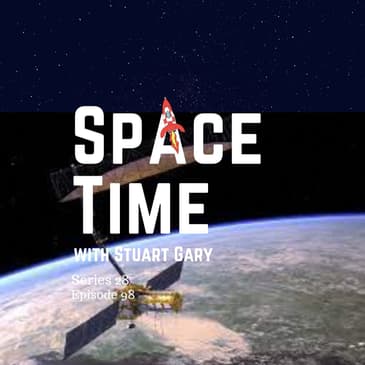
NISAR: A New Era in Earth Observation
The Indian Space Research Organisation (ISRO) has successfully launched the NISAR satellite, a joint mission with NASA that promises to revolutionise our understanding of Earth's dynamic systems. This advanced synthetic aperture radar satellite will monitor changes in forests, wetlands, and ice-covered surfaces with unprecedented detail, providing crucial data for disaster response, infrastructure management, and climate change studies. With its ability to see through clouds and operate day and night, NISAR will deliver vital insights into the planet's movements and environmental changes every 12 days, enhancing our preparedness for natural hazards.
A New Hypothesis on the Universe's Origins
In a significant shift in cosmological theory, scientists have proposed a new model that explains the universe's early moments without relying on speculative elements. This revolutionary hypothesis, reported in the journal Physical Review Research, suggests that natural quantum fluctuations in a state known as de Sitter space could account for the density differences that led to the formation of galaxies and stars. By eliminating arbitrary parameters, this model offers a clearer understanding of the cosmos and poses fundamental questions about our existence and origins.
Russia's Commitment to the International Space Station
In a surprising announcement, Russia has confirmed its intention to remain a partner in the International Space Station (ISS) project until at least 2028, despite previous threats to withdraw. This decision comes amid ongoing geopolitical tensions and technical challenges within the Russian segment of the ISS. As the global space community continues to evolve, Russia's commitment ensures continued collaboration in low Earth orbit, even as plans for an independent Russian space station progress.
www.spacetimewithstuartgary.com
✍️ Episode References
Physical Review Research
https://journals.aps.org/prresearch/
NASA NISAR Mission
https://www.nasa.gov/nisar
Become a supporter of this podcast: https://www.spreaker.com/podcast/spacetime-space-astronomy--2458531/support.
00:00:00 --> 00:00:02 Stuart Gary: This is space time series 28 episode 98
00:00:02 --> 00:00:05 full broadcast on 15 August 2025.
00:00:06 --> 00:00:09 Coming up on Space Time. The joint American
00:00:09 --> 00:00:11 Indian NISA radar mission lifts off
00:00:12 --> 00:00:14 a new hypothesis to understand the origins of the
00:00:14 --> 00:00:17 universe. And Russia says it uh, will
00:00:17 --> 00:00:20 remain part of the International Space station project until
00:00:20 --> 00:00:23 2028. All that and more coming
00:00:23 --> 00:00:25 up on uh, Space Time.
00:00:26 --> 00:00:29 Welcome to Space Time with Stuart.
00:00:46 --> 00:00:48 The Indian Space Research Organisation ISRO
00:00:48 --> 00:00:51 has successfully launched a new joint American Indian
00:00:51 --> 00:00:53 Advanced Synthetic Aperture Radar satellite called
00:00:53 --> 00:00:56 nisar. The mission was launched aboard an Indian
00:00:56 --> 00:00:59 GSLV geosynchronous satellite launch vehicle from
00:00:59 --> 00:01:02 the Shitishtawan Space Centre in Siri Kota Province
00:01:02 --> 00:01:05 on the Bay of Be coast. Orbiting at an
00:01:05 --> 00:01:08 altitude of 747 kilometres, NISA
00:01:08 --> 00:01:11 will help protect communities by providing dynamic three
00:01:11 --> 00:01:14 dimensional images of the Earth in unprecedented detail.
00:01:14 --> 00:01:17 This will allow faster disaster response, better
00:01:17 --> 00:01:20 infrastructure monitoring as well as agricultural management
00:01:20 --> 00:01:23 opportunities. Jointly developed by NASA
00:01:23 --> 00:01:26 and isro, NISA will use two advanced radar
00:01:26 --> 00:01:29 instruments to track changes in Earth's forests and wetlands,
00:01:29 --> 00:01:32 monitor deformation and motion of the planet's frozen
00:01:32 --> 00:01:35 surfaces and detect the movement of the Earth's crust down
00:01:35 --> 00:01:38 to fractions of a centimetre, a key measurement in
00:01:38 --> 00:01:40 understanding how the land surface moves before, during
00:01:40 --> 00:01:43 and after earthquakes, volcanic eruptions and
00:01:43 --> 00:01:46 landslides. The mission's two radars
00:01:46 --> 00:01:49 will monitor nearly all of the planet's land and ice covered
00:01:49 --> 00:01:52 surfaces twice every 12 days, including
00:01:52 --> 00:01:55 areas of the polar southern hemisphere rarely covered by
00:01:55 --> 00:01:57 other Earth observing radar, uh, satellites. And
00:01:57 --> 00:02:00 unlike optical sensors, NISA will be able to see
00:02:00 --> 00:02:03 through clouds, making it possible to monitor surfaces
00:02:03 --> 00:02:06 during storms in both day and night. In
00:02:06 --> 00:02:09 the coming weeks the spacecraft will begin a roughly 90
00:02:09 --> 00:02:12 day commissioning phase. During this time it
00:02:12 --> 00:02:15 will deploy its primary 12 metre diameter radar
00:02:15 --> 00:02:18 antenna reflector. Uh, it's this reflector which
00:02:18 --> 00:02:20 will direct and receive the microwave signals coming from the
00:02:20 --> 00:02:23 two radars. By interpreting the differences
00:02:23 --> 00:02:26 between the two radars, researchers will be able to discern
00:02:26 --> 00:02:29 characteristics about the surface below. As
00:02:29 --> 00:02:32 NISAR passes over the same location twice every 12
00:02:32 --> 00:02:35 days, scientists will be able to evaluate how characteristics have
00:02:35 --> 00:02:38 changed over that time, revealing new insights
00:02:38 --> 00:02:40 about Earth's uh, dynamic surfaces.
00:02:40 --> 00:02:43 This report from NASA tv.
00:02:44 --> 00:02:46 Paul Rosen: With nisar we're tracking the changes of the
00:02:46 --> 00:02:49 solid Earth and how it's moving ecosystems,
00:02:49 --> 00:02:52 ice cover and any other thing that's
00:02:52 --> 00:02:55 changing at the scale of a centimetre on the Earth
00:02:55 --> 00:02:57 in a way that we've never been able to see before.
00:03:00 --> 00:03:02 Because of these very subtle motions we can
00:03:02 --> 00:03:05 measure, we're able to understand what's
00:03:05 --> 00:03:08 happening below. The uh, surface of the Earth at great
00:03:08 --> 00:03:11 precision we can see subsidence
00:03:11 --> 00:03:14 and that allows us then to manage resources
00:03:14 --> 00:03:15 of what's happening below the Earth.
00:03:16 --> 00:03:19 Deepak Putravu: Scientists want to study the movements of the Earth's surface,
00:03:19 --> 00:03:22 uh, to understand the processes that could trigger
00:03:22 --> 00:03:24 earthquakes, volcanoes and.
00:03:24 --> 00:03:27 Paul Rosen: Landslides and, and that allows us then to
00:03:27 --> 00:03:29 understand risks associated with natural
00:03:29 --> 00:03:30 hazards.
00:03:30 --> 00:03:33 Deepak Putravu: Which in turn can help in mitigation measures
00:03:33 --> 00:03:35 and early response. Other changes over the
00:03:35 --> 00:03:38 Earth's surface include melting of glaciers and ice
00:03:38 --> 00:03:41 sheets, changes in forest biomass, soil
00:03:41 --> 00:03:43 moisture and shoreline changes.
00:03:43 --> 00:03:46 Tim Mendham: It's based on radar, so it has two different
00:03:46 --> 00:03:49 frequency radars and it basically looks
00:03:49 --> 00:03:51 through clouds and sees the surface of the Earth.
00:03:51 --> 00:03:54 Paul Rosen: We can see day and night through clouds and
00:03:54 --> 00:03:56 uh, we're covering all of the land and all of the ice
00:03:56 --> 00:03:59 covered surfaces of Earth every week.
00:03:59 --> 00:04:02 NISAR is quite unique in that it
00:04:02 --> 00:04:04 has two radars, one provided by
00:04:05 --> 00:04:07 NASA, one provided by isro, the Indian
00:04:07 --> 00:04:09 Space Research Organisation.
00:04:11 --> 00:04:14 Chitra Rao: NASA and ISRO have collaborated in
00:04:14 --> 00:04:16 this mission. Till last year we were there at
00:04:16 --> 00:04:19 jpl, NASA where the radars
00:04:19 --> 00:04:22 got integrated and tested and were shipped back to
00:04:22 --> 00:04:22 India.
00:04:23 --> 00:04:25 Deepak Putravu: NASIR is measuring the changes on the Earth's
00:04:25 --> 00:04:28 surface which are either factors or
00:04:28 --> 00:04:31 indicators of uh, climate change. The society
00:04:31 --> 00:04:34 will also immensely benefit due to its
00:04:34 --> 00:04:36 contribution towards disaster management
00:04:36 --> 00:04:38 and providing food and water security.
00:04:40 --> 00:04:43 Paul Rosen: These things are global problems that the global community
00:04:43 --> 00:04:45 needs to come to, together to resolve.
00:04:45 --> 00:04:48 Chitra Rao: Now it looks like we are no more uh, belonging to
00:04:48 --> 00:04:51 two different worlds and we all belong to the space community.
00:04:51 --> 00:04:52 That's it.
00:04:52 --> 00:04:55 Tim Mendham: There's the excitement about what we are going to learn that
00:04:55 --> 00:04:57 we didn't even anticipate we were going to learn.
00:04:57 --> 00:04:59 Stuart Gary: And in that report from NASA TV we had from NASA project
00:05:00 --> 00:05:02 scientist Paul Rosen from NASA's Jet Propulsion
00:05:02 --> 00:05:04 Laboratory in Pasadena California.
00:05:05 --> 00:05:07 NASA Science co lead Deepak Putravu from
00:05:07 --> 00:05:10 isro, the Indian Space Research Organisation,
00:05:10 --> 00:05:13 NISA Deputy Project Manager uh, Wendy Edelston from
00:05:13 --> 00:05:16 NASA's Jet Propulsion Laboratory in Pasadena California
00:05:16 --> 00:05:19 and NISA Deputy Project Director uh, Chitra
00:05:19 --> 00:05:21 Rao from isro, the Indian Space Research
00:05:21 --> 00:05:22 Organisation.
00:05:23 --> 00:05:25 This is space time still to come,
00:05:26 --> 00:05:29 a new hypothesis to understand the origins of the
00:05:29 --> 00:05:32 universe and Russia says it will remain part of
00:05:32 --> 00:05:34 the International Space Station until at least
00:05:34 --> 00:05:37 2028. All that and more still to come
00:05:37 --> 00:05:38 um, on space time
00:05:54 --> 00:05:57 scientists have developed a revolutionary new hypothesis to
00:05:57 --> 00:05:59 try and better understand the origins of the universe
00:06:00 --> 00:06:02 without the need for speculative elements.
00:06:02 --> 00:06:05 Um, the new idea reported in the journal Physical
00:06:05 --> 00:06:08 Review Research introduces a radical change in
00:06:08 --> 00:06:10 the understanding of the first moments after the Big Bang
00:06:10 --> 00:06:13 without relying on the speculative Assumptions that
00:06:13 --> 00:06:15 physicists have traditionally needed to assume.
00:06:16 --> 00:06:19 For decades, cosmologists have worked under the
00:06:19 --> 00:06:22 inflationary paradigm. That's a model that suggests that
00:06:22 --> 00:06:24 the universe suddenly expanded extremely rapidly
00:06:24 --> 00:06:27 through cosmic inflation in just a fraction of a second,
00:06:27 --> 00:06:30 thus paving the way for everything we observe today.
00:06:31 --> 00:06:34 Cosmic inflation is the only way Scientists can
00:06:34 --> 00:06:36 explain why the universe looks the way it does
00:06:36 --> 00:06:39 today, with things looking pretty much the same in all
00:06:39 --> 00:06:42 directions. The problem is this model includes too
00:06:42 --> 00:06:45 many adjustable parameters, so called free parameters,
00:06:45 --> 00:06:48 which can be modified scientifically. This
00:06:48 --> 00:06:50 poses a problem because it makes it difficult to know whether a model
00:06:50 --> 00:06:53 is truly predicting what happened or simply adapting to the
00:06:53 --> 00:06:56 data. Now, in a significant breakthrough,
00:06:56 --> 00:06:59 Scientists have proposed a new model in which the early universe
00:06:59 --> 00:07:02 doesn't require any of these arbitrary parameters.
00:07:02 --> 00:07:05 Instead, it begins with a well established cosmic state
00:07:05 --> 00:07:08 Called de ceta space, which is consistent with
00:07:08 --> 00:07:11 current observations of dark energy. De
00:07:11 --> 00:07:14 Setter space is a theoretical concept in physics,
00:07:14 --> 00:07:16 Specifically within general relativity, Representing a
00:07:16 --> 00:07:19 universe with a positive cosmological constant Leading to
00:07:19 --> 00:07:22 an exponential expansion. It's a
00:07:22 --> 00:07:25 maximally synthetic space, Meaning it has a
00:07:25 --> 00:07:28 uniform curvature and looks the same in all locations
00:07:28 --> 00:07:30 and directions. Think of it as sort of like being an empty
00:07:30 --> 00:07:33 universe With a repulsive force, the cosmological
00:07:33 --> 00:07:36 constant, what we call dark energy, which is
00:07:36 --> 00:07:38 causing it to expand even without any matter.
00:07:39 --> 00:07:42 The new model doesn't rely on any hypothetical
00:07:42 --> 00:07:44 fields or particles, Such as cosmic inflation.
00:07:45 --> 00:07:48 Instead, it suggests that natural quantum fluctuations
00:07:48 --> 00:07:50 in space time Were sufficient to see the small
00:07:50 --> 00:07:53 density differences that eventually gave rise to
00:07:53 --> 00:07:56 galaxies, stars, and planets. These ripples
00:07:56 --> 00:07:59 evolve nonlinearly, interacting and generating
00:07:59 --> 00:08:01 complexity over time, Allowing for verifiable
00:08:01 --> 00:08:04 predictions with real data. The study's lead author,
00:08:04 --> 00:08:07 Raul Jimenez, from the University of Barcelona, says
00:08:07 --> 00:08:10 that for decades, Scientists have tried to understand the early
00:08:10 --> 00:08:13 moments of the universe Using models based on elements
00:08:13 --> 00:08:16 we've never observed. He says what makes this
00:08:16 --> 00:08:18 proposal so exciting Is its simplicity and
00:08:18 --> 00:08:21 variability. It doesn't add any speculative
00:08:21 --> 00:08:24 elements, but rather demonstrates that gravity and
00:08:24 --> 00:08:27 quantum mechanics May be sufficient to explain how
00:08:27 --> 00:08:30 the structure of the cosmos came into being. He
00:08:30 --> 00:08:33 says understanding the origins of the universe Is not
00:08:33 --> 00:08:36 just a philosophical question, but it actually helps
00:08:36 --> 00:08:38 answer fundamental questions about who we are
00:08:39 --> 00:08:40 and where we came from.
00:08:41 --> 00:08:44 This space time still to come.
00:08:44 --> 00:08:47 Russia to remain a partner with the International Space
00:08:47 --> 00:08:50 Station until at least 2028. And later in the
00:08:50 --> 00:08:53 science report, a new study has found that walking
00:08:53 --> 00:08:55 40 steps a minute faster could be enough to help
00:08:55 --> 00:08:58 older people improve their endurance and aerobic
00:08:58 --> 00:09:01 capac. All that and more still to come on, um,
00:09:01 --> 00:09:02 space time.
00:09:16 --> 00:09:19 The Russian Federal space Agency Roscosmos
00:09:19 --> 00:09:22 has announced that it will remain in partnership with the International
00:09:22 --> 00:09:25 space station until 2028.
00:09:25 --> 00:09:28 For years now, the Kremlin has been threatening to leave the International
00:09:28 --> 00:09:31 Space Station partnership. Ongoing issues,
00:09:31 --> 00:09:34 including concerns over quality control and reliability
00:09:34 --> 00:09:37 problems with Russian segments of the orbiting outpost, have
00:09:37 --> 00:09:40 caused friction with Moscow's American, European and
00:09:40 --> 00:09:42 Japanese partners. And then there was the
00:09:42 --> 00:09:45 Russian invasion of Ukraine, which triggered major
00:09:45 --> 00:09:47 sanctions by Western nations, including
00:09:47 --> 00:09:50 cooperation in space. But somehow the
00:09:50 --> 00:09:53 International Space Station project has remained
00:09:53 --> 00:09:56 insulated from these issues, at least to a degree.
00:09:56 --> 00:09:59 The West's disapproval of Moscow's actions in
00:09:59 --> 00:10:02 Ukraine led to Moscow announcing in 2022
00:10:02 --> 00:10:05 that it would leave the International Space station partnership
00:10:05 --> 00:10:08 by 2024. At the same time, the
00:10:08 --> 00:10:10 Kremlin moved forward with its plans to launch its own
00:10:10 --> 00:10:13 independent standalone space station, the ros, or
00:10:13 --> 00:10:16 Russian Orbital Space Station. And Moscow went
00:10:16 --> 00:10:19 a step further. They announced plans to team up with their new
00:10:19 --> 00:10:22 best friend China to build a joint space station on
00:10:22 --> 00:10:24 the moon's surface. One which could be operational by
00:10:24 --> 00:10:27 the2030s. The Russian orbital space
00:10:27 --> 00:10:30 station's core module, known as the Science Power Module
00:10:30 --> 00:10:33 1, was slated for launch in 2024, at which
00:10:33 --> 00:10:36 time Russia would leave the International Space Station.
00:10:36 --> 00:10:39 However, corruption within the Russian space industry, as
00:10:39 --> 00:10:42 well as ongoing construction problems and chronic funding issues
00:10:42 --> 00:10:45 has continuously delayed the project, forcing
00:10:45 --> 00:10:48 Moscow to repeatedly delay Roscosmos
00:10:48 --> 00:10:51 departure from the ISS partnership. Now the
00:10:51 --> 00:10:54 head of Roscosmos, Dmitry Bankanov, uh, says Moscow will
00:10:54 --> 00:10:57 remain as a partner with the ISS until 20.
00:10:58 --> 00:11:01 And that's just two years before NASA plans to deorbit the outpost
00:11:01 --> 00:11:03 in 2030. Anyway. The International Space
00:11:03 --> 00:11:06 Station's first modules were launched way back in
00:11:06 --> 00:11:09 1998. It was originally planned to remain
00:11:09 --> 00:11:12 in orbit until 2024, but the SO called
00:11:12 --> 00:11:15 American section of the space station, which also contains the
00:11:15 --> 00:11:18 Japanese and European modules, is operating fine.
00:11:18 --> 00:11:21 It's only the Russian segments which keep having leaks and other
00:11:21 --> 00:11:23 problems. As for what happens after the space
00:11:23 --> 00:11:26 station de orbits, several private companies are already
00:11:26 --> 00:11:29 developing plans to launch their own space stations over the next
00:11:29 --> 00:11:32 dec. And NASA, together with the European
00:11:32 --> 00:11:35 Space Agency and Japan's Aerospace Exploration Agency
00:11:35 --> 00:11:38 jaxa, uh, are already building modules for the new Lunar
00:11:38 --> 00:11:41 Gateway space Station. That'll be an orbital base in
00:11:41 --> 00:11:43 cislunar space for manned missions to the moon's
00:11:43 --> 00:11:46 surface and eventually onto Mars and
00:11:46 --> 00:11:48 beyond. This is space, time
00:12:05 --> 00:12:07 and time. Now to take another brief look at some of the other stories making
00:12:07 --> 00:12:10 news in science this week with a science report.
00:12:11 --> 00:12:13 A new study claims that walking just 14 extra
00:12:13 --> 00:12:16 steps a minute faster could be enough to help older
00:12:16 --> 00:12:19 people improve their walking endurance and aerobic
00:12:19 --> 00:12:22 capacity. A report in the journal PLOS ONE
00:12:22 --> 00:12:25 looked at a small study of around 100 people living in
00:12:25 --> 00:12:28 a retirement community. The authors found that those
00:12:28 --> 00:12:31 who increased the number of walking steps they took per minute
00:12:31 --> 00:12:34 had around a 10% increase in their chances of
00:12:34 --> 00:12:36 having an improvement in their functional capacity.
00:12:37 --> 00:12:40 Engineers from the Royal Melbourne Institute of Technology
00:12:40 --> 00:12:43 University have produced a new type of 3 dimensionally
00:12:43 --> 00:12:46 printed titanium that's about a third cheaper than
00:12:46 --> 00:12:48 currently commonly used titanium alloys.
00:12:49 --> 00:12:51 The new researcher reported in the journal Nature
00:12:51 --> 00:12:54 Communications used readily available and cheaper
00:12:54 --> 00:12:57 alternative materials to replace the increasingly expensive
00:12:57 --> 00:12:59 vanadium. The Royal Melbourne Institute of Technology
00:13:00 --> 00:13:02 has now filed a provisional patent on their innovative
00:13:02 --> 00:13:05 approach as the team considers future commercial
00:13:05 --> 00:13:06 opportunities.
00:13:07 --> 00:13:10 Palaeontologists have discovered dinosaurs from different
00:13:10 --> 00:13:13 species walking together some 76 million years
00:13:13 --> 00:13:16 ago. Sort of like herds of zebras and wildebeests do
00:13:16 --> 00:13:19 in Africa today. The findings, reported in the
00:13:19 --> 00:13:22 journal PLOS one represents the first evidence of
00:13:22 --> 00:13:24 multi species dinosaur herding behaviour.
00:13:25 --> 00:13:28 The authors say the track showed horned ceratopsians
00:13:28 --> 00:13:31 and armoured ankylosaurs travelled together during the
00:13:31 --> 00:13:33 late Cretaceous epoch across what is now
00:13:33 --> 00:13:36 Alberta in Canada. The discovery in
00:13:36 --> 00:13:39 Canada's Dinosaur Provincial park also includes tracks
00:13:39 --> 00:13:42 of two large tyrannosaurs walking perpendicular
00:13:42 --> 00:13:45 to the herd, suggesting a possible predator stalking
00:13:45 --> 00:13:48 behaviour. These findings are, uh, providing a rare
00:13:48 --> 00:13:50 snapshot into how these ancient animals interacted
00:13:50 --> 00:13:52 in their natural environment.
00:13:54 --> 00:13:56 Okay, time now for the silliest story of the week.
00:13:56 --> 00:13:59 And a British psychic who claims he was abducted by
00:13:59 --> 00:14:02 extraterrestrials back in the 1980s has now
00:14:02 --> 00:14:04 developed what he says is a five point guide to
00:14:04 --> 00:14:07 determine if you too have been the victim of an alien
00:14:07 --> 00:14:10 probing. Philip Kinsilla claims he was beamed
00:14:10 --> 00:14:13 aboard an alien spaceship, stripped down, and
00:14:13 --> 00:14:16 in true alien fashion, given the sort of probing the
00:14:16 --> 00:14:18 TSA would be proud of as to why
00:14:18 --> 00:14:21 aliens travelled light years across the galaxy just to probe
00:14:21 --> 00:14:24 him, that's still a bit of a mystery. Timms Mendham from
00:14:24 --> 00:14:26 Australian Sceptics says Kinsella claims many
00:14:26 --> 00:14:29 victims have had their own ET experience, but
00:14:29 --> 00:14:32 simply don't remember it because of alien mind
00:14:32 --> 00:14:32 control.
00:14:32 --> 00:14:35 Tim Mendham: This actually was developed by someone who reckons they
00:14:35 --> 00:14:38 were abducted by reptilian aliens when
00:14:38 --> 00:14:41 he was stripped down, probed, etc. And then he
00:14:41 --> 00:14:44 got all these sort of psychic powers. He developed these sure
00:14:44 --> 00:14:47 signs to show that you've been abducted, and I'm sure
00:14:47 --> 00:14:49 judging by how broad they are,
00:14:49 --> 00:14:52 indicates that basically everyone's been abducted at some stage or another.
00:14:52 --> 00:14:55 Some of these are pretty strange One is mysterious bumps under your skin.
00:14:55 --> 00:14:58 We're not talking about fatty substances, we're talking about implants.
00:14:58 --> 00:15:01 Right. So you can check on them. You can get an X ray or something.
00:15:01 --> 00:15:03 Stuart Gary: Pacemaker or something like that.
00:15:03 --> 00:15:06 Tim Mendham: Yeah, something more subtle than that. If you know your X
00:15:06 --> 00:15:09 files. People get implants all the time for tracking you with controlling
00:15:09 --> 00:15:12 your brain. Could be as small as a grain of rice. You can
00:15:12 --> 00:15:14 check it out with X rays just to see if it's actually there or not. So
00:15:14 --> 00:15:17 maybe you should do that. Unexplained nosebleeds. A lot of people get
00:15:17 --> 00:15:20 unexplained nosebleeds. That happens suddenly your nose starts
00:15:20 --> 00:15:20 bleeding.
00:15:20 --> 00:15:22 Stuart Gary: I have never had a nosebleed.
00:15:22 --> 00:15:23 Tim Mendham: Haven't you? No.
00:15:23 --> 00:15:24 Stuart Gary: Yeah. Never ever, ever, ever.
00:15:25 --> 00:15:27 Tim Mendham: It's not fun when you're sitting there during a meeting and your stomach starts
00:15:27 --> 00:15:30 looking. Suddenly gotta rush out and grab a hanky. You sit there looking
00:15:30 --> 00:15:32 stupid with a hanky shoved up your nose.
00:15:32 --> 00:15:33 Stuart Gary: Tissues in each nostril.
00:15:33 --> 00:15:36 Tim Mendham: So I'll explain. Nosebleeds. So suddenly you've got this bump
00:15:36 --> 00:15:39 under your skin. You've got your nose starts bleeding. Another one is
00:15:39 --> 00:15:42 strange flashbacks. Not quite sure what strange means, actually.
00:15:42 --> 00:15:45 Vivid memories of being somewhere otherworldly,
00:15:45 --> 00:15:47 perhaps. Maybe there are things locked away in your brain.
00:15:47 --> 00:15:50 Stuart Gary: Cold metal table in a dark area with.
00:15:50 --> 00:15:50 Tim Mendham: That's right.
00:15:51 --> 00:15:54 Stuart Gary: Or shoving things in places you'd rather not have them shove
00:15:54 --> 00:15:54 things.
00:15:55 --> 00:15:58 Tim Mendham: That's the irony. Because lost time. Yeah, sort of. What happened
00:15:58 --> 00:16:01 to that, uh, that 20 minutes? You know? Was I just daydreaming?
00:16:01 --> 00:16:04 Last one, I should add. Psychic powers. If you have psychic powers, you've been
00:16:04 --> 00:16:07 abducted by aliens. So that's one most people might not have.
00:16:07 --> 00:16:10 But if you do have it and your nose bleeds, you've probably been abducted.
00:16:10 --> 00:16:13 Stuart Gary: It was Howard Wolowitz from Big Bang Theory who said it best
00:16:13 --> 00:16:15 is if you're going to date someone, date someone who feels they've been abducted
00:16:15 --> 00:16:18 by aliens. Because you know that. That might have been
00:16:18 --> 00:16:19 approving.
00:16:19 --> 00:16:21 Tim Mendham: Yeah, good old Wallowitz. And he went to space.
00:16:21 --> 00:16:24 Stuart Gary: And if you Google on yout hear an astronaut scream
00:16:24 --> 00:16:26 for eight minutes, it's there. They actually did it.
00:16:26 --> 00:16:29 Wallowit's screaming for eight minutes in the SO's
00:16:29 --> 00:16:32 capsule. Very funny stuff. That's Timms Inam
00:16:32 --> 00:16:34 from Australian Sceptics.
00:16:49 --> 00:16:52 And that's the show for now. Space Time is
00:16:52 --> 00:16:55 available every Monday, Wednesday and Friday through Apple
00:16:55 --> 00:16:58 Podcasts, itunes, Stitcher, Google
00:16:58 --> 00:17:00 Podcast, Pocketcasts, Spotify,
00:17:01 --> 00:17:02 acast, Apple Music,
00:17:02 --> 00:17:05 bytes.com, soundcloud,
00:17:05 --> 00:17:08 YouTube. Your favourite podcast download provider
00:17:08 --> 00:17:10 and from spacetimewithstuartgarry.com
00:17:11 --> 00:17:14 spacetime's also broadcast through the National Science
00:17:14 --> 00:17:16 foundation on Science Zone Radio and on both
00:17:16 --> 00:17:19 iHeartradio and TuneIn radio. And
00:17:19 --> 00:17:22 you can help to support our show by visiting the Space
00:17:22 --> 00:17:25 Store for a range of promotional merchandising goodies,
00:17:26 --> 00:17:28 or by becoming a Space Patron, which gives you
00:17:28 --> 00:17:31 access to triple episode commercial free versions of the
00:17:31 --> 00:17:34 show, as well as lots of bonus audio content which doesn't
00:17:34 --> 00:17:37 go to air, access to our exclusive Facebook group,
00:17:37 --> 00:17:40 and other rewards. Just go to
00:17:40 --> 00:17:42 spacetimewithstuartgarry.com for full
00:17:42 --> 00:17:45 details. You've been listening to Space
00:17:45 --> 00:17:47 with Stuart Gary. This has been another
00:17:47 --> 00:17:50 quality podcast production from bytes.com.