
First Ever Spacewalk by Private AstronautsA historic milestone as the first commercial non-government astronauts successfully complete a spacewalk using a SpaceX Dragon capsule. The mission, launched aboard a Falcon 9 rocket, aimed to monitor radiation exposure levels during its journey into the Van Allen radiation belts.
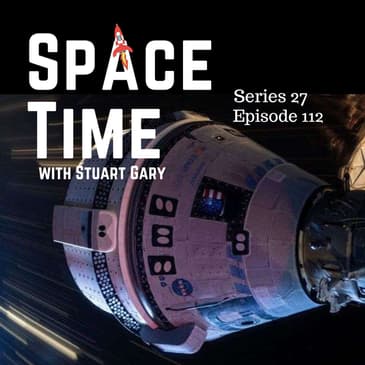
Boeing Starliner Returns Safely to EarthBoeing's trouble-plagued Starliner spacecraft has safely returned to Earth, landing unmanned at the White Sands Missile Range in New Mexico. NASA opted for an unmanned return due to ongoing safety concerns with the spacecraft.
*Asteroid Creates Spectacular Fireball Over the Philippines: A small asteroid created a stunning fireball as it entered Earth's atmosphere over the Philippines. The asteroid, designated 2024 RW1, was detected just hours before its atmospheric entry, providing a dazzling light show without causing any harm.
https://spacetimewithstuartgary.com
https://www.bitesz.com/
Become a supporter of this podcast and access commercial-free, triple episode editions plus bonus content. Details: https://www.spreaker.com/podcast/spacetime-with-stuart-gary--2458531/support.
🌏 Get Our Exclusive NordVPN deal here ➼ www.bitesz.com/nordvpn . The discount and bonuses are incredible! And it’s risk-free with Nord’s 30-day money-back guarantee! ✌
[00:00:00] [SPEAKER_09]: This is SpaceTime Series 27, Episode 112, for broadcast on the 16th of September 2024.
[00:00:07] [SPEAKER_09]: Coming up on SpaceTime, the first ever spacewalk by private astronauts,
[00:00:13] [SPEAKER_09]: Boeing's Starliner returned safely to the Earth, but it was empty,
[00:00:17] [SPEAKER_09]: and the asteroid that created a spectacular fireball over the Philippines.
[00:00:22] [SPEAKER_09]: All that and more coming up on SpaceTime.
[00:00:26] [SPEAKER_04]: Welcome to SpaceTime with Stuart Gary.
[00:00:45] [SPEAKER_09]: The first ever spacewalk by a pair of commercial, non-government astronauts has been successfully completed.
[00:00:52] [SPEAKER_09]: The mission, using a SpaceX Dragon capsule, was launched aboard a Falcon 9 rocket from the Kennedy Space Center in Florida
[00:00:58] [SPEAKER_09]: on a flight designed to monitor radiation exposure levels.
[00:01:02] [SPEAKER_09]: Ten, nine, eight, seven, six, five, four, three, two, one.
[00:01:22] [SPEAKER_05]: T plus 35 seconds into the Polaris Dawn mission, flying crew onboard Dragon and Falcon 9 to new heights.
[00:01:31] [SPEAKER_05]: And we're throttling down in preparation for Max-Q.
[00:01:35] [SPEAKER_05]: Next call out, the vehicle SuperSonic.
[00:01:40] [SPEAKER_05]: We're throttling back up to power, and we heard the call out, one Bravo.
[00:01:46] [SPEAKER_05]: That just tells the crew what would happen should they need to initiate anything.
[00:01:50] [SPEAKER_05]: But right now, everybody making nominal call outs on Falcon 9.
[00:01:54] [SPEAKER_05]: Handback chill is underway.
[00:01:56] [SPEAKER_05]: The announcement lets us know we've begun the final chill of the second stage engine
[00:01:59] [SPEAKER_05]: in preparation for its activity coming up at about T plus two minutes and 40 seconds.
[00:02:04] [SPEAKER_05]: Two minutes into flight, everything continues to look good.
[00:02:07] [SPEAKER_05]: We'll have in half a minute three major activities.
[00:02:10] [SPEAKER_05]: Shutdown of the nine Merlin 1D engines.
[00:02:13] [SPEAKER_05]: Stage separation.
[00:02:13] [SPEAKER_05]: Throttled down.
[00:02:14] [SPEAKER_05]: And then ignition of the second stage engine.
[00:02:16] [SPEAKER_05]: Throttled down.
[00:02:17] [SPEAKER_05]: We're holding a constant acceleration now for the crew just below four Gs.
[00:02:21] [SPEAKER_05]: See, we're coming up 70 kilometers, preparing for MECO.
[00:02:24] [SPEAKER_04]: Main engine cutoff.
[00:02:25] [SPEAKER_04]: Two Alpha.
[00:02:26] [SPEAKER_05]: Stage separation confirmed.
[00:02:28] [SPEAKER_00]: As you can tell by the cheers behind us, the first stage booster now on its way to attempt landing on just read the instructions.
[00:02:38] [SPEAKER_00]: The first stage has not yet reached its apogee.
[00:02:40] [SPEAKER_00]: Now three and a half minutes into the Polaris Dawn mission.
[00:02:45] [SPEAKER_00]: First stage continuing to make its way up to its apogee.
[00:02:49] [SPEAKER_00]: We'll see that altitude begin to slow down.
[00:02:52] [SPEAKER_04]: Dragons, SpaceX trajectory nominal.
[00:02:54] [SPEAKER_00]: Great news there indicating that the second stage trajectory is looking good.
[00:02:59] [SPEAKER_00]: Now the grid fins have deployed on the first stage.
[00:03:03] [SPEAKER_00]: Once again, booster is attempting to land on our drone ship.
[00:03:06] [SPEAKER_00]: Just read the instructions.
[00:03:07] [SPEAKER_00]: The next event coming up will be the entry burn taking place around T plus seven and a half minutes.
[00:03:14] [SPEAKER_00]: This burn will utilize three of the engines on the first stage that helps to slow the booster down as it reenters the Earth's atmosphere.
[00:03:23] [SPEAKER_04]: Dragons, SpaceX trajectory nominal.
[00:03:26] [SPEAKER_00]: Dragon copy.
[00:03:26] [SPEAKER_00]: Following the entry burn, we will see the landing burn and that'll be around T plus nine minutes.
[00:03:32] [SPEAKER_00]: That one will be just a single engine burn and that will bring the booster down for a soft landing on our drone ship.
[00:03:40] [SPEAKER_00]: Around the same time as that, we expect to see Dragon injected into orbit.
[00:03:45] [SPEAKER_00]: Everything continuing to look good for second stage there.
[00:03:48] [SPEAKER_00]: The crew settling quite...
[00:03:50] [SPEAKER_04]: Dragons, SpaceX trajectory nominal.
[00:03:52] [SPEAKER_00]: Dragon copy.
[00:03:52] [SPEAKER_00]: Crew seems pretty comfortable there at T plus six minutes.
[00:03:56] [SPEAKER_00]: They're at about four G's and everything looks good.
[00:03:59] [SPEAKER_00]: First stage continuing its descent back down to planet Earth.
[00:04:03] [SPEAKER_00]: Everything continuing to look great with the second stage engine burn there as well as the...
[00:04:08] [SPEAKER_04]: Dragons, SpaceX trajectory nominal.
[00:04:10] [SPEAKER_00]: Dragon copy.
[00:04:11] [SPEAKER_00]: We're about 30 seconds away from the first stage entry burn.
[00:04:15] [SPEAKER_00]: This is the first of two burns that the first stage will perform designed to help reduce the amount of drag experienced by the first stage.
[00:04:23] [SPEAKER_03]: Stage two FTS has saved.
[00:04:25] [SPEAKER_00]: All right, standing by for entry burn begin on the first stage.
[00:04:29] [SPEAKER_07]: And right on time.
[00:04:31] [SPEAKER_07]: The entry burn has begun.
[00:04:32] [SPEAKER_07]: There's three engines lit on that first stage vehicle and this is about a 29 second burn and helps slow the vehicle down as it's re-entering the Earth's atmosphere.
[00:04:42] [SPEAKER_07]: The engines have now shut down on that first stage.
[00:04:44] [SPEAKER_07]: That concludes the entry burn.
[00:04:46] [SPEAKER_07]: And the cool part about this, the stage one vehicle returning back to Earth is we get to fully utilize the atmosphere.
[00:04:52] [SPEAKER_07]: The atmosphere actually...
[00:04:53] [SPEAKER_04]: Stage two is in thermal guidance.
[00:04:54] [SPEAKER_07]: The atmosphere actually scrubs about 70% of the velocity on the vehicle.
[00:04:58] [SPEAKER_07]: So we use that entry burn to help slow the vehicle down.
[00:05:00] [SPEAKER_07]: Then we utilize the atmosphere and the drag from the atmosphere to slow the vehicle down.
[00:05:05] [SPEAKER_07]: And then we do have one single burn for the landing burn.
[00:05:07] [SPEAKER_06]: Copy, Shannon.
[00:05:08] [SPEAKER_07]: And next up will be CECA one.
[00:05:12] [SPEAKER_07]: And that is second stage engine cutoff one.
[00:05:15] [SPEAKER_07]: And that'll be on the second stage.
[00:05:17] [SPEAKER_07]: That MVAC engine will shut down and allow the vehicle with Dragon attached to coast.
[00:05:22] [SPEAKER_04]: MVAC shut down.
[00:05:23] [SPEAKER_07]: And there's that shut down.
[00:05:25] [SPEAKER_07]: And the landing burn on the first stage should be starting up here momentarily.
[00:05:29] [SPEAKER_07]: And there it is.
[00:05:30] [SPEAKER_07]: Landing burn has begun for...
[00:05:31] [SPEAKER_04]: Dragon SpaceX nominal orb insertion.
[00:05:34] [SPEAKER_03]: Dragon SpaceX launch escape system disarmed.
[00:05:37] [SPEAKER_03]: Copy that, SpaceX and we show the scene.
[00:05:39] [SPEAKER_06]: Stage one vehicle has touched down on just three of the instructions.
[00:05:44] [SPEAKER_06]: A variant here in Hawthorne.
[00:05:48] [SPEAKER_06]: We've also confirmed MVAC engine shut down
[00:05:51] [SPEAKER_06]: and an orbital insertion of the second stage with the crew on board.
[00:05:56] [SPEAKER_00]: Honestly a pretty impressive crowd for 2.30 in the morning here.
[00:06:02] [SPEAKER_09]: It initially launched into a 1,400 kilometer high orbit,
[00:06:05] [SPEAKER_09]: high enough to take the capsule into the Van Allen radiation belt,
[00:06:09] [SPEAKER_09]: which teem with high energy charged particles,
[00:06:12] [SPEAKER_09]: posing a health risk to astronauts if exposed for extended periods.
[00:06:16] [SPEAKER_09]: The flight plan saw the Dragon spend 10 hours in the Van Allen radiation belts
[00:06:20] [SPEAKER_09]: as the crew undertook readings and monitored the surrounding space environment.
[00:06:25] [SPEAKER_09]: It was the furthest point humans have traveled from Earth since the days of Apollo,
[00:06:29] [SPEAKER_09]: more than half a century ago,
[00:06:31] [SPEAKER_09]: and over three times the orbital altitude of the International Space Station.
[00:06:36] [SPEAKER_09]: The elliptical orbit was then gradually reduced over the following days
[00:06:40] [SPEAKER_09]: with the EVA being undertaken at an altitude of 738 kilometers.
[00:06:45] [SPEAKER_09]: The two-hour extravehicular activity or EVA
[00:06:48] [SPEAKER_09]: developed by Polaris Dawn spacecraft commander Jared Isaacman
[00:06:51] [SPEAKER_09]: and mission specialist Sarah Gillies
[00:06:53] [SPEAKER_09]: was designed to perform a series of mobility tests
[00:06:56] [SPEAKER_09]: on SpaceX's newly designed EVA suits, which Isaacman developed.
[00:07:01] [SPEAKER_09]: The mission plan saw Isaacman and Gillies each leave the capsule for around 10 minutes.
[00:07:06] [SPEAKER_09]: They used a specially supplied handrail system resembling a pull ladder called the Skywalker
[00:07:11] [SPEAKER_09]: and a 3.6 meter long umbilical tether
[00:07:14] [SPEAKER_09]: in order to keep them secured to the spacecraft
[00:07:16] [SPEAKER_09]: as it orbited the planet at over 28,000 kilometers per hour.
[00:07:21] [SPEAKER_09]: The remaining two crew members,
[00:07:22] [SPEAKER_09]: pilot Scott Pertitte and mission specialist Anna Menon,
[00:07:25] [SPEAKER_09]: who also wore the new space suits,
[00:07:27] [SPEAKER_09]: are now also considered spacewalkers
[00:07:29] [SPEAKER_09]: as the capsule, which doesn't have a separate airlock,
[00:07:32] [SPEAKER_09]: had to be depressurized for the EVA,
[00:07:34] [SPEAKER_09]: thereby exposing all four to the vacuum of space.
[00:07:38] [SPEAKER_09]: Unlike his previous chartered SpaceX flight,
[00:07:41] [SPEAKER_09]: tech entrepreneur Isaacman shared the cost of the mission with SpaceX this time round,
[00:07:45] [SPEAKER_09]: which included developing and testing the new space suits,
[00:07:48] [SPEAKER_09]: which are outfitted with head up displays, helmet cameras
[00:07:51] [SPEAKER_09]: and advanced joint mobility systems.
[00:07:54] [SPEAKER_09]: This report from SpaceX.
[00:07:58] [SPEAKER_02]: An EVA suit is an extravehicular activity suit,
[00:08:01] [SPEAKER_02]: which is a space suit that can go outside of the spacecraft to do a spacewalk.
[00:08:05] [SPEAKER_02]: We started with the IVA suit that we have,
[00:08:08] [SPEAKER_02]: the intravehicular activity suit,
[00:08:10] [SPEAKER_02]: as a kind of starting point and looked at it
[00:08:12] [SPEAKER_02]: and said, what would we have to change about this to be able to support a spacewalk?
[00:08:16] [SPEAKER_02]: So the first is mobility.
[00:08:18] [SPEAKER_02]: The crew will have to do a lot of moving around inside a dragon
[00:08:20] [SPEAKER_02]: to get outside and do the spacewalk.
[00:08:22] [SPEAKER_02]: We had to add in new joints and new features in the suit
[00:08:25] [SPEAKER_02]: to allow them enhanced mobility while the suit's pressurized.
[00:08:29] [SPEAKER_08]: When a crew member is pressurized in the suit,
[00:08:31] [SPEAKER_08]: the soft portions of the suit become rigid.
[00:08:34] [SPEAKER_08]: They need actual flexure and rotational joints
[00:08:37] [SPEAKER_08]: to allow them to move around.
[00:08:38] [SPEAKER_08]: It's kind of like a suit of armor made of fabric.
[00:08:44] [SPEAKER_08]: Flexure joints to allow easy bending at the elbows and the knees,
[00:08:48] [SPEAKER_08]: as well as a collapsible rotator joint that exists on the shoulder,
[00:08:53] [SPEAKER_08]: which allows the suit to remain nearly fully soft,
[00:08:56] [SPEAKER_08]: but when pressurized is a rotational bearing.
[00:09:01] [SPEAKER_01]: The difference between the IVA and EVA suit is that on the IVA suit,
[00:09:05] [SPEAKER_01]: the zipper system location is in the inseam.
[00:09:08] [SPEAKER_01]: But since we needed to have lots of mobility on our EVA suit,
[00:09:13] [SPEAKER_01]: that was not the preferred choice.
[00:09:15] [SPEAKER_01]: By moving the zipper system from the inseam to the waist,
[00:09:19] [SPEAKER_01]: we mitigated risk of the stress of the zipper.
[00:09:23] [SPEAKER_02]: Another big element was also the thermal side of things.
[00:09:26] [SPEAKER_02]: The crew is obviously exposed to a much more extreme thermal environment
[00:09:28] [SPEAKER_02]: during the EVA, so we want to make sure that the inside of the suit
[00:09:32] [SPEAKER_02]: is comfortable for them and that as they interface with parts of the vehicle,
[00:09:35] [SPEAKER_02]: that that is safe for them to touch as well.
[00:09:37] [SPEAKER_01]: The EVA suit is built and designed here at SpaceX in Hawthorne, California.
[00:09:43] [SPEAKER_01]: We wanted to have something that's easy to manufacture
[00:09:45] [SPEAKER_01]: that we can handle here in-house.
[00:09:48] [SPEAKER_01]: So we developed this new material, so it's fabric based.
[00:09:51] [SPEAKER_08]: We actually added a new layer to the suit,
[00:09:54] [SPEAKER_08]: which we refer to as the Faraday layer.
[00:09:56] [SPEAKER_08]: And this is a conductive cage around the suit
[00:09:59] [SPEAKER_08]: that shields the suit from external electric fields.
[00:10:04] [SPEAKER_02]: The helmet on the EVA suit looks very similar to the IVA suit.
[00:10:08] [SPEAKER_02]: But it is really an all new design of that helmet.
[00:10:11] [SPEAKER_02]: It's much more robust from a thermal structural perspective,
[00:10:14] [SPEAKER_02]: since it will be taking more extreme temperatures.
[00:10:17] [SPEAKER_08]: We are really excited to introduce this new single pane visor helmet
[00:10:20] [SPEAKER_08]: to the world of spacesuits.
[00:10:22] [SPEAKER_08]: The EVA suit visor is made of polycarbonate
[00:10:24] [SPEAKER_08]: and is coated with copper and ITO or indium tin oxide.
[00:10:28] [SPEAKER_08]: These two coatings together reflect the sun away from the crew,
[00:10:32] [SPEAKER_08]: as well as reflecting infrared heat back to the crew
[00:10:35] [SPEAKER_08]: when they are facing deep space.
[00:10:36] [SPEAKER_08]: Our suit has a HUD or heads up display,
[00:10:40] [SPEAKER_08]: which is a small display screen in the helmet,
[00:10:43] [SPEAKER_08]: which is transparent, which allows the crew to see through the display
[00:10:47] [SPEAKER_08]: to have unfettered access during their EVA.
[00:10:50] [SPEAKER_08]: But it also provides critical telemetry to the crew.
[00:10:53] [SPEAKER_08]: So pressure, temperature, relative humidity.
[00:10:56] [SPEAKER_02]: We're trying to improve the technology and streamline it in one way.
[00:10:59] [SPEAKER_02]: And at the same time, we're also trying to get it more and more
[00:11:01] [SPEAKER_02]: manufacturable with each generation.
[00:11:03] [SPEAKER_02]: The ultimate goal is that you can put on a spacesuit
[00:11:05] [SPEAKER_02]: and go out and get work done anywhere in the solar system
[00:11:09] [SPEAKER_02]: and not feel like you're wearing anything more than you normally wear every day.
[00:11:16] [SPEAKER_09]: The five-day mission had been delayed by two weeks,
[00:11:18] [SPEAKER_09]: firstly due to technical issues with the launch tower
[00:11:21] [SPEAKER_09]: and then poor weather forecasts affecting the splashdown site
[00:11:24] [SPEAKER_09]: off the coast of Florida.
[00:11:26] [SPEAKER_09]: Polaris dawns the first of three missions
[00:11:28] [SPEAKER_09]: under a joint Isaacman SpaceX Polaris program.
[00:11:32] [SPEAKER_09]: The final mission is slated to be the first manned flight
[00:11:35] [SPEAKER_09]: of SpaceX's Starship prototype,
[00:11:37] [SPEAKER_09]: the interplanetary transport system SpaceX is developing
[00:11:41] [SPEAKER_09]: as the key to future Martian colonisation.
[00:11:44] [SPEAKER_09]: This is space time.
[00:11:47] [SPEAKER_09]: Still to come, Boeing's Starliner returns safely to Earth
[00:11:50] [SPEAKER_09]: and an asteroid creates a spectacular fireball
[00:11:53] [SPEAKER_09]: as it enters Earth's atmosphere over the Philippines.
[00:11:57] [SPEAKER_09]: All that and more still to come on space time.
[00:12:16] [SPEAKER_09]: Boeing's trouble-plagued Starliner spacecraft
[00:12:18] [SPEAKER_09]: has returned safely to Earth, landing unmanned
[00:12:21] [SPEAKER_09]: at the White Sands Missile Range in New Mexico.
[00:12:24] [SPEAKER_09]: The decision to return without a crew on board was taken by NASA
[00:12:27] [SPEAKER_09]: because of ongoing concerns about the safety of the spacecraft,
[00:12:31] [SPEAKER_09]: following a series of failures involving five of Starliner's
[00:12:35] [SPEAKER_09]: orbital manoeuvring system thrusters
[00:12:36] [SPEAKER_09]: and a persistent series of helium leaks
[00:12:39] [SPEAKER_09]: which were gradually getting worse.
[00:12:41] [SPEAKER_09]: NASA and Boeing issued a go to proceed with the undocking
[00:12:44] [SPEAKER_09]: of the spacecraft from the International Space Station
[00:12:47] [SPEAKER_09]: pending weather and operational readiness.
[00:12:49] [SPEAKER_09]: After Starliner undocked, it executed a powerful breakout burn
[00:12:53] [SPEAKER_09]: in order to swiftly clear it from the space station
[00:12:56] [SPEAKER_09]: and avoid any risk of collision.
[00:12:59] [SPEAKER_09]: Mission managers then conducted over five hours
[00:13:01] [SPEAKER_09]: of free-flying extensive checks,
[00:13:03] [SPEAKER_09]: testing the thrusters needed for the crucial deorbit burn
[00:13:06] [SPEAKER_09]: which would guide the capsule into its reentry path
[00:13:09] [SPEAKER_09]: around 40 minutes before touchdown.
[00:13:12] [SPEAKER_09]: NASA's Boeing Crew Certification Mission astronauts
[00:13:15] [SPEAKER_09]: Butch Wiltmore and Sunny Williams
[00:13:17] [SPEAKER_09]: traveled to the space station aboard the CST-100 Starliner
[00:13:20] [SPEAKER_09]: back in June for what should have been an eight day test flight.
[00:13:24] [SPEAKER_09]: They'll now remain on station for eight months
[00:13:27] [SPEAKER_09]: as members of the Expedition 7172 crew until February next year
[00:13:31] [SPEAKER_09]: when they'll return to Earth aboard a SpaceX Dragon capsule
[00:13:34] [SPEAKER_09]: as part of the agency's SpaceX Crew-9 mission.
[00:13:38] [SPEAKER_09]: Starliner's departure makes room aboard the ISS
[00:13:41] [SPEAKER_09]: for Crew-9's Dragon capsule Freedom.
[00:13:43] [SPEAKER_09]: It has a reduced crew of two instead of the normal four
[00:13:47] [SPEAKER_09]: so that Williams and Wiltmore will be able to have their ride home.
[00:13:51] [SPEAKER_09]: For Boeing, it's all been a bittersweet lesson
[00:13:53] [SPEAKER_09]: with the trouble-plagued spacecraft making a perfect landing
[00:13:56] [SPEAKER_09]: under parachutes and inflated airbags to soften the touchdown.
[00:14:00] [SPEAKER_09]: But that follows a long string of failures.
[00:14:04] [SPEAKER_09]: Back in 2014, Boeing and SpaceX were each awarded
[00:14:07] [SPEAKER_09]: commercial crew contracts by NASA to develop new spacecraft
[00:14:11] [SPEAKER_09]: to transport astronauts to the International Space Station.
[00:14:15] [SPEAKER_09]: SpaceX were quick to repurpose and further develop
[00:14:17] [SPEAKER_09]: their Dragon cargo capsule
[00:14:19] [SPEAKER_09]: which had always been designed as a manned spacecraft.
[00:14:22] [SPEAKER_09]: After a series of successful unmanned and then manned
[00:14:25] [SPEAKER_09]: test flights to the orbiting outpost,
[00:14:27] [SPEAKER_09]: SpaceX began regular crew transport flights in 2020
[00:14:30] [SPEAKER_09]: as well as undertaking a series of commercial manned orbital flights
[00:14:34] [SPEAKER_09]: for both space tourism and scientific missions.
[00:14:37] [SPEAKER_09]: However, competitor Boeing have been experiencing
[00:14:40] [SPEAKER_09]: a series of significant setbacks with their Starliner spacecraft.
[00:14:44] [SPEAKER_09]: The mission's first orbital test flight to the space station
[00:14:47] [SPEAKER_09]: back in 2019 suffered a number of computer failures,
[00:14:51] [SPEAKER_09]: the first of which saw the spacecraft commence its orbital insertion burn
[00:14:54] [SPEAKER_09]: too early after the mission clock had been wrongly programmed.
[00:14:58] [SPEAKER_09]: And that resulted in its orbital insertion burn taking place
[00:15:01] [SPEAKER_09]: too low in altitude to reach the space station.
[00:15:04] [SPEAKER_09]: And while mission managers were working through that issue,
[00:15:07] [SPEAKER_09]: they realized that the faulty programming would have also prevented
[00:15:10] [SPEAKER_09]: Starliner from rendezvous with the space station anyway.
[00:15:13] [SPEAKER_09]: Had it been at the correct altitude,
[00:15:15] [SPEAKER_09]: it simply wouldn't have been able to dock.
[00:15:18] [SPEAKER_09]: And making matters even worse, far worse in fact,
[00:15:21] [SPEAKER_09]: was the discovery that another software error
[00:15:23] [SPEAKER_09]: would have caused the Starliner crew module to collide with the service module
[00:15:27] [SPEAKER_09]: when it was being jettisoned before atmospheric re-entry.
[00:15:30] [SPEAKER_09]: The computer error would have meant that instead of moving away
[00:15:34] [SPEAKER_09]: from the crew module, the program would have caused the service module
[00:15:37] [SPEAKER_09]: to move forward into the crew module, crashing into it
[00:15:40] [SPEAKER_09]: and destroying both spacecraft.
[00:15:42] [SPEAKER_09]: Starliner eventually did land safely at White Sands,
[00:15:45] [SPEAKER_09]: but only after a fix was uploaded.
[00:15:48] [SPEAKER_09]: After a lengthy and exhaustive review process
[00:15:51] [SPEAKER_09]: with more than 80 recommended changes,
[00:15:54] [SPEAKER_09]: Starliner was eventually deemed safe for a second attempt
[00:15:57] [SPEAKER_09]: at an unmanned orbital test flight in 2020.
[00:16:00] [SPEAKER_09]: However, with the rocket on the launch pad ready for flight,
[00:16:03] [SPEAKER_09]: corrosion was discovered in 13 propulsion system valves,
[00:16:06] [SPEAKER_09]: apparently caused by moisture interacting with the propellant.
[00:16:10] [SPEAKER_09]: Even though it was on the launch pad and mated to its Atlas V rocket,
[00:16:14] [SPEAKER_09]: technicians attempted to resolve the issue, but were unsuccessful.
[00:16:18] [SPEAKER_09]: So, the entire stack was then moved back into the vehicle assembly building.
[00:16:23] [SPEAKER_09]: Inspections there found the damage to be far deeper in the system than expected,
[00:16:27] [SPEAKER_09]: and that resulted in the need for a complete disassembly of the propulsion system,
[00:16:31] [SPEAKER_09]: meaning it had to go back to the factory.
[00:16:33] [SPEAKER_09]: Finally, a second orbital test flight to the space station,
[00:16:36] [SPEAKER_09]: this one somewhat more successful, took place in 2022.
[00:16:41] [SPEAKER_09]: But there were still serious problems.
[00:16:43] [SPEAKER_09]: Two orbital maneuvering and attitude control or OMAC thrusters
[00:16:46] [SPEAKER_09]: failed during the orbital insertion burn.
[00:16:49] [SPEAKER_09]: And then a couple of RCS thrusters, used to maneuver Starliner,
[00:16:53] [SPEAKER_09]: also failed during the docking to the space station,
[00:16:56] [SPEAKER_09]: this time due to low chamber pressure.
[00:16:58] [SPEAKER_09]: And it didn't end there.
[00:16:59] [SPEAKER_09]: Thermal systems used to cool the spacecraft
[00:17:01] [SPEAKER_09]: were showing extra cold temperatures in the cabin
[00:17:04] [SPEAKER_09]: that required engineers to manage it during the docking procedure.
[00:17:08] [SPEAKER_09]: And during the return journey to Earth,
[00:17:10] [SPEAKER_09]: one of the navigation systems dropped communications
[00:17:12] [SPEAKER_09]: with the GPS satellites during re-entry.
[00:17:16] [SPEAKER_09]: And once safely back on the ground,
[00:17:18] [SPEAKER_09]: engineers discovered flammable insulation tape
[00:17:20] [SPEAKER_09]: was being used on the spacecraft's wiring system,
[00:17:23] [SPEAKER_09]: and the parachute harnesses also required further strengthening.
[00:17:27] [SPEAKER_09]: Eventually, a long delayed manned orbital flight to the space station
[00:17:31] [SPEAKER_09]: was finally approved for a window opening on May the 6th.
[00:17:35] [SPEAKER_09]: But that was then scrubbed due to an oxygen valve problem
[00:17:37] [SPEAKER_09]: on the Atlas V rocket.
[00:17:39] [SPEAKER_09]: Subsequently, a helium leak in Starliner's service module
[00:17:43] [SPEAKER_09]: further delayed the mission.
[00:17:45] [SPEAKER_09]: Another launch attempt on June the 1st was scrubbed,
[00:17:47] [SPEAKER_09]: this time due to a ground computer hardware fault.
[00:17:50] [SPEAKER_09]: In fact, it wasn't until June the 5th
[00:17:52] [SPEAKER_09]: that Starliner finally launched with its crew onboard.
[00:17:56] [SPEAKER_09]: But once in orbit and on approach to the space station,
[00:17:59] [SPEAKER_09]: both the automated systems and astronauts taking manual control
[00:18:02] [SPEAKER_09]: during the docking sequence were instructed to repeatedly fire
[00:18:06] [SPEAKER_09]: the RCS thrusters.
[00:18:08] [SPEAKER_09]: This was part of a stress testing program for the test flight.
[00:18:11] [SPEAKER_09]: But it revealed performance degradation in the thrusters,
[00:18:14] [SPEAKER_09]: leading to the spacecraft's command computers
[00:18:16] [SPEAKER_09]: cutting out five of the thrusters
[00:18:18] [SPEAKER_09]: after assessing them as damaged and unusable.
[00:18:21] [SPEAKER_09]: And a persistent helium leak in the service module,
[00:18:24] [SPEAKER_09]: which had been there since before the launch,
[00:18:25] [SPEAKER_09]: was gradually getting worse.
[00:18:27] [SPEAKER_09]: The five failed thrusters were all aft-facing.
[00:18:31] [SPEAKER_09]: That resulted in the loss of six degrees of freedom attitude control
[00:18:35] [SPEAKER_09]: until four of the thrusters were then manually restored,
[00:18:38] [SPEAKER_09]: allowing the crew to finally safely dock the capsule to the space station.
[00:18:43] [SPEAKER_09]: After a series of reviews, NASA decided against
[00:18:46] [SPEAKER_09]: risking the crew on the return journey,
[00:18:49] [SPEAKER_09]: resulting in Boeing's decision
[00:18:50] [SPEAKER_09]: to return Starliner to the ground unmanned.
[00:18:54] [SPEAKER_09]: Meanwhile, strange pulsing sounds heard by astronauts
[00:18:57] [SPEAKER_09]: emanating from the Starliner while it was docked to the space station
[00:19:00] [SPEAKER_09]: have been explained as simple audio feedback.
[00:19:04] [SPEAKER_09]: The mystery noise was apparently generated by the audio configuration
[00:19:07] [SPEAKER_09]: between the spacecraft and the space station.
[00:19:11] [SPEAKER_09]: NASA says the space station's complex communication system
[00:19:13] [SPEAKER_09]: allows multiple spacecraft and modules to be interconnected,
[00:19:17] [SPEAKER_09]: and it's common to experience noise and feedback.
[00:19:20] [SPEAKER_09]: This is space time.
[00:19:23] [SPEAKER_09]: Still to come, an asteroid creates a spectacular
[00:19:26] [SPEAKER_09]: fireball over the Philippines, and later in the science report,
[00:19:30] [SPEAKER_09]: discovery of an antibody able to neutralise
[00:19:32] [SPEAKER_09]: all known variants of SARS-CoV-2,
[00:19:34] [SPEAKER_09]: the virus which causes COVID-19.
[00:19:38] [SPEAKER_09]: All that and more still to come on space time.
[00:19:57] [SPEAKER_09]: Residents in the Philippines have been treated
[00:19:58] [SPEAKER_09]: to a spectacular celestial light show
[00:20:00] [SPEAKER_09]: as a small asteroid ripped into Earth's atmosphere,
[00:20:03] [SPEAKER_09]: burning up during its entry.
[00:20:05] [SPEAKER_09]: The bright green fireball didn't cause any harm to people
[00:20:08] [SPEAKER_09]: or damage to buildings on the ground,
[00:20:10] [SPEAKER_09]: but it did brighten up the skies above the western Pacific Ocean
[00:20:13] [SPEAKER_09]: near the Philippines island of Luzon.
[00:20:16] [SPEAKER_09]: Astronomers first detected the object
[00:20:18] [SPEAKER_09]: just eight hours before its fiery atmospheric entry.
[00:20:22] [SPEAKER_09]: The asteroid, designated as 2024RW1,
[00:20:25] [SPEAKER_09]: was discovered by the Catalina Sky Survey,
[00:20:27] [SPEAKER_09]: which is operated by the Stuart Observatory near Tucson, Arizona.
[00:20:31] [SPEAKER_09]: The NASA-funded project is run by the University of Arizona
[00:20:35] [SPEAKER_09]: as part of the Spacewatch program.
[00:20:37] [SPEAKER_09]: It scans the skies looking for potentially hazardous near-Earth objects.
[00:20:42] [SPEAKER_09]: The European Space Agency says this was only the ninth asteroid
[00:20:45] [SPEAKER_09]: ever detected before entering Earth's atmosphere.
[00:20:49] [SPEAKER_09]: Astronomers quickly determined that it was going to hit the Earth,
[00:20:52] [SPEAKER_09]: but at just a metre in diameter,
[00:20:54] [SPEAKER_09]: wasn't likely to survive its fiery journey through Earth's atmosphere.
[00:20:58] [SPEAKER_09]: Asteroids the size of 2024RW1 enter Earth's atmosphere
[00:21:02] [SPEAKER_09]: roughly once every two weeks on average.
[00:21:04] [SPEAKER_09]: However, astronomers rarely see them coming
[00:21:07] [SPEAKER_09]: because of their diminutive size.
[00:21:10] [SPEAKER_09]: The last such cosmic encounter was back in January.
[00:21:13] [SPEAKER_09]: That's where NASA scientists spotted a similar-sized asteroid
[00:21:16] [SPEAKER_09]: labelled as 2024BX1 some three hours before it entered the atmosphere
[00:21:21] [SPEAKER_09]: and exploded in the skies above Berlin.
[00:21:24] [SPEAKER_09]: That asteroid did make scientific headlines
[00:21:27] [SPEAKER_09]: because it was the fastest spinning asteroid ever seen.
[00:21:31] [SPEAKER_09]: Small fragments of meteors often reach the Earth's surface
[00:21:33] [SPEAKER_09]: after being shattered in airbursts.
[00:21:36] [SPEAKER_09]: And astronomers were able to retrieve several fragments
[00:21:38] [SPEAKER_09]: from January's Berlin asteroid airburst.
[00:21:41] [SPEAKER_09]: From this, they were able to determine that it was a rare or bright asteroid,
[00:21:45] [SPEAKER_09]: possibly up to 4.6 billion years old,
[00:21:48] [SPEAKER_09]: making it as old as the solar system.
[00:21:51] [SPEAKER_09]: However, the Philippines asteroid's origins are likely to remain a mystery.
[00:21:55] [SPEAKER_09]: That's because it airburst over the ocean
[00:21:58] [SPEAKER_09]: and any surviving fragments would have fallen into the sea.
[00:22:01] [SPEAKER_09]: However, astronomers should be able to retrace the asteroid's trajectory
[00:22:05] [SPEAKER_09]: towards the Earth and that could reveal some more clues about its origins.
[00:22:10] [SPEAKER_09]: This is space-time.
[00:22:28] [SPEAKER_09]: I'm out to take a brief look at some of the other stories
[00:22:30] [SPEAKER_09]: making news in science this week with the Science Report.
[00:22:34] [SPEAKER_09]: Researchers at the University of Texas at Austin have discovered an antibody
[00:22:38] [SPEAKER_09]: which is able to neutralise all known variants of SARS-CoV-2,
[00:22:42] [SPEAKER_09]: the virus which causes COVID-19.
[00:22:45] [SPEAKER_09]: The findings published in the journal Cell Reports Medicine
[00:22:48] [SPEAKER_09]: also claims the antibody, called SC27,
[00:22:51] [SPEAKER_09]: can also target more distantly related SARS-like coronaviruses
[00:22:55] [SPEAKER_09]: which infect other animals.
[00:22:57] [SPEAKER_09]: As part of a new study on hybrid immunity in the virus,
[00:23:00] [SPEAKER_09]: the large multi-institution research team discovered an isolated,
[00:23:04] [SPEAKER_09]: broadly neutralising plasma antibody known as SC27 from a single patient.
[00:23:09] [SPEAKER_09]: The authors then extracted the molecular sequence of the antibody,
[00:23:12] [SPEAKER_09]: opening up the possibility of eventually manufacturing it
[00:23:15] [SPEAKER_09]: on a larger scale for future treatments.
[00:23:19] [SPEAKER_09]: During the more than four years since the discovery of COVID-19,
[00:23:22] [SPEAKER_09]: the virus that causes it has evolved rapidly.
[00:23:25] [SPEAKER_09]: And that's been the problem.
[00:23:27] [SPEAKER_09]: Each new variant has displayed different characteristics,
[00:23:30] [SPEAKER_09]: many of which made them more resistant to vaccines and other treatments.
[00:23:34] [SPEAKER_09]: The protective antibodies bind to a part of the virus called the spike protein.
[00:23:38] [SPEAKER_09]: It's this spike protein which acts as an anchor point for the virus
[00:23:42] [SPEAKER_09]: in order to attach to and infect cells in the body.
[00:23:46] [SPEAKER_09]: By blocking the spike protein,
[00:23:48] [SPEAKER_09]: the antibodies prevent this interaction and therefore prevent the infection.
[00:23:52] [SPEAKER_09]: The World Health Organisation says over seven million people
[00:23:56] [SPEAKER_09]: have been killed by the COVID-19 coronavirus
[00:23:58] [SPEAKER_09]: since it was first detected among workers
[00:24:00] [SPEAKER_09]: at China's Wuhan Institute of Virology back in September 2019.
[00:24:05] [SPEAKER_09]: However, a report in the Lancet Medical Journal
[00:24:08] [SPEAKER_09]: estimates the true death toll from COVID-19's likely to be above 18 million,
[00:24:13] [SPEAKER_09]: with over 775 million confirmed cases globally.
[00:24:19] [SPEAKER_09]: A new study claims that while some species of pterosaurs
[00:24:22] [SPEAKER_09]: would flap their wings in order to stay airborne, others would simply soar.
[00:24:27] [SPEAKER_09]: Certain birds have the ability to flap their wings to start their flight,
[00:24:30] [SPEAKER_09]: and they only need to flap occasionally once they're in the air
[00:24:33] [SPEAKER_09]: in order to keep them in a stable position.
[00:24:35] [SPEAKER_09]: That's what researchers refer to as soaring.
[00:24:39] [SPEAKER_09]: Now, a report in the journal Vertebrate Paleontology
[00:24:41] [SPEAKER_09]: has found remarkable and rare three-dimensional fossils
[00:24:44] [SPEAKER_09]: of two different large-bodied pterosaur species
[00:24:47] [SPEAKER_09]: which are in such good condition,
[00:24:49] [SPEAKER_09]: scientists could scan the internal structure of their 10-metre wingspan bones.
[00:24:54] [SPEAKER_09]: They found that there were a series of ridges and spirals
[00:24:57] [SPEAKER_09]: up and down the bones of one of the behemoths
[00:24:59] [SPEAKER_09]: that resemble the structure of vulture wing bones,
[00:25:02] [SPEAKER_09]: which suggest that these reptiles could also soar in a similar fashion.
[00:25:08] [SPEAKER_09]: Scientists have discovered that almost half of all cats
[00:25:11] [SPEAKER_09]: enjoy playing fetch with their human companions.
[00:25:15] [SPEAKER_09]: The findings reported in the journal PLAS One
[00:25:17] [SPEAKER_09]: are based on a survey of pet owners
[00:25:19] [SPEAKER_09]: that included more than 8,000 cat owners and nearly 74,000 dog owners.
[00:25:24] [SPEAKER_09]: Researchers asked the survey participants
[00:25:26] [SPEAKER_09]: whether their pet would sometimes, frequently or always
[00:25:29] [SPEAKER_09]: chase a toy that they had thrown.
[00:25:31] [SPEAKER_09]: While 78% of dog owners said their dogs loved to play fetch,
[00:25:36] [SPEAKER_09]: 41% of cat owners said their kitty cats also enjoyed the game.
[00:25:40] [SPEAKER_09]: They found that in both cats and dogs,
[00:25:43] [SPEAKER_09]: females, older pets and those with health problems
[00:25:45] [SPEAKER_09]: were less likely to participate.
[00:25:48] [SPEAKER_09]: And the authors found that cats were more likely to play fetch
[00:25:50] [SPEAKER_09]: if they lived indoors.
[00:25:54] [SPEAKER_09]: Scientists at Monash University have developed a new set of guidelines
[00:25:57] [SPEAKER_09]: for assessing research integrity in scientific publications.
[00:26:02] [SPEAKER_09]: The world's first framework reported in the Lancet Medical Journal
[00:26:05] [SPEAKER_09]: uses a simple checklist system
[00:26:07] [SPEAKER_09]: to help scientists and publishers assess research integrity.
[00:26:11] [SPEAKER_09]: It's designed to exclude untrustworthy research
[00:26:13] [SPEAKER_09]: during evidence synthesis and clinical guideline development.
[00:26:17] [SPEAKER_09]: Tim Mendham from A Strange Skeptic says
[00:26:19] [SPEAKER_09]: the key to the new system is transparency,
[00:26:22] [SPEAKER_09]: where studies ranked by the integrity committee
[00:26:24] [SPEAKER_09]: as having a moderate or high risk of integrity concerns
[00:26:27] [SPEAKER_09]: are clearly documented and authors then contacted
[00:26:30] [SPEAKER_09]: to highlight the identified concerns.
[00:26:33] [SPEAKER_03]: The problem with academic papers is there are frauds.
[00:26:36] [SPEAKER_03]: There might be accidental frauds,
[00:26:37] [SPEAKER_03]: there might be mistakes, honest mistakes or whatever,
[00:26:40] [SPEAKER_03]: or sometimes they can be totally misleading and on purpose.
[00:26:43] [SPEAKER_03]: And the issue is how to spot them and what to do about them.
[00:26:45] [SPEAKER_03]: A recent study suggested there might be as many as 10,000
[00:26:49] [SPEAKER_03]: research articles retracted during 2023
[00:26:52] [SPEAKER_03]: and they retracted for various reasons,
[00:26:54] [SPEAKER_03]: one mainly that they're wrong,
[00:26:55] [SPEAKER_03]: or there's various procedural problems with them
[00:26:57] [SPEAKER_03]: or concerns generally.
[00:26:59] [SPEAKER_03]: So they're not all fakes, but there might just be a paper
[00:27:01] [SPEAKER_03]: that needs more work and shouldn't have been published.
[00:27:03] [SPEAKER_03]: But 10,000 is quite a lot.
[00:27:04] [SPEAKER_03]: There's a lot of papers published every year.
[00:27:06] [SPEAKER_03]: The issue is keeping track of them
[00:27:08] [SPEAKER_03]: and what to do if and when you see them.
[00:27:10] [SPEAKER_03]: So a group from a Australian university, Monash University in Melbourne,
[00:27:14] [SPEAKER_03]: has prepared a set of what they call integrity guidelines
[00:27:17] [SPEAKER_03]: for publications, for the research institutions,
[00:27:20] [SPEAKER_03]: for researchers themselves to use
[00:27:22] [SPEAKER_03]: to weed out those papers that might not be absolutely perfect.
[00:27:26] [SPEAKER_03]: They have suggested over their research,
[00:27:28] [SPEAKER_03]: many as perhaps even more than 25% of clinical trials,
[00:27:32] [SPEAKER_03]: and this is mainly medical areas we're looking at,
[00:27:33] [SPEAKER_03]: 25% of clinical trials have clinical guidelines
[00:27:36] [SPEAKER_03]: that may not be trustworthy.
[00:27:37] [SPEAKER_03]: That's a lot.
[00:27:38] [SPEAKER_03]: Obviously there's pressure on university academics
[00:27:41] [SPEAKER_03]: and people like that publish or perish.
[00:27:43] [SPEAKER_03]: You have to have these papers written out there
[00:27:45] [SPEAKER_03]: to show that you're doing some work,
[00:27:46] [SPEAKER_03]: otherwise it might not be tenured after a while.
[00:27:49] [SPEAKER_09]: What does that mean when they say guidelines that are untrustworthy?
[00:27:52] [SPEAKER_09]: That means that the researchers are following the rules,
[00:27:54] [SPEAKER_09]: but the rules themselves are bad.
[00:27:56] [SPEAKER_03]: Yes, yes.
[00:27:57] [SPEAKER_03]: I mean, the rules themselves are vague half the time.
[00:28:01] [SPEAKER_03]: The other half of the time they're not actually followed at all.
[00:28:03] [SPEAKER_03]: So there might be good guidelines, but they're not being followed.
[00:28:05] [SPEAKER_03]: It's an issue.
[00:28:06] [SPEAKER_03]: There's a group that has set themselves out called
[00:28:08] [SPEAKER_03]: Research Integrity in Guidelines and Edie Baines Synthesis,
[00:28:11] [SPEAKER_03]: which must be one of the worst,
[00:28:13] [SPEAKER_03]: most forced acronyms you can think of.
[00:28:15] [SPEAKER_09]: Oh no, you have not read astronomy papers.
[00:28:18] [SPEAKER_09]: You have no idea how bad it gets.
[00:28:20] [SPEAKER_03]: It's like people think of the acronym first
[00:28:22] [SPEAKER_03]: and then try and think of the words to match it.
[00:28:24] [SPEAKER_03]: Yes, always, always.
[00:28:26] [SPEAKER_03]: Research Integrity in Guidelines and Edie Baines.
[00:28:29] [SPEAKER_03]: So, Richard, anyway, it's a concern.
[00:28:30] [SPEAKER_03]: And it always has been a concern in medical areas.
[00:28:33] [SPEAKER_03]: And the whole concept, of course,
[00:28:35] [SPEAKER_03]: is proving a particular scientific theory.
[00:28:37] [SPEAKER_03]: And part of the scientific method is to publish.
[00:28:39] [SPEAKER_03]: Publish your papers for peer review.
[00:28:41] [SPEAKER_03]: Now you're supposed to be reviewed before they're published,
[00:28:43] [SPEAKER_03]: but also when you put them out into the marketplace
[00:28:45] [SPEAKER_03]: they might be reviewed generally by those people
[00:28:47] [SPEAKER_03]: who read and follow the particular publication.
[00:28:49] [SPEAKER_03]: Does this work well? Sometimes.
[00:28:51] [SPEAKER_03]: There are 10,000 retractions,
[00:28:52] [SPEAKER_03]: which means that it must be working to a certain extent.
[00:28:55] [SPEAKER_03]: There's whistleblowers.
[00:28:56] [SPEAKER_03]: Are there enough facilities within the publications?
[00:28:58] [SPEAKER_03]: That's a good question. It's up to them really.
[00:29:00] [SPEAKER_03]: There are obviously junky publications
[00:29:01] [SPEAKER_03]: that will publish anything. They don't review it at all.
[00:29:04] [SPEAKER_03]: But there are other learned publications.
[00:29:06] [SPEAKER_03]: Nature is one that supposedly has a good...
[00:29:08] [SPEAKER_03]: should have a good system for checking papers,
[00:29:11] [SPEAKER_03]: for reviewing them.
[00:29:12] [SPEAKER_03]: They've been fooled as well.
[00:29:13] [SPEAKER_03]: The Lancet, we can probably think of some examples.
[00:29:16] [SPEAKER_09]: There's quite some history there.
[00:29:18] [SPEAKER_09]: They've made controversy recently
[00:29:19] [SPEAKER_09]: with quoting bogus figures regarding the war in Gaza
[00:29:23] [SPEAKER_09]: and nothing like getting your figures
[00:29:25] [SPEAKER_09]: from a terrorist organisation for accuracy.
[00:29:28] [SPEAKER_09]: And of course you can't forget Andrew Wakefield.
[00:29:30] [SPEAKER_03]: Yes, Andrew Wakefield, the anti-vaccination person
[00:29:33] [SPEAKER_03]: who created a whole lot of problems
[00:29:34] [SPEAKER_03]: and probably death throughout the world.
[00:29:36] [SPEAKER_03]: He published a paper along with a number of other researchers
[00:29:39] [SPEAKER_03]: suggesting that the MMR vaccine,
[00:29:41] [SPEAKER_03]: which is the measles, mumps, rubella vaccine, was dangerous.
[00:29:44] [SPEAKER_03]: Actually, the paper itself didn't say that specifically,
[00:29:47] [SPEAKER_03]: but he certainly says it when promoting the paper.
[00:29:50] [SPEAKER_09]: The problem there of course is it took the Lancet
[00:29:52] [SPEAKER_09]: years to retract it.
[00:29:54] [SPEAKER_03]: Yes, absolutely, even though it had been pointed out
[00:29:56] [SPEAKER_03]: pretty quickly that there were some problems with the paper.
[00:29:58] [SPEAKER_03]: Certainly ethical problems as much as
[00:29:59] [SPEAKER_03]: factual problems with it.
[00:30:01] [SPEAKER_03]: So yes, it took them a long time to finally come around
[00:30:03] [SPEAKER_03]: to saying it was retracted, it was wrong,
[00:30:05] [SPEAKER_03]: which was a further criticism of the Lancet there.
[00:30:08] [SPEAKER_03]: It took a long time, but unfortunately
[00:30:09] [SPEAKER_03]: a lot of people followed and that paper got a lot of publicity,
[00:30:12] [SPEAKER_03]: especially in the UK.
[00:30:12] [SPEAKER_03]: A lot of people stopped vaccinating.
[00:30:14] [SPEAKER_03]: The vaccination rates dropped dramatically,
[00:30:16] [SPEAKER_03]: and kids started getting measles and things like that.
[00:30:18] [SPEAKER_03]: And as we know, measles can have a serious injury
[00:30:20] [SPEAKER_03]: to children especially, and can cause death.
[00:30:23] [SPEAKER_03]: Any suggestion that the vaccine was bad for you
[00:30:26] [SPEAKER_03]: had had its own serious effect.
[00:30:28] [SPEAKER_03]: The fact that Wakefield was himself
[00:30:29] [SPEAKER_03]: developing some vaccines is obviously beside the point
[00:30:32] [SPEAKER_03]: rather than just criticising the opposition.
[00:30:34] [SPEAKER_03]: He once found out, but he's still campaigning.
[00:30:36] [SPEAKER_03]: He's campaigning now on the basis that he was marked.
[00:30:38] [SPEAKER_09]: Well that's his industry now, isn't it?
[00:30:39] [SPEAKER_03]: That's right, yeah.
[00:30:40] [SPEAKER_03]: He goes around speaking to the anti-vaccination movement,
[00:30:42] [SPEAKER_03]: especially in the US. He was debarred.
[00:30:44] [SPEAKER_03]: He had his medical licence torn up
[00:30:46] [SPEAKER_03]: in the UK because of this,
[00:30:48] [SPEAKER_03]: because of the ethics of the program he did.
[00:30:50] [SPEAKER_03]: But it comes down to the back down of this fact
[00:30:52] [SPEAKER_03]: of publishing papers that should have been
[00:30:54] [SPEAKER_03]: spotted well before they actually
[00:30:56] [SPEAKER_03]: ever reached the printed page.
[00:30:57] [SPEAKER_09]: The thing is we've got this peer review system.
[00:30:59] [SPEAKER_09]: It's not perfect, but it's the best we've got.
[00:31:02] [SPEAKER_09]: I mean you've got to trust your peers
[00:31:05] [SPEAKER_09]: to seriously look at the work
[00:31:06] [SPEAKER_09]: and then critique it as necessary.
[00:31:09] [SPEAKER_09]: In journalism that's what editors do, isn't it?
[00:31:11] [SPEAKER_09]: For reporters.
[00:31:12] [SPEAKER_03]: Or sub-editors, they're supposed to
[00:31:15] [SPEAKER_03]: check papers whether they have the staff
[00:31:16] [SPEAKER_03]: to do it. That's the problem. Should there be a...
[00:31:19] [SPEAKER_09]: That's the huge issue for
[00:31:21] [SPEAKER_09]: researchers, isn't it?
[00:31:22] [SPEAKER_09]: Is there a staff to actually carry out the peer review work?
[00:31:26] [SPEAKER_09]: The peer review work is never glorious.
[00:31:29] [SPEAKER_03]: No, it's often those people who actually
[00:31:30] [SPEAKER_03]: peer review articles and things aren't named.
[00:31:33] [SPEAKER_03]: Papers they aren't named and they're not even
[00:31:35] [SPEAKER_03]: necessarily known to the researcher.
[00:31:36] [SPEAKER_03]: So they're supposed to be anonymous. The peer reviewer
[00:31:38] [SPEAKER_03]: is not supposed to know if they research or either, although
[00:31:40] [SPEAKER_03]: if you're in a pretty niche area you might get
[00:31:42] [SPEAKER_09]: a good idea. There are occasions when
[00:31:44] [SPEAKER_09]: I've written stories on
[00:31:46] [SPEAKER_09]: astronomy topics. I've read the
[00:31:48] [SPEAKER_09]: paper and I know there are inaccuracies
[00:31:50] [SPEAKER_09]: in the paper and I've then had to plead
[00:31:52] [SPEAKER_09]: my case because what's published in the
[00:31:54] [SPEAKER_09]: paper itself isn't accurate to my editor
[00:31:56] [SPEAKER_09]: and luckily she
[00:31:58] [SPEAKER_09]: supported me but these things happen.
[00:32:00] [SPEAKER_03]: They do happen. I've seen papers
[00:32:02] [SPEAKER_03]: that I've been reporting on the same one.
[00:32:04] [SPEAKER_03]: I thought this is just silly. It doesn't
[00:32:06] [SPEAKER_03]: follow or there's a logical problem
[00:32:08] [SPEAKER_03]: with the research.
[00:32:10] [SPEAKER_03]: So it happens. As you say, the
[00:32:12] [SPEAKER_03]: peer review process is by no means
[00:32:14] [SPEAKER_03]: perfect but it's the best we have at
[00:32:16] [SPEAKER_09]: the moment. That's Tim Endham from
[00:32:18] [SPEAKER_09]: Australian Skeptics
[00:32:35] [SPEAKER_09]: and that's the show for now.
[00:32:37] [SPEAKER_09]: Spacetime is available every Monday
[00:32:39] [SPEAKER_09]: Wednesday and Friday through Apple
[00:32:41] [SPEAKER_09]: Podcasts, iTunes, Stitcher,
[00:32:43] [SPEAKER_09]: Google Podcasts, Pocket Casts,
[00:32:45] [SPEAKER_09]: Spotify, Acast,
[00:32:47] [SPEAKER_09]: Amazon Music, Bytes.com,
[00:32:50] [SPEAKER_09]: SoundCloud, YouTube,
[00:32:51] [SPEAKER_09]: your favorite podcast download provider
[00:32:53] [SPEAKER_09]: and from Spacetime with Stuart
[00:32:55] [SPEAKER_09]: Gary dot com.
[00:32:57] [SPEAKER_09]: Spacetime's also broadcast through the National Science
[00:32:59] [SPEAKER_09]: Foundation on Science Zone Radio
[00:33:01] [SPEAKER_09]: and on both iHeart Radio
[00:33:03] [SPEAKER_09]: and TuneIn Radio.
[00:33:05] [SPEAKER_09]: And you can help to support our show by visiting
[00:33:07] [SPEAKER_09]: the Spacetime store for a range
[00:33:09] [SPEAKER_09]: of promotional merchandising goodies
[00:33:11] [SPEAKER_09]: or by becoming a Spacetime patron
[00:33:13] [SPEAKER_09]: which gives you access to
[00:33:15] [SPEAKER_09]: triple episode commercial free versions of the show
[00:33:17] [SPEAKER_09]: as well as lots of Burness audio
[00:33:19] [SPEAKER_09]: content which doesn't go to air,
[00:33:21] [SPEAKER_09]: access to our exclusive Facebook group
[00:33:23] [SPEAKER_09]: and other rewards.
[00:33:25] [SPEAKER_09]: Just go to Spacetime with Stuart Gary dot com
[00:33:27] [SPEAKER_09]: for full details.
[00:33:29] [SPEAKER_09]: And if you want more Spacetime please check out
[00:33:31] [SPEAKER_09]: our blog where you'll find all the stuff we
[00:33:33] [SPEAKER_09]: couldn't fit in the show as well as heaps
[00:33:35] [SPEAKER_09]: of images, news stories,
[00:33:37] [SPEAKER_09]: loads of videos and things on the web
[00:33:39] [SPEAKER_09]: I find interesting or amusing.
[00:33:41] [SPEAKER_09]: Just go to Spacetime with Stuart Gary dot
[00:33:43] [SPEAKER_09]: com. That's all one word
[00:33:46] [SPEAKER_09]: and that's Tumblr without the E.
[00:33:48] [SPEAKER_09]: You can also follow us through
[00:33:49] [SPEAKER_09]: at Stuart Gary on Twitter
[00:33:51] [SPEAKER_09]: at Spacetime with Stuart Gary on Instagram
[00:33:54] [SPEAKER_09]: through our Spacetime
[00:33:55] [SPEAKER_09]: YouTube channel and on Facebook
[00:33:57] [SPEAKER_09]: just go to Facebook dot com
[00:33:59] [SPEAKER_09]: forward slash Spacetime with Stuart Gary.
[00:34:02] [SPEAKER_09]: You've been listening to
[00:34:03] [SPEAKER_09]: Spacetime with Stuart Gary.
[00:34:05] [SPEAKER_05]: This has been another quality podcast
[00:34:07] [SPEAKER_05]: production from Bytes dot com.