
*Revisiting the Milky Way's Black Hole Image
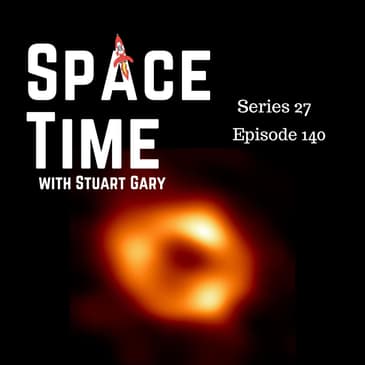
A new study questions the accuracy of the first-ever image of Sagittarius A, the supermassive black hole at the centre of the Milky Way. Researchers suggest the image may not accurately represent its appearance, proposing a more elongated accretion disc instead of the ring-like structure previously released by the Event Horizon Telescope.
*Methane in Titan's Crust
Data from NASA's Cassini spacecraft indicates that Saturn's moon Titan may have a methane-rich crust up to 10 kilometres thick. This insulating layer could explain Titan's shallow impact craters and its methane-rich atmosphere, providing insights into its unique geological and atmospheric dynamics.
*Updates on Earth's Ozone Hole
NASA reports that the annual ozone hole over Antarctica was smaller this year, ranking as the seventh smallest since recovery efforts began. The ozone layer is on track to fully recover by 2066, thanks to international agreements curbing ozone-depleting chemicals.
The Science Report
Antarctic ice core samples suggest Earth has already surpassed a 1.5°C global temperature rise due to human-induced climate change. A study links outdoor lighting at night to increased Alzheimer's risk for those under 65. LED lights on surfboards could reduce shark attacks by mimicking natural camouflage. Nord's latest survey reveals continued use of weak passwords, with "123456" and "password" among the most common.
www.spacetimewithstuartgary.com
www.bitesz.com
🌏 Get Our Exclusive NordVPN deal here ➼ www.bitesz.com/nordvpn. Enjoy incredible discounts and bonuses! Plus, it’s risk-free with Nord’s 30-day money-back guarantee! ✌
Check out our newest sponsor - Old Glory - Iconic Music and Sports Merch and now with official NASA merch. Well worth a look....
Become a supporter of this Podcast for as little as $3 per month and access commercial-free episodes plus bonuses: https://www.spreaker.com/podcast/spacetime-with-stuart-gary--2458531/support
00:00 New study suggests first ever picture of Milky Way's black hole might not be accurate
00:47 New study claims first ever images of Sagittarius A may be inaccurate
03:57 New study suggests Saturn's moon Titan may have an insulating methane crust
09:12 Scientists say Antarctic ozone layer could fully recover by 2066
20:04 New study suggests Earth has already passed 1.5 degrees Celsius warming attributable to climate change
21:24 A new study claims exposure to outdoor lighting at night increases Alzheimer's risk
25:29 Space Time with Stuart Gary is available on numerous podcast platforms
[00:00:00] This is SpaceTime Series 27 Episode 140, for broadcast on the 20th of November 2024.
[00:00:06] Coming up on SpaceTime, a new study suggests the first ever picture of the Milky Way's black hole might not be accurate, claims that methane might be infused in the crust of the Saturnian moon Titan, and NASA's latest update on Earth's ozone hole.
[00:00:23] All that and more coming up on SpaceTime.
[00:00:28] Welcome to SpaceTime with Stuart Gary.
[00:00:47] A new study claims that those historic first ever images of Sagittarius A star, that's the supermassive black hole at the centre of our Milky Way galaxy, might not be a true reflection of its actual appearance.
[00:01:00] The astronomers behind the new analysis say that their study points to Sagittarius A star having a more elongated accretion disk, as opposed to the ring-like donut image released back in 2022 by the Saturnian moon Titan.
[00:01:11] The event horizon telescope collaboration.
[00:01:14] Located some 27,000 light years away, Sagittarius A star has some 4.3 million times the mass of the Sun.
[00:01:22] And it's the central pivot point around which our entire Milky Way galaxy revolves.
[00:01:28] The event horizon telescope collaboration's image shows a central dark region where the black hole resides, circled by the light coming from superheated gas being accreted by immense gravitational forces.
[00:01:41] But this new report in the monthly notices of the Royal Astronomical Society suggests that part of this appearance may actually be an artifact caused by the way the image was put together.
[00:01:51] The study's lead author, Miyoshi Makoto from the National Astronomical Observatory of Japan, says their new image is slightly more elongated in the east-west direction and the eastern half is brighter than the western segment.
[00:02:04] Makoto says this appearance means the accretion disk surrounding the black hole is rotating at about 60% the speed of light.
[00:02:12] He hypothesizes that the ring image resulted from errors during the event horizon telescope's imaging analysis and that part of it was an artifact rather than the actual astronomical structure.
[00:02:23] The event horizon telescope observed Sagittarius A star in 2017.
[00:02:28] They used a network of eight ground-based radio telescopes using a technique known as radio interferometry to combine the results of these various telescopes into a single image.
[00:02:39] The results of all these observations were then published in 2022.
[00:02:43] It showed an image of a bright ring structure surrounding a central dark region indicating the presence of a black hole.
[00:02:50] Now in contrast to typical photography, data from these observations linking several widely separated radio telescopes contain gaps.
[00:02:58] And that required special algorithms to construct a complete image from the available data.
[00:03:03] In the new analysis, Makoto and colleagues applied more traditional methods to the event horizon data.
[00:03:09] Although the appearance of Sagittarius A star put forward in the new paper differs from the results of the event horizon team,
[00:03:15] both are plausible structures derived from the data using their respective methods.
[00:03:21] This is space time.
[00:03:23] Still to come, a new study looking at data from NASA's Cassini spacecraft suggests that Saturn's moon Titan has an insulating methane-rich crust which could be up to 10 kilometres thick.
[00:03:34] And NASA's released its latest update on the size of Earth's ozone hole.
[00:03:39] And the new study looking at data from NASA's Cassini spacecraft suggests that Saturn's moon Titan could have an insulating methane-rich crust which could be up to 10 kilometres thick.
[00:04:08] Titan has a special place in our solar system.
[00:04:11] You see, it's the only world other than Earth which is a thick atmosphere and where rain falls onto the ground forming streams and rivers which eventually flow into lakes and seas.
[00:04:23] But because Titan's extremely cold, the liquids there aren't water but rather hydrocarbons like methane and ethane.
[00:04:30] And on Titan, water is frozen solid forming the planet's bedrock.
[00:04:35] The new findings reported in the Planetary Science Journal reveal that methane gas may also be trapped within the ice,
[00:04:42] forming a distinct crust up to 10 kilometres thick which warms the underlying ice shell and may also explain Titan's methane-rich atmosphere.
[00:04:51] The new observations are based on a fresh analysis of Titan's impact craters, which it turns out are hundreds of metres shallower than expected.
[00:04:59] Also, only 90 impact craters have been identified on Titan.
[00:05:02] Now, this is a world some 5,150 kilometres wide.
[00:05:07] That's 50% larger than the Earth's moon and 80% more massive.
[00:05:11] In fact, Titan's the second largest moon in the solar system after Jupiter's moon Ganymede and it's larger than the planet Mercury.
[00:05:19] So, why does it only have 90 craters where places like the Moon and Mercury are smack bang full of thousands of craters?
[00:05:26] The study's lead author Lorraine Schumacher from the University of Hawaii says this was a very surprising result because based on other moons,
[00:05:33] one would expect to see far more impact craters on the surface and the craters should also be much deeper than what are observed on Titan.
[00:05:41] All that suggests something unique is happening on Titan, which must firstly be making the craters shallower and then making them disappear relatively quickly.
[00:05:49] So, Schumacher and colleagues developed computer models to see how the topography of Titan might relax and then rebound after an impact event if the ice shell was covered with a layer of insulating methane clathrate ice,
[00:06:02] a kind of solid water ice with methane gas trapped within the crystalline structure.
[00:06:07] Now, since the initial shape of Titan's craters is unknown, the authors modelled and compared two plausible initial depths based on fresh-looking craters of similar size on the similar-sized icy moon Ganymede.
[00:06:19] They were able to constrain the methane clathrate cross thickness to between 5 and 10 kilometres because simulations using that thickness produced crater depths that best matched the observations.
[00:06:30] Schumacher says the methane clathrate crust warms Titan's interior and that causes a surprisingly rapid topographic relaxation,
[00:06:38] and that results in crater shallowing at a rate similar to that of fast-moving warm glaciers on Earth.
[00:06:45] Estimating the thickness of the methane ice shell is important because it may help explain the origin of Titan's methane-rich atmosphere,
[00:06:51] and it helps researchers understand Titan's carbon cycle, liquid methane-based hydrological cycle, and changing climate.
[00:06:59] Schumacher says,
[00:07:00] Schumacher says,
[00:07:00] Titan's a natural laboratory to study how the greenhouse gas and methane warms and cycles through the atmosphere.
[00:07:06] Earth's own methane clathrate hydrates found in the permafrost of Siberia and below the Arctic sea floor are currently destabilising and releasing methane.
[00:07:16] Now, methane is four times worse as a greenhouse gas than carbon dioxide.
[00:07:20] And as Earth is heating up, more and more methane is being released.
[00:07:26] So, lessons from Titan can provide important insights into the process which is happening here on Earth.
[00:07:31] And the topography seen on Titan makes sense in the light of these new findings.
[00:07:37] Constraining the thickness of the methane clathrate ice crust indicates that Titan's interior is likely warm,
[00:07:43] not cold, rigid and inactive as previously thought.
[00:07:46] You see, methane clathrate is stronger and more insulating than regular water ice.
[00:07:51] A clathrate crust insulates Titan's interior, making the water ice shell very warm and ductile,
[00:07:57] and implies that Titan's ice shell is or at least was slowly convecting.
[00:08:01] And that's important because if life exists or ever has existed in Titan's oceans under its thick ice shell,
[00:08:08] any biomarkers would need to be transported up through Titan's ice shell to the surface,
[00:08:13] where scientists could more easily access it or at least view it with future missions.
[00:08:17] With NASA's Dragonfly mission to Titan scheduled to launch in July 2028,
[00:08:22] with arrival on the Saturnian moon in 2034,
[00:08:25] researchers will have an opportunity to make up-close observations of this moon
[00:08:29] and further investigate its icy surface.
[00:08:32] Needless to say, we'll keep you informed.
[00:08:35] This is space-time.
[00:08:37] Still to come, NASA provides its latest update on Earth's ozone hole,
[00:08:42] and later in the science report,
[00:08:44] new Antarctic core samples suggest planet Earth has already passed
[00:08:48] 1.5 degrees Celsius of global temperature rise above pre-industrial levels.
[00:08:53] All that and more still to come on space-time.
[00:09:11] A new study has found that the annual ozone hole that opens up above Earth's South Pole Antarctic region
[00:09:17] every year was relatively smaller this year.
[00:09:20] Scientists with NASA and the National Oceanographic and Atmospheric Administration NOAA
[00:09:25] suggest that at this present rate, the ozone layer could fully recover by 2066.
[00:09:30] During the peak of the ozone depletion season between September 7 and October 13,
[00:09:35] the 2024 area of ozone hole ranked the seventh smallest since recovery began in 1992.
[00:09:42] That's when the Montreal Protocol, a landmark international agreement to phase out ozone-depleting chemicals,
[00:09:48] began to take effect.
[00:09:50] At almost 20 million square kilometres,
[00:09:53] the monthly average ozone depletion region in the Antarctic this year
[00:09:57] was still nearly three times the size of Australia.
[00:10:00] The hole reached its greatest one-day extent for the year on September 28,
[00:10:05] when it was 22.4 million square kilometres.
[00:10:08] Scientists described the ozone hole as the area in which the ozone concentrations
[00:10:13] have dropped below the historical threshold of 220 Dobson units.
[00:10:17] In 2024, the concentration reached its lowest value of 109 Dobson units on October 5.
[00:10:24] The lowest value ever recorded over the South Pole was 92 Dobson units back in October 2006.
[00:10:31] The improvement is due to a combination of continuing declines
[00:10:34] in the use of harmful chlorofluorocarbons or CFCs,
[00:10:38] along with an unexpected infusion of ozone carried by air currents from north of the Antarctic.
[00:10:43] In previous years, NASA and NOAA have reported the ozone hole ranking using a timeframe dating back to 1979.
[00:10:50] That's when scientists began tracking Antarctic ozone levels using satellite data.
[00:10:55] Using that longer record, this year's hole ranked as the 20th smallest in area across 45 years of continuous observations.
[00:11:03] The Chief of Earth Scientists, Paul Newman from NASA's Goddard Space Flight Centre in Greenbelt, Maryland,
[00:11:09] says the gradual improvements seen over the past two decades shows that international efforts to curb ozone depleting chemicals are working.
[00:11:17] And that's important.
[00:11:19] You see, the ozone-rich layer high in the Earth's atmosphere acts as a planetary sunscreen,
[00:11:23] helping to shield the Earth from harmful ultraviolet radiation from the sun.
[00:11:28] Areas with depleted ozone allow more ultraviolet radiation to reach the Earth's surface,
[00:11:34] and that results in increased cases of skin cancer and cataracts.
[00:11:39] Excessive exposure to ultraviolet light can also reduce agricultural yields,
[00:11:43] and it can damage aquatic plants and animals in vital ecosystems.
[00:11:47] By the mid-1980s, the ozone layer had been depleted to such an extent
[00:11:52] that broad areas of the Antarctic stratosphere were essentially devoid of ozone by early October each year.
[00:11:58] Sources of damaging CFCs included coolants in refrigerators and air conditioners,
[00:12:04] as well as aerosols in hairspray, antiperspirant, and spray paints.
[00:12:08] Harmful chemicals were also released in the manufacturing of insulation foam
[00:12:13] and as components of industrial fire suppression systems.
[00:12:17] Scientists rely on a combination of different systems to monitor the ozone layer.
[00:12:22] These include instruments aboard NASA's AORUS satellite, the NOAA-20 and NOAA-21 satellites,
[00:12:28] and the Suomi NPP satellite, which is jointly operated by NASA and NOAA.
[00:12:33] NOAA scientists also released instrumented weather balloons from the South Pole Baseline Atmospheric Observatory
[00:12:38] to monitor ozone concentrations directly overhead.
[00:12:42] This report from NASA TV.
[00:12:47] Have you ever heard that something called the ozone layer is thinning?
[00:12:50] Or that your aerosol hairspray is what's causing it?
[00:12:53] Or that it leads to more severe sunburns and UV rays?
[00:12:57] This is referring to the ozone hole.
[00:12:59] But what exactly does it all mean?
[00:13:02] Welcome to Ozone 101.
[00:13:06] The ozone hole's proper name is actually the Antarctic ozone hole,
[00:13:10] because when it forms, it forms over Antarctica.
[00:13:13] But before we get into what that is, let's first talk about what ozone itself is.
[00:13:19] Ozone is a gas comprised of three oxygen atoms.
[00:13:23] About 90% of the Earth's ozone exists in the stratosphere,
[00:13:27] the layer of the atmosphere that extends from 8 to about 30 miles above the Earth's surface.
[00:13:31] In fact, the stratosphere is often referred to as the ozone layer.
[00:13:36] Ozone acts as a sunscreen around the Earth, filtering out harmful ultraviolet radiation, or UV rays,
[00:13:42] which are mainly absorbed in the stratosphere.
[00:13:45] Without an ozone layer, UV radiation would sterilize the Earth.
[00:13:49] With a damaged but still present ozone layer, there would be more sunburns, more skin cancer cases,
[00:13:55] increased cases of eye damage, the wilting and loss of trees and plants,
[00:14:00] and significantly lessened crop yields.
[00:14:02] Suffice it to say, ozone is pretty important for the planet.
[00:14:05] So, what causes the ozone hole?
[00:14:08] There are several major factors that, together, lead to the destruction of ozone,
[00:14:13] thus creating the ozone hole.
[00:14:16] Those factors are,
[00:14:17] 1. Very strong winds around the South Pole, or the polar vortex.
[00:14:23] 2. The sun's rays.
[00:14:25] 3. Chlorine and bromine compounds from ozone-depleting substances.
[00:14:30] 4. Cold temperatures below negative 109 degrees Fahrenheit in the stratosphere,
[00:14:36] which form a specific kind of cloud, polar stratospheric clouds.
[00:14:41] The polar vortex forms in the Southern Hemisphere stratosphere during the winter as temperatures drop.
[00:14:46] And when sunlight returns to Antarctica in late winter and early spring,
[00:14:51] temperatures are still cold enough to form polar stratospheric clouds,
[00:14:54] and now there's also sunlight.
[00:14:56] Chemical reactions take place on the cloud particle surfaces,
[00:15:00] converting unreactive forms of chlorine and bromine into reactive chemicals.
[00:15:05] The vortex acts as a sort of container,
[00:15:08] confining the contents of the Antarctic stratosphere within its bounds,
[00:15:12] allowing the reactive chlorine and bromine compounds to destroy ozone molecules.
[00:15:17] That's when depletion can occur on a large scale.
[00:15:20] With the presence of sunlight,
[00:15:22] the reactive chlorine and bromine compounds produced during winter begin to deplete ozone molecules
[00:15:28] by sealing one of their oxygen atoms, leaving just oxygen gas or O2 in its wake.
[00:15:34] As long as the polar stratospheric clouds are present,
[00:15:37] these reactions will occur over and over again until the ozone is nearly gone.
[00:15:42] This forms what we call the ozone hole, but that's really a misnomer.
[00:15:46] It's actually more of a thinned layer.
[00:15:49] In mid to late spring, the vortex begins to break up,
[00:15:53] and the polar air depleted of ozone is mixed back in to the rest of the southern hemisphere.
[00:15:58] The ozone hole is gone.
[00:16:01] Ozone depletion has still occurred,
[00:16:03] it's just no longer all concentrated in one small area.
[00:16:07] It's spread around the atmosphere.
[00:16:09] So why is the ozone hole bigger and longer lasting in certain years?
[00:16:13] Well, it all comes down to weather.
[00:16:16] Just like some winters are colder and longer than others on the Earth's surface,
[00:16:20] the same goes for weather in the stratosphere.
[00:16:22] If the Antarctic stratosphere stays cold,
[00:16:25] the polar vortex and the ozone hole within it will persist.
[00:16:29] And in years with cold springtime temperatures,
[00:16:32] the polar vortex and the ozone hole are large.
[00:16:36] Make no mistake, ozone depletion is not a natural thing.
[00:16:39] It stems from human emissions of chemicals called chlorofluorocarbons or CFCs.
[00:16:45] In the early 1900s, refrigerators used toxic gases like ammonia and methyl chloride as refrigerants.
[00:16:52] Unfortunately, this led to fatalities as the toxic gases leaked out of the appliances.
[00:16:57] So the search began for a non-toxic and non-flammable chemical that could be used as a refrigerant.
[00:17:03] Thus, the CFC was born.
[00:17:05] There are many types of CFCs, but the two most common are CFC 11 and CFC 12.
[00:17:12] In the 1930s, the production and consumption of CFCs began to skyrocket.
[00:17:17] By the early 1980s, over 300 million pounds of CFC 11 alone were being released into the atmosphere each year.
[00:17:26] Then, in 1985, British researcher Joe Farman and his colleagues published their research on large seasonal ozone losses over Antarctica.
[00:17:35] Thanks to the combined efforts of the quick acting science community, industry and policymakers,
[00:17:41] the Montreal Protocol was signed in 1987, restricting the production and consumption of CFCs.
[00:17:47] Every nation on Earth has now signed the Montreal Protocol.
[00:17:51] So, for the record, your hairspray and aerosol deodorant hasn't been harming ozone since these laws went into effect in the 80s.
[00:17:59] But why do we still see an ozone hole today?
[00:18:02] First, CFCs have lifetimes of 50 to 100 plus years and it will take some time for the concentration of CFCs in the atmosphere to drastically decline.
[00:18:13] Second, there are still CFCs being released into the atmosphere today.
[00:18:16] For example, as an old refrigerator or air conditioning unit deteriorates in a landfill, the CFCs within are slowly released.
[00:18:25] From the time a CFC is released into the air, it takes about five years for its impact to be felt over Antarctica, where depletion will occur.
[00:18:34] The CFCs emitted at the surface eventually rise into the tropical stratosphere.
[00:18:39] The ozone in the stratosphere blocks most of the sun's UV radiation.
[00:18:44] So, the CFCs have to rise above most of the ozone layer before sunlight can then break them down.
[00:18:50] Once they get high enough, solar radiation releases the chlorine,
[00:18:54] most of which eventually goes into ozone-safe forms like hydrochloric acid and chlorine nitrate.
[00:19:00] When these compounds make their way to Antarctica, those chemical reactions start up.
[00:19:04] And if you're wondering why Antarctica, these reactions are unique to the polar regions because of their extreme low temperatures and presence of polar stratospheric clouds.
[00:19:15] One chlorine atom can destroy thousands of ozone molecules.
[00:19:19] And millions of tons of CFCs were pumped into the atmosphere from the 1920s through the early 1990s.
[00:19:27] As CFC concentrations in the atmosphere continue to decline, the ozone hole is expected to gradually become less severe.
[00:19:34] And scientists expect the Antarctic ozone to recover back to healthy levels around the year 2070.
[00:19:41] This is space-time.
[00:19:43] And time now to take another brief look at some of the other stories making news and science this week with a science report.
[00:20:03] A new study looking at Antarctic ice core samples has suggested that planet Earth has already passed the 1.5 degree Celsius global temperature rise attributable to human-induced climate change.
[00:20:17] The findings reported in the journal Nature Geoscience used ice core data to estimate how global surface temperatures and atmospheric carbon dioxide levels have changed over the past 2,000 years.
[00:20:28] Researchers say that from their estimates, human-induced warming likely reached 1.49 degrees Celsius in 2023 compared to a pre-industrial baseline level from the 1300s to the 1700s.
[00:20:41] Preventing global temperatures from exceeding 1.5 degrees Celsius of warming has been a key goal of the Paris Agreement, made at the United Nations Climate Change Conference in 2015.
[00:20:51] The agreement, however, is faulty as it allows two of the world's largest CO2 producers, namely China and India, to continue polluting the air with greenhouse gases until 2030.
[00:21:03] In fact, the World Meteorological Organization says China remains the world's biggest carbon dioxide polluter, producing a third of the total global output that amounts to more than 10.2 million tonnes annually.
[00:21:15] That's double that of the United States, which is the world's second-worst polluter, and four times that of India, which holds third place.
[00:21:24] A new study claims exposure to outdoor lighting at night could be increasing Alzheimer's prevalence more than any other risk factor for people aged under 65.
[00:21:34] The findings reported in the journal Frontiers of Neuroscience studied light pollution maps for 48 U.S. states and incorporated medical data about variables known or believed to be risk factors for Alzheimer's.
[00:21:48] They found that for people aged under 65, Alzheimer's prevalence was more strongly linked to nightlight pollution than just about any other disease factor, including alcohol abuse, chronic kidney disease, depression and obesity.
[00:22:01] Only disease factors such as diabetes, high blood pressure and stroke were more strongly linked to Alzheimer's than light pollution.
[00:22:10] Scientists have discovered that adding LED lights to surfboards and wetsuits could be a simple way to prevent attacks by great white sharks.
[00:22:18] The study, reported in the journal Current Biology, shows that the lights act as a type of camouflage, confusing the silhouette which white pointers normally search for.
[00:22:27] Some marine species emit light from their undersides as a camouflage strategy because any predators below them looking for a snack would be searching for a shape illuminated by sunlight from above.
[00:22:38] So, scientists from Macquarie University tested a similar strategy by fitting LED lights on sealed decoys towed behind a boat to see if different brightness levels would impact predator attacks.
[00:22:49] They found sharks were far more likely to interact with sealed decoys that didn't have LED lights attached, and the brighter the light, the less likely sharks were to interact with the fake seals.
[00:23:00] The authors say that because white pointers have poor visual acuity anyway, and they also lack colour vision, the strategy is especially likely to work on them.
[00:23:11] Nord have just released their latest global survey of people's passwords, and the results shocking.
[00:23:16] With the details, we're joined by technology editor Alex Sahar of Royt from techadvice.life.
[00:23:22] Yeah, this is their sixth year of doing this, and they're saying that, look, the passwords people are choosing are still really bad.
[00:23:29] So they've analysed a 2.5 terabyte database of publicly available sources.
[00:23:35] Obviously, they didn't hack anything themselves.
[00:23:36] They saw what the passwords were out there that people were using.
[00:23:40] And look, globally, the number one password that people use is 123456, which is just ridiculous.
[00:23:47] I mean, if this is the password you use, you obviously don't really care about your digital security.
[00:23:53] I mean, would you leave your house unlocked?
[00:23:54] Would you leave your car unlocked?
[00:23:56] This is also one of the passwords that people are using in business settings.
[00:24:00] And Nord was able to determine both consumer addresses and business addresses because, well, business name as part of the email address generally indicates it's from a business.
[00:24:08] And in Australia, the number one password for both consumers and for businesses is the word password, which is no security at all.
[00:24:17] Well, I use non-sequential letters, numbers and symbols.
[00:24:20] Obviously, you should be using complicated passwords.
[00:24:23] But the more complicated passwords you have, the harder it is to remember.
[00:24:26] You want to write them down into a book.
[00:24:28] You're worried people are going to take the book and know your passwords.
[00:24:30] So you use a password manager.
[00:24:33] Now, Nord has one of those.
[00:24:34] Norton 360 has one of those.
[00:24:36] There's the One Password app.
[00:24:38] Your phone, whether it's Android or iPhone, your browser, they have these in there.
[00:24:43] They can generate passwords for you.
[00:24:45] And if you use a password app, you only have to remember one password to be able to get into that app.
[00:24:50] And then normally those apps will then fill the passwords in for you.
[00:24:54] But there's another way where you can use your device as a pass key.
[00:24:58] So here you don't have to remember any passwords at all, except the one to get into your phone.
[00:25:02] And then your phone or your computer can be the actual second or even third factor of authentication.
[00:25:09] So in the future, we'll have no passwords at all.
[00:25:12] It'll be your devices.
[00:25:13] It'll be both a biometric or password to get into the phone.
[00:25:17] And then your phone itself is the password.
[00:25:18] So this is a problem of the current time.
[00:25:21] And I would suggest don't use really simple passwords that give the bad guys an opportunity to try that password everywhere else in your life.
[00:25:29] That's Alex Saharov-Royt from techadvice.life.
[00:25:33] And that's the show for now.
[00:25:50] Space Time is available every Monday, Wednesday and Friday through Apple Podcasts, iTunes, Stitcher, Google Podcasts, Pocket Casts, Spotify, Acast, Amazon Music, Bytes.com, SoundCloud, YouTube, your favorite podcast download provider and from Space Time with Stuart Gary.com.
[00:26:09] Space Time is also broadcast through the National Science Foundation on Science Zone Radio and on both iHeart Radio and TuneIn Radio.
[00:26:17] And you can help to support our show by visiting the Space Time store for a range of promotional merchandising goodies.
[00:26:24] Or by becoming a Space Time patron, which gives you access to triple episode commercial free versions of the show, as well as lots of bonus audio content which doesn't go to air, access to our exclusive Facebook group and other rewards.
[00:26:37] Just go to spacetimewithstuartgary.com for full details.
[00:26:42] You've been listening to Space Time with Stuart Gary.
[00:26:45] This has been another quality podcast production from Bytes.com.