
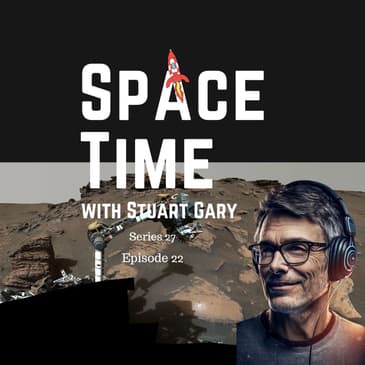
*Technical Troubles for NASA's Mars Perseverance Rover
NASA's Mars Perseverance rover faces a new challenge as engineers work to stabilize a dust cover on one of the rover's crucial science instrument cameras. The Sherlock instrument's cover remains partially open, hindering its quest to find signs of past microbial life in Jezero Crater. Will the team overcome this cosmic hiccup? Stay tuned.
*Was Snowball Earth Triggered by an Asteroid Impact?
A new study suggests that Snowball Earth events, which turned our planet into an icy wasteland, could have been sparked by an asteroid impact winter. It's a chilling thought that adds a new layer to the mystery of Earth's ancient climate catastrophes.
*Ancient Astronomy and Britain's Standing Stones
Britain's prehistoric standing stones have long puzzled archaeologists and astronomers alike. Now, research reveals that these ancient monuments were precisely aligned with the sun and moon, reflecting a deep connection between our ancestors and the cosmos.
*Testing the Next-Gen NASA Spacesuit in Microgravity
NASA's future Artemis astronauts will don new spacesuits, and the latest design is undergoing microgravity testing aboard the "vomit comet." Will these suits meet the stringent demands of spacewalks and lunar exploration?
Join us on SpaceTime with Stuart Gary as we explore these intriguing stories from our universe's vast expanse.
Listen to SpaceTime on your favorite podcast app with our universal listen link: https://spacetimewithstuartgary.com/listen and access show links via https://linktr.ee/biteszHQ
For more SpaceTime and show links: https://linktr.ee/biteszHQ
For more space and astronomy podcasts visit our HQ at https://bitesz.com
Your support is needed... **Support SpaceTime with Stuart Gary: Be Part of Our Cosmic Journey!** Help us continue to unravel the mysteries of the universe and the wonders of space exploration. By becoming a patron, you'll gain access to commercial-free episodes, exclusive content, and the satisfaction of propelling us forward on this stellar journey. [Join the Journey with SpaceTime](https://bitesznetwork.supercast.tech/)
#space #astronomy #science #spacetime #podcast #MarsRover #SnowballEarth #StandingStones #NASA #Spacesuit
Become a supporter of this podcast: https://www.spreaker.com/podcast/spacetime-with-stuart-gary--2458531/support.
[00:00:00] reader. Some people may call it the Simple Life. You know it's anything but simple. There's
[00:00:06] always work to be done. Grass to mine, gravel to spread, gardens to chill, snow to blow,
[00:00:11] hay to bale, bales to stack, host to dig, loads to haul and you need a reliable, versatile,
[00:00:17] easy to use tractor for every season. Do it all with a John Deere 5 Series tractor. Contact
[00:00:23] your local John Deere dealer to learn more.
[00:00:25] This is SpaceTime Series 27 Episode 22 for broadcasts on the 19th of February 2024.
[00:00:39] Coming up on SpaceTime, technical issues hit NASA's Mars Perseverance rover was Snowball
[00:00:45] Earth caused by an asteroid impact winter. And the next generation NASA space suit now
[00:00:52] being tested in microgravity. All that and more coming up on SpaceTime.
[00:00:58] Welcome to SpaceTime with Stuart Gary.
[00:01:16] Mission managers and engineers are working to resolve a technical issue which is seriously
[00:01:23] affecting NASA's Mars Perseverance rover. They're trying to stabilise a dust cover
[00:01:28] on one of the car size vehicle's science instrument cameras. Data and imagery from
[00:01:33] Perseverance indicates that one of two covers designed to keep dust from accumulating on
[00:01:38] the optics of the Sherlock instrument remains partially open. In this position the cover
[00:01:44] interferes with science data collection operations. Mounted on the rover's robotic arm, the scanning
[00:01:50] habitable environment with raymen and luminescence for organics and chemicals instrument, better
[00:01:55] known as Sherlock uses cameras, spectrometer and a laser to search for organic compounds
[00:02:01] and minerals that have been altered by watery environments and maybe science of past microbial
[00:02:06] life on the red planet. Sherlock is NASA's main data collection instrument on Perseverance
[00:02:12] which has been exploring Gizro crater since February 2021.
[00:02:17] Last month mission managers determined that the cover was oriented in such a position
[00:02:21] that some of its operations simply could not be successfully undertaken. Ever since then
[00:02:26] an engineering team has been investigating to determine the root cause of the problem
[00:02:31] and search for a possible solution. To better understand the behaviour of the cover's
[00:02:35] motor, the team have been sending commands to the instrument that alter the amount of
[00:02:39] power it's receiving. With the cover in its current position, the instrument cannot use
[00:02:44] its laser on rock targets and so it can't kill its spectroscopic data. However, imaging
[00:02:50] microscopy can still be done using the wide-angle topographic sensor for operations in engineering
[00:02:55] at an earnest Watson. It's a colour camera on Sherlock that's used for taking close-up
[00:03:00] images of rock grains and surface textures and which operates using a different aperture.
[00:03:06] Already making its way to explore an area known as Beehav Giza, the six-willed robotic
[00:03:10] rover, marked its 1,000th Martian day or soul on the red planet back in December. That's
[00:03:16] more than 300 souls beyond its primary mission.
[00:03:20] Since the rover's landing back on February 18, 2021, Sherlock scanned and provided rich
[00:03:25] data on 34 rock targets, creating a total of 261 hyperspectral maps of those samples.
[00:03:33] Experience uses a radioisotope power system. Its desire is based on NASA's other currently
[00:03:39] operating rover on the red planet, the Mars Curiosity rover, which is still going strong
[00:03:44] after more than 11 years or 4,000 souls on the surface of Mars.
[00:03:50] This space time.
[00:03:52] Still to come was Snowball Earth caused by an asteroid-impact winter and we look at the
[00:03:57] astronomy of Britain's ancient standing stones. All that and more still to come, on
[00:04:03] space time.
[00:04:06] A new study claims that Snowball Earth events which cover the planet in ice for thousands
[00:04:26] of years could have been triggered by an impact winter caused by a large asteroid strike.
[00:04:31] The findings reported in the journal Science Advances provides a new option for a question
[00:04:36] that's been stumping scientists for decades about these most dramatic climate shifts in
[00:04:41] Earth's history. Climate models have known since the 1960s that if the Earth became sufficiently
[00:04:46] cold, the high reflectivity of its snow and ice could create a runaway feedback loop.
[00:04:52] That would create more sea ice and even colder temperatures until eventually the planet would
[00:04:57] be completely covered in ice and snow. These very conditions, a nodal have occurred at
[00:05:02] least twice during Earth's near protozoeic era between 720 and 635 million years ago.
[00:05:10] However if it's to explain what initiated these periods of global glaciation which
[00:05:14] have become known as Snowball Earth events have been inconclusive.
[00:05:19] This theory who's centered on the idea that greenhouse gases in the atmosphere somehow
[00:05:23] declined to the point where snowballing began. Another popular hypothesis involves changes
[00:05:30] in the Malanchovit cycles which dictate the tilt of Earth's axis and changes in the
[00:05:34] shape of Earth's orbit around the sun. And yet another possibility involves changes
[00:05:39] in ocean currents and landmass heating caused by continental drift.
[00:05:43] This study's lead author Min Min Fove from Yale University says they decided to explore
[00:05:48] an alternative possibility. What if an extraterrestrial impact caused this climate change transition
[00:05:54] very abruptly, what astronomers refer to as an impact winter?
[00:05:58] To work out what would happen, the authors used a sophisticated climate model which represents
[00:06:03] atmospheric and oceanic circulations as well as the formation of sea ice under different
[00:06:07] conditions. They then applied their model to the aftermath of a hypothetical asteroid
[00:06:12] impact in four distinct geological periods in the past. The pre-industrial period before
[00:06:18] 150 years ago, the last glacial maximum 21,000 years ago, the Cretaceous period around 66
[00:06:26] million years ago and the Neo-Proteozoic Epoch between a billion and 542 million years
[00:06:32] ago. For two of the warmer climate scenarios, the
[00:06:35] Cretaceous and pre-industrial, the authors found that it was unlikely that an asteroid
[00:06:40] strike could trigger global glaciation. After all, we had one of those when the chicks
[00:06:45] of blue basteroids slammed into the Yucatan Peninsula, that ended more than 75% of all
[00:06:50] life on the planet, including all the non-avian dinosaurs. But for the last glacial minimum
[00:06:56] and Neo-Proteozoic scenarios, when the Earth's temperature may have been cold enough already
[00:07:00] to be considered a nice age, an asteroid impact just might have been enough to tip the Earth
[00:07:05] into a snowball state. Surprisingly, they found that given sufficiently
[00:07:10] cold initial climate conditions, a snowball state after an asteroid impact could develop
[00:07:15] over a global ocean in just 10 years or so, with sea ice at the equator reaching 10 meters
[00:07:21] in thickness. Now by comparison, the Arctic Ocean today averages sea ice thickness between
[00:07:26] 1 and 3 meters. As for chances of an asteroid induced snowball
[00:07:30] Earth period in the years to come, all the authors say that's highly unlikely to global
[00:07:36] warming. This space time. Still to come, the astronomy behind ancient
[00:07:42] Britain's standing stones, and NASA testing their next-generation spaces for the International
[00:07:47] Space Station in microgravity. All that and more still to come, on Space Time.
[00:07:53] All across Europe, including the British Isles, there are standing stones, ancient
[00:08:14] monuments, dating back thousands of years. There's always been mystery associated with
[00:08:20] the likely origins of these. From Stonehenge to Orkney, these standing stones which predate
[00:08:26] the pyramids have been a source of wonder and speculation. Were there religious monuments,
[00:08:32] or an astronomically linked agricultural calendar?
[00:08:35] A few years ago, scientists at the University of Adelaide were able to statistically prove
[00:08:40] for the first time that the earliest standing stone monuments in Britain, the Great Circles,
[00:08:46] were constructed specifically in line with the movement of the Sun and Moon some 5,000
[00:08:51] years ago. Their research, published in the Journal of
[00:08:54] Archaeological Science reports, used innovative two- and three-dimensional technologies to
[00:08:59] construct quantitative tests of the patterns of the alliance of the standing stones.
[00:09:05] The study's lead author, Gail Higginbottom, who at the time was the visiting research
[00:09:08] fellow at both the Australian National University and the University of Adelaide, says nobody
[00:09:13] had statistically determined that a single stone circle was constructed with astronomical
[00:09:18] phenomena in mind prior to this research. In other words, up until then, it was all
[00:09:23] just speculation. So, Higginbottom and colleagues examined the
[00:09:27] oldest great stone circles built in Scotland, Kalamish on the Isle of Lewis, and Stennis
[00:09:33] on the Isle of Orkney, both of which predate Stonehenge's standing stones by around 500
[00:09:39] years. What they found was a great concentration of alignments towards both the Sun and the
[00:09:44] Moon at different times in their cycles. It's important to remember that 2000 years
[00:09:49] later in Scotland, much simpler monuments were still being built that had at least one
[00:09:54] of the same astronomical alignments found in the Great Circles. The stones however are
[00:09:59] not just connected with the Sun and the Moon. The authors also discovered a complex relationship
[00:10:04] between the alignment of the stones, the surrounding landscape and horizon, and the movements
[00:10:09] of the Sun and Moon across that landscape. Higginbottom says it was the final proof they
[00:10:14] needed that ancient Britons connected the Earth to the sky with their earlier standing
[00:10:19] stones, and that this practice continued in the same way for some 2000 years.
[00:10:25] By examining sites in detail, the authors found that about half of the sites were surrounded
[00:10:29] by just one landscape pattern, and the other half of the sites were composed of the complete
[00:10:34] opposite. And these chosen surroundings would have influenced the way the Sun and the Moon
[00:10:39] was seen, especially in the timing of their rising and setting on special days, like when
[00:10:44] the Moon appears at its most northerly position on the horizon, which only happens every 18.6
[00:10:50] years. For example, at 50% of the sites, the northern horizon is relatively higher and
[00:10:56] closer at the southern horizon and the summer solstice sun.
[00:10:59] rise is out of the highest peak in the north. And at the other 50% of the sites, it's the southern
[00:11:05] horizon which is higher and closer than the northern and the winter solstice sun rises out of these
[00:11:10] highest horizons. Higginbottom says it appears the people of the day chose to erect these giant
[00:11:16] stone monuments very precisely within the landscape and in relation to the astronomy they knew.
[00:11:21] She says they invested a tremendous amount of effort and work to do so,
[00:11:26] which tells modern day scientists about their strong connection with their environment and how
[00:11:31] important it must have been for them. 'Most certainly as far as individual statistical evidence for
[00:11:36] individual circles as opposed to looking at groups of circles for example this is the first time
[00:11:41] that we've actually been able to confirm that individual circles have a complex array of
[00:11:47] orientations regarding different parts of the solar and lunar cycles and other reason for that
[00:11:53] is that when people were looking at the stone circles previously they used to look at just the
[00:11:57] orientations that they thought hit on the sun or the moon and they ignored those that didn't.
[00:12:02] So even if they tried to do some kind of assessment on it they weren't approaching it in a very
[00:12:08] fully sound manner. So now we can conclude that we've done that and we've got excellent results
[00:12:14] where both the circle of Kalanish, which is on the west coast and the Isle of Lewis of Scotland and
[00:12:21] Orkney, the stone circle and this most certainly say 97.7% sure that they are set up in regards to
[00:12:30] astronomical phenomena. And how did you do the research? So we had two approaches.
[00:12:35] The first one was we had to do a very specific statistical test that was developed by my colleague
[00:12:40] Roger Clay. How much debt in depth would you like me to go into that? Couple of lines? Well we're
[00:12:47] dealing with something that was 5,000 years ago when these things were first set up.
[00:12:51] So obviously the sky was different then you had to account for all that and also the landscape
[00:12:58] although the hills were there nevertheless the landscape may have appeared different in terms
[00:13:02] of vegetation and that sort of thing. All these environmental factors need to be considered as
[00:13:06] well. So what did you basically do? Yes so first of course we did run our programs to ensure that
[00:13:11] we knew exactly where the sun and the moon were rising and setting at the times that these stones
[00:13:17] have been shown to be erected as scientific dating has shown for them to be erected and then on top
[00:13:23] of that we looked at or examined the possibility of the vegetation cover in the areas and basically
[00:13:30] certainly for western Scotland it was shown that there was either very very open kind of like a
[00:13:36] scrub land equivalent and partial very very open basically particularly on western Lewis very very
[00:13:44] open and western Scotland generally and on Awkeny during that time it would have been much the
[00:13:49] same so when there were trees it was very open or sometimes just open patches in these two
[00:13:55] particular areas and we've looked at other areas individually. Is it difficult to put a date on
[00:13:59] these things? How does one date start? You can't use carbon dating for stone I guess so you're looking
[00:14:04] at something which is buried somewhere near it I guess. How did you do it? Actually I didn't do
[00:14:08] it but other people. So for example a gentleman by the name of Patrick Ahsmore did excavation of
[00:14:14] Cavendish and they looked at the different times that specific stones were erected or not and other
[00:14:21] activities around the stone circle so they confirmed the different kinds of dating you do us through
[00:14:28] burnt material so for example wood or bowing and both have been found at Stennis and Cavendish.
[00:14:35] That gave scientists a pretty good idea of when these things were erected I guess the fact that
[00:14:39] we're seeing these sorts of stone circles throughout what we now call the British Isles but also we'll
[00:14:45] see them in parts of Europe as well. Are we looking at and I know this isn't your specific area of
[00:14:50] expertise but are we looking at something which was a fairly literally a broad church I guess
[00:14:54] something that was practiced over a wide area. Certainly standing stone monuments were placed
[00:14:59] over a wide area. Right from Ireland until Eastern Europe and beyond in fact India,
[00:15:06] China, other places right through at slightly different times. Standing stone circles though
[00:15:12] certainly not as prevalent as perhaps stone rows or single standing stones and
[00:15:18] stone circles are most prevalent in the British Isles, western Europe, Spain, Portugal, I've got
[00:15:24] few in Scandinavia. No confirmed circles in Germany but lots of standing stones. The circles tend to
[00:15:30] be part of a burial monument as opposed to a separate standing stone circle but there are great
[00:15:35] patches through the European continent where people chose to continue building their monuments
[00:15:40] in wood and earth. So there's a very interesting division there between the groups of people who
[00:15:45] adopted the Megalithic culture and those who didn't. Does it go with trade? Haha interesting
[00:15:50] question. I think that in the very very early days of when for example agriculture was first
[00:15:57] coming in through Europe I think that that is a possibility I think it would have been trade but
[00:16:02] also the movement of peoples because sometimes people brought this different and the new it's
[00:16:08] called the Neolithic sort of agriculture and the new stone age coming through parts of Europe
[00:16:13] such as southeastern Europe and moving through central Europe and other times it was trade so
[00:16:19] it would have been a combination. Nothing simple I'm afraid sorry I'd like to say
[00:16:22] with them but it's not. Show them as important. Yeah exactly. We like to try and keep it simple
[00:16:28] but then reality overtakes us. Yeah there's always caveats in any sort of research. Absolutely
[00:16:34] I agree with you for later. What got you interested in this? What got me most interested in it was
[00:16:39] when I first saw a very tiny tiny article in Scientific American many years ago on the
[00:16:45] standing stones of Scotland or one one in particular and my colleagues said to me
[00:16:50] why don't you do this for your PhD. Maybe you could really solve some of the issues so
[00:16:55] it all began there and I have been addicted to it ever since. Moving through from monument
[00:17:01] to monument and place to place across Scotland and branching out now through the British Isles
[00:17:05] and parts of Europe to see whether or not how much there is a connection between the peoples
[00:17:10] and culturally of those who are using standing stones. It's been a lot of work in Australia
[00:17:15] looking at Aboriginal astronomy and the role that the night skies play in Aboriginal culture
[00:17:20] and one thing I've seen by looking at that is that it simply mirrors what's happening everywhere
[00:17:25] else in the world. Is that what you're seeing? If you're certainly referring to the idea that
[00:17:30] people were closely wedded to the night sky and the day sky as well I would say absolutely
[00:17:37] that the sky itself you know in different ways of course because Indigenous people of Australia
[00:17:42] often looked at the dark spaces in between the bright white lights so to speak and they
[00:17:48] had their shapes and their dream time connected to these identities and they then mirrored
[00:17:55] what happened to them in their dream time on earth as well. And overseas ethnographically
[00:18:01] you have very similar models but with constellations and I think that in ancient times that people
[00:18:07] were very closely or prehistoric ones or very very closely connected to their landscape. They
[00:18:11] had to be because it was a life and death situation and it was their full-time living space. You pay
[00:18:17] attention to what's going on if you're living in it. Is it just for agricultural purposes or is
[00:18:22] there more to it than that? All we really have are the stones. There's no written work associated
[00:18:26] with this. What do you surmise from what you've done? I think there are two very important things
[00:18:32] going on that they're both tightly entwined and that is I think that the standing stones are in
[00:18:38] places that people already knew about but at these places and I'll explain this because it's
[00:18:43] something that we haven't really touched on is that the standing stones and Britain at least
[00:18:47] are in very specific places we've discovered which allow you to view the sun and the moon
[00:18:52] from very specific perspectives. So for instance you can at the half of sight see one perspective
[00:19:00] and loosely speaking and at the other half of the sights another perspective and so the first
[00:19:07] perspective is that when you're standing at your stone circle that you will have the northern horizon
[00:19:13] very high and quite close to you relatively. The south will be very distant and low compared to
[00:19:19] the north. The summer solstice sun will rise out of the highest peak in the north east out of this
[00:19:25] range or hillock or mountain depending on the landscape and set in the the high mountain in the north
[00:19:31] west. If you turn south the winter solstice sun will rise and set out of little hills or they could
[00:19:37] be mountains at a great distance from the southeast and set into a hill in the southwest and often
[00:19:43] it will travel over water to do so and so you have all these amazing setups that they've done that
[00:19:49] can only be viewed at these specific locations and what we discovered that we discovered that for
[00:19:55] scores of sites in western Scotland which are Bronze Age about 1,500 BC so that's about 3,500
[00:20:02] years ago and we now know those two great circles we talked about at the beginning have the same
[00:20:07] setup and so to get back to your question therefore they know about these places already so I don't
[00:20:13] think that they're already agricultural because as soon as they built standing stones they already
[00:20:19] knew about those places before agriculture had come agriculture was coming into that area
[00:20:23] around the same time. They will mainly are herders but they did do some agriculture but it wasn't as
[00:20:29] big as it was down south so to speak I think that what they've done is actually represent
[00:20:34] their cosmological understanding of the universe and through these standing stones and how they see
[00:20:39] the sun rises set out of those very special setups that they've done they're showing themselves and
[00:20:44] it represents the site that they understand that the universe works as a cycle and that
[00:20:49] their the cycle of themselves work as opposition so you've got day and night the sun rising in the
[00:20:54] north for example at some of Solstice the full moon that can only rise in the south at the
[00:21:00] summer solstice if it's at its most extreme rising and setting point which only occurs every 18.6 years
[00:21:07] and all these kind of complicated things go on enough information in fact that they could even
[00:21:12] if they wanted to predict the clips that they knew about that sort of thing so there's more
[00:21:16] to it than that's the nearly thing. It's a very detailed culture isn't it? It is very detailed and
[00:21:22] and very and very complex very complex and it's also linked to the cult of the dead because you
[00:21:28] will always find the dead associated with standing stones. Oh that was my next question are there
[00:21:33] burial sites nearby so I guess you've just answered that. Yes and in very very different ways when
[00:21:39] they're associated directly with the standing stones they're very frequently
[00:21:43] cremated dead and you get parts of people's bodies placed cremated bones that is placed in
[00:21:50] the socket of the standing stones so they put them in before they put the people in or parts of
[00:21:55] before they put the standing stone there and then they may also
[00:21:59] put a cremation burial inside a jar and bury that next to the standing stone or it may in fact be
[00:22:05] next to where they bury the cremation in a stone slab. Coughram underneath the ground and put a nice
[00:22:12] stone monument over that, you know, array of a can that we call it. So the dead are associated
[00:22:18] in many different ways with these standing stones and stone henge itself is known to have many,
[00:22:23] many dead associated with it. With some standing stands I believe there's also evidence of festivals
[00:22:28] associated with that animal bones, things like that. Oh yes, we've got something very similar
[00:22:34] also happen at Stennis. So certainly nearby there may have actually been major festivals occurring,
[00:22:39] whether that's an association with the dead or not as well. I'm unsure but they've also found
[00:22:45] bones that are associated with specific seasons in relation to areas near Stonehenge and they've
[00:22:52] decided they may well have been the special gathering times that people met together for either trade
[00:22:58] or other kinds of connections between groups across a large area. Let's scale Higginbottom
[00:23:03] who at the time of our interview was a visiting research fellow with the University of Adelaide
[00:23:08] and the Australian National University. This space time. Still to come, NASA tested
[00:23:15] its next-generation international spacesuits in microgravity and later in the science report,
[00:23:20] a new study is found nearly half of all the world's migratory species are now experiencing a population
[00:23:26] decline. All that and more still to come. On space time.
[00:23:33] Some people may call it the simple life. You know it's anything but simple. There's always work to
[00:23:50] be done. Grass to mow, gravel to spread, gardens to till, snow to blow, hay to bale, bales to
[00:23:56] stack, hosted dig, loads to haul and you need a reliable, versatile, easy to use tractor for every
[00:24:03] season. Do it all with a John Deere five-searns tractor. Contact your local John Deere dealer to learn more.
[00:24:09] Well, NASA's new spacesuits for use on the Artemis program and lunar surface
[00:24:21] are still being developed and in our years behind schedule and over budget. Another space suit
[00:24:26] project, this one for use aboard the International Space Station has now finally reached the testing
[00:24:31] phase. The new extra-vehicular activity or EVA spacesuits are being developed by Rathion's
[00:24:38] Kolonzera space. Now the first completed pressure garment has undergone a system of fit and
[00:24:43] functionality tests in the microgravity-like environment of a vomit comet aircraft.
[00:24:48] These converted jet lighters achieve microgravity-like conditions by undertaking a series of steep
[00:24:54] parabolic rollercoaster-like maneuvers in flight. The test is part of NASA's rigorous plenary
[00:25:00] design review process, ensuring the new spacesuits meet all necessary system requirements before
[00:25:06] the commencement of manufacturing actual flight ready suits. The new suits will eventually replace
[00:25:11] the current spacesuits used aboard the International Space Station, which are known as the extra-vehicular
[00:25:17] mobility unit or EMU. The EMU has been the standard for astronauts task with assembling and
[00:25:23] maintaining the space station for over two decades and were originally developed for the space shuttle
[00:25:27] era. As for these new suits, they'll feature updated technologies and materials, enhanced
[00:25:33] functionality, improved safety measures and better support for an extended range of operations
[00:25:38] during spacewalks. This is space time.
[00:25:42] [Music]
[00:25:55] And time now to take a brief look at some of the other stories making news in science this week
[00:25:59] with a science report. A new landmark study has warned that nearly half of the world's
[00:26:04] migratory species are showing population decline. The findings are contained in the first-ever
[00:26:10] report on the state of the world's migratory species by the convention on the conservation
[00:26:15] of migratory species of wild animals. The report, which was partially funded by the Australian
[00:26:20] government, found more than one in five listed species are threatened with extinction, while
[00:26:25] nearly all some 97 percent of listed fish are also threatened with extinction. Climate change,
[00:26:31] pollution and invasive species are all having a profound impact on migratory animals. But the
[00:26:37] study points out that the two greatest threats are over exploitation by humans and habitat loss,
[00:26:44] also due to human activity. New researchers found that the magma flow into the dark beneath
[00:26:51] the Icelandic town of Grindevic in November was movie at an unprecedented 7,400 cubic meters per
[00:26:57] second. A report of the journal science claims the resulting lava flow caused widespread damage.
[00:27:04] Vertical magma dikes are a pathway often formed from tectonic factoring to subsurface molten rocks
[00:27:10] to move rapidly upwards. According to the study's authors, these findings have serious implications
[00:27:15] for hazard mitigation should the magma build up in the dikes breach the surface and produce an eruption.
[00:27:21] The ancient Think River, which flows south of the central Australian town of Alice Springs,
[00:27:28] is often described as one of the world's oldest rivers. Now a new study in the journal
[00:27:34] Vertebrate Paleontology has shown how the waterway was once teeny with bizarre animal life.
[00:27:40] And included in that was a sleek predatory lobe thin fish with large fangs and burning scales.
[00:27:47] The newly described air-breathing fish dates back more than 380 million years and has been
[00:27:53] named Harajah Karajakadekti too many. The Green Hills of Wales are not normally thought of as
[00:28:00] Sasquatch country, but reports of recent Bigfoot sightings in the area have been spreading far and
[00:28:06] wide. However as Tim Mendham from The Sri and Skeptics points out, those behind the sightings
[00:28:11] just happen to be a TV crew and they just may have ulterior motives. Always rather good Bigfoot
[00:28:17] story, the week is not complete without a Bigfoot story, but unusually that the ordinary associate
[00:28:22] big feet with the U.S. and practically every state in the U.S. has a big foot or two.
[00:28:27] Bigfoot's not big feet. Well I don't know big foot but every state America has one even Florida
[00:28:33] of Got One, Texas of Got One, it's not always in the north-west Pacific area, but Wales has one
[00:28:38] in the U.K. And Wales is not necessarily known for big foots, more known for rugby players
[00:28:44] and sheep and that sort of stuff. But there was a story, people discovered rather large footprints
[00:28:49] size 23 was described as and a nest which is basically like a little shelter made up of twigs
[00:28:55] and branches and stuff, wouldn't be much defence against the rain which Wales is also known for.
[00:28:59] But they were saying look, here we are we have this evidence of a Bigfoot which as they all
[00:29:04] described with feet about the same size as the Shaq, Shotel and Neil, the basketball player,
[00:29:09] which I think is a bit rough on Satel and Neil I don't think he has a Bigfoot, he has big feet.
[00:29:12] Anyway everyone was describing that to give you an idea of how big these footprints were
[00:29:17] and they found this layer made out of sticks etc and it was found by,
[00:29:21] intriguingly, by paranormal researchers and filmmakers working on a new TV series.
[00:29:26] About what? He asks innocently, perhaps they were researching Bigfoots and a lot of them
[00:29:30] behold they found one, or they found the evidence for them.
[00:29:32] I'm the son of myself with Shawn.
[00:29:34] I know, if only it would work out that way all the time.
[00:29:38] This got public city, it went around the world etc and people were very intrigued by
[00:29:42] big footed whales. It would be until suddenly a couple of days later someone came out and was
[00:29:45] there, "Oh, it's a hoax." They'd sort of blame me down with a feather. Someone said we actually
[00:29:49] did it but I presume it's the same filmmakers owning up that they faked the story.
[00:29:54] They built this little freaking rubbishy shelter and they into this Shaq,
[00:29:58] Neil and Neil sized footprints and they said, "It was us all the time, surprise.
[00:30:02] I think you should have left it a bit longer before revealing the hoax,
[00:30:05] unless the people revealing the hoax are actually a hoax themselves."
[00:30:10] Well that's what they want you to think isn't it?
[00:30:12] That's what they want you to think, but actually the debunking, as always the case,
[00:30:16] didn't get as much problems as the original claim.
[00:30:18] The debunking never does, there's skeptics for them, there's skeptics have to carry that.
[00:30:22] The original outlandish claim gets front page news,
[00:30:25] the debunking gets back page news, if at all,
[00:30:28] the truth is not an interesting claim, it's a lot better, a lot more fun.
[00:30:30] I can't quite understand that, but it's still.
[00:30:33] That's Tim Ondon from Australia and skeptics.
[00:30:35] [Music]
[00:30:51] And that's the show for now.
[00:30:53] "Space Time" is available every Monday, Wednesday and Friday through Apple Podcasts iTunes,
[00:30:59] Stitcher Google Podcasts, PocketCasts, Spotify,
[00:31:02] ACAST, Amazon Music, Bites.com, SoundCloud, YouTube,
[00:31:07] your favourite podcast download provider, and from "Space Time" with StewartGary.com.
[00:31:12] "Space Time" is also broadcast through the National Science Foundation on Science zone radio,
[00:31:17] and on both iHeartRadio and TuneInRadio.
[00:31:21] And you can help to support our show by visiting the Space Time store for a range of
[00:31:25] promotional merchandising goodies, or by becoming a "Space Time" patron,
[00:31:29] which gives you access to triple episode commercial-free versions of the show,
[00:31:33] as well as lots of bonus audio content which doesn't go to wear,
[00:31:37] access to our exclusive Facebook group, and other rewards.
[00:31:40] Just go to "Space Time" with StewartGary.com for full details.
[00:31:44] And if you want more "Space Time", please check out our blog,
[00:31:47] where you'll find all the stuff we couldn't fit in the show,
[00:31:50] as well as heaps of images, news stories, loads of videos,
[00:31:54] and things on the web I find interesting or amusing.
[00:31:57] Just go to "Space Time" with StewartGary.pumbler.com.
[00:32:00] That's all one word, and that's "Tumbler" without the E.
[00:32:04] You can also follow us through @stewardGary on Twitter,
[00:32:07] @spacedimewithstewardGary on Instagram,
[00:32:10] through our "Space Time" YouTube channel.
[00:32:12] And on Facebook, just go to Facebook.com/spacedimewithstewardGary.
[00:32:19] This has been another quality podcast production from Bites.com.
[00:32:27] Some people may call it the Simple Life.
[00:32:32] You know it's anything but simple.
[00:32:34] There's always work to be done.
[00:32:36] Grass to mow, gravel to spread, gardens to till,
[00:32:39] snow to blow, hay to bale, bales to stack,
[00:32:42] hoes to dig, loads to haul.
[00:32:44] And you need a reliable, versatile,
[00:32:46] easy to use tractor for every season.
[00:32:48] Do it all with a John Deere 5 Series tractor.
[00:32:51] Contact your local John Deere dealer to learn more.
[00:32:53] [Music]