
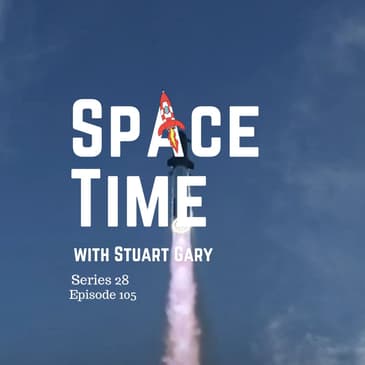
Starship's Spectacular Test Flight
After overcoming numerous challenges, SpaceX's Starship has successfully completed its 10th test flight, launching from Texas and splashing down in the Indian Ocean. This flight demonstrated the rocket's capabilities, including a controlled splashdown of the Super Heavy booster and the successful deployment of Starlink satellite simulators. The mission provided critical data on the vehicle's performance during reentry, including stress testing its heat shield.
New Insights into Mars
The European Space Agency's Mars Express Orbiter has provided new observations of the Acheron Foci region, revealing the geological forces that have shaped the Red Planet. These findings highlight the impact of ancient geological upheaval and climatic shifts on Mars' landscape, offering clues about its past and the dynamic processes that continue to influence its environment today.
Space Force's Secret Shuttle Mission
The United States Space Force has launched its 8th X37B space shuttle mission, utilizing a SpaceX Falcon 9 rocket. This classified mission aims to test next-generation technologies, including advanced laser communication systems and quantum sensors. The versatile X37B continues to serve as a platform for various operational demonstrations and experiments in space.
www.spacetimewithstuartgary.com
✍️ Episode References
European Space Agency
https://www.esa.int/
NASA
https://www.nasa.gov/
Become a supporter of this podcast: https://www.spreaker.com/podcast/spacetime-space-astronomy--2458531/support.
This is Spacetime Series twenty eight, Episode one hundred and five for broadcasts on the first of September twenty twenty five. Coming up on space Time, a spectacular successful test flight for Starship, and You Look at the Titanic forces shaping the red planet Mars, and America's military space Shuttle launches on its latest secret mission. All that and more coming up on space Time. Welcome to space Time with Stuart Gary. After a number of setbacks to world's biggest and most powerful rocket, space Exis Starship has undertaken a successful test flight, launching under stunning blue skies on the Texas Gulf coast and splashing down just as planned in the Indian Ocean off the Western Australian coast just over an hour later. The flight had been delayed two days, first by ground systems issues, then by bad weather. The one hundred and twenty three meter tall reusable Mega rocket was on its tenth test flight, igniting the super heavy boosters thirty three methane field Raptor engines, leashing some sixteen million pounds of thrust, blasting off from SpaceX's starbase in Berker, Chica, South Texas. No. Eight seven six five four three two one vehicles pitchc gun range, booster, chamber pressure nominal for a little over forty seconds into flight thirty three at ravion's power in telemtary nominal, getting good call outs healthy systems on the booster as it starts to pitch over over the gulf. All right, a little over one minute into flight, about to pack through max q macroq. All right, so we are through the period of maximum dynamic pressure max stress on the vehicle as it continues to fly. Back in June, SpaceX suffered another blow when the vehicle it was originally preparing for test flight ten exploded on a star based test stand, destroying the starship upper stage, forcing the company to switch to another ship. That last was eventually traced to damage in a composite overwrapped pressure vessel in starship's payload bay used to hold nitrogen gas to the vehicle's environmental control system. This time, the launch went smoothly. The hot fire stage separation sequence also went as planned, with a super heavy first stage booster undertaking a controlled splash down in the blue waters of the Gulf of America seven minutes after lift off. Our next major event is going to be hot staging. To get ready, the booster will shut down all but three of its raptor engines. The clamps holding the two stages together will release, and the Starship second stage ignites it engines. The ship then separates from the super Heavy booster and heads to space. At the same time, the three engines still firing on super Heavy will flip the booster around. Ten more engines will ignite for the boost backburn, putting the first stage on the path four splashdown in the Golf. The hot stage will be jettisoned for this flight, and that should occur just after the boostbackburn. So we're about to shut down the first stage and perform hot staging all right. Seeing the engines start to throttle down, Miko ship ignition startup, space separation, Stage separation confirmed. We've got six engines running on ship. Booster is doing its boost back burn, continuing now towards its splashdown site in the Gulf, where we are seeing all such rappers lit up on ship. Super Heavy boost has already proven it's so reliable, with two spectacular launch pad landings during test flight seven and eight, being caught both times by the launch towers, Megazilla chopstick arms. So SpaceX use this flight spooster return to Worth to carry out a number of experiments, including a fuel conserving controlled flip during these stage and a landing burn during which one of the engines was deliberately shut down. Now the list the boost is successfully compensated for the loss of thrust and even completed to control with HOBBA before splash. Down down all right, So at this point we finished our boost back burn, so that was shut down. So that's the first of the two burns after a launch that the booster is going to do today. So now it's headed towards the Gulf, it's not going to be quite as an aggressive of a flight down. We relax that angle of attack a little bit, but we are then going to be looking for it to do its engine tests for the landing burn, and those are going to be a little unique this time. Yeah. Typically we start with all thirteen c inner engines lit for that landing burn and bring that down to just the center three. But one of our test objectives for today is to simulate what an engine out situation would look like. So we're going to be intentionally turning off one of those center three and instead lighting one of the engines from the middle ten ring. Yeah, we did see one of those engines in the middle ring shut down during the initial asso. Looks like we have hot stage jettison floating away there to the left of the booster. Yeah, we did see one of those middle engines shut down during the ascent. Again, we are resilient, engine out on super heavy. We were able to get through our asset starship flying on the expected path. There's still a chance that engine could be back in the mix for the very start of the landing burn. So we'll see if we light up all thirteen. But we've I mean, we've even done a landing burn at the tower with an engine out, so very resilient. We'll see how it does on its way down to the gulf. Though shipraptor chamber pressures nomenal. All right, here we go landing burg startups like we got twelve of those thirteen down, the three including one of the middle ring down to two. Nice little hover and landing burn shut down and into the gulf here we come. And the booster has splashed out. This flight nine back in June and also wants to take in several experiments during its boosts the descent, including a different re entry angle, and so also aimed for a splash down in the gulf rather than back on the launch pad. And while that just appeed to go well for most of the cent, the test flight nine booster suddenly exploded just before splash down. That anomaly is thought of being caused by high forces on the boosters fuel transferred pipe due to the high angle of attack during descent. The failure was in the booster's main fuel tank pressurization system, the fuser, which has now been redesigned to better direct pressurized gas in the main fuel tank, decreasing strain on the diffuser structure mean only thirty two meter tall Starship upper stage used full Flight ten continued its climb as planned into a suborbital trajectory. Ship chamber pressure's nominal so that chamber pressure just that expected thrust level in those raptor engines on the ship three vacuum optimized level about seven minutes into today's flight, ship continuing its ascent burn. This goes until just about nine minutes into our flight. That ship engine cut off is slated for eight minutes and fifty seven seconds. We are going to see those three arevack the raptor vacuum engines knows shut down first, and we continue burning for a couple seconds longer on those inner three before we hit sicco or second engine cut off. Yeah, we have ship engine cut off coming up here just shortly. And as we mentioned, today's flight test is not an orbital flight, but rather one that demonstrates the Starship's orbital capability. Parship terminal guidance. Entering the final phase of this burn, right, shut down the vacuum engines, ship engine cut off. We shut down. Those center three successful ship engine cut. Off SICCO Baby, there we go. That's what we want, nominal orbit fer sure. All right, we just heard the call out for a nominal orbital insertion. All right, So ship is in space. Once in its suborbital flight path. About twenty minutes after launch, Starship successfully deployed eight Stylink satellight simulators in order to test it's PiZZ like dispenser mechanism, something it had failed to achieve on its three previous test flights. And the flaps starting to move into a stowed position. So we've got some exciting demonstrutions planned while we're on orbit. That right there, we just saved the fts the flight termination system. That's that automatic flight safety system we have on the vehicle, so that is now turned off while ship starts its coast period. Our next milestone is going to be the deployment of those Starlink simulators. We've got some payload inside of starship that we're hoping to deploy into space for the very first time. It'll go about one satellite a minute. Just a few seconds until we expect those payload doors to open. All right, one more time, open the pod bay doors, holl So we are currently in payload deploy prep. One step closer. How listen, this time he cooperated. He opened the payload door for us. Ship has transitioned to payload deploy. There we go. There goes another one, finally getting to deploy some of those simulated satellites, his system. Moving down next brow, there we go. This is just kind of a dress rehearsal for when we're going to do be deploying the V three re satellites. And these are just a massive, massive increase to Starlink's capability. Each one of them has sixty terabits per second of capacity that's going to get added to the network per launch. That's twenty times more than what we're adding with every single Falcon nine launch today. All right, So, as we said, we've got eight total that we're going to go through today. It's about a minute for each one. All right, another one firing out. The last one has been deployed Starlink Simulator payload complete. Also, unlike its flight nine, this latest mission didn't suffer any issues with the reaction control system, meaning the spacecraft was able to retain correct attitude control during its flight. That failure during test flight nine, it lifts Starship, rolling out of control and eventually breaking up during its re entry. Yeah, we were able to get to a reentry last time, but we didn't have full attitude control, so we weren't able to go in you know, heat chield first the way we're designed to, So we ended up losing contact with the ship before we could make it all the way through. So you still get data, but you're you're not really getting the data that we want to make sure. We're kind of stressed testing the vehicle. Another test about thirty eight minutes into test flight ten, so mission managers reignite when a Starship center raptor engines. That's a procedure which would be needed during regular flight operations. A relight of a single raptor engine while we are in space. We've done this once before. This is not necessary to deorbit, as we are in a suborbital trajectory, but this was essentially a chance to test out what we need to be able to do. A deorbit burn at about thirty seven minutes or so into the flight and then we get into re entry, relate, demost startup. All right, looks like we confirmed the relight of one of those center raptor. Engines and shut down. Second time. We've done that. Super exciting, FuG congrats to the team on this milestone. In about forty five minutes after launch, Starship began its planned re entry back into words atmosphere. Mission managers had again modified the vehicle at its re entry trajectory in order to push the spacecraft to its limits. During the test flight, you mis hate you, tiles have been removed in order to stress test vulnerable areas across the vehicle. Several tiles were also seen to fall off during the flight. Engineers also use the mission to test new metallic tile options, including one with an active cooling system. We're looking to get that light show and more importantly, get that really critical data about the ship's heat shield. Yeah, exactly, at about T plus forty five minutes, we'll be heading for re entry again running those experiments with the tiles. We're going to be doing missing tiles, metallic tiles, and also intentionally loading those vehicles flaps. There's a managers that we removed a bunch of tiles, and we do this in some intentionally scary places on the vehicle because we're really looking are there spots that were vulnerable to this before we ever start moving towards putting ship into a full orbital mission to then do re entries a little bit later on, so really critical to get that data. Re Entry has begun. We are starting to re enter the Earth's atmosphere. We're moving about five times the speed of sound, and we're about to start barreling through the Earth's atmosphere and head for a splash down in the Indian Ocean. We don't plan to recover the spacecraft today, but if we do make it all the way down to the water, who knows. But the goal of this part of the flight is to learn as much as we can about the ship's heat shield. Fully reusable, rapidly reusable heat shield for spacecraft has never been done before. It's one of the hardest engineering challenges still out there for us, and. Re entry is a critical phase of flight, so we'll need information on how the ship's system ends up performing. Still, the deliberately violent re entry trajectory did take its toll, with a portion of the spacecraft's skirt the engine bay breaking off and sending chunks of de breed space. That's not what we want to see. We just saw some of the aft skirt just take a hit, so we've got some visible damage on the aft skirt. We're continue to re enter though, and again we are intentionally stressing the ship as we go through this, so it is not guaranteed to be a smooth ride down to the Indian Ocean. We've removed a bunch of tiles in kind of critical places across the vehicle, trying to kind of push this vehicle to the limits to learn what its limits are as we design our next version of Starship. So forty seven minutes, forty five seconds into the flight, the light show is continuing the hit we saw to the skirt definitely interesting. I will note when we started doing these missing tile tests, we were intentionally removing them. Only in the skirt is that's not over your fuel tanks or anything else that's kind of structurally critical for keeping the entire vehicle together. That obviously exposes your engines, so that could do some things for our landing burn. The ship itself, it's little over fifty meters tall. We've got the six engines on board, the three vacuum, the three C level, and they're down to a control right so at this point the flaps have controlled. That means we're getting into a dense enough part of the atmosphere that the flaps can start controlling us. We're not only reliant on those kind of reaction control system thrusters. We're going to continue hearing some callouts as the ship makes its way back to Earth. So when we hear entry max heating and entry max queue, that will mean the ship has made it through the maximum heating and aerodynamic loads it will experience as it returns. So if it makes it through those, we could say we're doing pretty well. It's about seventy four kilometers in altitude. Been about ten minutes. Like Dan said, Starship will be transonic. This is going to be the period of flight where the velocities of airflow surrounding and flowing past the vehicle are concurrently below, at and above the speed of sound, so somewhere in the range of mock zero point eight to one point two for reference. Commercial jets have a range of cruising speeds, but most of them fly at speeds between mock point seven to four and mock point eighty five, So that's four hundred and eighty to five seventy five miles per hour or seven hundred and seventy to nine hundred and thirty kilometers per hour. And after transonic comes subsonic. That just means you're slower than the speed of sound. We're still well in access to that right now, but by the time we hit subsonic, we're essentially belly flopping down one of the other things we're doing during this, and you're going to see Starship kind of pitch in some pretty not extreme ways, but a little extreme as we're trying to really stress the structure of it of the ship itself, specifically those aft flaps, so the ones in the very bottom of the vehicle. We're pushing not just how well does the heat shield hold up, but how well does the ship structure hold up. I mean, we are pushing it beyond essentially what we think we'll have to fly at to do something like a return to launch site. So again, may not be a very smooth ride downhill, but we're doing that by design. We're really trying to find what are the edges that we can operate at in target? Is past peak heating? All right? We just heard the call out that we're past peak heating. So things are looking good so far. Yeah, looking good. And at this point again the flaps are controlling just maintain control, maintain attitude of the vehicle. As we're coming down, we are maximumly stressing those apt flaps right now. It's like we got a little bit of burned through the very bottom part of it. On board camera is showing milting neither hinge on one of the control flaps. Ship maintaining control. It's still a little bit toasty on the aft skirt of the vehicle. As we continue coming in. It's about forty eight forty nine counting down to forty eight kilometers in altitude. This re entry I is going to take about twenty minutes or so until our plans flash down. We were trying to splash down about one hour and six minutes into the flight. Yeah, and one day. Starship is designed to land on Mars where there are obviously no runways or other humans to help us out, So we are doing propulsive landing instead of more traditional means such as parachutes, and propulsive landing enables us to have more rapid reusability with these vehicles. Right now, we've got kind of a lot of forward momentum, lot of forward velocity, and then eventually by the time we hit subsiding, all right, here we go. So this is what we've been talking about where we are going to essentially try to fully deploy those apt flaps and really stress them out. So again this is meant to test the extremes for the vehicle, those flaps swinging out like we're still maintaining control. One of the changes we made after flight six was to change the tile line a little bit, so we had kind of scaled back the number of tiles significantly. Is when we go to catch these ships, you don't want to see I think, as Elon said, you don't want to shuck the ship as you catch it and knock all those tiles off, So we knew we were going to have to kind of peel back that layer a little bit, and the first time we did it was on flight six, and we saw wrinkling and dimples almost in the ship as we were creating these hot spots in the uneven parts of the heat shield, and so we tod kind of address that. We smoothed it out on the ship, and just looking at it, we can see kind of a little little bit of hot spot, a little bit of warping almost near the payload door, little bit of colored patina up above it, but we don't see those kind of deep almost they almost look like gouges on that. So it looks like that's been pretty successful. So our shape is subsonic, all right. So at this point we've dropped below the speed of sound. Still despite the damage, Starship eventually performed the controlled vertical landing, splashing down tail first, just as planned, right on target in the Indian Ocean, sixty six minutes after launch. We're gonna do the flip and the burns, so we're only using those three center raptor engines the sea levels, the ones that can kind of gimbal that can move around and steer, dipping the nose down a little bit. Two of our engines chilled in waiting on one more, so we'll attempt to use three burns for that initial flip. We eventually go down to just two raptors for the end of the landing burn. Structurally, we're looking good, got good pressures in our nose cone for everything. So Starship's doing its belly flop right now. We're going to do the flip. Swing out. Let's punch through some clouds first, Starship lanning burns start up, seeing three engines, here's our flip. There's a pooing, there's a splashdown. Hey, oh bad, go planning flip, planning burn, splash out of the Indianosha. There we go. This successful test flight will help e some of NASA's concerns about Starship being ready for the Plan twenty twenty seven Atamus three mission that'll see humans return to the lunar surface for the first time since Apollo seventeen. Way back in nineteen seventy two, NASA plans to use a modified version of Starship called the HLS transport crew from the Orion capsual down to the lunar South Pole's surface for a week long stay, but there are still many major hurdles yet to be overcome, including working out how to refuel the HLS in lunar orbit and keep the cryogenic liquid methane and oxygen cold enough and long enough to prevent it from boiling off during the ten or more st ship flights that it will take to transport enough fuel to the HLS for the crew transfer mission. Starship and its super heavy booster are being developed by SpaceX boss Elon Musk as a colonial transport system to move one hundred people or one hundred and fifty tons of payload at a time on deep space missions, not just to the Moon but ultimately to Mars and beyond. Starship will also replace the existing Falcon nine rockets and Dragon spacecraft on orbital missions around the Earth, and they could eventually be used for point to point planetary transport flights, putting any two places on Earth within just ninety minutes of each other. This is space time still to come. A new look at the Titanic forces that have shaped the Red planet, Mars and the United States Space Force launches its eighth X thirty seven B space Shuttle on another classified mission. All that and more still to come on space time. The European Space Agency's Mars Express orbiter has revisited a spectacular rift valley system on the red planet, showing how Mars was shaped by ancient geological upheaval and later sculpted by ice rich flows. The spacecraft's high resolution stereo camera first captured the Huron Phoci area back in April two thousand and four, shortly after Mars orbit insertion. Huron Phoci is at the western end of its striking system of deep fishes forming on thousand meters deep valleys stretching for hundreds of kilometers. The new observations have revealed the faulted terrain's hosted grub and pattern. This is a system of raised and lowered blocks formed by molten material rising beneath the Martian crust more than three point seven billion years ago, in the process pulling the surface apart. The valley floors were then later smoothed by slow moving glaciers. The new observations are providing evidence of repeated climatic swings that suggests cycles of warming and cooling on the Red planet, which allowed ice to advance towards the Martian equator before retreating again. Astronomers believe that these climatic shifts stem from gramatic variations in the red planet's axial tilt. Earth's relatively stable axial tilt is moderated by its relatively large moon, but the two tiny Martian moons pherbos and demos, have little effect on the Red planet. So the Martian axial tilt is swung by between fifteen and forty five degrees over the past ten million years, and this gramatically amplifies the effects of the Melancovit cycles on its climate. The Melancovit cycles are regular, long term, periodic changes in the planet's orbit an axial tilt, which in turn affect the amount of solar energy reaching the planet and influencing climatic patterns. The three key cycles involve eccentricity, that is, changes in the shape of a planet's orbit from being more circular to being more elliptical. This change alters the total amount of solar radiation received by a planet over the course of its orbit. Then there's obliquity, which involves changes in the angle of the tilt of a planet spin axis with respect to its orbital plane. The greater the tilt, the more extreme seasons become. And finally, there's procession that involves the wobble of a planet's spin axis, in other words, the direction in space in which the axis is pointing. It's similar to how a top wobbles as it spins. In the case of Earth, for example, the direction in which its axis is pointed changes over a period of roughly twenty six thousand years. This affects climate and the timing of seasons relative to the planet's position in its orbit, and while these changes are fairly gradual on Earth, on the red planet Mars, the changes are striking, having a major effect on its climate. Towards the east of acron Fosi, the fractured ground gives worre to dark plains separated by maces and rounded hills, which are remnants of an eroded rock layer. Eroded ancient channels carved by the persistent movement of ice and debris snake between these features. Smoother plains lie to the west, stretching all the way towards the giant, now extinct Shield volcano Olympus, Mond's largest volcano in our Solar System and more than twice the height of Mount Everest. Mars Express has been orbiting the Red planet since two thousand and three, and it's continuing its mission of mapping the planet, delivering data that's reshaping sciences understanding of Martian geological and climatic history. This is space time still to come. The United States Space Forces military space Shuttle launches on its eighth secret mission, and later in the science report, palaeontologists uncover one of the most complete ixious or fossils ever found. All that and more still to come on space time. The United States Space Force has launched its eighth X thirty seven B space Shuttle mission on another classified flight, The Dotal wing space plane was mounted inside the payload fairing of a SpaceX Falcon nine rocket for the launch of Pad thirty nine A at the Kennedy Space Center at the Cape Canaveral Space Force Space in Florida. The United States Space Force says the vehicle's clandestine mission will include a wide range of tests and experimentation objectives. The military says these operational demonstrations and experiments comprised next generation technologies, including laser communication systems and the highest performing quantum inertial sensor system ever tested in space. The X thirty seven was originally developed by NASA and the US military back in nineteen ninety nine as a mini version of the manned Space Shuttle. It was designed to be carried in the payload bay of the Space Shuttle and then launched from orbit on a range of potential missions, including the refueling and servicing of operational satellites. It would also undertake independent research, carrying instruments in its own payload bay. The project was eventually taken over exclusively by the military in two thousand and four, and that resulted in the development of two operational X thirty seven B reasonable spacecraft by Boeing, the first of which flew its first orbital mission in twenty ten. The last X thirty seven B mission, OHTV seven, remained in orbit for more than a year before returning to Earth back in March, and previous missions have lasted in orbit for several years at a time, the longest staying up for nine hundred and eight days. This eighth mission, OTV eight, is the fourth vehicle one the X thirty seven b's proven itself to be a versatile platform capable of targeting highly elliptical orbits and also dipping down in the upper Earth atmosphere using aero breaking to change orbits before for enemy nations can lock tracking onto it. And that's important because as well as testing new technologies, these space plans can also be used for reconnaissance missions and they can utilize a range of anti satellite capabilities visiting, studying, and monitoring enemy spacecraft in orbit. This space time and time out to take a brief look at some of the other stories making news in science this week with a science report. A new study has found that teens and young people who use vapes are more likely to pick up smoking cigarettes, use marijuana, and take up drinking, as well as facing much higher risks of a host of health issues. A report in the General Tobacco Control examine the results of twenty one previous systematic studies, finding young people who vape are three more likely to start smoking cigarettes and were consistently more likely to start using dope and binge drinking booze. Vaping's also been linked to asthma diagnosis and worsening symptoms for a range of different health issues, including ammonia, low's sperm count migraines and poor mouthhealth. Paleontologists in Queensland have uncovered one of the most complete ixtiosaur fossils ever found. Ixiosaurs were marine predators from the age of the dinosaur and were similar in appearance to modern day dolphins. The seven point one meter long aquatic reptile was discovered four hundred kilometers northwest of Longreach in out back western Queensland. The one hundred million year old fossil, thought to be species of Platatyigus australis, is some ninety percent complete. The find includes a complete vertebral column and intact left flipper, part of the right flipper, as well as hind flippers, partial telfin and a nearly complete scullant Also, the ixiosaur was a dominant predator of the inlands which covered much of western Queensland some one hundred million years ago. Surgeons in China have for the first time transplanted a genetically modified pig lung into a human patient. The lung continued to function in the recipient for almost nine days. A report in the journal Nature Medicine claims previous research on transplanting genetically modified pig organs are focused primarily on kidneys, hearts, and livers, with genetic modifications used to remove adogens that could make the human immune system reject the organs immediately. So, using the same strategy, the surgeons implanted a pig lung into a thirty nine year old human had already been declared brain dead. They say the body did not immediately reject the lung. However, the lung dicho signs of damage twenty four hours after transplant and signs of rejection at three and six days before it finally died on day nine. A new study is found that around three in every ten Americans make use of astrology terot cards four in telling at least once a year. However, the findings by Pure Research also showed that about two thirds of those so they only do it for fun. To mend them from Australian Skeptics says. The findings also show that around one in ten people mostly engage because they believe the practices really do give them helpful insights, and one in one hundred actually rely on what they learned from these practices when making major life decisions. Curious searches are pretty reasonable places that are quite Legiti, and they did a survey as close to getting up towards ten thousand US adults, asking them what their attitude toward astrology and fortune telling, tarot carts, that sort of stuff, and they said three in ten Americans make use of it at least once a year, but most of those do it for fun. It's sort of like reading the star fid astrology in the local paper, or they just sort of dabble it it but don't take it that seriously. So you could say that nine out of ten Americans don't take astrology seriously, so that'd be a different headline entirely. There's one person out of tens who might say they engage mostly because they believe the practices give them helpful insights. And there's one percent for the whole population they say they rely on what they learn from astrology of tarracarts, et cetera when making major life decisions. So it get easy to say that nineteen nine percent of Americans do not lie one that's probably not the way people want to see it. They're talk about being a big industry, billion dollars of revenue, employing one hundred and five thousand people. Apparently cut into a different market research firm either world, so it is big business. The biggest fans tend to be younger people tend to be people who's just got as high school. Younger women, especially LGBTQ people apparently have a greater interest, but it's not necessarily huge. People who are older age sixty five or older, those with higher incomes, college degrees, and those who identify as politically conservative are less likely than are the adults to believe in astrology and engage with tarot cards. So there doesn't seem to be a correlation either between religion religious belief and belief in these things, which is interesting because they do tend to contradict each other. But a lot of religious people are just as much inclined through follow astrology in tarot carts, according to this survey, or at least have fun with it as the non religious gript although atheist seem to be a bit more discissive of astrology and tero biginess probably don't believe in the supernatural. It's the growing industry. Despite the fact that what he can I say funk. When you say one percent of Americans, there's still three point three million people. That's a lot of people. Yeah, yeah, but I mean there's more people than that believe in ghosts. It's only a small PERCENTA let's sume that they take it very seriously. There are a lot more people taking a lot of other supernatural things seriously. That's timendum from Australia Skeptics, and that's the show for now. Space Time is available every Monday, Wednesday and Friday through Apple Podcasts, iTunes, Stitcher, Google Podcast poker Casts, Spotify a Cast, Amazon Music, bytes dot com, SoundCloud, YouTube, your favorite podcast provider, and from space Time with Stuart Gary dot com. Space Time's also broadcast through the National Science Foundation, on Science Own Radio and on both iHeartRadio and tune in Radio. And you can help to support our show by visiting the Spacetime Store for a range of promotional merchandising goodies, or by becoming a Spacetime Patron, which gives you access to triple episode commercial free versions of the show, as well as lots of bonnus audio content which doesn't go to weir, access to our exclusive Facebook group, and other rewards. Just go to space Time with Stuart Gary dot com for full details. You've been listening to space Time with Stuart Gary This has been another quality podcast production from bytes dot com.