
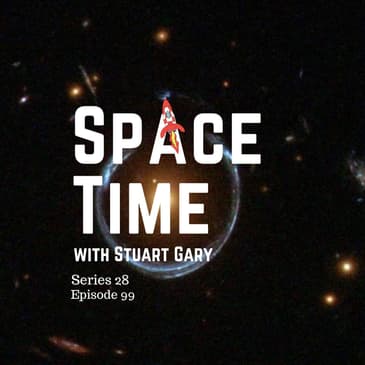
The Cosmic Horseshoe: A Supermassive Discovery
Astronomers have potentially identified the most massive supermassive black hole ever discovered, dubbed the Cosmic Horseshoe, which is estimated to be around 36 billion times the mass of our Sun. Located approximately 5 billion light years away, this colossal black hole distorts space-time and creates a stunning Einstein ring effect by gravitationally lensing light from distant galaxies. The measurement of its mass combines gravitational lensing and stellar kinematics, providing a rare glimpse into the formation and evolution of galaxies and their central black holes.
Possible New Planet in the Alpha Centauri System
Exciting news emerges from the Alpha Centauri star system, where astronomers may have discovered a new planet orbiting Alpha Centauri A, the closest star system to our own at just 4.25 light years away. Using data from NASA's Webb Space Telescope, researchers suggest this Saturn-sized gas giant could be located in the habitable zone of a sun-like star. While the planet's gaseous nature may not support life, its proximity offers a unique opportunity to study planetary systems beyond our own, challenging existing theories on planet formation in binary star systems.
The Satellite Proliferation Dilemma
As the number of satellites in Earth orbit continues to rise, astronomers are sounding alarms over the interference these satellites cause to vital scientific research. A study has highlighted the impact of Starlink's megaconstellation on radio astronomy, with significant radio emissions masking faint signals from the universe. This growing concern emphasizes the need for regulatory measures to mitigate interference and protect the integrity of astronomical observations.
www.spacetimewithstuartgary.com
✍️ Episode References
Monthly Notices of the Royal Astronomical Society
https://academic.oup.com/mnras
Astrophysical Journal Letters
https://iopscience.iop.org/journal/2041-8205
Astronomy and Astrophysics Journal
https://www.aanda.org/
Become a supporter of this podcast: https://www.spreaker.com/podcast/spacetime-space-astronomy--2458531/support.
00:00:00 --> 00:00:02 Stuart Gary: This is space time series 28 episode 99
00:00:02 --> 00:00:05 full broadcast on 18 August
00:00:05 --> 00:00:08 2025 coming up on SpaceTime,
00:00:08 --> 00:00:11 the most massive black hole ever discovered.
00:00:11 --> 00:00:14 The detection of what looks like another planet in the Alpha
00:00:14 --> 00:00:17 Centauri star system, and the growing
00:00:17 --> 00:00:20 concern among scientists about the ongoing
00:00:20 --> 00:00:22 proliferation of satellites in Earth orbit.
00:00:23 --> 00:00:25 All that and more coming up on, um, Space
00:00:25 --> 00:00:28 Time. Welcome to
00:00:28 --> 00:00:30 Space Time with Stuart Gary Gary.
00:00:46 --> 00:00:49 Astronomers have discovered what's potentially the biggest
00:00:49 --> 00:00:52 supermassive black hole ever seen, called
00:00:52 --> 00:00:55 the cosmic horseshoe, because it's so big, it's
00:00:55 --> 00:00:57 distorting space time. This behemoth's
00:00:57 --> 00:01:00 estimated to be around 36 billion times the
00:01:00 --> 00:01:03 mass of the sun. And that puts it close to the
00:01:03 --> 00:01:05 theoretical upper limit of what's possible.
00:01:06 --> 00:01:08 Located some 5 billion light years away,
00:01:08 --> 00:01:11 supermassive black hole warps and gravitationally
00:01:11 --> 00:01:14 lenses light from background galaxies, turning its
00:01:14 --> 00:01:17 appearance into that of a giant horseshoe shaped Einstein
00:01:17 --> 00:01:20 ring. A report in the Monthly Notices of the Royal
00:01:20 --> 00:01:23 Astronomical Society claims the monster is located in
00:01:23 --> 00:01:26 one of the most m massive galaxies ever observed.
00:01:26 --> 00:01:29 Astronomers believe that most, if not all galaxies
00:01:29 --> 00:01:32 contain supermassive black holes at their centers.
00:01:32 --> 00:01:35 And the bigger the galaxy, the bigger the black hole.
00:01:35 --> 00:01:38 One of the study's authors, Thomas Collett from the University
00:01:38 --> 00:01:41 of Portsmouth, says the cosmic horseshoe is among the 10
00:01:41 --> 00:01:44 most massive black holes ever discovered and quite
00:01:44 --> 00:01:47 possibly the biggest of all. The thing is,
00:01:47 --> 00:01:49 most of the other black hole mass measurements have been
00:01:49 --> 00:01:52 through indirect methods, and that means there's quite a bit
00:01:52 --> 00:01:55 of leeway for uncertainties. So
00:01:55 --> 00:01:58 astronomers don't really know for sure which is the
00:01:58 --> 00:02:01 biggest. However, Collette says they've got far
00:02:01 --> 00:02:03 more certainty with the mass of this black hole, thanks to the way
00:02:03 --> 00:02:06 it was measured. The authors detected the cosmic
00:02:06 --> 00:02:09 horseshoe black hole using a combination of gravitational
00:02:09 --> 00:02:12 lensing and stellar kimatics.
00:02:12 --> 00:02:15 Gravitational lensing involves the bending of light from
00:02:15 --> 00:02:17 background objects by the mass of a foreground
00:02:17 --> 00:02:20 object. Kinematics is the study of the
00:02:20 --> 00:02:23 motion of stars within galaxies and the speed and
00:02:23 --> 00:02:26 way they're moving around black holes. And the
00:02:26 --> 00:02:29 latter is seen as the gold standard for measuring black hole
00:02:29 --> 00:02:32 masses. But it doesn't really work outside the very
00:02:32 --> 00:02:34 nearby universe because galaxies appear too small in
00:02:34 --> 00:02:37 the sky to resolve the region a supermassive
00:02:37 --> 00:02:40 black hole lies. But adding gravitational
00:02:40 --> 00:02:43 lensing allowed the authors to push much further out into
00:02:43 --> 00:02:46 the universe. So they were able to detect the
00:02:46 --> 00:02:49 effect of the black hole in two ways. Firstly, by the way
00:02:49 --> 00:02:52 it's altering the path that light takes as it travels past
00:02:52 --> 00:02:54 the black hole, and secondly, the way it's causing
00:02:54 --> 00:02:57 stars in the Inner regions Of its host galaxy to move
00:02:57 --> 00:03:00 extremely quickly around the black hole, Often at
00:03:00 --> 00:03:03 speeds of greater than 400 kilometers per second.
00:03:03 --> 00:03:06 By combining these two measurements, astronomers could be
00:03:06 --> 00:03:09 completely confident that the black hole is real.
00:03:09 --> 00:03:12 This discovery was made for what's referred to as a
00:03:12 --> 00:03:15 dormant black hole. That's one that isn't actively accreting
00:03:15 --> 00:03:18 material at the time of its observation. So
00:03:18 --> 00:03:21 its detection relied purely on its immense
00:03:21 --> 00:03:24 gravitational pull and the effect it has on its
00:03:24 --> 00:03:26 surroundings. Uh, typically, for such a remote
00:03:26 --> 00:03:29 system, Black hole mass measurements are only possible when the
00:03:29 --> 00:03:32 black hole is active. The authors are describing the
00:03:32 --> 00:03:35 cosmic horseshoe system As a fossil group,
00:03:35 --> 00:03:37 Galaxy fossil groups at the end
00:03:37 --> 00:03:40 state of the most massive Gravitationally bound
00:03:40 --> 00:03:43 structures in the universe, Arising when they've
00:03:43 --> 00:03:46 collapsed down to a single extremely massive galaxy
00:03:46 --> 00:03:49 with no bright companions. Collette says
00:03:49 --> 00:03:52 it's now likely that all of the supermassive black
00:03:52 --> 00:03:55 holes that were originally the companion galaxies have
00:03:55 --> 00:03:57 now been merged to form this one single
00:03:57 --> 00:04:00 giant. So that means what we're really
00:04:00 --> 00:04:03 seeing here Is the end state of
00:04:03 --> 00:04:05 galaxy formation and the end
00:04:05 --> 00:04:07 state of black hole formation.
00:04:08 --> 00:04:11 This is space time. Still to
00:04:11 --> 00:04:14 come, astronomers discover what could be another
00:04:14 --> 00:04:17 planet Orbiting in the Alpha Centauri triple star system.
00:04:17 --> 00:04:20 And there's growing concern among scientists about the
00:04:20 --> 00:04:23 ongoing proliferation of satellites in Earth orbit.
00:04:23 --> 00:04:26 All that and more still to come, uh, on space
00:04:26 --> 00:04:26 time,
00:04:42 --> 00:04:44 astronomers may have discovered another planet
00:04:44 --> 00:04:47 Orbiting the Alpha Centauri triple star system.
00:04:48 --> 00:04:51 At a distance of just 4.25 light years,
00:04:51 --> 00:04:53 Alpha Centauri is the nearest star system to our
00:04:53 --> 00:04:56 own solar system. The system is located in
00:04:56 --> 00:04:59 the southern skies. It's the second of the two
00:04:59 --> 00:05:02 pointer stars Showing the way to the Southern cross.
00:05:03 --> 00:05:05 The system comprises two sun like stars,
00:05:05 --> 00:05:08 Alpha Centauri A and B, which orbit each other.
00:05:08 --> 00:05:11 Alpha Centauri A is fractionally larger Than our Sun,
00:05:11 --> 00:05:14 Alpha Centauri B, just a little bit smaller.
00:05:14 --> 00:05:17 And both are orbited by the system's third star, the
00:05:17 --> 00:05:20 red dwarf Proxima Centauri, which right now
00:05:20 --> 00:05:23 is the nearest star to the sun, consequently the second
00:05:23 --> 00:05:26 nearest star to Earth after the Sun. And astronomers
00:05:26 --> 00:05:29 have already confirmed three planets Orbiting Proxima
00:05:29 --> 00:05:32 Centauri. But the search for possible worlds Orbiting
00:05:32 --> 00:05:34 Alpha Centauri A and B has proven to be far more
00:05:34 --> 00:05:37 challenging. Now, a report in the
00:05:37 --> 00:05:40 Astrophysical Journal Letters has used observations
00:05:40 --> 00:05:42 from NASA's Webb Space Telescope's mid infrared
00:05:42 --> 00:05:45 instrument to suggest that a Saturn sized gas
00:05:45 --> 00:05:48 giant is orbiting Alpha Centauri A.
00:05:48 --> 00:05:51 Alpha Centauri A is the third brightest star system in the
00:05:51 --> 00:05:54 night sky. Now, if confirmed, it would
00:05:54 --> 00:05:57 make this planet the closest to Earth orbiting the
00:05:57 --> 00:06:00 habitable zone of a sun like star. Uh,
00:06:00 --> 00:06:02 studies lead author Charles Beckman from NASA's Jet
00:06:02 --> 00:06:05 Propulsion Laboratory in Pasadena, California, says
00:06:05 --> 00:06:08 that because this exoplanetary candidate is a gas
00:06:08 --> 00:06:11 giant, it's not likely to support life as we know it.
00:06:11 --> 00:06:14 But Beckman says with the system being so close,
00:06:14 --> 00:06:17 any exoplanets found there would offer a great
00:06:17 --> 00:06:19 opportunity to collect data on planetary systems other
00:06:19 --> 00:06:22 than our, um, own. Yet these are incredibly
00:06:22 --> 00:06:25 challenging observations to make, even with the world's
00:06:25 --> 00:06:28 most powerful space telescopes. That's because
00:06:28 --> 00:06:31 they're orbiting stars that are really bright and close and
00:06:31 --> 00:06:34 moving quickly across the sky. Webb
00:06:34 --> 00:06:36 was actually designed and optimized to find the most distant
00:06:36 --> 00:06:39 stars and galaxies in the universe. So the
00:06:39 --> 00:06:42 operations team at the Space Telescope Science Institute
00:06:42 --> 00:06:45 in Baltimore, Maryland, had to come up with a custom
00:06:45 --> 00:06:48 designed observation sequence just for this target.
00:06:48 --> 00:06:51 And it looks like this extra effort may well have paid off
00:06:51 --> 00:06:53 spectacularly. Several rounds of
00:06:53 --> 00:06:56 meticulously planned observations by Webb, careful
00:06:56 --> 00:06:59 analysis by astronomers and extensive computer
00:06:59 --> 00:07:02 modeling all combine to help determine that the
00:07:02 --> 00:07:05 source in the Webb image is likely to be a planet and not
00:07:05 --> 00:07:08 just a background object like a distant galaxy or a
00:07:08 --> 00:07:10 foreground object like a passing asteroid, or for that
00:07:10 --> 00:07:13 matter, some sort of detector or image artifact.
00:07:14 --> 00:07:17 The first observations of this planetary candidate actually
00:07:17 --> 00:07:20 took place back in August 2024, using
00:07:20 --> 00:07:23 the chronographic mask to block Alpha Centauri
00:07:23 --> 00:07:26 A's light. Still, the extra brightness
00:07:26 --> 00:07:28 from the nearby companion star Alpha Centauri B
00:07:28 --> 00:07:31 complicated the analysis. Nevertheless,
00:07:31 --> 00:07:34 Beckman and colleagues were able to subtract out the light from both the
00:07:34 --> 00:07:37 stars Alpha Centauri A and B to reveal an object
00:07:37 --> 00:07:40 over 10 times fainter than Alpha Centauri
00:07:40 --> 00:07:43 A, separated from the star by about two times
00:07:43 --> 00:07:45 the distance between the sun and the earth, about
00:07:45 --> 00:07:48 300 million kilometres. While the
00:07:48 --> 00:07:51 initial detection was exciting, the authors still needed
00:07:51 --> 00:07:53 more data in order to come to a firm conclusion.
00:07:54 --> 00:07:56 The trouble is, the additional observations of the system by
00:07:56 --> 00:07:59 Webb in February and April this year didn't reveal any
00:07:59 --> 00:08:02 objects like the one initially identified back in August
00:08:02 --> 00:08:05 last year. So to work out what was likely
00:08:05 --> 00:08:07 happening, the authors turned to computer models to
00:08:07 --> 00:08:10 simulate millions of potential orbits. And these
00:08:10 --> 00:08:13 simulations included both the new Webb data and
00:08:13 --> 00:08:15 Also an earlier 2019 potential
00:08:15 --> 00:08:18 exoplanetary candidate sighting by the European
00:08:18 --> 00:08:21 Southern Observatory's Very Large Telescope in Chile.
00:08:22 --> 00:08:25 And they also considered orbits that would be gravitationally stable
00:08:25 --> 00:08:28 in the presence of Alpha Centauri B, meaning the
00:08:28 --> 00:08:30 planet wouldn't be getting flung out of the system. The
00:08:30 --> 00:08:33 authors say, a non detection in the second and third round of
00:08:33 --> 00:08:36 observations using Webb wasn't surprising. The
00:08:36 --> 00:08:39 models showed that the planet simply would have moved too close to the
00:08:39 --> 00:08:41 star to be visible during both the February and April
00:08:41 --> 00:08:44 observations. Now, if confirmed, the
00:08:44 --> 00:08:46 potential planet could mark a new milestone for
00:08:46 --> 00:08:49 exoplanetary imaging efforts. In fact, of all the
00:08:49 --> 00:08:52 directly imaged planets seen so far, this would be the
00:08:52 --> 00:08:55 closest to its star. It's also the most
00:08:55 --> 00:08:58 similar in terms of temperature and age to the gas giants
00:08:58 --> 00:09:01 in our own solar system and the nearest to Earth.
00:09:02 --> 00:09:04 But its very existence in a system of two
00:09:04 --> 00:09:07 closely separated stars challenges our
00:09:07 --> 00:09:10 understanding of how planets form and how they could
00:09:10 --> 00:09:12 survive and evolve in such a chaotic environment.
00:09:13 --> 00:09:16 If confirmed by additional observations, the results could
00:09:16 --> 00:09:19 transform the future of exoplanetary science,
00:09:19 --> 00:09:22 Beckman says. It would become a touchstone object.
00:09:22 --> 00:09:25 For example, NASA's Nancy Grace Roman Space
00:09:25 --> 00:09:28 Telescope, which is set to launch in May 2027, is
00:09:28 --> 00:09:31 equipped with dedicated hardware that's specifically designed
00:09:31 --> 00:09:34 to test new technologies to observe bina systems like
00:09:34 --> 00:09:36 Alpha Centauri in the search for other
00:09:36 --> 00:09:39 worlds. This is space time
00:09:40 --> 00:09:43 still to come. Growing concern among astronomers about the
00:09:43 --> 00:09:45 worsening proliferation of satellites in Earth orbit.
00:09:45 --> 00:09:48 And later in the Science report, early stage
00:09:48 --> 00:09:51 trials have shown positive results for a
00:09:51 --> 00:09:54 vaccine specifically designed to recognize and kill
00:09:54 --> 00:09:57 cancer cells. All that and more still to come
00:09:57 --> 00:09:58 on space time.
00:10:04 --> 00:10:04 Tim Mendham: Foreign.
00:10:14 --> 00:10:17 Stuart Gary: Astronomers have again raised concerns about the
00:10:17 --> 00:10:20 interference broadband Internet satellites are causing the
00:10:20 --> 00:10:22 vital scientific research. The latest
00:10:22 --> 00:10:25 warnings are focused on radio emissions being generated by
00:10:25 --> 00:10:28 Starlink and other broadband satellites, which are
00:10:28 --> 00:10:30 interfering with radio astronomy observations.
00:10:31 --> 00:10:34 A study led by Dylan Gregg from Curtin University
00:10:34 --> 00:10:36 Note of the International center for Radio Astronomy Research
00:10:37 --> 00:10:39 specifically looked at the effect of the Starlink
00:10:39 --> 00:10:42 megaconstellation, which now has more than 7
00:10:42 --> 00:10:45 satellites in orbit. Gregg says Starlink
00:10:45 --> 00:10:48 is the most immediate and frequent source of potential
00:10:48 --> 00:10:51 interference for radio astronomy. IT launched
00:10:51 --> 00:10:53 some 477 satellites alone during the
00:10:53 --> 00:10:56 study's four month data collection period.
00:10:57 --> 00:11:00 The problem is unintended signals coming from the
00:11:00 --> 00:11:03 satellites. The signals are being leaked by
00:11:03 --> 00:11:05 onboard electronics, and they drown out the faint
00:11:05 --> 00:11:08 radio waves astronomers are trying to study from the
00:11:08 --> 00:11:11 universe. Greg and colleagues collected and
00:11:11 --> 00:11:13 analyzed some 76 million images of the
00:11:13 --> 00:11:16 sky using a prototype of the Square Kilometer
00:11:16 --> 00:11:19 Array, which when complete, will be the world's largest and most
00:11:19 --> 00:11:22 sensitive radio telescope. They detected
00:11:22 --> 00:11:25 more than 112 radio emissions coming from
00:11:25 --> 00:11:27 1 Starlink satellites.
00:11:28 --> 00:11:31 That makes it the most comprehensive catalogue of satellite
00:11:31 --> 00:11:34 radio missions at low frequencies ever undertaken.
00:11:34 --> 00:11:37 They found that Starlink satellites, uh, are causing significant
00:11:37 --> 00:11:40 radio Pollution by interfering with radio astronomy
00:11:40 --> 00:11:43 observations, potentially impacting important
00:11:43 --> 00:11:46 discoveries and research. The study
00:11:46 --> 00:11:49 reported in the journal Astronomy and Astrophysics found that
00:11:49 --> 00:11:51 some data sets had up to 30% of images
00:11:52 --> 00:11:54 showing interference from a Starlink satellite.
00:11:55 --> 00:11:58 Now, these latest warnings follow ongoing similar
00:11:58 --> 00:12:01 concerns raised by optical astronomers who have had to deal
00:12:01 --> 00:12:03 with trains of Starlink satellites blocking out their
00:12:03 --> 00:12:06 observations of the night skies. Griggs
00:12:06 --> 00:12:09 says the issue isn't just the number of satellites up there, but
00:12:09 --> 00:12:12 the strength of their radio signals and the frequencies they were
00:12:12 --> 00:12:15 visible at. Some of the satellites were being detected
00:12:15 --> 00:12:17 emitting in radio bands where no signals are supposed to
00:12:17 --> 00:12:20 be present at all. And that included some 703
00:12:20 --> 00:12:23 satellites identified at 150.8
00:12:23 --> 00:12:26 MHz, which is meant to be a, uh, protected fre
00:12:26 --> 00:12:29 for radio astronomy. Greg says because they come
00:12:29 --> 00:12:32 from components on the satellites like electronics, they're
00:12:32 --> 00:12:35 not part of any intentional signal and astronomers
00:12:35 --> 00:12:38 can't easily predict them or filter them out.
00:12:38 --> 00:12:40 Alex Zaharov-Reutt: We wanted to find out what the prevalence of
00:12:40 --> 00:12:43 satellites were at the frequencies that the SKA
00:12:43 --> 00:12:46 Low is going to be looking over, because similar studies
00:12:46 --> 00:12:49 with other telescopes around the world had seen satellite
00:12:49 --> 00:12:52 in images and data are, ah, created of the
00:12:52 --> 00:12:55 sky. So, yeah, we, um, designed a
00:12:55 --> 00:12:57 survey using telescope called
00:12:58 --> 00:13:01 Engineering Development Array 2. It's pretty much
00:13:01 --> 00:13:03 the same size as a SKA Low
00:13:03 --> 00:13:06 station. And yeah, so we found a lot of satellites
00:13:06 --> 00:13:09 in the images that we created, most of them being
00:13:09 --> 00:13:12 Starlink satellites. And so the way we looked
00:13:12 --> 00:13:15 at the sky was we took images of the
00:13:15 --> 00:13:18 sky in radio every two seconds, uh,
00:13:18 --> 00:13:21 for about a month. And yeah, so that's how we searched
00:13:21 --> 00:13:22 for the satellites.
00:13:22 --> 00:13:24 Stuart Gary: Something like 30% of the images showed
00:13:24 --> 00:13:27 interference from Starlink satellites.
00:13:27 --> 00:13:30 Alex Zaharov-Reutt: Uh, yeah, in some of the frequencies that we looked at,
00:13:30 --> 00:13:33 we saw a lot of Starlink satellites in the images.
00:13:33 --> 00:13:36 And it kind of makes sense because if we see one or two of
00:13:36 --> 00:13:38 them, most of them are designed pretty
00:13:38 --> 00:13:41 similarly. And the launch of
00:13:41 --> 00:13:43 Starlink satellites has been almost
00:13:43 --> 00:13:46 exponential. So yeah, it kind of makes sense that we see so
00:13:46 --> 00:13:47 many of them in the images.
00:13:47 --> 00:13:50 Stuart Gary: Can you filter them out of the data to save the research,
00:13:50 --> 00:13:53 or is this just an interference we now have to deal with?
00:13:53 --> 00:13:56 Alex Zaharov-Reutt: They're quite bright, so they're roughly
00:13:56 --> 00:13:59 sometimes the same brightness as like
00:13:59 --> 00:14:01 the brightest radio galaxy that we see in the,
00:14:02 --> 00:14:04 um. And when they're so bright compared
00:14:05 --> 00:14:08 to really faint signals from the early
00:14:08 --> 00:14:10 universe, which is what radio astronomers are looking for,
00:14:10 --> 00:14:13 it makes them quite difficult to filter out. But a lot of
00:14:13 --> 00:14:16 the time, the current mitigation strategy is just to
00:14:16 --> 00:14:19 get rid of data when they're visible, or
00:14:19 --> 00:14:22 be smarter in how the surveys are
00:14:22 --> 00:14:25 required so that, uh, you're looking at the sky with the
00:14:25 --> 00:14:27 telescope when the satellites aren't directly overhead.
00:14:27 --> 00:14:30 Stuart Gary: But that's one of the big problems, isn't it? Because they're everywhere now.
00:14:30 --> 00:14:33 You've got potentially 35 of them. This
00:14:33 --> 00:14:36 is Starlink alone, potentially 35 of
00:14:36 --> 00:14:39 them about to be launched. Already. You've got what,
00:14:39 --> 00:14:42 over 7 at the time of recording
00:14:42 --> 00:14:43 this program, correct?
00:14:43 --> 00:14:45 Alex Zaharov-Reutt: Yeah. So, uh, yeah, there's going to be.
00:14:45 --> 00:14:46 Tim Mendham: A lot more launch.
00:14:46 --> 00:14:49 Alex Zaharov-Reutt: So we've had dialogue with SpaceX,
00:14:49 --> 00:14:51 which is the company that operates these
00:14:51 --> 00:14:54 satellites. So we're hoping that, yeah, further
00:14:54 --> 00:14:56 discussion with them will help with
00:14:56 --> 00:14:59 introducing mitigations for future
00:14:59 --> 00:15:02 satellites that they launch. Because, yeah, there's going to be
00:15:02 --> 00:15:03 a lot more in the future.
00:15:03 --> 00:15:06 Stuart Gary: And this isn't a problem which is new, because when
00:15:06 --> 00:15:09 Starlink first began launching, optical
00:15:09 --> 00:15:12 astronomers began seeing them in their images, and
00:15:12 --> 00:15:15 they began seeing entire trains of these satellites and
00:15:15 --> 00:15:17 more and more of them. And it's affecting research
00:15:18 --> 00:15:21 for optical astronomy to a huge degree. And even
00:15:21 --> 00:15:24 then, this is five years ago, there are already warnings
00:15:24 --> 00:15:27 that the same thing would happen in radio astronomy. And that's exactly what
00:15:27 --> 00:15:27 we're seeing.
00:15:27 --> 00:15:30 Alex Zaharov-Reutt: Yeah. So, um, in optical, SpaceX
00:15:30 --> 00:15:33 has made some good mitigations for the satellites.
00:15:33 --> 00:15:36 Like they made some changes, like pa. The satellite.
00:15:36 --> 00:15:39 Stuart Gary: They're stealth satellites, they're calling them, but they're making some
00:15:39 --> 00:15:41 changes. But they're still coming up in images.
00:15:41 --> 00:15:44 Alex Zaharov-Reutt: Oh, for sure, for sure. Yeah. But at least there has been
00:15:44 --> 00:15:46 some progress towards mitigating it. And we're
00:15:46 --> 00:15:49 hoping that some similar mitigations could be made
00:15:49 --> 00:15:52 for the radio data as well. But, yeah, with
00:15:52 --> 00:15:55 the sheer volume of satellites up there, and especially in
00:15:55 --> 00:15:58 optical, it's reflection of sunlight, so
00:15:58 --> 00:16:01 it's a little bit of a different transmission problem.
00:16:01 --> 00:16:04 Um, but yeah, with the sheer volume of them being up there,
00:16:04 --> 00:16:05 you're going to see a lot of them.
00:16:05 --> 00:16:08 Stuart Gary: I know we've been Starlink for this, but of course, it's
00:16:08 --> 00:16:11 not just StarLink. We've got GlobeStar up there as well.
00:16:11 --> 00:16:14 They've got thousands of satellites either in space or on
00:16:14 --> 00:16:17 their way there. Iridium is still there and they've been around
00:16:17 --> 00:16:20 for years now. And you've also got Kuiper
00:16:20 --> 00:16:23 Systems, Inmarsat. There are so many of them up there, and the problem's
00:16:23 --> 00:16:26 not going to go away. This is something, unfortunately, we're going
00:16:26 --> 00:16:26 to have to live with.
00:16:26 --> 00:16:29 Alex Zaharov-Reutt: Yes, the number of satellites being launched into space is
00:16:29 --> 00:16:32 going to keep increasing, at least for the near future. So
00:16:32 --> 00:16:35 it's pretty important that continuing surveys
00:16:35 --> 00:16:38 are done to see if the prevalence of satellites in the
00:16:38 --> 00:16:41 IM of astronomy gets worse.
00:16:41 --> 00:16:44 And if it does, it's probably going to come down to having
00:16:44 --> 00:16:46 conversations with the individual operators
00:16:46 --> 00:16:49 and hoping like so the, the emission from
00:16:49 --> 00:16:52 the Starlink satellites that we detected was
00:16:53 --> 00:16:56 outside of their designated downlink frequency.
00:16:56 --> 00:16:59 And so it's emission coming from somewhere on board
00:16:59 --> 00:17:01 the satellites electronics.
00:17:01 --> 00:17:04 And so it's kind of a gray area of regulation
00:17:04 --> 00:17:06 at the moment. So it's, there's no one
00:17:07 --> 00:17:09 regulating that. So we're having
00:17:09 --> 00:17:12 continued conversations about getting this kind of stuff
00:17:12 --> 00:17:15 regulated in the future, which would help
00:17:15 --> 00:17:15 astronomy.
00:17:15 --> 00:17:18 Stuart Gary: It's only by government mandated regulations that
00:17:18 --> 00:17:21 these things tend to change. Otherwise companies who are out there to
00:17:21 --> 00:17:24 make a profit, well, they're going to drag their feet.
00:17:24 --> 00:17:26 Alex Zaharov-Reutt: There's uh, an organization called the International
00:17:26 --> 00:17:28 Telecommunications Union and so they
00:17:28 --> 00:17:31 regulate a lot of the radio emissions for these
00:17:31 --> 00:17:34 satellites for the intentional transmissions and
00:17:34 --> 00:17:37 they do most of the radio spectrum
00:17:37 --> 00:17:40 terrestrial transmission on Earth as well. So it would be an
00:17:40 --> 00:17:43 organization like that which would probably
00:17:43 --> 00:17:46 be in the best position to regulate
00:17:46 --> 00:17:48 something like this. And ultimately they're having those
00:17:48 --> 00:17:51 discussions to hopefully regulate it in the future.
00:17:51 --> 00:17:54 So it'll probably come down to an organization that
00:17:54 --> 00:17:57 represents a lot of different countries rather
00:17:57 --> 00:17:59 than one country, like federal government.
00:18:00 --> 00:18:03 That's a, that's the side of regulation of policy
00:18:03 --> 00:18:06 and stuff which my work didn't focus on at all.
00:18:06 --> 00:18:08 Stuart Gary: That's where the politics comes into it all, I guess.
00:18:08 --> 00:18:08 Tim Mendham: Correct?
00:18:08 --> 00:18:11 Stuart Gary: Yes, that's Dylan Gregg from the Curtin University
00:18:11 --> 00:18:14 node of the International center for Radio Astronomy
00:18:14 --> 00:18:17 Research. And this is space, time
00:18:33 --> 00:18:36 and time there to take a brief look at some of the other stories maybe making
00:18:36 --> 00:18:39 news in science this week with the Science Report.
00:18:40 --> 00:18:43 Early stage trials in 25 patients have
00:18:43 --> 00:18:45 shown that a vaccine designed to stimulate a type of
00:18:45 --> 00:18:48 immune T cell to recognize and kill cancer cells
00:18:48 --> 00:18:51 is showing positive results. The
00:18:51 --> 00:18:54 findings reported in the journal Nature Medicine could help
00:18:54 --> 00:18:57 prolong long term recurrence free survival in
00:18:57 --> 00:18:59 some cancer patients. The vaccine is
00:18:59 --> 00:19:02 not personalized to people's individual tumors,
00:19:02 --> 00:19:05 but instead trains the immune system to attack
00:19:05 --> 00:19:07 a specific type of cell carrying a prot
00:19:08 --> 00:19:11 Kras, which is often mutated in people with specific
00:19:11 --> 00:19:14 cancers. The study found that after around
00:19:14 --> 00:19:16 20 months, 68% of participants had
00:19:16 --> 00:19:19 developed strong T cell responses specific to
00:19:19 --> 00:19:22 these mutant Kras tumour proteins.
00:19:22 --> 00:19:25 The patients with the strongest T cell responses also
00:19:25 --> 00:19:28 lived longer and stayed cancer free for longer than
00:19:28 --> 00:19:30 those with weaker responses.
00:19:31 --> 00:19:34 A new study has shown that While being stuck at home
00:19:34 --> 00:19:37 during the COVID 19 pandemic, more parents
00:19:37 --> 00:19:40 were thinking about, shall we say, playing an away
00:19:40 --> 00:19:42 game compared to non parents. A
00:19:42 --> 00:19:45 report in the journal PLOS ONE found that a survey
00:19:45 --> 00:19:48 of 1American adults showed that parents
00:19:48 --> 00:19:51 were more likely than non parents to cheat on their partners
00:19:51 --> 00:19:54 during the pandemic. In fact, the authors found
00:19:54 --> 00:19:57 that parents were both more likely to think about cheating as
00:19:57 --> 00:19:59 well as actually having an affair, with
00:19:59 --> 00:20:01 20.7% of parents engaging in
00:20:01 --> 00:20:04 infidelity compared to just 13.9% of
00:20:04 --> 00:20:07 non parents. They also found that males were more
00:20:07 --> 00:20:10 likely to cheat and think about cheating compared to females,
00:20:10 --> 00:20:13 although among the parents, both mothers and fathers
00:20:13 --> 00:20:16 showed similar patterns. The
00:20:16 --> 00:20:19 Australian Navy signed a contract to purchase 11
00:20:19 --> 00:20:22 Japanese designed upgraded Mogami Class
00:20:22 --> 00:20:24 FMM guided missile frigates.
00:20:25 --> 00:20:27 Developed by Mitsubishi Heavy Industries. The
00:20:27 --> 00:20:30 4880 ton warships will be equipped
00:20:30 --> 00:20:33 with 32 vertical launch cells capable of
00:20:33 --> 00:20:35 firing long range Tomahawk cruise missiles.
00:20:36 --> 00:20:39 The new 10 billion dollar fleet will replace the aging
00:20:39 --> 00:20:42 ANZAC class frigates and will work closely with
00:20:42 --> 00:20:44 Canberra's Aegis class destroyers. The
00:20:44 --> 00:20:47 first three frigates will be built in Japan with shipbuilding yards
00:20:47 --> 00:20:50 in Western Australia expected to produce the remainder.
00:20:51 --> 00:20:54 The first of these new so called stealth frigates should be in
00:20:54 --> 00:20:56 the water by 2030. In
00:20:56 --> 00:20:58 2021, Australia announced a deal to
00:20:58 --> 00:21:01 acquire at least three American Virginia class nuclear
00:21:01 --> 00:21:04 submarines with a further five SSN Aukus
00:21:04 --> 00:21:07 nuclear submarines be built in South Australia under an
00:21:07 --> 00:21:09 agreement with the British Royal Navy. The
00:21:09 --> 00:21:12 SSN Aukus subs will use a combination
00:21:12 --> 00:21:14 of Australian, British and American
00:21:15 --> 00:21:15 technologies.
00:21:17 --> 00:21:20 Well, despite all the scientific advances in
00:21:20 --> 00:21:22 medicine, there are still millions of people who practice
00:21:22 --> 00:21:25 worthless traditional Chinese medicine pseudoscience
00:21:25 --> 00:21:28 to make up for their, shall we say, lack of manliness.
00:21:29 --> 00:21:31 The result is the slaughter or cruel
00:21:31 --> 00:21:34 captivity of thousands of innocent animals,
00:21:34 --> 00:21:36 including many rare and endangered species.
00:21:36 --> 00:21:39 Tim Mendham from Australian Skeptics says the science
00:21:39 --> 00:21:42 proves it simply doesn't work. But men with
00:21:42 --> 00:21:45 teeny weeny attributes simply don't
00:21:45 --> 00:21:45 care.
00:21:45 --> 00:21:48 Tim Mendham: The animals that they use and abuse, quite frankly
00:21:48 --> 00:21:51 with this medicine, things for tiny treatments, quite frankly
00:21:51 --> 00:21:54 that uh, that don't work. Rhino horn of course
00:21:54 --> 00:21:57 being used as an aphrodisiac during impotency issues.
00:21:57 --> 00:22:00 Stuart Gary: I thought that was only something that people with small worried
00:22:00 --> 00:22:00 about.
00:22:01 --> 00:22:03 Tim Mendham: I haven't checked but it could be
00:22:03 --> 00:22:06 tigers, bears, the bile from
00:22:06 --> 00:22:09 bears, pangolins of course with the scales or
00:22:09 --> 00:22:12 whatever. Well, musk, it's a terrible situation that is
00:22:12 --> 00:22:15 actually uh, wiping out animals. Seahorses are
00:22:15 --> 00:22:18 being sort of wiped out by um, this traditional
00:22:18 --> 00:22:21 Chinese medicine for cures that are Totally. Just because it's
00:22:21 --> 00:22:23 traditional doesn't mean it works. It just makes it sound good. It's
00:22:23 --> 00:22:26 unfortunate. That prime effect of traditional Chinese
00:22:26 --> 00:22:29 medicine when it uses these animal products is that
00:22:29 --> 00:22:32 they just ruthlessly pay money for animals which are
00:22:32 --> 00:22:34 just torn out of their natural environments,
00:22:35 --> 00:22:37 killed for a very small bit of it if they're not farmed
00:22:37 --> 00:22:40 like a lot of the bears are. Ah, for, uh, farming the bile
00:22:40 --> 00:22:43 ducks and have a little tube stuck in the river moor and they're kept in
00:22:43 --> 00:22:46 awful conditions. It's a real problem and it still exists. The rhino
00:22:46 --> 00:22:49 hood, the tigers are sort of have been banned, the tiger
00:22:49 --> 00:22:52 bones to be used in China, but there's still people there using it. And
00:22:52 --> 00:22:55 actually a lot of them, uh, a lot of overseas Chinese
00:22:55 --> 00:22:58 practitioners not in China, uh, are using tiger
00:22:58 --> 00:23:00 bones as well. And you think these are animals being depleted from the
00:23:00 --> 00:23:03 natural environment? These are endangered species if not
00:23:03 --> 00:23:06 wiped out entirely for one small part of their body.
00:23:06 --> 00:23:09 And, uh, it's a real concern from a natural environment
00:23:09 --> 00:23:12 point of view. It definitely is a concern and certainly also from a
00:23:12 --> 00:23:15 medical point of view because they don't actually do anything. It's a false
00:23:15 --> 00:23:18 treatment with a major problem associated with it.
00:23:18 --> 00:23:20 Stuart Gary: That's Tim Mendham from Australian Skeptics.
00:23:36 --> 00:23:39 And that's the show for now. Space Time is
00:23:39 --> 00:23:42 available every Monday, Wednesday and Friday through Apple
00:23:42 --> 00:23:44 Podcasts, itunes, Stitcher, Google
00:23:44 --> 00:23:47 Podcast, Pocketcasts, Spotify,
00:23:47 --> 00:23:49 Acast, Amazon Music,
00:23:49 --> 00:23:52 bytes.com, soundcloud, YouTube Music,
00:23:52 --> 00:23:55 your favorite podcast download provider, and from
00:23:55 --> 00:23:57 spacetime with stewardgarry.com
00:23:57 --> 00:24:00 Space Times also broadcasts through the National Science
00:24:00 --> 00:24:03 foundation on Science Zone Radio and on both
00:24:03 --> 00:24:06 iHeartradio and TuneIn radio. And
00:24:06 --> 00:24:09 you can help to support our show by visiting the SpaceTime
00:24:09 --> 00:24:12 Store for a range of promotional merchandising goodies
00:24:12 --> 00:24:15 or by becoming a SpaceTime patron, which gives you
00:24:15 --> 00:24:18 access to triple episode commercial free versions of the
00:24:18 --> 00:24:21 show, as well as lots of bonus audio content. Which doesn't
00:24:21 --> 00:24:23 go to where access to our exclusive Facebook book group
00:24:23 --> 00:24:26 and other rewards. Just go to
00:24:26 --> 00:24:28 spacetimewithstuartgarry.com for full
00:24:28 --> 00:24:31 details. Uh, you've been listening to
00:24:31 --> 00:24:33 SpaceTime with Stuart Gary Gary. This has been
00:24:33 --> 00:24:36 another quality podcast production from Bytes.
00:24:36 --> 00:24:37 Com.