
- Insta360 X5 Camera. To bag a free invisible selfie stick worth US$24.99 with your purchase, head to store.insta360.com and use the promo code "spacetime", available for the first 30 standard package purchases only.
New Insights into Dark Matter
Astronomers have made a significant breakthrough in understanding dark matter, revealing a potential new type of less massive dark matter at the center of the Milky Way. This study, published in Physical Review Letters, suggests that huge clouds of positively charged hydrogen may be linked to this elusive substance. The findings challenge existing models of dark matter, proposing that lighter particles may be responsible for unexplained chemical reactions observed in the galactic center.
Lunar Gateway Space Station Takes Shape
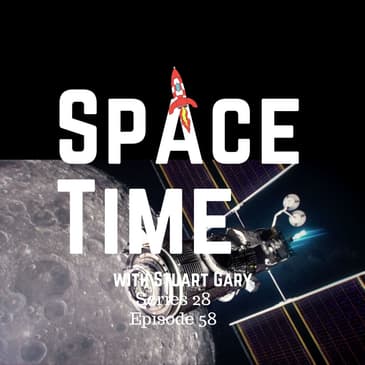
In an exciting development for lunar exploration, the first habitation module for the Lunar Gateway Space Station has arrived in the United States. Known as the Habitation and Logistics Outpost (HALO), this module will serve as a command hub for future missions to the Moon and Mars. We discuss the integration of HALO with the Power and Propulsion Element and the implications for the Artemis program.
Space Junk Threatens the ISS
We also cover the alarming increase in space debris, as NASA is forced to maneuver the International Space Station to avoid a potential collision with fragments of a Chinese rocket. This ongoing issue highlights the growing challenges of maintaining a safe orbital environment for astronauts aboard the ISS.
www.spacetimewithstuartgary.com
✍️ Episode References
Physical Review Letters
https://journals.aps.org/prl/
NASA Lunar Gateway
https://www.nasa.gov/gateway
Become a supporter of this podcast: https://www.spreaker.com/podcast/spacetime-space-astronomy--2458531/support.
00:00 This is Space Time Series 28, Episode 58 for broadcast on 14 May 2025
00:54 New insights into dark matter in the Milky Way
10:30 The Lunar Gateway Space Station's HALO module arrives
17:15 Space junk threatens the International Space Station
20:45 Science report: Insights into Earth's population growth and continental movement
00:00:00 --> 00:00:03 Stuart Gary: This is space Time Series 28, Episode 58,
00:00:03 --> 00:00:05 for broadcast on the 14th of May, 2025.
00:00:06 --> 00:00:09 Coming up on Space Time, is there a new kind
00:00:09 --> 00:00:12 of dark matter in the galactic center? The Lunar
00:00:12 --> 00:00:15 Gateway Space Station's first habitation module arrives in
00:00:15 --> 00:00:18 the United States. And more space junk
00:00:18 --> 00:00:21 threatens the International Space Station. All
00:00:21 --> 00:00:23 that and more coming up on, Space Time.
00:00:24 --> 00:00:27 Voice Over Guy: Welcome to Space Time with Stuart
00:00:27 --> 00:00:28 Gary Gary.
00:00:44 --> 00:00:47 Stuart Gary: Astronomers have uncovered a mysterious phenomenon in the center of
00:00:47 --> 00:00:50 the Milky Way Galaxy which could reveal a new,
00:00:50 --> 00:00:52 different kind of less massive dark matter.
00:00:53 --> 00:00:56 Dark matter is a mysterious, invisible substance which
00:00:56 --> 00:00:58 makes up some 85% of all the mass in the universe.
00:00:58 --> 00:01:01 Yet scientists have absolutely no idea what it
00:01:01 --> 00:01:04 is. They know it exists because they can see
00:01:04 --> 00:01:07 its gravitational effect on, surrounding space, keeping
00:01:07 --> 00:01:10 galaxies from spinning apart as they revolve and
00:01:10 --> 00:01:13 bending light from distant objects. Now,
00:01:13 --> 00:01:16 in a first of its kind study, scientists have taken a
00:01:16 --> 00:01:18 step closer to understanding this elusive substance by taking
00:01:18 --> 00:01:21 another look at a previously dismissed candidate for dark
00:01:21 --> 00:01:24 matter that could be behind unexplained chemical
00:01:24 --> 00:01:27 reactions seen taking place at the centre of the Milky
00:01:27 --> 00:01:30 Way. One of the study's authors, Sham Balaji
00:01:30 --> 00:01:33 from King's College London, says the key could be huge
00:01:33 --> 00:01:36 clouds of positively charged hydrogen located at
00:01:36 --> 00:01:38 the center of our galaxy. Their existence has been a
00:01:38 --> 00:01:41 mystery for decades because normally the gas should be
00:01:41 --> 00:01:44 neutral. So that raises the question of
00:01:44 --> 00:01:47 what's supplying enough energy to knock all the negatively charged
00:01:47 --> 00:01:49 electrons out of these clouds.
00:01:49 --> 00:01:52 Bulli says the energy signatures radiating from this
00:01:52 --> 00:01:55 part of the galaxy suggest that there's a constant roiling
00:01:55 --> 00:01:58 source of power doing that. And his data suggests
00:01:58 --> 00:02:01 that it might well be from a much lighter form of dark
00:02:01 --> 00:02:03 matter than what current models are considering
00:02:04 --> 00:02:07 now. Most established hypotheses designed to
00:02:07 --> 00:02:09 explain dark matter describe it as likely being
00:02:09 --> 00:02:11 weakly interacting massive particles,
00:02:12 --> 00:02:15 tiny subatomic particles which pass through regular
00:02:15 --> 00:02:18 matter without much interaction. And that makes them extremely hard
00:02:18 --> 00:02:21 to detect. However, this new study, reported
00:02:21 --> 00:02:23 in the journal Physical Review Letters, has potentially
00:02:23 --> 00:02:26 revived another type of dark matter, one with
00:02:26 --> 00:02:29 far lower mass than your traditional wimp.
00:02:29 --> 00:02:32 The authors think these tiny dark matter particles are crashing
00:02:32 --> 00:02:35 into each other and as a result, are, producing new charged
00:02:35 --> 00:02:38 particles in a process called annihilation. And
00:02:38 --> 00:02:40 it's these newly produced charged particles that are
00:02:40 --> 00:02:42 subsequently ionizing the hydrogen gas.
00:02:43 --> 00:02:46 Previous attempts to explain the ionization process in
00:02:46 --> 00:02:49 these gas clouds has always relied on cosmic rays,
00:02:49 --> 00:02:51 fast and energetic particles which travel throughout the
00:02:51 --> 00:02:54 universe. However, that explanation has some
00:02:54 --> 00:02:57 difficulties. For example, the energy signature
00:02:57 --> 00:03:00 recorded from observations of this area, known as the central
00:03:00 --> 00:03:03 molecular zone, isn't large enough to be attributed to
00:03:03 --> 00:03:05 cosmic rays. And such a process doesn't
00:03:05 --> 00:03:08 seem to be possible with WIMPs either. So the
00:03:08 --> 00:03:11 research team have been left with an explanation that this
00:03:11 --> 00:03:14 energy source which is causing the annihilation is slower than
00:03:14 --> 00:03:17 a cosmic ray and less massive than a wimp.
00:03:17 --> 00:03:20 Balaji says that search for dark matter has seen
00:03:20 --> 00:03:23 a lot of experiments here on Earth, and none of them have
00:03:23 --> 00:03:26 produced anything conclusive. But by using gas
00:03:26 --> 00:03:28 at the galactic center for a different kind of observation,
00:03:28 --> 00:03:31 astronomers might be getting straight to the source.
00:03:32 --> 00:03:35 And the data is telling scientists that dark matter
00:03:35 --> 00:03:37 could potentially be a lot lighter than they thought.
00:03:38 --> 00:03:40 The finding may simultaneously explain wider
00:03:40 --> 00:03:43 mysteries in our galaxy as well, such as a specific type
00:03:43 --> 00:03:46 of X ray observation found at the center of the Milky Way known
00:03:46 --> 00:03:49 as the 511 kiloelectron volt emission line.
00:03:50 --> 00:03:53 See this specific energy signature could also be due to the same
00:03:53 --> 00:03:55 low mass dark matter colliding and producing charged
00:03:55 --> 00:03:58 particles. It's an interesting hypothesis,
00:03:58 --> 00:04:01 and it follows a trend where other low mass candidates for
00:04:01 --> 00:04:03 dark matter have already been postulated.
00:04:04 --> 00:04:07 This is space time still to
00:04:07 --> 00:04:09 come. The Lunar Gateway Space Station's first
00:04:09 --> 00:04:12 habitation module arrives in the United States ready for
00:04:12 --> 00:04:15 final fit out, and then it's up to orbit. And speaking
00:04:15 --> 00:04:18 of space stations, more space junk is threatening the
00:04:18 --> 00:04:21 International Space Station now. NASA have been forced to take
00:04:21 --> 00:04:23 evasive action. All that and more still to come
00:04:24 --> 00:04:25 on space time.
00:04:41 --> 00:04:43 The first habitation module for the new Lunar Gateway
00:04:43 --> 00:04:46 Space Station has finally arrived in the United States.
00:04:47 --> 00:04:50 Known as the Habitation and Logistics Outpost, or
00:04:50 --> 00:04:53 HALO module, it'll be a core element of the Lunar
00:04:53 --> 00:04:55 Gateway Space Station, which will be humanity's first
00:04:55 --> 00:04:58 lunar space station. The pressurized module
00:04:58 --> 00:05:01 was fabricated by Thallus Alenius Space in Turin,
00:05:01 --> 00:05:04 Italy, and then shipped to Northrop Grumman's facility in
00:05:04 --> 00:05:07 Gilbert, Arizona for final fit out. It'll
00:05:07 --> 00:05:10 then be sent to NASA's Kennedy Space center in Florida, where
00:05:10 --> 00:05:13 it will be integrated with the space station's ppe, or
00:05:13 --> 00:05:15 Power and Propulsion Element. The two components
00:05:15 --> 00:05:18 will then be launched together into lunar orbit aboard a
00:05:18 --> 00:05:21 SpaceX Falcon Heavy rocket ahead of the Artemis 4
00:05:21 --> 00:05:24 manned lunar mission. Gateway is important to the
00:05:24 --> 00:05:26 Artemis program because it will provide a staging post
00:05:26 --> 00:05:29 for manned missions to the lunar surface and eventually
00:05:29 --> 00:05:32 manned missions going to Mars. HALO will
00:05:32 --> 00:05:35 operate as the Command and Control Hub 4 Gateway.
00:05:35 --> 00:05:38 It's equipped with multiple docking ports which will be used by
00:05:38 --> 00:05:40 spacecraft such as NASA's Orion, as well as lunar
00:05:40 --> 00:05:43 landers and cargo and logistics vehicles.
00:05:43 --> 00:05:46 And it will provide data handling, energy storage, power
00:05:46 --> 00:05:49 distribution, thermal regulation and communications and
00:05:49 --> 00:05:52 tracking capabilities for the space station.
00:05:52 --> 00:05:55 HALO will also include the telecommunications section
00:05:55 --> 00:05:57 of the European Space Agency's Sprite service
00:05:57 --> 00:05:59 module that will be slated to launch in
00:05:59 --> 00:06:02 2027 and will include a small windowed
00:06:02 --> 00:06:05 habitation section as well as more docking ports, an
00:06:05 --> 00:06:08 airlock and refueling infrastructure for the space station
00:06:08 --> 00:06:11 and for lunar landers. Another component,
00:06:11 --> 00:06:14 called the International Habitation Module or ihab, is now
00:06:14 --> 00:06:17 being jointly built by the European Space Agency and the
00:06:17 --> 00:06:19 Japan Aerospace Exploration Agency jaxa.
00:06:20 --> 00:06:22 It will also launch sometime next year.
00:06:23 --> 00:06:26 IHAB will also include a new Canadian Space Agency
00:06:26 --> 00:06:28 built robotic arm. Other proposed
00:06:28 --> 00:06:31 segments include more logistics modules for supplies
00:06:31 --> 00:06:34 and storage and a purpose built airlock module for
00:06:34 --> 00:06:37 extra vehicle or activities outside the space station, as well
00:06:37 --> 00:06:40 as additional docking ports for deep space transports.
00:06:40 --> 00:06:43 The current plan is to have astronauts occupy the 40 ton
00:06:43 --> 00:06:46 space station for up to 90 days at a time.
00:06:47 --> 00:06:50 Although it's called a lunar space station, it's actually quite a bit
00:06:50 --> 00:06:53 away from the Moon. See Gateway will be positioned
00:06:53 --> 00:06:56 in a highly elliptical trans lunar orbit known as the
00:06:56 --> 00:06:58 near rectilinear Halo orbit. Instead of
00:06:58 --> 00:07:01 orbiting directly around the Moon in low lunar orbit like the
00:07:01 --> 00:07:04 International Space Station does around the Earth, Gateway will follow
00:07:04 --> 00:07:07 a highly eccentric path. At its
00:07:07 --> 00:07:10 closest, it'll pass about 3 kilometers above the
00:07:10 --> 00:07:13 lunar surface, but its orbit will then swing it out
00:07:13 --> 00:07:16 to some 70km away at its most distant
00:07:16 --> 00:07:18 orbital position. Now, this design will allow
00:07:18 --> 00:07:21 Gateway to be both relatively close to the Moon for
00:07:21 --> 00:07:24 excursions down to the lunar surface, but also allow for
00:07:24 --> 00:07:27 shorter trips to the space station by spacecraft traveling to
00:07:27 --> 00:07:30 and from the Earth with crew and supplies. See
00:07:30 --> 00:07:32 Most current rockets don't have the power to reach the
00:07:32 --> 00:07:35 Moon directly in one go, but they could reach Gateway.
00:07:36 --> 00:07:39 So after liftoff, only a moderate maneuver will be needed to
00:07:39 --> 00:07:42 slow a visiting spacecraft for rendezvous with
00:07:42 --> 00:07:44 Gateway. For example, it means Europe's Ariane
00:07:44 --> 00:07:47 6 could be used to deliver supplies for astronauts for use
00:07:47 --> 00:07:50 on missions to the Moon or deeper into space.
00:07:50 --> 00:07:53 And at the other end of the journey, NASA will be using a modified
00:07:53 --> 00:07:56 version of SpaceX's Starship known as the SpaceX
00:07:56 --> 00:07:59 Human Landing System, or HLS as Lunar
00:07:59 --> 00:08:02 Shuttle Transporting crews, robot supplies and
00:08:02 --> 00:08:05 infrastructure from Gateway down to the lunar surface when
00:08:05 --> 00:08:08 the space station's closest to the Moon. And the that'll happen
00:08:08 --> 00:08:11 about once every seven days. Likewise, a
00:08:11 --> 00:08:14 transfer window to Gateway opens about every seven days for
00:08:14 --> 00:08:16 the return trip from the lunar surface to the space
00:08:16 --> 00:08:19 station, and Gateway's orbit will rotate together
00:08:19 --> 00:08:22 with the Moon as seen from Earth. It'll Appear a
00:08:22 --> 00:08:25 little bit like a lunar halo. Now orbits like this are
00:08:25 --> 00:08:28 possible because of the interplay between the Earth and the Moon's
00:08:28 --> 00:08:31 gravitational forces. As the two large bodies
00:08:31 --> 00:08:34 dance through space. A smaller object can be caught in
00:08:34 --> 00:08:37 a variety of stable and near stable positions in relation
00:08:37 --> 00:08:40 to the orbiting masses, Also known as light vibration or
00:08:40 --> 00:08:42 Lagrangian points. Such locations are
00:08:42 --> 00:08:45 perfect for planning long term missions and to some extent
00:08:45 --> 00:08:48 they'll dictate the design of the spacecraft, what it can carry
00:08:48 --> 00:08:51 to and from orbit, and how much energy it needs to get and
00:08:51 --> 00:08:54 stay there. Traveling on the near rectilinear
00:08:54 --> 00:08:57 halo orbit, One revolution of Gateway in its orbit around
00:08:57 --> 00:08:59 the Moon will take seven Earth days. This
00:08:59 --> 00:09:02 period was chosen to limit the number of eclipses when Gateway
00:09:02 --> 00:09:05 would be shrouded by the Earth or Moon's shadow.
00:09:05 --> 00:09:08 However, near rectilinear halo orbits are slightly
00:09:08 --> 00:09:11 unstable and objects in these orbits do have a tendency
00:09:11 --> 00:09:14 of drifting away. That means regular small
00:09:14 --> 00:09:17 station keeping maneuvers will be needed to keep Gateway in
00:09:17 --> 00:09:20 position. We've learned how to do that by keeping the International
00:09:20 --> 00:09:23 Space Station in its correct orbital height above the Earth.
00:09:23 --> 00:09:26 This report on the Gateway project by NASA
00:09:26 --> 00:09:27 tv.
00:09:31 --> 00:09:34 NASA TV: Gateway is in and of itself a humongous
00:09:34 --> 00:09:37 technological marvel. It is the first
00:09:37 --> 00:09:40 space station around the Moon. It is going to be a very
00:09:40 --> 00:09:43 important part of our future exploration
00:09:43 --> 00:09:46 missions. We know how to live and work
00:09:46 --> 00:09:49 in low Earth orbit. But now it's time to
00:09:49 --> 00:09:52 go further. Artemis is going to take us to parts of the moon that
00:09:52 --> 00:09:53 we haven't been to before.
00:09:53 --> 00:09:56 Stuart Gary: Going back to the moon has to be an international
00:09:56 --> 00:09:59 cooperation. The resources and the efforts
00:09:59 --> 00:10:01 required to make this
00:10:01 --> 00:10:04 happen are just too much for any single nation to,
00:10:04 --> 00:10:05 to go on their own.
00:10:06 --> 00:10:08 NASA TV: There's the old saying that if, you want to go fast, you
00:10:08 --> 00:10:11 go alone. If you want to go for
00:10:11 --> 00:10:14 a long time, you go together. And so
00:10:14 --> 00:10:17 it's going to take a humankind effort to go
00:10:17 --> 00:10:20 to the moon and then use that as a stepping stone to go to
00:10:20 --> 00:10:23 Mars. To be able to go and do
00:10:23 --> 00:10:26 lunar surface exploration missions and do sustainable missions,
00:10:26 --> 00:10:29 be able to do long duration missions, go to the moon to stay,
00:10:29 --> 00:10:32 rather than just to visit like we did during Apollo. We need
00:10:32 --> 00:10:34 a Space Station and GatewaySat Station.
00:10:34 --> 00:10:37 The International crews and the international astronauts
00:10:37 --> 00:10:40 that will perform these missions will be the first
00:10:40 --> 00:10:42 humans that are making their home in deep space.
00:10:43 --> 00:10:46 NASA TV: I think about all that we've learned from the International Space
00:10:46 --> 00:10:47 Station as a.
00:10:47 --> 00:10:48 Stuart Gary: low Earth orbit laboratory.
00:10:49 --> 00:10:51 NASA TV: Gateway will be an extension of that and
00:10:51 --> 00:10:54 continue that legacy of science and discovery.
00:10:56 --> 00:10:58 NASA TV: We are going to be learning about deep space
00:10:58 --> 00:11:01 exploration. When we're in low Earth orbit,
00:11:01 --> 00:11:04 we're protected. When we're around
00:11:04 --> 00:11:07 the Moon, we don't have that protection. So it is
00:11:07 --> 00:11:09 going to affect everything.
00:11:10 --> 00:11:13 We have the very unique ability at
00:11:13 --> 00:11:15 Gateway to study that radiation.
00:11:16 --> 00:11:19 Gateway sounds so science fiction, but
00:11:19 --> 00:11:22 it's real and we're building it. And science will
00:11:22 --> 00:11:23 never be the same.
00:11:23 --> 00:11:26 NASA TV: In one of the first steps of our Artemis lunar
00:11:26 --> 00:11:28 exploration plans, we have selected Maxar
00:11:28 --> 00:11:31 Technologies to provide the power and propulsion
00:11:31 --> 00:11:34 element for our lunar gateway. The
00:11:34 --> 00:11:37 power and propulsion element is a spacecraft that will
00:11:37 --> 00:11:40 use high power solar electric propulsion to
00:11:40 --> 00:11:43 give our explorers aboard the gateway access to the
00:11:43 --> 00:11:45 entire surface of the Moon. It will also
00:11:45 --> 00:11:48 enable the Gateway to serve as a mobile command and
00:11:48 --> 00:11:51 service module by providing a communications relay
00:11:52 --> 00:11:54 for human and robotic expeditions to the lunar
00:11:54 --> 00:11:55 surface.
00:11:55 --> 00:11:58 Stuart Gary: This is a critical capability for not just
00:11:58 --> 00:12:01 a sustainable lunar return, but also an
00:12:01 --> 00:12:03 eventual journey to Mars.
00:12:03 --> 00:12:06 NASA TV: NASA's current lunar exploration plans call
00:12:06 --> 00:12:09 for a return to the moon. The sustained human presence
00:12:09 --> 00:12:11 on and around the moon by 2028.
00:12:16 --> 00:12:19 Stuart Gary: This is space time. Still to come,
00:12:19 --> 00:12:22 more space junk threatens the International Space Station.
00:12:22 --> 00:12:24 And later in the science report, new insights
00:12:24 --> 00:12:27 into how the Earth's continents are moving. All that
00:12:27 --> 00:12:30 and more still to come on, space time.
00:12:46 --> 00:12:48 NASA has been forced to move the International Space Station again
00:12:48 --> 00:12:51 to avoid some large fragments of space junk. The
00:12:51 --> 00:12:54 orbital correction maneuver involved the Russian Progress
00:12:54 --> 00:12:57 MS.30 cargo ship which was docked at the space station,
00:12:57 --> 00:12:59 firing its thrusters for a 212.79
00:12:59 --> 00:13:02 second burn, in the process increasing the station's
00:13:02 --> 00:13:05 orbital altitude by 540 metres.
00:13:05 --> 00:13:08 Now, without this maneuver, NASA estimated the fragment could have come
00:13:08 --> 00:13:11 within 6 km of the space station. That's too
00:13:11 --> 00:13:14 close for comfort. The space junk has been identified
00:13:14 --> 00:13:17 as part of a Chinese Long March M rocket launched back in
00:13:17 --> 00:13:20 2005. Space Junk has become
00:13:20 --> 00:13:23 a constant problem for crew aboard the orbiting outpost, with
00:13:23 --> 00:13:25 collision avoidance maneuvers now being undertaken
00:13:25 --> 00:13:28 multiple times every year. Each time
00:13:28 --> 00:13:31 it happens, crew have to stop what they're doing, take
00:13:31 --> 00:13:34 refuge inside one of the dock capsules just in
00:13:34 --> 00:13:37 case something hits the space station and they're forced to make an
00:13:37 --> 00:13:39 emergency evacuation and return to Earth.
00:13:40 --> 00:13:42 And the trouble is that problem's only going to get worse.
00:13:43 --> 00:13:44 This is space time
00:14:00 --> 00:14:03 and time now to take another brief look at some of the other stories making
00:14:03 --> 00:14:06 news in science this week with a science report.
00:14:07 --> 00:14:09 A computer simulation of Earth's population growth
00:14:09 --> 00:14:12 has shown that humans will need to have more babies than the
00:14:12 --> 00:14:15 current rates if the species is meant to avoid
00:14:15 --> 00:14:18 extinction. The findings reported in the journal
00:14:18 --> 00:14:21 plos One, shows that Homo sapiens survival
00:14:21 --> 00:14:24 requires every woman of childbearing age to have an average of
00:14:24 --> 00:14:27 at least 2.7 children, much higher than the
00:14:27 --> 00:14:30 2.1 previously thought would be enough to keep people
00:14:30 --> 00:14:32 going. The researchers say the previous
00:14:32 --> 00:14:35 2.1 kids per woman rate doesn't account for
00:14:35 --> 00:14:38 random differences in how many kids people have, or things like
00:14:38 --> 00:14:40 birth rates, gender ratios and the fact that some
00:14:40 --> 00:14:43 people never have children at all. They say the
00:14:43 --> 00:14:46 research shows that women need to have at least 2.7
00:14:46 --> 00:14:49 kids to reliably avoid eventual extinction of the
00:14:49 --> 00:14:52 species, especially in populations that are already
00:14:52 --> 00:14:55 small. So it's one kid for mum, one
00:14:55 --> 00:14:57 for dad, one for and one for humanity.
00:14:59 --> 00:15:01 A new analysis of lava flows that solidified
00:15:01 --> 00:15:04 and broke apart over a massive crack in the earth's crust in
00:15:04 --> 00:15:07 Turkey has brought new insights into how continents
00:15:07 --> 00:15:09 move. The findings, reported in the journal
00:15:09 --> 00:15:12 Communications Earth and Environment, will help improve
00:15:12 --> 00:15:15 science's understanding of earthquake risks. The
00:15:15 --> 00:15:17 new research by Curtin University has revealed that
00:15:17 --> 00:15:20 Tsugalu Fault zone, a more than 200 kilometer long
00:15:20 --> 00:15:23 geological structure visible from space, is slowly
00:15:23 --> 00:15:26 pulling apart, providing a rare glimpse into the forces
00:15:26 --> 00:15:28 that shape Earth's crust when plates collide.
00:15:29 --> 00:15:31 The study solves a long standing mystery about the
00:15:31 --> 00:15:34 fault's movement, unambiguously revealing that the
00:15:34 --> 00:15:37 fault is pulling apart at a rate of about 1 millimeter
00:15:37 --> 00:15:40 per year, rather than, as other studies have suggested,
00:15:40 --> 00:15:43 it's shifting sideways. Understanding
00:15:43 --> 00:15:46 these movements is crucial not just for assessing volcanic
00:15:46 --> 00:15:49 and earthquake threats, but also for improving global models
00:15:49 --> 00:15:50 of continental deformation.
00:15:52 --> 00:15:55 A new study has shown that teenagers diagnosed with a
00:15:55 --> 00:15:57 mental health condition report spending about 50 minutes
00:15:57 --> 00:16:00 extra per day on social media compared to their
00:16:00 --> 00:16:03 peers. The findings, reported in the journal Nature
00:16:03 --> 00:16:06 Human Behavior, looked at self reported social media
00:16:06 --> 00:16:09 use among more than 3 teens, 16%
00:16:09 --> 00:16:12 of whom had at least one diagnosed mental health condition.
00:16:12 --> 00:16:15 The researchers say participants with depression or anxiety
00:16:15 --> 00:16:18 disorders reported comparing themselves to others on
00:16:18 --> 00:16:21 social media more frequently. They also reported
00:16:21 --> 00:16:24 being less happy with the number of friends or followers they have
00:16:24 --> 00:16:27 on social media, and that their mood was more strongly being
00:16:27 --> 00:16:30 impacted by how many likes, shares and comments
00:16:30 --> 00:16:33 they get. Apple have
00:16:33 --> 00:16:36 started rolling out their latest series of updates for iPhones,
00:16:36 --> 00:16:38 tablets and Macs. With the details, we're joined by
00:16:38 --> 00:16:41 technology editor Alex Zaharov-Reutt Vroid from TechAdvice
00:16:42 --> 00:16:42 Life
00:16:42 --> 00:16:45 Alex Zaharov-Reutt: The ritual of updating all of our, devices
00:16:45 --> 00:16:48 on seemingly a monthly basis is about to start up again
00:16:48 --> 00:16:50 with iOS 18.5. Currently
00:16:50 --> 00:16:53 I'm running the release candidate, but by the time
00:16:53 --> 00:16:56 people are hearing this iOS 18.5 should be out.
00:16:56 --> 00:16:59 And whilst there's the usual bug fixes and
00:16:59 --> 00:17:02 new wallpapers, there is sometimes some new feature.
00:17:02 --> 00:17:05 And the feature that really caught my eye was that the
00:17:05 --> 00:17:08 emergency SOS and messaging features that were
00:17:08 --> 00:17:11 debuted with the iPhone 14 and then
00:17:11 --> 00:17:14 were available with the iPhone 15 and 16 are actually going
00:17:14 --> 00:17:16 to be backported to the iPhone 13.
00:17:17 --> 00:17:20 So this is big. I mean they clearly had the technology ready to
00:17:20 --> 00:17:23 go at the time, but the satellites weren't in place or maybe
00:17:23 --> 00:17:25 they just weren't ready to launch it. This is going to
00:17:25 --> 00:17:28 be something that enables millions more people in the
00:17:28 --> 00:17:29 case of an emergency.
00:17:30 --> 00:17:33 Stuart Gary: I think the satellites up there, I think that's the key.
00:17:33 --> 00:17:35 Alex Zaharov-Reutt: One of the flights had launched 29 more satellites. I mean Elon is
00:17:35 --> 00:17:38 launching more and more satellites all the time. And he's also
00:17:38 --> 00:17:41 upgrading his satellites to version 2, which can
00:17:41 --> 00:17:44 do higher bandwidth and will in the future
00:17:44 --> 00:17:47 enable voice and video calls as well as high
00:17:47 --> 00:17:50 speed data. I mean, at the moment most people are just using it to
00:17:50 --> 00:17:53 send messages for emergencies, but also if they're off the
00:17:53 --> 00:17:55 beaten track, they can send find my notifications
00:17:56 --> 00:17:58 to relatives who know that they can't otherwise
00:17:58 --> 00:18:01 track their loved ones on some hiking trail
00:18:01 --> 00:18:04 because there's no 4G or 5G infrastructure. So yeah, the
00:18:04 --> 00:18:07 satellite re really accelerated and
00:18:07 --> 00:18:10 by 2030 being able to access voice and
00:18:10 --> 00:18:13 data from virtually anywhere on the planet, unless you're deep
00:18:13 --> 00:18:16 underground, is going to be just taken for granted, just
00:18:16 --> 00:18:18 in the same way that we take mobile phones for granted today. And
00:18:18 --> 00:18:20 yet in the 80s it was car phones.
00:18:21 --> 00:18:23 Stuart Gary: So these updates, will they be extended to other products as
00:18:23 --> 00:18:24 well?
00:18:24 --> 00:18:26 Alex Zaharov-Reutt: Yes, they'll be 18.5 for iPad, OS
00:18:26 --> 00:18:29 15.5 for macOS, should be 11.5 for the
00:18:29 --> 00:18:32 WatchOS and new versions 2.5 for the
00:18:32 --> 00:18:35 Vision Pro OS. So yeah, all the different Apple devices.
00:18:35 --> 00:18:37 If your device can still get updates, expect an update
00:18:38 --> 00:18:41 by the time you're hearing this, and if not, it'll be in in the very few days
00:18:41 --> 00:18:44 thereafter. But, new updates coming all the time stay updated.
00:18:44 --> 00:18:46 Stuart Gary: That's Alex Zaharov-Reutt vroid from M TechAdvice
00:18:47 --> 00:18:47 Live.
00:19:03 --> 00:19:05 And that's the show for now. Space Time is
00:19:05 --> 00:19:08 available every Monday, Wednesday and Friday through Apple
00:19:08 --> 00:19:11 Podcasts, iTunes, Stitcher, Google
00:19:11 --> 00:19:13 Podcast, Pocketcasts, Spotify,
00:19:14 --> 00:19:16 Acast, Amazon Music, bitesz.com,
00:19:17 --> 00:19:20 soundCloud, YouTube Music, your favorite podcast
00:19:20 --> 00:19:21 download provider, and from
00:19:21 --> 00:19:23 spacetimewithstuartgary.com
00:19:23 --> 00:19:26 SpaceTime's also broadcast through the National
00:19:26 --> 00:19:29 Science foundation on Science Zone Radio and
00:19:29 --> 00:19:32 on both iHeartradio and TuneIn radio.
00:19:32 --> 00:19:35 And you can help to support our show by visiting the
00:19:35 --> 00:19:38 SpaceTime Store for a range of promotional merchandising
00:19:38 --> 00:19:40 goodies, or by becoming a SpaceTime
00:19:40 --> 00:19:43 Patron, which gives you access to triple episode commercial
00:19:43 --> 00:19:46 free versions of the show, as well as lots of bonus
00:19:46 --> 00:19:49 audio content which doesn't go to air, access to our
00:19:49 --> 00:19:51 exclusive Facebook group, and other rewards.
00:19:52 --> 00:19:55 Just go to spacetimewithstuartgary.com for
00:19:55 --> 00:19:56 full details.
00:19:57 --> 00:20:00 Voice Over Guy: You've been listening to Space Time with Stuart Gary This has
00:20:00 --> 00:20:02 been another quality podcast production from
00:20:02 --> 00:20:03 bitesz.com