
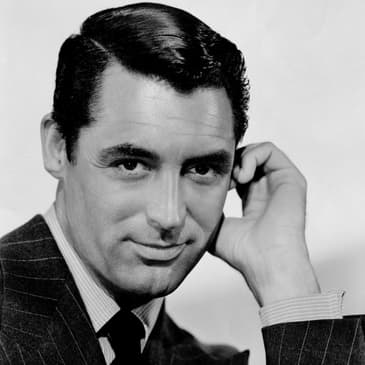
Cary Grant: The Iconic Leading Man
Delve into the life and legacy of Cary Grant, one of Hollywood's most enduring figures. Born Archibald Leach in Bristol, England, Grant's journey from a troubled childhood to becoming the epitome of charm and sophistication is nothing short of remarkable. Discover how he transformed himself into a cinematic legend, captivating audiences with his impeccable comedic timing in screwball comedies like *The Awful Truth* and *Bringing Up Baby*, and showcasing his versatility in thrilling collaborations with Alfred Hitchcock such as *Suspicion* and *North by Northwest*. Despite never winning a competitive Academy Award, Grant's influence on the film industry is undeniable, earning him an honorary Oscar for his artistry. Explore the man behind the tuxedo, his complex personal life, and the lasting impact he left on cinema. Join us as we celebrate the legacy of Cary Grant, a true icon of Hollywood glamour.
1. Early Life and Transformation
2. Rise to Stardom
3. Iconic Collaborations with Hitchcock
4. Versatility in Film Roles
5. Academy Award Nominations
6. Personal Life and Legacy
Stream podcast episodes on demand from https://bitesz.com/podcast/the-classic-film-club-revisited-re-rated
Subscribe, rate, and review The Classic Film Club podcast at all good podcatcher apps, including Apple Podcasts, Spotify, YouTubeMusic, iHeartRadio or wherever you get your podcasts.
For more, join the Classic Film Club Facebook group and meet up with fellow film enthusiasts from around the globe.
Facebook Group - https://www.facebook.com/groups/711768422887685
YouTubeMusic Channel: The Classic Film Club
Website: https://bitesz.com/podcast/the-classic-film-club-revisited-re-rated
Email: tcfc@bitesz.com
If you're enjoying The Classic Film Club, please share and tell your friends. Your support would be appreciated...thank you.
Become a supporter of this podcast: https://www.spreaker.com/podcast/the-classic-film-club--4614300/support.
00:00:00 --> 00:00:02 Speaker A: Welcome back to the Classic Film Club, where
00:00:02 --> 00:00:04 we dive deep into the legends of Hollywood's
00:00:04 --> 00:00:07 golden age. Today we're tackling a question
00:00:07 --> 00:00:09 that's both simple and endlessly complex.
00:00:10 --> 00:00:12 Who is Cary Grant? For many, the name
00:00:12 --> 00:00:15 Cary Grant conjures an image of effortless
00:00:15 --> 00:00:18 charm, debonair style and a twinkle
00:00:18 --> 00:00:20 in the eye that could melt glaciers. He was
00:00:20 --> 00:00:23 in many ways the epitome of the leading man,
00:00:23 --> 00:00:26 a man who seemed to have been born with a
00:00:26 --> 00:00:28 tuxedo on. But beneath that polished
00:00:28 --> 00:00:31 exterior lay a fascinating life story.
00:00:31 --> 00:00:33 A journey from humble beginnings to
00:00:33 --> 00:00:36 international stardom. Born Archibald Leach
00:00:36 --> 00:00:39 in Bristol, England on January 18,
00:00:39 --> 00:00:42 1904, his early life was far from the
00:00:42 --> 00:00:45 glamour he would later embody. His father was
00:00:45 --> 00:00:47 an alcoholic tailor and his mother suffered
00:00:47 --> 00:00:50 from mental health issues leading to her
00:00:50 --> 00:00:52 institutionalization when Archie was just a
00:00:52 --> 00:00:55 boy. This early trauma deeply affected
00:00:55 --> 00:00:57 him and he often spoke of a feeling of
00:00:57 --> 00:01:00 abandonment. He found solace and escape in
00:01:00 --> 00:01:02 the world of performance, joining a troupe of
00:01:02 --> 00:01:05 acrobats at a young age. This experience
00:01:05 --> 00:01:08 would prove invaluable, teaching him physical
00:01:08 --> 00:01:11 comedy, stage presence and a
00:01:11 --> 00:01:13 remarkable sense of timing. At 16,
00:01:14 --> 00:01:16 he emigrated to the United States, initially
00:01:16 --> 00:01:18 working in vaudeville and touring with his
00:01:18 --> 00:01:21 acrobatic group. It was during this time that
00:01:21 --> 00:01:23 he began to shed the skin of Archibald Leach
00:01:23 --> 00:01:26 and cultivate the Persona of Cary Grant.
00:01:26 --> 00:01:29 He adopted the name in 1927, a
00:01:29 --> 00:01:31 decision that would forever etch him into
00:01:31 --> 00:01:34 cinematic history. His distinctive name,
00:01:34 --> 00:01:36 coupled with his striking looks and suave
00:01:36 --> 00:01:38 demeanor quickly caught the attention of
00:01:38 --> 00:01:41 Hollywood. His early film career saw him
00:01:41 --> 00:01:44 in a variety of roles, but it was his
00:01:44 --> 00:01:46 transition to RKO pictures in the early
00:01:46 --> 00:01:49 1930s that that truly launched him. He
00:01:49 --> 00:01:52 became a star with films like the Awful
00:01:52 --> 00:01:54 Truth and
00:01:54 --> 00:01:57 Bringing up Baby in 1938,
00:01:57 --> 00:02:00 both opposite the equally brilliant Katharine
00:02:00 --> 00:02:03 Hepburn. These screwball comedies, with
00:02:03 --> 00:02:05 their rapid fire dialogue and chaotic
00:02:05 --> 00:02:08 situations, showcased Grant's impeccable
00:02:08 --> 00:02:11 comedic timing and his ability to play a man
00:02:11 --> 00:02:14 perpetually out of his depth, yet always
00:02:14 --> 00:02:16 maintaining his composure. But Cary Grant
00:02:16 --> 00:02:19 wasn't just a comedian. He could embody
00:02:19 --> 00:02:22 romance, adventure and even a touch of
00:02:22 --> 00:02:24 danger. His collaboration with Alfred
00:02:24 --> 00:02:27 Hitchcock is legendary. In
00:02:27 --> 00:02:29 Suspicion, he played
00:02:29 --> 00:02:32 a charming but potentially sinister husband,
00:02:32 --> 00:02:35 leaving audiences guessing his true nature.
00:02:35 --> 00:02:37 Then came north by Northwest,
00:02:40 --> 00:02:42 a masterful thriller where he plays an
00:02:42 --> 00:02:45 innocent man mistaken for a spy, leading
00:02:45 --> 00:02:47 to a series of breathtaking chases and close
00:02:47 --> 00:02:50 calls. Hitchcock himself once said that
00:02:50 --> 00:02:53 Grant was the only actor he ever loved. And
00:02:53 --> 00:02:55 who can forget his iconic role as John Robey,
00:02:56 --> 00:02:59 the retired jewel thief in To Catch
00:02:59 --> 00:03:01 a Thief. Set
00:03:01 --> 00:03:03 against the breathtaking backdrop of the
00:03:03 --> 00:03:06 French Riviera. The this film solidified his
00:03:06 --> 00:03:08 image as the ultimate sophisticated
00:03:08 --> 00:03:11 adventurer, charming and elegant, even while
00:03:11 --> 00:03:14 evading the law. His filmography is
00:03:14 --> 00:03:17 a testament to his versatility. He starred in
00:03:17 --> 00:03:19 dramas like An Affair to Remember,
00:03:21 --> 00:03:24 a timeless tale of love and loss, and
00:03:24 --> 00:03:26 none but the Lonely Heart,
00:03:28 --> 00:03:30 a poignant drama for which he received his
00:03:30 --> 00:03:33 first Academy Award nomination. He also
00:03:33 --> 00:03:36 ventured into musicals, most notably in
00:03:36 --> 00:03:37 Kiss Them For Me,
00:03:39 --> 00:03:42 and even explored more complex characters in
00:03:42 --> 00:03:43 films like Indiscreet.
00:03:45 --> 00:03:47 Throughout his career, Grant was nominated
00:03:47 --> 00:03:50 for two Academy Awards for Best Actor for
00:03:50 --> 00:03:53 Penny Serenade in 1941 and
00:03:53 --> 00:03:55 None but the Lonely Heart in
00:03:55 --> 00:03:57 1942-1944.
00:03:58 --> 00:04:00 However, in a surprising twist for an actor
00:04:00 --> 00:04:03 of his caliber and popularity, he he never
00:04:03 --> 00:04:05 actually won an Oscar. In
00:04:05 --> 00:04:08 1970, he was awarded an honorary
00:04:08 --> 00:04:10 Academy Award for his unrivaled
00:04:10 --> 00:04:13 mastery of the art of screen acting. It was a
00:04:13 --> 00:04:16 fitting tribute to a man who, despite never
00:04:16 --> 00:04:18 taking home a competitive statue, had
00:04:18 --> 00:04:21 undeniably shaped the landscape of cinema.
00:04:22 --> 00:04:25 What made Cary Grant so special? It was more
00:04:25 --> 00:04:27 than just his good looks and charm. He was a
00:04:27 --> 00:04:30 master craftsman. He meticulously curated
00:04:30 --> 00:04:32 his image, and he understood the power of
00:04:32 --> 00:04:35 performance. He was also known for his
00:04:35 --> 00:04:37 professionalism on set, always prepared and
00:04:37 --> 00:04:40 always a gentleman. Yet behind the scenes, he
00:04:40 --> 00:04:43 was a complex individual, grappling with his
00:04:43 --> 00:04:45 past and the pressures of maintaining his
00:04:45 --> 00:04:48 carefully constructed Persona. He was
00:04:48 --> 00:04:50 married five times, and his personal life was
00:04:50 --> 00:04:52 often a subject of public fascination and
00:04:52 --> 00:04:55 speculation. Cary Grant retired from
00:04:55 --> 00:04:58 filmmaking in 1966, choosing to
00:04:58 --> 00:05:00 focus on his life off screen. He spent his
00:05:00 --> 00:05:03 later years as a respected figure, often
00:05:03 --> 00:05:05 attending film festivals and appearing at
00:05:05 --> 00:05:07 events. Still possessing that signature
00:05:07 --> 00:05:10 charisma, he passed away on November
00:05:10 --> 00:05:13 29, 1986, at the age of 82,
00:05:13 --> 00:05:15 leaving behind a legacy of unforgettable
00:05:15 --> 00:05:18 performances and a timeless image of
00:05:18 --> 00:05:19 Hollywood glamour.
00:05:19 --> 00:05:22 So who is Cary Grant? He is the
00:05:22 --> 00:05:24 suave gentleman who could conquer any
00:05:24 --> 00:05:27 situation with a smile. He is the master of
00:05:27 --> 00:05:30 comedic timing, the romantic lead who swept
00:05:30 --> 00:05:32 audiences off their feet, and the man who
00:05:32 --> 00:05:35 proved that true stardom is a combination of
00:05:35 --> 00:05:38 talent, dedication and an enduring
00:05:38 --> 00:05:40 mystique. He is, quite simply, an
00:05:40 --> 00:05:43 icon. OUTRO MUSIC FADES IN
00:05:43 --> 00:05:45 that's all for this episode of the Classic
00:05:45 --> 00:05:48 Film Club. Join us next time as we explore
00:05:48 --> 00:05:50 another fascinating chapter in cinematic
00:05:50 --> 00:05:53 history. Until then, keep those reels
00:05:53 --> 00:05:55 rolling. OUTRO MUSIC FADES OUT.