
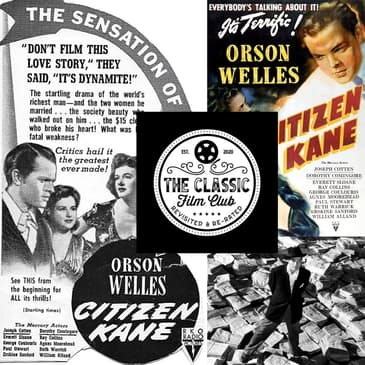
Following the death of publishing tycoon Charles Foster Kane, reporters scramble to uncover the meaning of his final utterance; 'Rosebud'.
Director: Orson Welles
Writers: Herman J. Mankiewicz (original screenplay), Orson Welles (original screenplay)
Stars: Orson Welles, Joseph Cotten, Dorothy Comingore - (IMDb)
https://www.imdb.com/title/tt0033467/?ref_=nv_sr_srsg_0
Discovery Spot
If… (Crime, Drama) (1968)
In this allegorical story, a revolution led by pupil Mick Travis takes place at an old established private school in England.
Director: Lindsay Anderson
Writers: David Sherwin (screenplay), David Sherwin (original script: "Crusaders")
Stars: Malcolm McDowell, David Wood, Richard Warwick - (IMDb)
https://www.imdb.com/title/tt0063850/?ref_=nm_flmg_act_261
Trash & Treasure Corner
The Stuff (Comedy, Horror, Sci-Fi)
A delicious, mysterious goo that oozes from the earth is marketed as the newest dessert sensation, but the tasty treat rots more than teeth when zombie-like snackers who only want to consume more of the strange substance at any cost begin infesting the world.
Director: Larry Cohen
Writer: Larry Cohen
Stars: Michael Moriarty, Andrea Marcovicci, Garrett Morris - (IMDb)
https://www.imdb.com/title/tt0090094/?ref_=fn_al_tt_1
The Classic Film Club RSS feed: https://rss.acast.com/the-classic-film-club
Stream podcast episodes on demand from https://theclassicfilmclub.com (mobile friendly).
Subscribe, rate and review The Classic Film Club podcast at all good podcatcher apps, including Google Podcasts, Apple Podcasts, Spotify, iHeartRadio, Stitcher, PocketCasts, CastBox.FM, Podbean, Spreaker, etc.
For more, join the Classic Film Club Facebook group and meet up with fellow film enthusiasts from around the globe.
Facebook Group - https://www.facebook.com/groups/711768422887685
Twitter - @tcfcpodcst
YouTube Channel: Coming soon
If you're enjoying The Classic Film Club, please share and tell your friends. Your support would be appreciated...thank you.
#classicfilms #classiccinema #movies #cinema #entertainment #podcast #reviews #tcfc
See acast.com/privacy for privacy and opt-out information.
Become a supporter of this podcast: https://www.spreaker.com/podcast/the-classic-film-club--4614300/support.
00:00:00
Generic: All right, let me go to the movies, play it for Harry.
00:00:04
Play it for me. Just put your lips together and look, go
00:00:07
ahead, make my day.
00:00:09
Fasten your seat. Then it's going to be a bumpy nut. I got a
00:00:13
bad feeling about this. I feeling we're not in Kansas
00:00:16
anymore. Frankly, am I here?
00:00:17
I welcome to the Classic Film Club with Richard Kuipers. Hello
00:00:23
and welcome to the Classic Film Club. The podcast dedicated to
00:00:26
taking a fresh look at famous films of the past and shining a
00:00:30
light on less famous, overlooked and forgotten films that are
00:00:34
well worth discovering.
00:00:35
Richard Kuipers: I'm Richard Kipper, a film critic for the
00:00:37
international trade paper variety film festival programmer
00:00:41
and documentary producer, inviting you to join me on this
00:00:45
cinematic adventure of discovery and celebration. Today, I want
00:00:49
to take a look at one of the most famous films ever made from
00:00:53
1962 until 2012.
00:00:56
It was number one in the top 10 films of all time critics poll
00:01:00
conducted by the respected British magazine, Sight And
00:01:03
Sound and it's widely regarded as the best debut feature ever
00:01:07
made Orson Welles was just 25 years old when he directed, co
00:01:13
wrote and played the lead role in Citizen Kane, which was
00:01:17
released in May 1941.
00:01:19
6 months before the US entered World War II, telling the life
00:01:24
story of fictional media tycoon and political aspirant Charles
00:01:28
Foster Kane. Citizen Kane was nominated for nine Oscars
00:01:32
winning only one for the original screenplay by Wells and
00:01:35
Herman Jay Mankowitz.
00:01:37
It performed well at the box office without being a smash hit
00:01:40
and it got mostly positive reviews including one from
00:01:44
Newsweek who praised Orson Welles as quote, the best actor
00:01:49
in the history of acting. On the other hand, the tattler said
00:01:52
Welles's movie was the well intentioned muddled amateurish
00:01:57
thing one expects from highbrows by the early 19 fifties.
00:02:02
It was largely a forgotten film. But thanks to screenings on the
00:02:06
new fangled device called television and an influential
00:02:09
1956 essay by film critic Andrew Saris in film culture magazine,
00:02:14
Citizen Kane began its re emergence first. It became a
00:02:18
great American film within a few years.
00:02:21
It was frequently being hailed as the greatest film of all
00:02:24
time. Other films have claimed that title in countless critics
00:02:29
and public polls over the years gone with the Wind Battleship
00:02:33
Potemkin raging bull vertigo. The list goes on but none quite
00:02:38
have the same aura and mystique as Citizen Kane.
00:02:42
When critics and publicists want to describe the best of a kind,
00:02:45
they still use the term the Citizen Kane of Night of the
00:02:50
living Dead has been called the Citizen Kane of zombie movies.
00:02:53
The sex pistols film, the great rock n roll swindle was promoted
00:02:57
as the Citizen Kane of rock movies.
00:02:59
And at the very other end of the scale, we have midnight movie
00:03:03
favorite. The room being described as the Citizen Kane of
00:03:07
bad films. Few motion pictures have inspired such awe and
00:03:12
intrigue as Citizen Kane or at the immense story it tells and
00:03:16
the techniques it employs and intrigue about every aspect of
00:03:20
its production.
00:03:21
From the moment it began filming in secret with largely unknown
00:03:25
actors before being released amid boycotts from some cinema
00:03:28
chains and fear of lawsuits from William Randolph Hearst, the
00:03:32
media tycoon whose business and private life has some very
00:03:36
strong parallels with the central character hurst
00:03:40
prohibited any of his newspapers from even mentioning the film we
00:03:44
could spend forever talking about that.
00:03:46
But let's get to the film itself. How does Citizen Kane
00:03:48
shape up almost 80 years later? How well has it stood the test
00:03:53
of time? And what can we take from it today?
00:03:56
I hadn't seen Citizen Kane for about 20 years before I gave it
00:04:00
a refresher run just recently. What struck me right away after
00:04:04
the R K O radio pictures logo one of the best of all time and
00:04:08
I never get tired of looking at it is the opening credit a
00:04:11
Mercury production by Orson Welles immediately.
00:04:15
It has the air of an event, something that's not merely a
00:04:18
movie but the unveiling of a major work of art. And in 1941
00:04:23
it was with Wells already being hailed as a young genius. In
00:04:28
1937. At the age of 22 he and John Houseman founded the
00:04:32
Mercury Theater Repertory Company in New York.
00:04:36
A year later, Wells frightened the pants off listeners with the
00:04:39
Mercury's radio production of H G Wells war of the Worlds
00:04:43
convincing many that Earth was actually being invaded by
00:04:46
Martians. As the first images of Citizen Kane appear, we could be
00:04:51
forgiven for thinking we're in gothic horror territory.
00:04:54
The camera lingers over shots of Xanadu, a dark foreboding castle
00:04:58
guarded by a huge gate with the letter K and a no trespassing
00:05:02
sign with Bernard Herman's brilliant score setting a somber
00:05:06
tone. We could be looking at the house of Usher or Dracula's
00:05:10
castle.
00:05:11
Then after two minutes and 30 seconds, we see a close up of an
00:05:15
old man's lips. He utters the film's first line of dialogue
00:05:19
and it's one of the most celebrated and discussed words
00:05:22
in cinema history. That word is Rose Bud. Of course, Rose Bud is
00:05:27
the dying word of Charles Foster Kane.
00:05:30
And it holds the key to understanding so much about the
00:05:33
life of this extremely rich, powerful and ruthless man. It's
00:05:37
like the riddle of the Sphinx. Why did Kane say it? What does
00:05:41
it mean? The task of finding out goes to newsreel reporter Jerry
00:05:45
Thompson played by William Allen in his only significant acting
00:05:49
role before Thompson begins the detective work of interviewing
00:05:54
everyone close to Kane.
00:05:55
We're given a rousing account of the dead man's life in the form
00:05:58
of a newsreel such as audiences used to watch in cinemas for a
00:06:02
small admission fee.
00:06:04
In the days before television, we learn about Kane's
00:06:07
astronomical wealth and the building of Xanadu with 20
00:06:11
tons of marble, enough artifacts to fill 10 museums and a
00:06:15
collection of animals to rival Noah's Ark. The newsreel
00:06:19
narrator tells us that some people called Kane, a Communist.
00:06:22
Others thought he was a fascist, loved and hated in equal
00:06:26
measure.
00:06:26
He met Hitler and played down any concerns about war. He was
00:06:31
married and divorced twice, once to us, president's niece Emily
00:06:34
Monroe Norton and once to Susan Alexander, a singer of modest
00:06:39
ability at best for whom he built an opera house and forced
00:06:43
her to embark on a humiliating career.
00:06:47
It's a dazzling opening 10 minutes setting up Kane as a
00:06:50
towering figure of staggering wealth, but also a man who died
00:06:54
alone and aloof. And I think this is one of the main reasons
00:06:58
why Citizen Kane remains relevant and powerful today.
00:07:01
Kane is a man who had everything and yet nothing. In 1941. This
00:07:06
was a bold and subversive theme to present the American dream of
00:07:10
wealth, success and power as being empty. Meaningless.
00:07:15
Kane collected things and people. But for reasons, we will
00:07:19
slowly discover he was unwilling or perhaps even incapable of
00:07:23
finding happiness. We may dislike Charles Foster Kane from
00:07:27
the outset, but we're fascinated by him, maybe even compelled to
00:07:31
feel some sympathy as the screenplay spins back to his
00:07:35
poor childhood and recounts events that made him one of the
00:07:38
richest men in the world by the age of 25.
00:07:42
Now, there have been many, many Charles Foster Keynes in the
00:07:45
movies over the years. And for me, the most memorable is Daniel
00:07:48
Plainview, the Oil Man played by Daniel Day Lewis. In there will
00:07:52
be blood the 2007 drama by director Paul Thomas Anderson.
00:07:57
That many critics voted as the best film of the year and a
00:08:01
decade.
00:08:03
The personality of Kane and the business empire he creates is
00:08:07
strikingly relevant today, his first foray intermedia is with
00:08:11
the struggling New York inquiry. Newspaper. Kane chooses
00:08:15
sensationalism over substance to boost circulation, yellow
00:08:19
journalism or tabloid journalism to give it the common names.
00:08:23
It's a wildly successful move that eventually makes him the
00:08:26
usa's most powerful media magnate and increases his
00:08:30
political influence. He may have been an amalgamation of real
00:08:34
life moguls such as William Randolph Hearst and Joseph
00:08:38
Pulitzer, whom audiences of the day would have been familiar
00:08:40
with.
00:08:41
But for every generation since the release of Citizen Kane,
00:08:44
there have been media magnates whose business methods and
00:08:47
personal lives have drawn strong parallels with aspects of
00:08:51
Charles Foster Kane.
00:08:53
We've had Lord Lou grade or low grade as he was called by some
00:08:56
of his critics, Robert Maxwell, the Italian publisher and Prime
00:09:01
Minister Silvio Berlusconi and his infamous bunga bunga parties
00:09:05
and closer to home here in Australia, the Packer Empire,
00:09:08
Sir Frank Kerry and James and the Murdoch family, well former
00:09:13
Australian citizen in the case of Rupert Murdoch, who started
00:09:16
out with just the little old Adelaide advertiser all those
00:09:19
years ago and build an empire, including the so called news
00:09:23
channel, Fox News, the acclaimed HBO series succession about
00:09:28
venal and vicious machinations inside a media family comes
00:09:32
directly from the Citizen Kane playbook and bears remarkable
00:09:36
similarities with certain media dynasties of today.
00:09:40
It's as if Charles Foster Kane has always existed in that
00:09:43
junction between myth and reality, fact and fiction and he
00:09:47
probably will forever more in film and television. Now, back
00:09:51
to the film as Thompson, the journalist continues his
00:09:54
investigation into the meaning of Rose Bud.
00:09:56
We meet the support players in Kane's life. That's all anyone
00:10:00
could ever hope to be an extra or a possession like the
00:10:04
thousands of artworks he acquired and never looked at
00:10:07
again as if knowing that he owned it and somebody else
00:10:10
didn't was all that mattered. First of all, there's Kane's
00:10:14
best friend Jed Leland played by Joseph Cotton.
00:10:17
He's a reporter for the Inquirer and acts as the conscience of
00:10:20
the film. Then there's Kane's first wife, Emily played by Ruth
00:10:25
Warwick, who was married six times herself in real life.
00:10:29
Emily's deteriorating relationship with Kane is shown
00:10:32
in a brilliant series of camera pans and edits with the
00:10:36
characters sitting at the same kitchen table.
00:10:38
But over the course of many, many years, Everett Sloan plays
00:10:42
Bernstein Kane's loyal business advisor who overlooks all of
00:10:47
Kane's faults and gives him unconditional love because he's
00:10:51
come closer than anyone to understanding the darkness in
00:10:54
Kane's heart and soul.
00:10:57
But most importantly, there's Susan Alexander portrayed by
00:11:00
Dorothy Comming Moore. She was discovered by Charles Chaplin
00:11:04
and only had bit parts under the name Linda Winters before
00:11:07
landing the role of her life in this film, Susan is the film's
00:11:11
innocent.
00:11:12
At first, Kane's initially attracted to her because she
00:11:16
doesn't recognize him and presumably doesn't want anything
00:11:19
from him. It's what Kane wants Susan to be that destroys her,
00:11:24
insisting she become an opera singer despite not possessing
00:11:27
the requisite talent and building a grand theater for her
00:11:31
to perform in one that becomes a prison of humiliation.
00:11:35
Unlike the untalented Susan Alexander, Dorothy Comming Moore
00:11:39
is superb in the role that made her immortal on the screen but
00:11:43
also destroyed her life and career.
00:11:45
The popular notion has always been that Susan Alexander was
00:11:48
based on Marion Davies, the young mistress of William
00:11:51
Randolph Hearst Hearst even formed a production company.
00:11:55
Metropolitan Pictures to promote her career. Davies was actually
00:12:00
a skilled comedian, but Hearst wrecked her career by insisting
00:12:04
she appear in stodgy historical dramas.
00:12:07
Although Wells always denied Davies was the inspiration and
00:12:11
he always publicly praised her talents. Hearst went for Dorothy
00:12:15
Comore with a vengeance. Her left wing political leanings
00:12:19
were all he needed to ruin her career.
00:12:21
Eventually driving her into a state mental home, alcoholism
00:12:25
and a tragic early death aged just 58 stories such as the fate
00:12:31
of Dorothy Comore go beyond the film. But over time, they've
00:12:35
become part of the film. That's what happens so often with movie
00:12:39
classics or cult films, the stories behind them are
00:12:42
something we take with us when we watch the film, think of
00:12:45
apocalypse.
00:12:45
Now, for example, with all those tales about Marlon Brando and
00:12:50
the apocalyptic filming conditions, knowing about these
00:12:54
things can affect how you see the film. Once you even know a
00:12:57
little bit about W R Hearst Marion Davies and the Hearst
00:13:01
Castle that inspired Kane's Xanadu Mansion, their presence
00:13:05
inhabits the picture hovering in your mind as you watch Orson
00:13:09
Welles and Dorothy Comming Mo.
00:13:12
If you want to know more about Hearst and Davies, I really
00:13:14
recommend you Seek out the Cats meow, directed by Peter
00:13:18
Bogdanovich. It's a terrific drama about the 1924 death of
00:13:22
producer Thomas Ins during a party on Hearst's Yacht.
00:13:25
It's got a fantastic cast including Kirsten Dunst as
00:13:28
Marion Davies, and Eddie Izzard as Charles Chaplin. I
00:13:32
deliberately haven't said much about the early sections of the
00:13:35
film showing Charles Foster Kane as a boy, which also featured
00:13:39
The Great Agnes Morehead as his mother.
00:13:42
If you haven't seen the film, these segments are best
00:13:44
encountered with as little knowledge and information as
00:13:47
possible. I promise you, it's not just a sweeping story of
00:13:51
Citizen Kane that helps it stand up so well, 79 years after it
00:13:55
was released, it's technically very impressive with superb
00:13:59
editing and cinematography.
00:14:01
Standing out, the editor was Robert Wise, who became a very
00:14:05
successful director and won Oscars for West side story and
00:14:08
the sound of music wise cut the film in non linear fashion with
00:14:13
the timeline of Kane's life jumping backwards and forwards,
00:14:17
creating a mosaic that we piece together as part of the viewing
00:14:21
experience.
00:14:22
This kind of non linear editing has been common since the
00:14:25
seventies and reached new heights with films such as
00:14:28
Quentin Tarantino's Pulp Fiction. But in Hollywood at the
00:14:32
time, it was rare to find anything much more complex than
00:14:35
simple flashback sequences.
00:14:37
The dialogue too is delivered at a rapid fire rate. Wells's
00:14:41
background in radio is evident here. This was common in
00:14:45
screwball comedies of the times but not in weighty serious
00:14:48
dramas such as this though.
00:14:50
It also has to be said that Citizen Kane does have its fair
00:14:53
share of amusing moments. One of the very few things about
00:14:57
Citizen Kane that reminds us of its age is the frequent use of
00:15:02
wipes in editing where one shot replaces another by moving from
00:15:06
one side of the frame to another. We don't see wipes used
00:15:10
much these days or fades to black for that matter.
00:15:13
The emphasis nowadays is on hard and increasingly faster cutting
00:15:16
to hold the attention of contemporary audiences. A lot
00:15:21
has been said about the brilliant cinematography of
00:15:23
Greg. Toland Wells even placed Toland on the same frame as him
00:15:27
in the credits so highly did he regard his work?
00:15:31
It's true that Toland's deep focus photography which allowed
00:15:34
everything in the frame to remain in focus regardless of
00:15:37
how far it was from the camera is truly extraordinary and it's
00:15:41
used for powerful emotional effect.
00:15:45
The same can be said for his stark lighting of sets such as
00:15:48
the echoy empty halls of Xanadu and the massive fireplace that
00:15:52
stands taller than Kane himself. Many of these camera and
00:15:56
lighting techniques had been used in earlier films such as
00:16:00
Nosferatu, the Cabinet of Dr Caligari and other German silent
00:16:04
classics.
00:16:05
But like the non linear editing, they hadn't been used quite like
00:16:10
this in a big mainstream Hollywood film Wells and Toland
00:16:14
adopted and adapted techniques and methods from everywhere,
00:16:18
bringing European stylistic touches to this very American
00:16:21
story and helping it to remain visually stimulating and
00:16:25
striking. Even today.
00:16:28
In more recent times, we've seen filmmakers such as Quentin
00:16:30
Tarantino, bringing elements of Asian action movies and
00:16:34
Spaghetti Westerns to his films with thrilling results in their
00:16:38
own way. Wells and Tolland brought that kind of world
00:16:42
cinema to Hollywood almost 80 years ago.
00:16:46
Watching Citizen Kane today is like viewing a Timeless
00:16:49
masterpiece in an art gallery. Something that time simply can't
00:16:53
touch as long as movies are being watched, talked about and
00:16:56
taught about at schools and universities. Welles' film will
00:16:59
be part of the conversation.
00:17:02
Wells was far from a one hit wonder he directed and often
00:17:05
starred in great films like The Magnificent Ambersons. His 1942
00:17:09
follow up at RCA and it was drastically cut by the studio.
00:17:14
There was the trial from 1962. An adaptation of Franz Kafka's
00:17:17
classic novel Mr Arcain in 1955 was a fascinating Citizen Kane,
00:17:23
like tale of a mysterious millionaire.
00:17:26
And then there's his 1958 crime masterpiece, Touch of Evil,
00:17:31
which for me is his second best film and comes very close to
00:17:35
rivaling Citizen Kane. In fact, everything with Welles's name on
00:17:39
it is worth watching. Even his lesser films offer extraordinary
00:17:43
moments. He appeared just as an actor in lots of terrible films
00:17:47
like Butterfly in 1982.
00:17:49
But that was always because he wanted to raise money for his
00:17:52
own projects and that's forgivable for an artist such as
00:17:55
Wells. You can watch Citizen Kane on Prime video. And if
00:17:59
you're interested in films about Citizen Kane, I recommend
00:18:03
seeking out R K 281 starring Lee Schreiber as Wells. There's also
00:18:08
me and Orson Welles starring Zac Efron and Claire Danes.
00:18:12
And finally, there's a wonderful, wonderful scene in
00:18:15
Tim Burton's film, Ed Wood, which stars Johnny Depp as the
00:18:19
famously inept filmmaker, Ed Wood. Look out for the moment
00:18:23
when Wood has a deep and meaningful conversation with
00:18:26
Orson Welles played by Vincent Donofrio. It's truly magical.
00:18:33
spk_2: Put together. You're listening to the Classic Film
00:18:36
Club with.
00:18:37
Richard Kuipers: Richard Kipper now to our Discovery Spot where
00:18:41
I take a look at special and important films that aren't
00:18:44
those world famous titles we've all heard of. And they've
00:18:47
sometimes just slipped out of you and become another title.
00:18:50
You could easily pass by on the menu of Netflix or Prime or
00:18:54
Stan.
00:18:55
When there are so many thousands and thousands of films out
00:18:58
there, it can be really hard to find the real gems and that's
00:19:01
exactly why I'm here. Some listeners will already know and
00:19:04
love these films and I couldn't be happier to celebrate that
00:19:07
with you for others. I hope these discovery films might be
00:19:10
exciting new movie treasures that come into your view.
00:19:14
There's something I really love about British cinema from the
00:19:17
late 19 fifties to the mid 19 seventies. And my discovery pick
00:19:21
for this week comes from the middle of that. From 1968. It
00:19:25
won the Grand Prix at Cannes and was named by the British Film
00:19:28
Institute as the 12th greatest British film of the 20th
00:19:32
century.
00:19:33
It was the start of a loose trilogy that followed the
00:19:35
eventful life of a man named Mick Travis, Malcolm McDowell
00:19:40
soon to be famous as Alex DeLarge in Clockwork Orange made
00:19:44
his debut as Michael Travis in if if tells the story of three
00:19:49
students leading a violent rebellion at a repressive boys
00:19:52
boarding school.
00:19:54
The year it was made is very important if was filmed while
00:19:57
the main 1968 riots in Paris were in full force and it
00:20:02
carries that anti establishment fury in every single frame. The
00:20:06
director Lindsay Anderson co founded the British Free Cinema
00:20:10
movement of the 19 fifties.
00:20:12
And he succeeds in if in creating a scathing satire of
00:20:15
the British class system and conservative institutions. With
00:20:19
this heavily allegorical drama. The basic story finds Mick
00:20:23
returning to an unnamed school for his second last year, year
00:20:27
11 for us in Australia.
00:20:29
He and his best friends, Knightley and Wallace are
00:20:32
idealists and dreamers who just don't fit into the discipline
00:20:36
and the strict hierarchy of the school where the seniors or
00:20:39
whips as they're known, have special privileges including
00:20:43
scum scum are junior boys who serve them basically as slaves.
00:20:49
The headmaster, the school chaplain and most of the
00:20:51
teachers represent British conservatism and authority. As
00:20:56
the term progresses, Mick and his friends run deeper and
00:20:59
deeper into trouble and are eventually given a brutal caning
00:21:02
by the whips. That's when they decide to really rebel where it
00:21:07
goes from. There is something to behold at one moment.
00:21:10
If is gritty British realism. The next moment it becomes
00:21:14
surreal, even dreamlike, especially when Mick and
00:21:18
Knightly steal a motorbike and drive to a roadside cafe where
00:21:21
Mick has an unforgettable encounter with an unnamed
00:21:25
waitress played by the incredible Christine Noonan whom
00:21:29
you'll never forget.
00:21:30
Once you see this, there's one particular look she gives to
00:21:33
Mick from across the counter. It's simply incredible and it
00:21:37
gives me goose bumps just thinking about it and talking
00:21:40
about it. Now, I first saw R when I was a rebellious teenage
00:21:44
school boy and it spoke to me very loudly.
00:21:47
It's one of those films that changed my life and inspired me
00:21:50
to think about the institutions that govern our lives. I must
00:21:54
have seen it at least 10 times on the big screen in the
00:21:57
seventies and eighties and I even wagged school when channel
00:22:00
seven broadcast it as a midday movie. I watched it for the
00:22:04
first time in about 15 years just recently.
00:22:07
Always a risk with movies, music, books, anything you've
00:22:11
loved from childhood and early adulthood in case it doesn't
00:22:15
stand up anymore all these years later, if still packs a huge
00:22:20
punch and it's lost none of its edge.
00:22:23
It's a timeless dateless film that's still radical in form and
00:22:26
content and still has the power to inspire us to challenge the
00:22:30
status quo and think about authority as surreal as it
00:22:35
sometimes gets, if always rings true. The screenplay by David
00:22:40
Sherwin was based largely on his memories of attending Tonbridge
00:22:44
School in Kent, founded in 15 53 would you believe?
00:22:48
And it was filmed at Lindsay Anderson's old school Cheltenham
00:22:51
College. It has a wonderful support cast including Arthur
00:22:55
Lowe as the housemaster, Peter Jeffrey as the headmaster and
00:22:59
Mona Washbourne as the school nurse. Importantly, the
00:23:04
soundtrack also really helps this film in its timelessness
00:23:07
and its statelessness.
00:23:08
It doesn't have rock and roll or pop songs from the era. It uses
00:23:12
African Sanctus, a beautiful recording of African Sanctus as
00:23:16
its key musical theme. And it brings something incredibly
00:23:20
special to the atmosphere and the aura of this film.
00:23:24
Malcolm McDowell played the character of Mick Travis in two
00:23:27
more films directed by Lindsay Anderson and written by David
00:23:30
Sherwin. Oh Lucky Man in 1973 and Britannia Hospital in 1982
00:23:37
though not strictly Sequels, they followed Travis as an
00:23:40
English. Every man negotiating his way through a country that
00:23:44
is sometimes cruel, sometimes glorious and always fascinating.
00:23:49
Many people myself included regard o Lucky Man as at least
00:23:53
the equal of if and like if it's one of the greatest British
00:23:58
films of all time. It's a magnificent unforgettable three
00:24:02
Hour Odyssey, which also features Helen Mirren Arthur
00:24:05
Lowe, Sir, Ralph Richardson and many other cast members from if
00:24:10
including the magnificent Christine Noonan.
00:24:13
Finally to my trash and Treasure corner where we highlight the
00:24:16
very best in bee movies, exploitation films and other
00:24:20
trashy delights never feel guilty about your guilty
00:24:23
pleasures. That's my motto.
00:24:25
And today I'd like to introduce you to a great little horror
00:24:28
thriller from 1985 called The stuff. The premise is fantastic.
00:24:35
A new dessert ice cream called The stuff has been launched onto
00:24:39
the market. It's a smash hit and everyone just can't get enough
00:24:43
of the stuff, but naturally nothing that good could be good
00:24:47
for you and there's a sinister secret to its success.
00:24:51
The stuff was directed by Larry Cohen. One of the great
00:24:53
exploitation filmmakers of the seventies, eighties and nineties
00:24:57
who cranked out gems like the demonic cop thriller, God told
00:25:01
me to and cued the winged serpent, which is one of the
00:25:04
best monster movies of the eighties.
00:25:07
In fact, I think it's one of the best monster movies of all time,
00:25:10
like all of Larry Cohen's best films. The stuff is very wicky
00:25:14
and very clever beneath the crazy story of this mysterious
00:25:18
ice cream lies a sharp critique of corporate ethics and
00:25:21
political corruption.
00:25:23
It's got a great cast with Coen, regular Michael Moriarty,
00:25:27
Cathy's brother playing an industrial saboteur who gets in
00:25:31
way over his head. And Paul Silvino also plays a scary
00:25:35
military type. You can see the stuff on Prime. It's great fun.
00:25:39
A real drive in movie treat that might just send you down the
00:25:42
rabbit hole of discovering more of Larry Cohen's terrific work.
00:25:46
And on that note, I'm about to sign off, but not before.
00:25:49
Thanking you all for listening. I hope you've enjoyed this
00:25:52
meeting of the Classic Film Club and I'm looking forward to our
00:25:55
next cinematic adventure. Bye for now. You can't go now.
00:25:59
Generic: Work here is done. I love a happy ending to the
00:26:03
Classic Film Club with Richard Kipper, available on Apple
00:26:07
Podcasts, Google Podcasts, Spotify, I Heart Radio or
00:26:12
wherever you get your podcasts. This has been another quality
00:26:16
podcast production from bites dot com.