
With Richard Kuipers
Series 01 Episode 05
Foreign Language Classics
The classic films revisited and re-rated...as seen through today’s eyes.
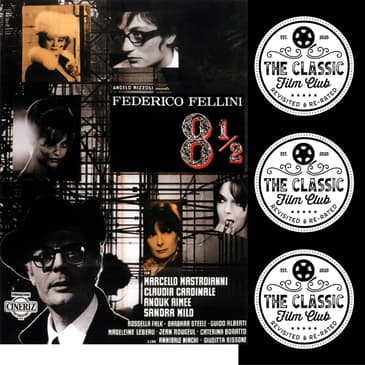
8 1/2 (1963)
A harried movie director retreats into his memories and fantasies.
Director - Federico Fellini
Writers - Federico FelliniEnnio FlaianoTullio Pinelli
Stars - Marcello MastroianniAnouk AiméeClaudia Cardinale - (IMDb)
Z (1969)
The public murder of a prominent politician and doctor amid a violent demonstration is covered up by military and government officials. A tenacious magistrate is determined not to let them get away with it.
Director - Costa-Gavras
Writers - Vasilis VasilikosJorge SemprúnCosta-Gavras
Stars - Yves MontandIrene PapasJean-Louis Trintignant (IMDb)
Giallo Movies
Giallo (Italian pronunciation: [ˈdʒallo]; plural gialli) is the Italian term designating mystery fiction and thrillers. The word giallo is Italian for yellow.[1] The term derives from a series of cheap paperback mystery and crime thriller novels with yellow covers that were popular in Italy.[2]
In the context of 20th-century literature and film, especially among English speakers and non-Italians in general, giallo refers specifically to a particular Italian thriller-horror genre that has mystery or detective elements and often contains slasher, crime fiction, psychological thriller, psychological horror, sexploitation, and, less frequently, supernatural horror elements.
Wikipedia
https://en.wikipedia.org/wiki/Giallo
Federico Fellini
Federico Fellini, Cavaliere di Gran Croce OMRI (Italian: [fedeˈriːko felˈliːni]; 20 January 1920 – 31 October 1993) was an Italian film director and screenwriter known for his distinctive style, which blends fantasy and baroque images with earthiness. He is recognized as one of the greatest and most influential filmmakers of all time. His films have ranked highly in critical polls such as that of Cahiers du cinéma and Sight & Sound, which lists his 1963 film 8 1⁄2 as the 10th-greatest film.
Wikipedia
https://en.wikipedia.org/wiki/Federico_Fellini
Stream podcast episodes on demand from https://theclassicfilmclub.com (mobile friendly).
The Classic Film Club RSS feed: https://rss.acast.com/the-classic-film-club
Follow, rate, and review The Classic Film Club podcast at all good podcatcher apps, including Apple Podcasts, Spotify, Google Podcasts, iHeartRadio, Stitcher, PocketCasts, CastBox.FM, Podbean, Spreaker, etc.
For more, join the Classic Film Club Facebook group and meet up with fellow film enthusiasts from around the globe.
Facebook Group - https://www.facebook.com/groups/711768422887685
Twitter - @tcfcpodcst
YouTube Channel: The Classic Film Club - YouTube
Website: https://theclassicfilmclub.com
Email: tcfc@bitesz.com
If you're enjoying The Classic Film Club, please share and tell your friends. Your support would be appreciated...thank you.
#classicfilms #classiccinema #movies #cinema #entertainment #podcast #reviews #tcfc Support this show http://supporter.acast.com/the-classic-film-club.
See acast.com/privacy for privacy and opt-out information.
Become a supporter of this podcast: https://www.spreaker.com/podcast/the-classic-film-club--4614300/support.
00:00:00
Generic: All right, let me go to the movie for Harry play it for
00:00:04
me.
00:00:05
Just put your lips together and go ahead. Make my day.
00:00:09
Fasten your seat. Then it's going to be a bumpy nut. I got a
00:00:13
bad feeling about this.
00:00:14
I, we're not in Kansas anymore. Frankly, am I here? I don't give
00:00:18
a damn welcome to the Classic Film Club with Richard Kuipers.
00:00:22
Richard Kuipers: Hello and welcome to the Classic Film
00:00:24
Club. Richard Kuipers here with you. I'm a critic for the
00:00:27
international Trade Paper variety, a film festival curator
00:00:30
and a lifelong movie nerd. Thanks to everyone for listening
00:00:34
throughout 2020. It's great to be back in 2021 with lots of
00:00:38
great things in store for this year.
00:00:41
This podcast is dedicated to taking a fresh look at movie
00:00:44
classics to see how well they've stood the test of time when we
00:00:48
look at films that were hailed as classics 40 60 even 90 years
00:00:52
ago, which ones still merit such lofty status and how many have
00:00:57
lost that luster when we look at them through the cultural,
00:01:00
social and political lens of today.
00:01:03
Some like citizen Kane are impervious to time. It's just as
00:01:06
relevant and powerful as it was in 1941. Others like Gone with
00:01:11
the Wind, which I looked at in the previous Classic Film Club
00:01:14
installment.
00:01:15
Haven't fared so well. It's still a great movie making
00:01:19
achievement. But for me, its portrayal of Black American
00:01:22
characters is so troublesome to put it kindly that its
00:01:26
reputation is diminished and I can't consider it to be a true
00:01:29
movie classic in this chapter of the Classic Film Club.
00:01:33
I'm turning my attention to movies that have won the Oscar
00:01:36
for best foreign language film. It'll bring us into contact with
00:01:41
giants of cinema, including Federico Fellini, the Italian
00:01:44
Maestro who brought us La Strada, La Dolce, Vita Satiric
00:01:48
City of women and so many other great films.
00:01:52
It also gives us a chance to focus on lesser known but
00:01:55
vitally important figures such as Greek director Konstantinos
00:01:58
Gavras, better known as Costa Gavras who made a series of
00:02:02
exceptional political dramas, including State of Siege, The
00:02:06
Confession and Missing, starring Sissy Spacek and Jack Lemmon.
00:02:11
Costa Gavras deserves to be better known and to support that
00:02:15
cause I'll take a look at arguably his best film Z from
00:02:19
1971 of very few features ever to be nominated for best picture
00:02:24
and best foreign language film in the same year after such
00:02:29
appalling events at the end of the previous US president's term
00:02:32
Z is even more relevant and urgent.
00:02:34
Now, 51 years on that's a little later in the show along with my
00:02:39
usual trip to the trash and treasure vault where I can feel
00:02:42
some juicy European exploitation titles coming on. But first, a
00:02:47
little background on the territory, we're about to enter
00:02:50
the Oscar category for best foreign language film is now
00:02:54
known as best international feature.
00:02:56
An overdue change made in 2019 when the Academy finally
00:03:00
realized that foreign is an outdated term when film finance
00:03:05
and production has become increasingly international, not
00:03:08
just in recent years, but for about the past 30 or even 40
00:03:11
years, it's still just one award, but at least it
00:03:15
recognizes changes in the industry.
00:03:18
The decision seemed to arrive right on cue with South Korean
00:03:22
production parasite winning best picture director, screenplay and
00:03:27
best international feature at the 2020 Oscars. Between 1929
00:03:33
the year of the first Academy Awards and 1946 there wasn't
00:03:37
even a category for foreign language films between 1947 and
00:03:42
1955.
00:03:43
An honorary Oscar was presented except in 1953 when no award was
00:03:48
given. Initially, this category had no nominees, just a winner
00:03:53
or announced on the night and the award going to the producing
00:03:56
country rather than the producers and or the director.
00:04:01
Just how the Academy Of Motion Picture Arts And Sciences
00:04:04
arrived at. The choice of just one film is a question that has
00:04:08
no clear answer though. I'm sure it's buried somewhere in the
00:04:12
Academy's tightly held archives.
00:04:15
Things changed in 2014 with the director's name engraved
00:04:19
alongside the country with he or she also allowed to keep the
00:04:23
statuette. The first film to receive the gong was shoeshine
00:04:27
by Italian director Vittorio DeCicco. He also won for bicycle
00:04:31
thieves in 1949 and the Garden of the Finzi Continis in 1971.
00:04:37
As of 2020 Italy leads the honor roll with 14 wins, followed by
00:04:42
France on 12 and Spain with four. Every country is eligible
00:04:48
to submit one film each year for consideration. From that initial
00:04:53
long list. A short list is made by the Foreign Language Film
00:04:56
Award Committee.
00:04:57
And from there, the final five nominees are announced Australia
00:05:02
has submitted 13 films over the years. The first of which was
00:05:06
Floating Life in 1996 a wonderful family drama directed
00:05:10
by Clara Law and spoken in Cantonese English and German.
00:05:15
Other Australian nominees include Warwick Thornton's
00:05:17
magnificent Samson and Delilah spoken primarily in Warlpiri and
00:05:22
buoyancy from 2019, a powerful story about human slavery
00:05:27
directed by Rod Rathjen in Thai and Khmer language one
00:05:32
Australian film, a co production with Vanuatu did make the final
00:05:36
list of Oscar nominees in 2016.
00:05:39
Tanna Co directed by Bentley Dean and Martin Butler. It's a
00:05:43
beautiful love story filmed in Vanuatu in novel language. It
00:05:48
still seems incredible that in 92 years of the Academy Awards,
00:05:52
only one foreign language film parasite has also won the Oscar
00:05:57
for best picture.
00:05:58
That's an English language bias of a mere 98.3%. I wanted to
00:06:04
dive into non English language cinema for any number of
00:06:07
reasons.
00:06:08
But the one that really guided me was having some time over the
00:06:11
new year break to think about the foreign language films I saw
00:06:14
when I was a kid in late primary school and early into high
00:06:18
school when cinema was becoming such a huge part of my life. So
00:06:22
often the first real impression I had of places, cultures,
00:06:26
politics, and people outside of the UK and USA which we all grew
00:06:30
up watching on TV.
00:06:31
And cinema was in a theater witnessing a movie with
00:06:35
subtitles and it was like a door being opened. And I learned so
00:06:39
much from what I'd seen directly on the screen.
00:06:41
And by turning to books to discover more about those
00:06:44
stories, films like Fassbinder, the marriage of Maria Brown,
00:06:48
1979 about a widow making her way in the aftermath of
00:06:52
Germany's defeat in World War II stalker by the Russian master
00:06:57
Andrei Tarkovsky, a mesmerizing sci fi mystery with strong
00:07:01
parallels to the Wizard Of Oz.
00:07:03
Yes. The Wizard Of Oz. I saw Hungary from the turn of the
00:07:07
20th century to the outbreak of World War II in Miklos, Jansa's
00:07:10
Hungarian Rhapsody from 1979. I witnessed a Vietnamese refugee
00:07:16
trapped in a Hong Kong detention camp in an Hoy's the story of Wu
00:07:20
Viet from 1981.
00:07:22
And I can never forget the lives of Sao Paulo street kids
00:07:25
depicted in Hector Babe's masterpiece Piot from 1980 one.
00:07:31
Positive thing to come out of the Coronavirus time we're still
00:07:34
experiencing is the amount of foreign language material that's
00:07:38
been watched on streaming services such as Stan Netflix
00:07:41
and Prime.
00:07:43
The numbers are staggering and what this has led to is a huge
00:07:46
rise in the number of non English language productions
00:07:49
being commissioned by these streaming services.
00:07:52
It shows that audiences are so much more willing to watch
00:07:55
subtitled material than ever before. As someone who spent
00:07:59
many years working at SBS Australia's multicultural
00:08:02
broadcaster and promoting foreign language movies. This is
00:08:05
especially great news and we're all going to be much richer for
00:08:09
it.
00:08:10
So let's get things going now with a trip back to Italy in
00:08:13
1963 and Federico Fellini's 8.5. The title refers to the number
00:08:20
of films Fellini had made up to that 0.6 features directed solo,
00:08:25
including Oscar nominees, La Strada, La Dolce Vita and E Vilo
00:08:31
Eloy was made in 1953 and nominated in the 1958 Academy
00:08:35
Awards.
00:08:36
Such was the lag time from its Italian release to its American
00:08:40
release. Imagine that now a five year wait to play in Overseas
00:08:45
markets. Fellini also co directed his first feature
00:08:49
variety Lights in 1950 with Alberto Latu AA and he
00:08:53
contributed to the omnibus films.
00:08:55
Love in the city. And Pao 70 collectively, those ones add up
00:09:00
to 2.5 films, making a total of 8.5 films. By the time he
00:09:04
embarked on this, the film I consider to be his masterpiece
00:09:08
of masterpieces life imitates art imitates life.
00:09:12
In 8.5, the story centers on Guido Marcello Mastrianni, a
00:09:17
film director about to start shooting an ambitious science
00:09:21
fiction movie.
00:09:22
But as the script is being finalized and casting is
00:09:25
underway, Guido loses his artistic inspiration and his
00:09:29
personal life starts to fall apart suddenly he's got no idea
00:09:34
what he's doing or how he's supposed to do it. That's just
00:09:37
the starting point for this mesmerizing semi surreal journey
00:09:41
into the mind of a troubled artist and the mechanics of
00:09:44
filmmaking itself.
00:09:46
The basic plot was drawn directly from Fellini's personal
00:09:49
experience in 1960. He developed an idea about a professional man
00:09:54
of unspecified occupation who's lost his way and spends two
00:09:58
weeks rediscovering himself two years later with 8.5 about to
00:10:03
start shooting.
00:10:04
Fellini had a major creative block and felt that he'd lost
00:10:07
his film. He couldn't remember what was at the heart of his
00:10:11
story, calling together his crew and cast. Fellini was about to
00:10:16
announce the abandonment of production when he was suddenly
00:10:19
overcome by shame.
00:10:21
In that exact moment, he found the inspiration that had
00:10:24
previously deserted him. The professional man in his story
00:10:28
would now be a film director and his experiences and feelings
00:10:32
would be based directly on what Fellini was going through at
00:10:35
that moment in time.
00:10:37
This may sound like an apocryphal tale. But throughout
00:10:40
his career, Fellini often worked with unfinished scripts and
00:10:43
worked out major plot points and themes as shooting progressed. I
00:10:47
think there's every reason to believe this is exactly what
00:10:50
happened in the case of 8.5, which began production under the
00:10:54
working title of The Beautiful Confusion.
00:10:57
And that is very apt. We first meet Guido in a traffic jam in a
00:11:02
tunnel. It's one of those chaotic traffic jams that
00:11:05
Italian cinema does so well.
00:11:08
He's sitting in his car trapped, smoke is entering the car, the
00:11:12
doors are locked and he's frantically trying to escape. In
00:11:15
the midst of this. We see images and freeze frames of vehicles
00:11:19
and people surrounding him. There's a leu old man stroking
00:11:22
the arm of a glamorous young woman.
00:11:25
The arms of passengers in a crowded bus are flopping out of
00:11:28
the windows. Their faces are staring at Guido. Suddenly he
00:11:32
escapes through the car's roof and floats above the traffic out
00:11:36
of the tunnel up into the clouds. And suddenly he's above
00:11:39
a beach where his foot is connected to a rope held by a
00:11:43
man below.
00:11:45
He's like a kite and with one pull of that rope, he plummets
00:11:49
into the ocean below. Fantastic opening tells us so much about
00:11:54
Guido. He's trapped and tormented by something while
00:11:57
striving to float above it all and reach lofty heights for the
00:12:01
next 8.5 minutes.
00:12:03
Exactly 8.5 minutes. I know because I timed it. Guido
00:12:07
wanders through a very strange landscape that resembles a
00:12:10
health spa. A doctor talks about the benefits of holy water.
00:12:14
While nuns and everyday people form long queues.
00:12:17
The soundtrack plays the Ride of the valkeries that rousing piece
00:12:21
of music by Wagner, which was immortalized in apocalypse. Now,
00:12:24
finally, we get concrete information about our man. He is
00:12:28
indeed a filmmaker and he's under pressure from his producer
00:12:32
to help get over his creative block.
00:12:34
Guido's hired a film critic, Dormer Jean regul to bounce
00:12:39
ideas off and get feedback. Some of Guido's ideas come from
00:12:42
childhood memories which play out in flashbacks that blend
00:12:46
seamlessly into the present time sequences like thought bubbles
00:12:50
that suddenly spring to life.
00:12:52
We see Guido as a child staying at his grandmother's house and
00:12:56
getting in trouble at his Catholic school after dancing on
00:12:59
a beach with a sex worker played by the totally amazing Edra
00:13:02
Gale, an American singer who was performing in Rome when she was
00:13:06
spotted by Fellini and cast in her first acting role, Gale has
00:13:10
only a few minutes of screen time but makes such an
00:13:13
impression.
00:13:14
You'll never forget her. And this was just about it for Edra
00:13:17
Gale.
00:13:18
She had tiny roles in Gidget goes to Rome, the graduate and
00:13:22
Alex and the Gypsy, but her star shines very, very brightly here
00:13:27
back to Guido and his autobiographical ideas for his
00:13:30
troublesome screenplay, Dornier. The script doctor gives a
00:13:35
withering response telling Guido that his film has a lack of
00:13:39
central issue and philosophical stance and it amounts to a chain
00:13:44
of gratuitous episodes.
00:13:46
Guido's producer Can Nokia Mario Canoa also has his doubts and
00:13:51
says, what if it's the end of a bluffer who ran out of talent if
00:13:56
Fellini didn't have such a grasp on his material.
00:13:59
And without that surreal and sensational opening sequence,
00:14:02
that grounds the tale in an emotional reality. You might
00:14:05
agree with Dornier and Can Nokia about the film itself, it
00:14:09
deliberately flirts with pretension and self indulgence
00:14:12
as Fellini did for much of his career.
00:14:15
But instead he turns these memories of his own childhood
00:14:18
and his own fears of failure into the beginnings of a
00:14:21
dazzling essay on the very nature of creativity and
00:14:24
imagination as we meet Guido, he's a celebrated artist
00:14:29
surrounded by people who hang on his every word and whose
00:14:32
livelihoods depend on his creativity.
00:14:35
But he's also like a lost child trying to find his way home,
00:14:39
Marcello Mastroianni, without doubt, Italy's biggest film star
00:14:42
of all time is masterful. In the main role, Mastrianni shot to
00:14:47
fame as disillusioned tabloid hack Marcello Rubini in
00:14:51
Fellini's La Dolce Vita.
00:14:53
He reunited with the master for the City Of Women in 1980 Ginger
00:14:57
and Fred in 1986. But this is his greatest role for Fellini or
00:15:02
anyone else in Mastroianni's hands.
00:15:05
Guido is a complex character whose neuroses, obsessions,
00:15:09
weaknesses and fears are utterly fascinating to watch. They're
00:15:13
the triggers for him to drift into a world in which reality is
00:15:16
constantly invaded by his fantasies, his dreams and his
00:15:20
desires as if he's hoping somehow they'll reignite his
00:15:25
powers.
00:15:26
This may involve a visit to a steam bath for an audience with
00:15:29
an influential Catholic cardinal who tells him solemnly outside
00:15:33
the church. There is no redemption or it might mean he
00:15:37
enters a fantasy realm in which all the women from his life
00:15:40
appear in a large house that again resembles a kind of spa or
00:15:44
a giant laundry.
00:15:46
They pamper and fuss over him, wrapping him up in towels while
00:15:49
he struts around like a harem keeper. Even cracking a whip
00:15:52
when the women begin to turn on him, expressing their
00:15:55
frustrations and anger at how selfish he's been and how poorly
00:16:00
treated they were.
00:16:01
After the initial fire of lust had subsided. Scenes of a man
00:16:05
marching around with a whip like this must have shocked many
00:16:08
viewers back in 1963 and they're still pretty wild today, but
00:16:13
nothing vicious is happening.
00:16:15
And it's clear that Fellini is with the women all the way.
00:16:19
Guido is hearing truths he needs to hear and the whip is really
00:16:23
on him apart from his creative crisis, Guido's personal life is
00:16:28
a shambles. He's estranged from wife Louisa played by the great
00:16:32
French star and me who'd also been in La do vita.
00:16:36
When his girlfriend, Carla Sandra Milo arrives at his hotel
00:16:40
where the production crew is staying and hoping they'll be
00:16:43
working soon. Guido hardly even seems excited and sends her to
00:16:47
another hotel.
00:16:49
He may not be able to connect properly with the women in his
00:16:52
life, but in his imagination, it's a very different story. He
00:16:56
constantly has visions of Claudia Claudia Cardinale, a
00:17:00
film star whom he pictures as perfect casting for his film and
00:17:04
the ideal woman for his life.
00:17:07
Choosing Claudia Cardinale was inspired. She was a true movie
00:17:11
star who'd shot to fame in Visconti's Rocco and his
00:17:13
brothers in 1960. And whose brilliant career includes once
00:17:17
upon a time in America and Fitzcarraldo in 1982.
00:17:22
There's another female character that floats in and out of the
00:17:24
picture that I'd like to draw attention to. It's Gloria, the
00:17:28
young girlfriend of Guido's close friend Mario. We first see
00:17:32
her early on while Guido is getting feedback from the critic
00:17:35
Dornier.
00:17:37
Gloria is played by Barbara Steele, an English actress who
00:17:40
starred in a series of Italian horror films, including the
00:17:43
Horrible Dr Hitchcock, the Long Hair of Death and the all time
00:17:47
cult classic Black Sunday made in 1960 Mario Bar. The director
00:17:52
of Black Sunday described Steele as having impossible eyes and he
00:17:57
was right.
00:17:58
You can't take your eyes off her eyes. As soon as you see her
00:18:03
Steele is one of the great scream queens of all time. And
00:18:07
you can also see her in David Cronenberg's shivers from 1974
00:18:12
and the original very fun version of the killer fish cult
00:18:15
classic piranha from 1978 in 8.5, things get crazier,
00:18:21
deliriously magnificently crazier.
00:18:24
As we get a glimpse of the sci fi film Guido is meant to be
00:18:27
making, he visits a mega set of a spaceship which looks like a
00:18:31
giant macao contraption and sits in the middle of nowhere
00:18:35
resembling some post apocalyptic wasteland.
00:18:38
Could this be a metaphor for Guido's creative powers at this
00:18:41
time? There's something in the middle but it's barren and
00:18:44
unsupported at the edges. Meanwhile, the casting process
00:18:48
continues with screen tests to determine who will play.
00:18:52
What role the camera tests are static head and shoulder shots
00:18:57
without any aspect of performance or audition as Guido
00:19:01
watches them and makes the comment. There's no part and
00:19:05
there's no film. I was reminded of the famous screen tests.
00:19:08
Andy Warhol shot between 1964 and 1966 at his New York Factory
00:19:13
studio. He shot over 500 reels of mostly famous faces who
00:19:18
weren't actually screen testing for anything.
00:19:21
They were in fact portraits created without a brush but with
00:19:25
a movie camera and they were independent works of art that
00:19:28
seems to be what Guido is doing here collecting things, objects,
00:19:33
people faces, hoping to make sense of it. All this is a film
00:19:39
that knows it's a film. Most movies create an illusion for
00:19:44
us.
00:19:44
The viewers of a real world we are given access to and one that
00:19:49
unfolds as if cameras and crew members weren't present 8.5
00:19:53
never pretends to make this contract with us. It draws
00:19:57
attention to the artifice of cinema and talks back to us as
00:20:00
if it's saying, look at how this art form works, it's completely
00:20:04
chaotic.
00:20:05
But when the ingredients are right, it somehow comes together
00:20:09
and it can be magical like the film you're watching right now
00:20:14
in that respect, it shares common ground with Robert
00:20:17
Altman's the player and Francois Truffaut's Day for night, two
00:20:21
other great films about art and artifice in cinema when shooting
00:20:26
began in May 1962 in the same sort of chaos we see on screen,
00:20:31
Fellini's American Press Officer Dina Boyer asked him to give
00:20:35
some sort of explanation for what he was doing.
00:20:38
He told her that he hoped to convey the three levels on which
00:20:42
our minds live, the past, the present and the conditional, the
00:20:47
realm of fantasy. He succeeded brilliantly. This is a fantasy
00:20:52
indeed. But one that's rooted in human emotion, frailty, doubt,
00:20:56
egotism, and finally the most powerful and beautiful quality
00:21:00
we possess the power of love.
00:21:03
The power of Nino Rotas music is also part of eight and a half's
00:21:07
many Charms. Nino Rota was an amazingly prolific composer,
00:21:12
conductor and musician who provided the scores for over 170
00:21:16
productions including The Godfather, the Godfather part
00:21:20
two, for which he won an Oscar and also about one third of the
00:21:24
films and shorts made by Fellini.
00:21:27
The Rota Fellini partnership is just as significant as Steven
00:21:30
Spielberg and John Williams or David Lynch and Angelo Balai
00:21:35
Rotas music is one of the things that holds 8.5 together. Even
00:21:40
when the plot, if we can use that term here seems to be going
00:21:44
way off the rails. Fellini loved the circus and it's Rotas
00:21:48
jaunty, flamboyant circus like rhythms that make 8.5 bounce
00:21:53
along so narrowly, I discovered Nino Rota thanks to Fellini.
00:21:58
And if you like the music you hear in this film, it might just
00:22:01
lead you on some wonderful musical journeys of your own. At
00:22:04
Fellini's funeral. In 1993 his widow and lifelong artistic
00:22:09
collaborator, Julietta Messina asked a trumpeter to play rota
00:22:13
improviser d'angelo.
00:22:16
You can find a clip of this on YouTube and it's truly spine
00:22:20
tingling stuff. 8.5 received a rapturous response when first
00:22:24
released with Italian critic Giovanni Grazzini, declaring
00:22:28
this the beauty of the film lies in its confusion, a mixture of
00:22:33
error and truth, reality and dream stylistic and human values
00:22:39
and in the complete harmony between Fellini's
00:22:41
cinematographic language and Guido's rambling imagination.
00:22:46
There isn't a set a character or a situation that doesn't have a
00:22:50
precise meaning on the great stage that is 8.5, not bad. One
00:22:56
of the few detractors was legendary American critic
00:22:59
Pauline Cale who called it a structural disaster. 8.5 won
00:23:03
Oscars for best foreign language film and best production design
00:23:07
for a Black and white film.
00:23:08
Fellini was also nominated for best director. If you're new to
00:23:13
Fellini, I recommend following up 8.5 with La Strada 1954.
00:23:18
That's from his early period starring Julietta Messina and
00:23:21
Anthony Quinn from his middle era Arm Accord in 1973 is a
00:23:26
beautiful film. And from his later phase, check out City Of
00:23:29
Women 1980 also with Marcello Mastrianni surrounded again by
00:23:34
women.
00:23:36
8.5, had a huge influence on cinema and filmmakers. Among the
00:23:40
many films it inspired are Paul Mazursky's Alex in Wonderland
00:23:44
from 1970 Woody Allen's Stardust Memories from 1980 Peter
00:23:49
Greenaway's 8.5 women from 1999. 8.5 was also the basis for the
00:23:55
1982 Broadway Musical Nine, which ran for 729 performances
00:24:01
and won five Tony Awards including best musical.
00:24:05
It was also adapted for the big screen in 2009 with Daniel Day
00:24:08
Lewis in the pivotal role. 8.5 is a movie masterpiece that has
00:24:13
stood the test of time brilliantly. Well, it's five out
00:24:16
of five and it will entertain and excite audiences forever
00:24:20
more. I am sure you can find it for rent on YouTube movies.
00:24:25
spk_2: You know, you just put your lips together and you're
00:24:29
listening to the Classic Film Club with Richard Kipper.
00:24:33
Richard Kuipers: Our next attraction on this foreign
00:24:35
language Oscar edition of the Classic Film Club comes from
00:24:38
1969. It was the first film to be nominated for best picture
00:24:43
and best foreign language film. It won the Oscar for best
00:24:47
foreign language film and also the Oscar for best editing and
00:24:51
it was also nominated for best director and best adapted
00:24:53
screenplay. The title of the film is the letter Z as we know
00:24:58
it.
00:24:58
But here it is definitely pronounced Z Z is a political
00:25:02
thriller about the assassination of a progressive politician and
00:25:06
the attempted cover up by military political and
00:25:09
bureaucratic forces. It's a French Algerian production
00:25:13
filmed in Algeria and directed by the Greek French filmmaker
00:25:17
Constantinos Gavras, known professionally as Costa Gavras.
00:25:22
Z was made at a very volatile time.
00:25:25
The May 1968 Riots Democratic Convention violence, the
00:25:29
assassinations of Robert Kennedy, Martin Luther King and
00:25:33
Malcolm X were still fresh in the memory and a general air of
00:25:36
tension prevailed as protests against the war in Vietnam
00:25:39
escalated, Z had its world premiere in Cannes in May 1969
00:25:45
and opened in the United States on the eighth of December just
00:25:49
two days after the infamous rolling Stones concert at
00:25:52
Altamont Speedway where 18 year old Black man MEREDITH Hunter
00:25:56
was stabbed to death on camera by hells angels member, Alan
00:26:00
Passaro.
00:26:01
The so called Summer Of Love that began in 1967 had become
00:26:05
the winter of hate by the time December 1969 rolled around and
00:26:10
it was into this environment that Z Z I should say was
00:26:14
released in the USA. Indeed, Z came to mind and I really wanted
00:26:19
to give it a fresh look after watching the storming of the US
00:26:21
capital on January the sixth this year when the foundations
00:26:25
of democracy were assaulted by extremist groups.
00:26:29
Z is based on the book by Greek author and diplomat Vasilis
00:26:33
Vasili cos and it's worth spending a little time now
00:26:36
talking about the book and the real life characters you can
00:26:40
watch and enjoy Z without any prior knowledge but having a
00:26:43
little background information adds even more to its impact.
00:26:47
Basillio novel is a thinly disguised account of the 1963
00:26:51
assassination of Gregori Lambis, a champion athlete, a World War
00:26:57
II resistance hero and a left winging member of parliament.
00:27:01
Lambis had just delivered an anti war speech when he was
00:27:04
killed in public by two right wing extremists.
00:27:08
Half a million people attended Lambis funeral which also served
00:27:12
as a protest against Greece's right wing government and its
00:27:16
monarchy. The investigation into Lambis death was headed by
00:27:20
Christos Saitta, a diligent honest magistrate who uncovered
00:27:25
damning connections to police army and far right forces in the
00:27:30
aftermath of the 1967 military coup, Saitta was imprisoned and
00:27:35
the killers were set free.
00:27:37
Zaka survived and went on to serve as president of Greece
00:27:40
from 1984 until his death in 1990. The film's title comes
00:27:45
from the first letter of the Greek word Z, meaning he lives.
00:27:50
The letter Z or Z appeared in graffiti all over Athens after
00:27:54
Lambis death and became an internationally recognized
00:27:58
symbol of peace and democracy. Next time you see a documentary
00:28:02
with archival footage about political unrest in the 19
00:28:04
sixties and 19 seventies, look out for the Zs painted on walls
00:28:09
in the background.
00:28:10
There's a striking text message during the opening credits of Z,
00:28:14
it reads any relation to real persons or events is not
00:28:18
coincidental. It is intentional. It's the complete opposite of
00:28:22
what's usually written in the end credits of dramas. And it
00:28:25
says so much about the film we're about to watch even if no
00:28:29
country city or places are ever named in Z.
00:28:33
We know it's based precisely on events in Greece 1963 but it
00:28:38
could be taking place anywhere. And at any time, in fact, events
00:28:42
like this have taken place almost everywhere and throughout
00:28:45
history and they continue to the character representing Gregori.
00:28:49
Lambis is also not named, played by French icon Yves Monin. He's
00:28:55
known simply as the deputy. The deputy is a member of the
00:28:59
opposition. He's a former Olympic champion and he's
00:29:02
gaining widespread support for his promotion of pacifism and
00:29:06
democratic principles. Before we meet the deputy, we're given a
00:29:10
bracing picture of the political landscape.
00:29:13
The opening scenes take place during an apparently dry and
00:29:16
very boring conference about government agricultural policy.
00:29:20
That's until the chief of military police steps up to the
00:29:23
microphone and starts talking about the need to combat mildew
00:29:27
of the mind and how blights such as pacifism are infections that
00:29:33
must be stopped by pro government forces.
00:29:35
He describes as being like antibodies, religion comes into
00:29:39
the mix as well. God casts no light on the reds. He says,
00:29:44
using the traditional right wing tactic of casting anyone in
00:29:47
opposition as a godless Communist.
00:29:50
Much like we still hear today, it's a playbook that's never
00:29:52
really been retired. These introductory passages might make
00:29:57
you think that Z is going to be a dirge of rhetoric and left
00:30:00
wing idealism like all that Marxism and Maoism that made
00:30:03
many political films of the sixties and seventies so tough
00:30:07
to watch and look embarrassingly naive today.
00:30:11
But Z is anything but a tough slog to watch. It's a tense,
00:30:15
complex crime thriller with a potent political backdrop. Costa
00:30:19
Gavras generates strong suspense from the moment we meet the
00:30:22
deputy and rumors about an attempt on his life begin to
00:30:25
circulate as the fateful moment draws near.
00:30:28
We see government figures making their way to a performance by
00:30:31
the Bolshoi ballet. What a perfectly ironic alibi attending
00:30:35
a high culture event featuring the famous dance company from
00:30:38
Communist Russia while hired thugs carry out the
00:30:42
assassination of a supposed left wing threat.
00:30:45
After the deputy is attacked by these thugs. He's rushed to
00:30:48
hospital and lingers in a coma for several days before dying.
00:30:52
There's no attempt to disguise the identity of the killers. A
00:30:55
couple of goons named Jago and Vargo rather than a who done it.
00:31:00
Z is a how done it as it begins to connect the dots between the
00:31:04
grungy killers and people in high office carrying out this
00:31:08
task is another unnamed character. The magistrate played
00:31:12
by French great Jean Louis Reign. And based on Christos,
00:31:16
Sata Ais, the honest legal investigator and future
00:31:20
president of Greece. I mentioned before Trenin famous for Claude
00:31:24
Le Luci is a man and a woman.
00:31:26
Bertolucci's the conformist and more recently in Michael
00:31:29
Haneke's armor from 2012, 1 best actor at Cannes for his
00:31:34
performance as a man who's determined to find the truth
00:31:37
even under the most intense pressure and danger that mounts
00:31:41
as his incorruptibility becomes apparent to those who expect him
00:31:45
to simply roll over and pervert the course of justice.
00:31:49
The magistrate is the key to the film being so watchable and
00:31:52
accessible. He's not a political creature who espouses ideology.
00:31:57
He is simply wholly dedicated to pursuing the facts of the matter
00:32:02
playing an important and exciting side role to the
00:32:04
magistrate is yet another unnamed character, the
00:32:07
photojournalist played by Jacques Perin, who was also the
00:32:10
producer of Z. He's a classic muck racking journalist type
00:32:15
doggedly pursuing the story from every angle which includes
00:32:19
barging in on the deputy's widow, Helene with uncomfortable
00:32:22
questions.
00:32:23
Helene is played by Irene Pappas, the only Greek actor in
00:32:28
this most Greek of stories like Eve Montane Papas who became an
00:32:32
international star in Zorba, the Greek and the Guns of Navarone
00:32:35
doesn't have much screen time but makes a major impact as the
00:32:40
wife of a man who was anything but a saint.
00:32:43
Again, this is such a strong aspect of the drama. The deputy
00:32:47
is a seriously flawed man with personal failings alongside his
00:32:51
political heroics. He's very human and not the kind of
00:32:55
majestic political superhero. He might have been in a lesser
00:32:58
film. It's worth noting that Irene Papas was a member of the
00:33:02
Greek Communist Party and fled to Italy after the 1967 coup.
00:33:07
Z is a pacey kinetic thriller that provides real insight into
00:33:11
how authoritarian governments seize and maintain power. It
00:33:16
also goes into almost documentary like detail when
00:33:20
depicting the strategies of individuals and groups that
00:33:23
refuse to stay silent and live in fear for all its excitement
00:33:27
and intrigue.
00:33:28
It's also a very sober film, never getting caught up in
00:33:31
dreamy, idealism about fairness, equity and social justice being
00:33:35
magically restored simply by getting rid of an oppressive
00:33:39
regime. The screenplay is so much smarter than that.
00:33:43
Z was Costa Gavras's third feature following the mystery
00:33:47
thriller, the sleeping car murders and World War II, French
00:33:50
resistance drama shock troops. Zi reflects some aspects of his
00:33:55
life. His father had fought Nazis in the Greek resistance
00:33:58
before being labeled a Communist and imprisoned. As a result.
00:34:02
Costa Gavras was denied educational opportunities at
00:34:05
home and moved to France where he studied at the famous ID Hek
00:34:08
film school and became an assistant to noted filmmakers
00:34:12
including Renee Clare, Rene Clemon and Jacques Demi, the
00:34:16
director of the umbrellas of Cherbourg, following Z Costa
00:34:20
Gavras made a series of outstanding politically charged
00:34:23
films such as The Confession from 1970 starring Eve Montane
00:34:27
as a character based on Czech politician Artur London.
00:34:31
He made state of siege in 1972 based on the 1970 kidnapping of
00:34:36
us embassy official Dan Miron in Uruguay and his best known film
00:34:42
Missing in 1982 starring Jack Lemmon and Sissy Spacek.
00:34:46
And based on the disappearance of American journalist Charlie
00:34:49
Horman in Chile 1973 following the overthrow of President
00:34:54
Salvador Allende and the start of brutal military rule under
00:34:57
General Augusto Pinochet Lemon Spacek and the film were
00:35:01
nominated and it won the Oscar for best adapted screenplay,
00:35:06
Costa Gavras is 88 years old and still making movies including
00:35:10
the ax from 2005 capital in 2012 and adults in the room in 2019,
00:35:18
everything with his name on it is well worth watching if you
00:35:21
want to look at some more great political films from the same
00:35:24
era as Z I strongly recommend the Battle of Algiers directed
00:35:28
by Gilo Pontic Corvo and the extraordinary Bolivian feature
00:35:32
Blood of the Condor from 1969.
00:35:35
It's a great pity. We don't see more political cinema these
00:35:38
days, maybe it's been displaced by political reality drama. We
00:35:43
see playing out live 24 hours a day on social media and other
00:35:47
platforms. Our final stop on each meeting of the Classic Film
00:35:51
Club is the trash and treasure department where I seek out the
00:35:53
best of offbeat obscure and otherwise strange cinema for
00:35:57
your discovery.
00:35:58
We started off in Italy today with Fellini and we're also
00:36:01
going to finish in Italy with a visit to the wonderful world of
00:36:05
Jao films. What are Jao films?
00:36:07
I hear you say Jao is Italian for yellow and it's applied
00:36:12
broadly to Italian pulp Crime films which reached their zenith
00:36:16
in the sixties seventies and eighties. The name originated
00:36:20
from crime novels that were first issued by the Giant
00:36:23
Mondadori Publishing House in 1929 all of which had yellow
00:36:27
covers and were printed on appropriately cheap paper, often
00:36:31
with yellow edges.
00:36:33
The word has become so strongly associated with Italian crime
00:36:36
films that you'll often read descriptions of crime flicks
00:36:39
from other countries referred to as Gallows if their stylistic
00:36:43
approach is similar. And by that, I mean, hard boiled
00:36:47
foundation of murder mystery with added ingredients,
00:36:50
including psychological thriller, psychological horror,
00:36:54
and even sometimes supernatural horror and eroticism.
00:36:57
If you're already a Jao fan, I salute you. And if not, there
00:37:01
are some fabulous gems to seek out from the thousands that were
00:37:04
made. The biggest name in Jao Cinema is also one of the
00:37:08
biggest names in Italian popular cinema.
00:37:10
Over the past 50 years, Dario Argento is probably best known
00:37:15
for his 1977 horror classic Superior. And that's probably
00:37:19
thanks to Luca Guardo's recent remake with Tilda Swinton.
00:37:23
Argento established his reputation with a great Jao
00:37:26
called Bird with the Crystal Plumage in 1970.
00:37:29
His other galli include Tenna Bray from 1982 opera, 1987
00:37:35
Sleepless from 2001 and his absolute masterpiece, Deep Red
00:37:41
aka Prof Rosso from 1975 British actor David Hemmings plays a
00:37:46
jazz pianist who witnesses a murder and teams up with a sassy
00:37:50
journalist played by Argento s then wife and artistic
00:37:54
collaborator Daria Niccoli seek out Deep red any way you can.
00:38:00
It's Hitchcock standard and has a superb score by Argento s
00:38:03
regular musical associates, the Italian rock band goblin. After
00:38:08
that, you might want to check out Blood and Black lace from
00:38:11
1964 about models from a shady Rome agency being murdered by a
00:38:16
masked killer.
00:38:19
It was directed by the hugely influential stylist Mario Bava,
00:38:22
whom I mentioned earlier when talking about the actress
00:38:25
Barbara Steele blood and Black lace is available on Amazon
00:38:29
Prime as is the perfume of The Lady In Black from 1974 starring
00:38:35
MSI farmer as a scientist haunted by hallucinations. Or
00:38:39
are they of her dead mother Prime also has a fine
00:38:43
documentary.
00:38:43
All the colors of Diallo, which gives a great overview of the
00:38:47
genre and includes interviews with key figures such as Dario
00:38:50
Argento. Mario Barber's son and filmmaker Lamberto Barba and the
00:38:56
late truly great Daria Niccoli. I could go on forever about
00:39:01
gallow films.
00:39:02
So before I get completely carried away, I'll just
00:39:04
recommend a few more titles. You can find all of these on the
00:39:07
internet with a bit of searching.
00:39:10
These are among the very best glos of all time and they're
00:39:13
worth it for the titles alone, for example, Lizard In a woman's
00:39:17
skin from 1971 and Don't torture a duckling 1972 both of which
00:39:24
were directed by the angry old man of Italian cinema, Lucio
00:39:28
Foci murder and sculpture are combined to great effect in who
00:39:33
saw her die from 1972 starring George Lazenby Australia's very
00:39:38
own one shot James Bond.
00:39:41
And from the 19 eighties, there's stage Fright made in
00:39:44
1986 also under the title of Aquarius, it's a super tense
00:39:49
backstage murder mystery directed by Michelle Soave, the
00:39:53
former assistant Dario Argento and Lucio Fulci. And finally,
00:39:58
don't forget about death, laid an egg from 1968 and because
00:40:03
nothing could possibly follow this one strip nude for your
00:40:07
killer from 1975 starring the Marvelous Ed Fenech.
00:40:13
Thank you very much for listening to this foreign
00:40:15
language film edition of the Classic Film Club. Lots to go on
00:40:18
with. I hope you explore and enjoy many, many foreign
00:40:21
language films, including the ones we've talked about today
00:40:24
and I'll be back soon with more movie musings until then. Bye
00:40:28
for now. You can't go now.
00:40:30
Generic: Work here is done. I love a happy ending.
00:40:33
You've been listening to the Classic Film Club with Richard
00:40:37
Kipper, available on Apple Podcasts, Google Podcasts,
00:40:41
Spotify, I Heart Radio or wherever you get your podcasts.
00:40:46
This has been another quality podcast production from bites
00:40:49
dot com.