
With Richard Kuipers
Series 01 Episode 04
The classic films revisited and re-rated...as seen through today’s eyes.
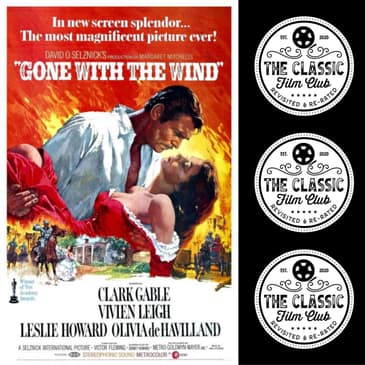
Gone With The Wind (1939) (Drama, History, Romance)
A manipulative woman and a roguish man conduct a turbulent romance during the American Civil War and Reconstruction periods.
Directors: Victor Fleming, George Cukor (uncredited)
Writers: Margaret Mitchell (story of the old south "Gone with the Wind"), Sidney Howard (screenplay)
Stars: Clark Gable, Vivien Leigh, Thomas Mitchell - (IMDb)
Australian Classic
Jedda (Drama) (1955)
Set against the harsh natural surrounds of outback Northern Territory, Jedda captures a rare and honest glimpse into the heart and history of indigenous Australia. Young Jedda is caught between two cultures forbidden from learning about her indigenous heritage and never fully accepted by the other. - (IMDb)
Blaxploitation Movies (1970s)
Blaxploitation was just as the title suggests exploitation films about the gritty and occasionally glamorous side of African-American life.- (IMDb)
Pam Greer
Pam Grier was born in Winston-Salem, NC, one of four children of Gwendolyn Sylvia (Samuels), a nurse, and Clarence Ransom Grier Jr., an Air Force mechanic. Pam has been a major African-American star from the early 1970s. Her career started in 1971, when Roger Corman of New World Pictures launched her with The Big Doll House (1971), about a women's penitentiary, and The Big Bird Cage (1972). Her strong role put her into a five-year contract with Samuel Z. Arkoff of American-International Pictures, and she became a leading lady in action films such as Jack Hill's Coffy (1973) and Foxy Brown (1974), the comic strip character Friday Foster (1975) and William Girdler's 'Sheba, Baby' (1975). She continued working with American-International, where she portrayed William Marshall's vampire victim in the Blacula (1972) sequel, Scream Blacula Scream (1973). - (IMDb)
https://www.imdb.com/name/nm0000427/bio?ref_=nm_ov_bio_sm
Stream podcast episodes on demand from https://theclassicfilmclub.com (mobile friendly).
The Classic Film Club RSS feed: https://rss.acast.com/the-classic-film-club
Subscribe, rate and review The Classic Film Club podcast at all good podcatcher apps, including Google Podcasts, Apple Podcasts, Spotify, iHeartRadio, Stitcher, PocketCasts, CastBox.FM, Podbean, Spreaker, etc.
For more, join the Classic Film Club Facebook group and meet up with fellow film enthusiasts from around the globe.
Facebook Group - https://www.facebook.com/groups/711768422887685
Twitter - @tcfcpodcst
YouTube Channel: The Classic Film Club
If you're enjoying The Classic Film Club, please share and tell your friends. Your support would be appreciated...thank you.
#classicfilms #classiccinema #movies #cinema #entertainment #podcast #reviews #tcfc
See acast.com/privacy for privacy and opt-out information.
Become a supporter of this podcast: https://www.spreaker.com/podcast/the-classic-film-club--4614300/support.
00:00:00
Generic: All right, let me go to the movie, play it, play it for
00:00:04
me, just put your lips together and go ahead.
00:00:08
Make my day.
00:00:09
Fasten your seat. It's going to be a bumpy night. I got a bad.
00:00:13
Feeling about this. I'm feeling we're not in Kansas anymore.
00:00:16
Frankly, am I here?
00:00:17
I don't give a damn welcome to the Classic Film Club with
00:00:21
Richard Kuipers.
00:00:22
Richard Kuipers: Hello and welcome to the Classic Film
00:00:24
Club. Richard Kuipers here with you. I'm a film critic for the
00:00:28
international trade paper variety film festival programmer
00:00:31
and documentary producer. I've loved movies ever since my
00:00:35
mother took me to see born free at the Malvin Dendy in Melbourne
00:00:39
about a million years ago.
00:00:41
And I'm especially interested in films that have attained classic
00:00:44
status and looking at how well they play in 2020 and 2021.
00:00:49
We're almost there. Has time treated them well. Have some of
00:00:53
these classic movies lost their magic over the years? Have some
00:00:56
aged really well. Do they play better now than they did in the
00:01:00
day? And how have their messages and meanings been affected by
00:01:04
the March of time?
00:01:06
Digging into the vaults of cinematic treasures is a
00:01:08
fascinating experience to say, the very least it's like pulling
00:01:12
out records. You may have loved in your younger days, but you
00:01:14
haven't played for a long time.
00:01:17
If they still sound great, great, if not, it can be
00:01:20
sobering and make you reflect on things a little bit as you
00:01:23
realize that the music is still the same, but how you hear it
00:01:26
has changed. I'm doing just that right here re watching famous
00:01:31
and highly acclaimed movies and casting a critical eye on their
00:01:35
merits and shortcomings in the cultural, social and political
00:01:39
times in which we live.
00:01:41
That's the main focus of the Classic Film Club. But we're
00:01:44
also here to celebrate films that may not be famous titles
00:01:47
that most people recognize but are lesser known gems that might
00:01:50
have followings among film buffs and film critics, but they
00:01:53
deserve to be more widely known and seen.
00:01:56
I also love a guilty pleasure. So stay tuned as well for our
00:02:00
trash and treasure segment when I pull out diamonds from the
00:02:03
dust bin and tell you why they're essential viewing. But
00:02:06
first, let's tackle one of the most famous awarded and
00:02:10
profitable films of all time, which lately has become one of
00:02:14
the most problematic films of all time.
00:02:17
Gone with The Wind, the adaptation of Margaret
00:02:20
Mitchell's 1936 best seller about the on again, off again,
00:02:24
Romance of Scarlett O'Hara and Rett Butler in the Southern
00:02:28
state of Georgia.
00:02:29
Before during and after the American Civil War, Mitchell's
00:02:34
book ranks second only behind the Bible as America's most read
00:02:39
book. And the film directed by Victor Fleming and starring
00:02:43
Vivian Lee and Clark Gable is one of the most viewed American
00:02:47
films of all time.
00:02:49
It's especially good to be looking at it again after
00:02:51
everything that's happened socially and politically in
00:02:54
recent times and particularly in light of the roles played by
00:02:57
Georgia and its capital city Atlanta. In the recent US
00:03:01
election on the 10th of June 2020 the US cable service HBO
00:03:07
pulled Gone with the Wind from its schedule amid the growing
00:03:10
momentum of Black Lives Matter.
00:03:12
And in the immediate wake of George Floyd's death, many TV
00:03:16
shows were also withdrawn from streaming and pay TV services
00:03:19
around the world.
00:03:21
You might remember an episode of Fawlty Towers and The Little
00:03:24
Britain series Coming Under Fire, Netflix in Australia and
00:03:28
New Zealand removed four shows created by and starring
00:03:31
Australian comedian Chris Lilly Jonah from Tonga Angry Boys
00:03:35
Summer Heights High and we can be heroes when Gone with the
00:03:39
Wind was reinstated.
00:03:40
Uncut by HBO two weeks after being removed, it included a
00:03:45
four minute introduction regarding racial stereotypes and
00:03:48
the film's historical context. These discussions are valuable
00:03:53
and important and I was pleased to see Foxtel Australia at the
00:03:56
following text information. When I watched it recently in full,
00:04:01
it said Gone With the Wind is a product of its time.
00:04:05
And depicts some of the ethnic and racial prejudices that
00:04:09
unfortunately remain commonplace in sections of society. We
00:04:13
present this film in its original form scenes which
00:04:17
depict racism are not endorsed by Foxtel. No one should endorse
00:04:21
racism, let alone practice it.
00:04:23
But what does that mean when we approach Gone with The Wind? Not
00:04:27
to mention many other films made during less enlightened times.
00:04:31
If you drew up a list of every Hollywood movie that endorsed
00:04:34
racism or demeaned and belittled non white characters, you'd end
00:04:38
up with thousands and thousands of titles.
00:04:41
So should we even watch Gone With The Wind? And if we do, how
00:04:46
does it play 80 years later, there's no way Gone with the
00:04:50
Wind could be made today. But does that mean it should be
00:04:53
dismissed from the ranks of Hollywood's great achievements?
00:04:56
Well, yes and no, there are good arguments on both sides of this
00:05:00
cinematic equation and I found watching Gone with The Wind in
00:05:03
2020 to be a very contradictory experience in this meeting of
00:05:08
the Classic Film Club. I'll examine those complex
00:05:10
impressions.
00:05:11
But first, let's just get to the basic facts of the matter as
00:05:16
Selznick International production in association with
00:05:19
MGM Gone With The Wind was released in Hollywood's golden
00:05:22
year 1939. There'd never been a year like it before and there
00:05:27
probably never will be again. The Wizard Of Oz Wuthering
00:05:31
Heights. Dark victory. Mr Smith goes to Washington. Goodbye, Mr
00:05:36
Chips.
00:05:36
Ninotchka of Mice and men love affair, stage coach, I mention
00:05:42
all these films because in 1939 they were also nominated
00:05:47
alongside Gone with the Wind in the Oscar category of
00:05:50
outstanding production. This category eventually became the
00:05:55
best picture award in 1962.
00:05:58
Against this incredible opposition. Gone with the Wind
00:06:01
won 10 Oscars Eight in competitive sections including
00:06:05
outstanding production and two honorary awards in the US alone.
00:06:10
It was re released in 1942 1947 1954 1967 1974 1989 and 1998. As
00:06:22
recently as last year, it was re released in cinemas in Taiwan
00:06:27
for around 50 years.
00:06:29
There wasn't a single day when Gone With The Wind wasn't
00:06:32
playing in a cinema somewhere on earth including the Barclay
00:06:36
Cinema in Sydney where I saw it in the school holidays in around
00:06:40
about 1979 I think on the internet movie database, it has
00:06:45
a staggering 287 votes, 28% of which rate it 10 out of 10.
00:06:51
And as of this recording date, it comes in at number 167 on
00:06:56
idb's top film ranking. I'm sure that would have been a bit
00:07:00
higher a few years ago, but still number 167 out of the
00:07:04
countless hundreds of thousands of films that have ever been
00:07:07
made, says something so we can say that gone with the Wind has
00:07:12
longevity.
00:07:13
But what about its durability in a social climate that's so
00:07:17
different from when it played publicly for the first time at
00:07:20
Lowe's Grand Theater in Atlanta, Georgia on December the 15th,
00:07:24
1939.
00:07:27
Here's a really good example of just how different that social
00:07:30
climate was in America at the time when Hattie Mcdaniel became
00:07:34
the first African American to win an Oscar for her supporting
00:07:37
role as Scarlett's loyal maid, Mammy. She was forced to sit at
00:07:42
a table at the back of the room during the awards ceremony at
00:07:45
the Ambassador Hotel in L A.
00:07:47
And that was after producer David O Selznick pulled a big
00:07:51
favor to allow mcdaniel into the room in the first place. Even
00:07:56
before the film went into production, the NAACP, the
00:07:59
National Association For The Advancement Of Colored People
00:08:03
became actively involved attempting to keep the novel's
00:08:06
most offensive depictions of African Americans out of the
00:08:10
final script.
00:08:11
While it's offensive to see slaves presented as basically
00:08:15
happy with their lot and toiling hard without complaining about
00:08:18
being owned by white people as if they were just the same as
00:08:21
livestock.
00:08:23
Many of the novel's worst excesses were modified and the
00:08:26
film could have been much, much worse on this front. The reason
00:08:31
for Gone with the Wind's existence is to present a
00:08:33
romantic, honorable and soul stirring vision of the South of
00:08:38
slavery and the Confederate cause a land of Cavaliers and
00:08:42
Cotton fields.
00:08:43
It says on the opening titles that sweep across the screen in
00:08:47
huge letters following the logo of Selznick International
00:08:50
pictures, a logo that looks like it could be a Southern mansion
00:08:54
from the film we're about to watch here in this pretty world.
00:08:58
Gallantry took its last bow. Here was the last ever to be
00:09:02
seen of Knights and their ladies fare of master of slave. It is
00:09:08
no more than a dream remembered. A civilization Gone with the
00:09:12
Wind.
00:09:13
That prologue was supplied by Ben Hecht, one of an army of
00:09:17
riders including Joe Swirling Charles Mcdonald and even F,
00:09:21
Scott Fitzgerald, who contributed to the screenplay
00:09:24
without receiving any credit. The Oscar winning script was
00:09:28
attributed solely to Sydney Howard, whose radical past
00:09:31
included supporting Communist Party Of America candidate
00:09:34
William Foster in the 1932 presidential election.
00:09:39
Right from the start as this prologue appears and before we
00:09:42
meet Scarlett O'Hara or Rett Butler or any of Sydney Howard's
00:09:46
words are actually spoken. You're reminded that this film
00:09:49
was released when segregation was mandated in the South and
00:09:53
widely unofficially enforced in the North.
00:09:56
This is indeed a poem to an age that may be gone, but for a
00:10:01
large part of its target audience in 1939 and undoubtedly
00:10:05
today, it has not been forgotten and is remembered with misty
00:10:09
eyed nostalgia. That's blind to how those plantations prospered
00:10:13
and how those Southern families accumulated all of their wealth.
00:10:18
That sense of Gallantry and Knights and their ladies is
00:10:21
evident. Straight away on the porch at Tara is the beautiful,
00:10:25
strong willed Southern Bell Scarlett O'Hara. She's talking
00:10:29
to the Tarlton twins, Brent and Stewart Stewart's played by
00:10:33
George Reeves of TV.
00:10:34
Fame in the fifties. As Superman, the Tartan boys are
00:10:38
vying for Scarlet's affections, but even more exciting than
00:10:41
romance is the prospect of going to war with those Yankees from
00:10:45
the North. There's never any detailed explanation of why
00:10:49
there's conflict between the South and the North.
00:10:51
Like the issue of slavery, for example, it's all very hazy and
00:10:56
that would have been bad for box office to make it so explicit
00:10:59
for the tartans and all the other Southern men we soon see
00:11:02
rushing off to enlist.
00:11:04
It's about self determination and land as Scarlett's Irish
00:11:09
American father Gerald tells her why land's the only thing in the
00:11:13
world worth working for, worth fighting for, worth dying for
00:11:18
because it's the only thing that lasts. But Scarlett isn't
00:11:22
interested in land and war fiddle D D.
00:11:24
She says this war talk spoiling all the fun at every party this
00:11:29
spring on her mind is romance and hopefully marriage to Ashley
00:11:34
Wilkes, Leslie Howard. He's the heir to nearby 12 Oaks
00:11:38
plantation. Never mind that Ashley doesn't love her and he's
00:11:42
about to announce his engagement to his cousin. Yes, cousin
00:11:46
Melanie Hamilton. Olivia De Haviland.
00:11:49
Scarlett will just have to tell Ashley he really does love her
00:11:53
and that'll be that if there's a white voice of reason and
00:11:56
conscience here it belongs to Ashley Wilkes. Certainly in the
00:11:59
first half of the film, he seems to have a genuine affection for
00:12:03
his slaves and says he would have freed them regardless of
00:12:06
the war's outcome in the stampede to join the Confederate
00:12:10
army.
00:12:11
It's Ashley who steps back and tells his friends that most of
00:12:14
the misery in the world has been caused by war that doesn't stop
00:12:19
him from joining up. But his motives are much more personal
00:12:22
and immediate.
00:12:23
He just wants to preserve 12 Oaks, the place he loves and
00:12:27
where he wants to be buried. When Ashley returns from the
00:12:30
war, he's clearly suffering PTSD and he is suicidal. A world
00:12:36
which is worse than death is how he describes coming home to the
00:12:39
wreckage of 12 Oaks.
00:12:43
Ashley may have lost everything, but let's remember that he owed
00:12:46
his wealth and the happiness it brought to the slave labor on
00:12:49
his property. If we can feel sympathy at all for Ashley,
00:12:53
who's also never owned up to his true feelings for Scarlett,
00:12:57
largely out of the obligation he feels for Melanie. It's largely
00:13:01
due to Leslie Howard's sensitive and heartfelt performance.
00:13:05
Howard, who was the star of Intermezzo and the Scarlett
00:13:08
Pimpin and was Oscar nominated for Pygmalion and Berkeley
00:13:11
Square co starred with Olivia De Havilland in its love. I'm after
00:13:16
a very zingy 1937 comedy directed by Archie Roach in
00:13:20
which an engaged heiress, played by Deland gets tangled up with
00:13:24
an egotistical actor played by Howard. It's great fun.
00:13:28
Leslie Howard returned to the UK after gone with the Wind to help
00:13:31
with the war effort and was killed on June the 1st 1943
00:13:36
after his commercial KLM flight from Lisbon to Bristol was shot
00:13:40
down by German planes. Even if he doesn't realize the
00:13:44
contradictions and hypocrisy of his position as a moneyed
00:13:47
Southerner whose noble notion of freeing his slaves would
00:13:50
adversely affect his profit margins.
00:13:53
Ashley is a calming and sensible presence. His earlier words of
00:13:57
caution about war ring loudest in famous scenes of Scarlett
00:14:01
wandering through thousands of wounded and dying Confederate
00:14:05
soldiers on the train tracks of Atlanta and especially when she
00:14:08
turns away in horror when Dr Mead Harry Davenport is about to
00:14:13
perform an amputation without anesthetic.
00:14:17
Gone with the Wind may glorify the Confederate cause but to its
00:14:20
credit, it never glorifies war itself. There are no big battle
00:14:25
scenes and the only deaths we witness of men in uniform come
00:14:29
during the Yankee occupation of Atlanta when the lives of
00:14:32
Southern civilians are placed at risk.
00:14:35
If not the conscience of the film, The Heart and Soul of Gone
00:14:38
With the Wind is undeniably. Ashley's wife and cousin Melanie
00:14:42
played so beautifully by Olivia De Havilland, whose career to
00:14:46
this point included Captain Blood, the charge of the Light
00:14:49
Brigade, the adventures of Robin Hood and Dodge City all with
00:14:52
Errol Flynn and Anthony adverse opposite Frederick March, almost
00:14:58
impossibly sweet, selfless and noble.
00:15:01
Melanie is the best friend Scarlett O'Hara could ever have.
00:15:04
Even if Melanie's husband is the man Scarlett wants for herself.
00:15:09
It's hard to like Scarlett and warm to her throughout the
00:15:13
entire story. She's so selfish and today we'd be tempted to
00:15:17
call her a stalker, but Melanie's the opposite and
00:15:20
dramatically, she's the perfect foil for Scarlett. Melanie loves
00:15:25
Scarlett as a sister, Melanie becomes a volunteer nurse as
00:15:29
does Scarlett, but she's never convincingly committed to it.
00:15:34
Unlike everyone else in Atlanta society. Melanie's happy to talk
00:15:38
in public with Belle Watling Ona Munson, the madam of an upscale
00:15:42
brothel frequented by the city's rich and powerful men.
00:15:46
Hypocrisy.
00:15:46
Again, Bell's offer to donate part of her earnings to a
00:15:50
hospital has been rejected by so called respectable society as an
00:15:54
insult to the Confederate cause. That's until Melanie who's
00:15:58
educated and well read graciously and without judgment
00:16:02
accepts Bell's much needed funds. One of the most famous
00:16:06
sequences in Gone With the Wind is the burning of Atlanta.
00:16:09
It was filmed in December 1938 very early in the production
00:16:13
schedule before Vivian Lee had signed on requiring the use of a
00:16:17
stand in for Scarlett in wide shots watch closely and you can
00:16:21
see the stand ins face turned away from camera or with a
00:16:24
raised arm hiding her identity.
00:16:26
Moselle Miller who was Vivian Lee's double was paid about $27
00:16:30
a day for her work, but it's not Scarlett's fate we're most
00:16:34
concerned with in the burning of Atlanta Sea. As Brett Butler
00:16:37
drives a horse and buggy through the flames.
00:16:39
Melanie and her newborn baby are in the carriage. Their safety
00:16:44
and the very real risk of their deaths give the scene an
00:16:47
emotional impact to match the awesome visual spectacle and
00:16:51
what a spectacle it is.
00:16:53
This sequence takes gone with the Wind into an apocalyptic
00:16:56
zombie movie or Mad Max Fury Road like territory with rep
00:17:00
fighting off desperados attempting to steal their
00:17:02
transport while an inferno slowly engulfs the town and the
00:17:07
lives of a mother and baby hang in the balance.
00:17:09
It's thrilling stuff right up there with the chariot race in
00:17:13
Ben Hur as a classic action scene that still makes the grade
00:17:16
today. Sure, computer generated imagery can do just about
00:17:20
anything today, but there's something about real action
00:17:23
that's hard to beat.
00:17:26
The first half of gone with the Wind moves at a break neck pace
00:17:29
driven by the Civil War and its impact on the main characters
00:17:33
for Scarlett, that means becoming married and widowed
00:17:36
while still obsessing over Ashley Wilkes and falling in and
00:17:39
out of lust.
00:17:40
There's no other way to put it with Rhett Butler, the handsome
00:17:44
opportunistic profiteer gambler, an all round scoundrel with no
00:17:49
allegiance to anyone or anything other than his own financial
00:17:53
well being. But of course, there's a heart there when it
00:17:56
really counts and who better to play than the king of Hollywood
00:18:00
himself.
00:18:01
Clark Gable, a man with a chin, a chest and hair at the height
00:18:05
of his powers as a leading man following a string of hits
00:18:09
opposite the tragic platinum blonde bombshell, Jean Harlow
00:18:12
and an Oscar to his name for the screwball comedy classic.
00:18:15
It happened one night most of us know about the search for
00:18:19
Scarlett O'Hara in which just about every leading lady in
00:18:23
Tinseltown was rumored at one time or another to be cast in
00:18:26
the role, Betty Davis, Paulette Goddard, even Catherine Hepburn
00:18:31
would you believe?
00:18:32
But much less is known about the casting of R Gable was
00:18:36
Selznick's first choice but tricky contractual matters in
00:18:39
the studio system of the times meant that leading men including
00:18:43
Gary Cooper and Errol Flynn came into the frame before Gable
00:18:47
could be secured.
00:18:48
Even though he didn't really want the part, the part that
00:18:51
eventually became his most famous and even earned him an
00:18:54
Oscar nomination. Rhett Butler, talk about a man's man and a
00:18:59
lady's man. Rhett is friends with Bell, the bordello keeper
00:19:03
and infuriatingly attractive to Scarlett who loves and hates his
00:19:08
brash straight talking ways.
00:19:10
The chemistry between Vivian Lee and Clark Gable is terrific
00:19:14
hurling insults at each other one moment and declaring their
00:19:17
love the next. Even when they finally do marry no spoiler
00:19:21
alert there. Even if you haven't seen the film you know, they
00:19:24
will.
00:19:25
There's tension, tragedy and fabulous melodrama from the
00:19:29
moment they say I do as wonderful as the Scarlet Rett
00:19:33
relationship is it sustains the second half of the film, which
00:19:36
is otherwise a little bit limp and repetitious. There's one
00:19:39
particularly troubling aspect involving rape inside marriage.
00:19:44
There's no question about what happens. One night at the
00:19:47
magnificent mansion Rett has built for them in Atlanta,
00:19:51
drunk, angry about Scarlett's ongoing love for Ashley and her
00:19:55
refusal to have sex with her husband Rett Marches Scarlett
00:19:59
upstairs against her will.
00:20:01
She's furious and resisting him strongly. He says this is one
00:20:06
night you're not turning me out the next morning, Scarlett is
00:20:09
seen smiling, beaming even with happiness.
00:20:13
But for me, this can't exonerate the previous scene as there's
00:20:16
not even the slightest hint that it might be a game that Scarlett
00:20:20
secretly enjoys or wants. That would have been too much to
00:20:23
convey to general audiences in 1939. It's possible that
00:20:27
Margaret Mitchell based this part of the story on her own
00:20:30
horrific experiences while married to Red Upshaw, a violent
00:20:34
alcoholic.
00:20:35
It's also been suggested that Rhett Butler was an idealized
00:20:38
version of Ups Shore.
00:20:40
In any case, it's a nasty scene of macho dominance and it really
00:20:43
detracts from the film a shame because elsewhere in the Red
00:20:47
Scarlet relationship, there's so much to enjoy I mentioned before
00:20:52
that it's hard to like Scarlett, but she's always compelling and
00:20:55
that's what drama requires with an unsympathetic central
00:20:58
character. We always want to know what's going to happen next
00:21:02
in her colorful and extremely eventful life.
00:21:05
The first time Scarlett and Rhett meet is at a barbecue at
00:21:08
12 Oaks. Scarlett's immediately intrigued when told about the
00:21:12
terrible reputation of this dashing man dressed in a Fancy
00:21:16
black suit after butler has mentally undressed her and given
00:21:20
her the first of many highly sexual stares and smiles.
00:21:24
Scarlett tells a friend he looks as if he knows what I look like
00:21:27
without my shimmy. Some of the film's best dialogue is
00:21:31
exchanged when they're in the heat of passion or at the height
00:21:34
of hostility.
00:21:35
You'll never corner me, Rhett Butler or frighten me. You've
00:21:38
lived in dirt so long. You can't understand anything else says
00:21:42
Scarlett. And as Rett says, I love you because we're alike
00:21:46
bad. Lots, both of us selfish and shrewd but able to look
00:21:51
things in the eyes as we call them by their right names.
00:21:54
It's great stuff. It really sizzles. The running time of
00:21:58
Gone with the Wind is 221 minutes or somewhere between 234
00:22:04
and 238 minutes. If you count the overture, intermission and
00:22:09
Exit Music that audiences would have experienced on original
00:22:12
release.
00:22:14
Quick side note, I love overtures that accompanied so
00:22:17
many of those big Hollywood films made from the 19 twenties
00:22:20
to the 19 seventies. The Wizard Of Oz Ben Hur 2001 A space
00:22:25
Odyssey. That's entertainment, films like that come to mind
00:22:28
when the lights were still up and the curtains were still
00:22:31
closed.
00:22:31
The overture of music brought anticipation and a marvelous
00:22:34
sense of occasion to going to the movies much better than the
00:22:38
20 minutes of advertising we get.
00:22:40
Now the intermission of gone with the Wind comes after the
00:22:43
war is over and Scarlett returns to her shattered family in the
00:22:46
ruins of Tara vowing to rebuild the great family home as God is
00:22:52
my witness, I'll never be hungry again. She says it's actually
00:22:56
not a bad idea to give yourself an intermission at that time as
00:22:59
well to think about this sprawling story and how it's
00:23:03
been told visually.
00:23:04
It's superb in three strip technicolor only the 30th
00:23:08
feature film to use that process and it's gorgeously costumed and
00:23:12
art directed and set to a rousing score by the legendary
00:23:15
Max Steiner Oscar nominated for this and winner for now Voyager
00:23:20
since you went away and the informer.
00:23:22
But what you can't ignore about Gone with the Wind. And what we
00:23:26
need to look at more closely than ever before is the
00:23:30
portrayal of African American characters. In early scenes, we
00:23:34
watch contented slaves peacefully working the fields.
00:23:37
There's field foreman, Big Sam Everett Brown, he'll remain
00:23:42
loyal to the o's even after the war and he rescues Scarlett when
00:23:45
her life's in danger. Pork Oscar Polk is a house servant like big
00:23:51
Sam.
00:23:51
He stays with the o's after emancipation, Prissy Butterfly
00:23:55
mcqueen, another house servant with a high pitched voice,
00:23:59
exaggerated speech and dim witted nature. She's played for
00:24:03
comic relief. Rett calls her a simple minded darkie. None of
00:24:08
the black characters here are treated with much dignity but
00:24:11
Prissy comes off the worst.
00:24:13
She's the living embodiment of that idea that black people are
00:24:16
intellectually inferior and stand little hope of making
00:24:19
their way in the world on their own. They need white owners to
00:24:23
provide the basic necessities and are better off in servitude.
00:24:28
We do see some freed slaves in the course of the film, but
00:24:31
mostly they're portrayed as hustlers and opportunists who've
00:24:34
teamed up with carpet baggers, those despised northerners who
00:24:38
came to the South after the war to exert political and economic
00:24:42
influence. One scene shows a carpet bagger offering a grant
00:24:47
of 40 acres and a mule to newly freed blacks.
00:24:50
A reference to special field orders number 15 issued by the
00:24:54
North's General Sherman in January 18 65. In truth, there
00:24:59
was a very short window for this order and it was never properly
00:25:02
enacted before being rescinded completely by Abraham Lincoln's
00:25:06
successor, Andrew Johnson. Few freed slaves ever received 40
00:25:11
acres and a mule.
00:25:12
Interesting to note here is that African American filmmaker Spike
00:25:16
Lee Black Klansman Malcolm X named his production company 40
00:25:20
Acres and a mule. 40 acres is also the name of the RCA studios
00:25:25
backlot that David O sells. Nick leased in 1935 and used for the
00:25:30
filming of Gone With The Wind. As you watch it land to burn.
00:25:34
You're also watching sets of the original 1933 version of King
00:25:38
Kong go up in smoke. I like digging into history such as
00:25:42
this. It helps us understand the context of stories we watch and
00:25:46
reminds us that movies should never be mistaken for accurate
00:25:49
history lessons.
00:25:51
Some come close to the truth, others treat it as an
00:25:54
afterthought but no drama, even 221 minute epics such as this
00:25:59
can tell the whole story. But let's get back to the issue at
00:26:03
hand and look at the most important African American
00:26:05
character in Gone with the Wind. Mammy played by Hattie Mcdaniel,
00:26:09
whom I mentioned earlier as only being allowed to sit at a side
00:26:13
table at the Academy Awards.
00:26:14
Even on the very night, she became the first African
00:26:17
American to win one of those famous statuettes best
00:26:21
supporting actress. The character name itself. Mammy is
00:26:25
the dominant caricature of African American women in
00:26:28
literature and cinema. Mammies were created to give the
00:26:32
impression that slaves were happy and even contented to be
00:26:35
part of the household of their owners.
00:26:37
And therefore slavery itself was acceptable. Giving them a
00:26:41
nurturing mothering role is an inherent part of this. They
00:26:46
bring up white children, they're part of the white family and are
00:26:49
always large framed older women with no overt sexual appeal that
00:26:54
could raise questions about wrongdoing with the male head of
00:26:57
the house.
00:26:58
We know from history. That's far from the truth, but it's very
00:27:02
convenient in dramas such as Gone With The Wind and hundreds
00:27:05
and hundreds of other films. And so it is here with Mammy, whom
00:27:09
we first meet as the sassy and straight talking house maid
00:27:12
who's been with the o's for generations and is the only
00:27:16
character apart from Rhett Butler, who ever tells Scarlett
00:27:19
O'Hara the truth as Scarlett prepares for the big 12 Oaks
00:27:24
barbecue.
00:27:24
At the beginning of the film, Mammy tells her to eat something
00:27:27
beforehand, so she won't appear to be unladylike by eating at
00:27:31
the gathering that in itself tells you plenty about social
00:27:34
norms and sexism in bygone days.
00:27:37
If you don't care what folks say about this family, I does says
00:27:41
Mammy, you can always tell a lady by the way that she eats in
00:27:45
front of folks like a bird. She adds, Mammy also lays it out
00:27:49
straight to Scarlett about Ashley Wilks, what a gentleman
00:27:53
says and what they think is two different things.
00:27:56
And I ain't noticed Mr Ashley asking for to marry her. She
00:28:00
says, Mammy calls it correct and true. Every single time. She's
00:28:04
like the Greek chorus of the film, she's powerless to do
00:28:08
anything because she's the property of the o'hara family.
00:28:11
But at the same time, she's privileged in this world because
00:28:14
she can say things that would land other slaves in very hot
00:28:17
water.
00:28:18
There's no doubt, Hattie Mcdaniel deserved her Oscar.
00:28:21
It's a fabulous, full blooded performance, but that's just it.
00:28:25
It's a performance intended to make white audiences feel
00:28:28
untroubled by the fact that Mammy and every other African
00:28:32
American character here has been denied basic human rights.
00:28:36
It's a complex issue when mcdaniel attracted criticism for
00:28:39
playing a role that perpetuated the Mammy is she said, why
00:28:44
should I complain about making $7000 a week playing a maid if I
00:28:48
didn't, I'd be making $7 a week actually being one which reminds
00:28:53
me if you want to see a very, very fine film about Black
00:28:56
American domestic maids, I highly recommend the help made
00:28:59
in 2011 and based on Catherine Stockett 2009 novel, which was
00:29:04
set in 19 sixties, Mississippi.
00:29:07
For me, the portrayal of Mammy is representative of the entire
00:29:10
film so much to admire and enjoy if you don't think too deeply.
00:29:15
But once you start to look more closely and think about it, it
00:29:18
becomes deeply troublesome in pure film making terms.
00:29:23
Gone with the Wind is a majestic achievement. David O. Selznick's
00:29:27
biographer, David Thompson noted that Selznick considered the
00:29:30
audience response to a public sneak preview on September the
00:29:34
9th, 1939 when it ran for 4.5 hours to be the greatest moment
00:29:39
of his life, the greatest victory and redemption of all
00:29:43
his failings is how Thompson put it.
00:29:46
300 people turned out in Atlanta for the December
00:29:49
premiere as part of a three day program of festivities with
00:29:54
Confederate flags flying everywhere. Again, that would
00:29:58
not and could not happen today.
00:30:01
It's a film that does sag a bit towards the end, but it's never
00:30:04
less than dramatically compelling and visually
00:30:06
magnificent. Even the shots of real pastures and real fields
00:30:11
look fake. They're so green and so red. And a special note here
00:30:16
about the stunning production design.
00:30:18
William Cameron Menzies received a special Oscar for outstanding
00:30:23
achievement in the use of color for the enhancement of dramatic
00:30:26
mood. Menzies who later directed films including Invaders from
00:30:31
Mars in 1953 also invented the job title production designer.
00:30:36
It all started there with him. One thing Menzies and his staff
00:30:41
and the costume designers didn't have to recreate was anything
00:30:45
related to the Ku Klux Klan.
00:30:47
An element of the novel omitted from the film. And luckily too,
00:30:51
I think how would we look at this film today if that were the
00:30:54
case in D W Griffith's landmark Silent Epic, the birth of a
00:30:59
nation. We see the Ku Klux Klan portrayed as an heroic movement,
00:31:04
keeping traditions and white supremacy alive.
00:31:08
The birth of a nation was the first feature film ever screened
00:31:11
at the White House for President Woodrow Wilson. When it went
00:31:15
into general release, cinema, ushers were dressed in Ku Klux
00:31:18
Klan robes at premiere screenings. The Birth of a
00:31:22
Nation is an amazing feat of film making, but its reputation
00:31:25
is severely and justifiably tarnished by its appalling and
00:31:29
overt racism in Gone with the Wind.
00:31:31
We're aware of Southern men attending a political meeting,
00:31:35
but we don't see this meeting nor is the group named, but it's
00:31:38
most certainly the Ku Klux Klan Gone with the Wind is without
00:31:43
doubt a racist film, but it's an audience friendly kind of
00:31:46
racism. The N word is never uttered.
00:31:49
Apart from a couple of moments like Rett Butler's simple minded
00:31:52
darkie comment. There's no speech making or foot stomping
00:31:56
about slavery or white supremacy. It's not acceptable
00:32:00
now. But in 1939 Gone with The Wind presented a view of the
00:32:04
Civil War era South that was consistent with general
00:32:07
community attitudes at the time.
00:32:10
It had to be, this film cost a staggering $3.85 million to make
00:32:15
and it needed to be accepted and embraced by the widest possible
00:32:19
audience in order to become profitable, which it did, it
00:32:23
made $189 million domestically and $200 million internationally
00:32:28
on first release alone with adjustments for inflation,
00:32:32
that's about $1.8 billion making it still the highest grossing
00:32:37
film of all time watching.
00:32:39
Gone With The Wind is a very mixed motion picture experience
00:32:44
as a spectacle and as entertainment. It's 4.5 out of
00:32:47
five for me. But on so many important fronts, it hasn't
00:32:51
stood the test of time. Well, at all it represents and promotes
00:32:55
views that for me are unacceptable.
00:32:57
And I simply couldn't put those to one side and just go with the
00:33:01
flow of Vivian Lee and Clark Gable's dynamite Central
00:33:04
performances and everything else. The film has going for it
00:33:07
while I don't regard it as a classic, a fallen classic baby.
00:33:12
I still highly recommend watching, Gone With The Wind at
00:33:15
least once because of its legendary stature and its
00:33:18
undeniable importance in the history of cinema.
00:33:22
spk_2: We're not in Kansas anymore.
00:33:24
spk_3: This is the Classic Film Club with Richard Kipper.
00:33:29
Richard Kuipers: I'd like to stick with the general theme of
00:33:30
this Classic Film Club meeting by looking into Australian movie
00:33:34
history and the representation of Aboriginal and Torres Strait
00:33:37
Islander characters.
00:33:39
For me, the most exciting development in Australian cinema
00:33:42
over the past two or even three decades has been the emergence
00:33:45
of indigenous filmmakers telling their own stories, Samson and
00:33:49
Delilah and Sweet Country by Warwick Thornton Radiance brand
00:33:52
New Day by Rachel Perkins Beneath Clouds and Mystery Road
00:33:56
by Ivan Sen Wayne Blair's the Sapphires and Top End Wedding to
00:34:00
name just a few.
00:34:02
There are so many more but long before the long overdue
00:34:05
emergence of indigenous filmmakers, Australian cinema
00:34:09
relied on anglo filmmakers to tell stories involving
00:34:12
indigenous characters, sometimes shamefully white actors in
00:34:17
blackface played Aboriginal characters such as Ed Devereaux
00:34:20
from the famous Skippy TV series playing Black Tracker Jubal in
00:34:25
the 1968 film, Journey Out of Darkness.
00:34:28
The same film also featured Malaysian born singer Kamal
00:34:32
playing an indigenous character. Let's go back 13 years before
00:34:37
that to 1955 and an Australian feature film.
00:34:40
That's the first of its kind on several different fronts made by
00:34:44
the pioneering team of Charles and Elsa Chavel. Jeddah was the
00:34:49
first Australian film in color. It's also the first Australian
00:34:53
film selected for competition at Cannes and the first to feature
00:34:57
indigenous actors in leading roles.
00:35:00
The story is set in Mangala, a remote cattle station in central
00:35:04
Australia run by Doug Mccann, George Simpson Little and his
00:35:08
wife Sarah Betty Sutter. After losing her own child, Sarah
00:35:13
adopts Jedda an indigenous baby whose mother died in childbirth,
00:35:17
reflecting a common view in 19 fifties, Australia.
00:35:21
Sarah decides to raise Jeddah as if she were white, denying her
00:35:25
access to her Aboriginal roots in the belief she'll have a
00:35:28
better chance in life. Doug is skeptical believing that blacks
00:35:33
and whites are too different for this to work and that Jedda
00:35:36
should be allowed to go and walk about and learn about her
00:35:38
people.
00:35:40
They don't tame. He says to which Sarah replies, it's my
00:35:45
duty to try narrating. The story is Joe an Afghani Aboriginal
00:35:49
orphan raised by the mccanns. When the story fast forwards to
00:35:53
Jeddah as a young woman, Joe falls in love with her and wants
00:35:57
to marry her.
00:35:58
But Jeddah played by Rosie Kuno Monks remains frustrated and
00:36:02
confused about not knowing her language or culture. Although
00:36:07
flattered by Joe's attention and attracted to him, Jeddah is
00:36:10
drawn much more strongly towards station worker, Marak, Robert
00:36:14
Tudu Ali, this handsome mysterious man whisks Jedda away
00:36:19
in the hope he can marry her.
00:36:21
She's willing at times and resists him at others. But
00:36:24
Mack's desire for Jeddah has broken a tribal Taboo leaving
00:36:28
them as outcasts while they're also being pursued by Joe and
00:36:32
Northern Territory. Police officers like gone with the
00:36:36
Wind. Jeddah is very much a product of its time from 19 oh 9
00:36:41
to 1970.
00:36:42
The Aboriginal Protection Act operated in Australia. This
00:36:46
granted authorities permission to take mixed race indigenous
00:36:49
children away from their mothers and have them raised in mostly
00:36:53
church run facilities and trained to become maids and
00:36:56
other domestic workers.
00:36:58
These children are known as the stolen generations and the
00:37:02
national trauma resulting from this policy remains ongoing and
00:37:06
very present in Australian society today. It's one of the
00:37:09
most shameful chapters in Australian history.
00:37:13
As appalling as the Aboriginal Protection Act was many
00:37:17
otherwise decent, ordinary Australians sincerely believed
00:37:20
it was for the best. We see this in Sarah as she goes about her
00:37:24
task with genuine love and care to be sure. But with such a
00:37:29
misguided and eventually catastrophic adherence to the
00:37:32
belief that her race and culture are superior.
00:37:36
On the other side of the equation is her husband Joe who
00:37:39
stops short of saying anything truly enlightened but does at
00:37:42
least recognize indigenous people and their culture as
00:37:45
being unique and valid and never uses any of the derogatory terms
00:37:50
that would have been accepted by most viewers in 1955 at the
00:37:54
heart of the film.
00:37:55
And what makes it so well worth watching today are the central
00:37:59
performances of 16 year old Rosalie Kuno Monks and 26 year
00:38:03
old Robert Tudu Ali, neither of whom had acted before. Very few
00:38:09
words are spoken between them. Most are in Mak's language that
00:38:12
Jeddah does not understand and some are in English.
00:38:15
But the danger, apprehension and passion of their relationship is
00:38:19
powerfully conveyed so powerfully that words really
00:38:22
aren't necessary. Rosalie Kuno Monks, an Aran and Mattie woman
00:38:27
was born on Utopia Cattle Station and was billed here as
00:38:31
Nala Kuno.
00:38:33
She later became a nun before working in politics and human
00:38:36
rights and was named NAOC National Aborigines and
00:38:39
Islanders Day Observance committee person of the year in
00:38:43
2015, she is an enormously respected indigenous Australian
00:38:48
woman.
00:38:49
A Tiwi man from Melbourne is Robert Tuta Wali appeared in a
00:38:52
few other productions and was elected Vice President of the
00:38:56
Northern Territory Council For Aboriginal Rights in 1966. His
00:39:01
troubled life came to a premature end in 1967 but his
00:39:05
remarkable performance as Buk is firmly etched in Australian
00:39:08
cinema history.
00:39:10
Jeter was filmed on locations that had never been seen before
00:39:14
in color in a feature film Colaba Cattle Station, Stanley
00:39:18
Chasm and Ormiston Gorge among them. And they're superbly
00:39:22
photographed by Dop Carl Kaiser. As we so often say about
00:39:26
Australian films set in the outback, the landscape comes
00:39:30
alive and seems like a living breathing character.
00:39:33
Interiors and a small number of exterior scenes were filmed at
00:39:37
Avondale Studios in the Sydney suburb of Chila. Some of the
00:39:42
matching between location and studio is noticeably substandard
00:39:46
with painted backdrops all too obvious. Additionally, Jetta is
00:39:50
hampered by the casting of white actor Paul Renal with dark
00:39:54
makeup playing Joe.
00:39:56
It's not the really awful black and white minstrel type makeup,
00:39:59
but black face is still black face any way you look at it yet
00:40:04
for all its flaws, which includes some clumsy dialogue
00:40:07
and variable supporting performances, there is something
00:40:10
special about Jeddah because it is at least trying to say
00:40:14
something and it's sympathetic to the plight of its central
00:40:17
character.
00:40:18
Yes, it fumbles around a bit and bends things to not confront mid
00:40:22
1950 s audiences too much such as never mentioning the forced
00:40:26
removal of indigenous children from their mothers, but Jeddah
00:40:29
does have its heart in the right place.
00:40:32
It's sincere and for that, it earns my respect and
00:40:35
recommendation. Jetta was Charles Shovel's final film
00:40:39
Shevell also made 40 Horsemen and The Rats of Tobruk,
00:40:43
both starring legendary Aussie actor Chips Rafferty.
00:40:47
Jeddah was a sizable hit in Australia when it opened in May
00:40:50
1955 and was released in the UK and the USA in 1956 where it was
00:40:56
retitled Jeddah, the uncivilized. Here's an excerpt
00:41:00
from the review by variety. The publication I write for
00:41:03
published on June 15th, 1956. Australians generally have
00:41:09
little sentiment for their native Negro people, their
00:41:12
words, not mine.
00:41:13
And this, although the Australian aborigine is
00:41:17
generally unlovely. Robert Tuta Wale is a dark native male of
00:41:21
fine physique and a natural actor. That review was written
00:41:25
by an unnamed variety critic in Sydney and shows like the film
00:41:29
what was acceptable in print and by community standards of the
00:41:32
time.
00:41:33
And I'm really pleased that those kinds of things would be
00:41:35
completely unacceptable. Now, Jetta is available to buy on
00:41:40
DVD. But isn't that easy to find on streaming services? The best
00:41:44
way to track it down is through the beer film streaming service
00:41:47
that operates via council libraries.
00:41:49
It's actually a great free service and I do highly
00:41:53
recommend you look it up on your local council website or by
00:41:56
Googling Beer Film B E A ma film. This is not a cash for
00:42:02
comments moment. I assure you I actually only just discovered
00:42:06
Beam a film for myself when I wanted to watch Jeddah again,
00:42:09
it's a great way to connect with your local library and the
00:42:12
selection of films for free is excellent.
00:42:15
Once you've registered with the library finally to the
00:42:19
traditional trash and treasure segment of the Classic Film
00:42:21
Club. I'm staying on topic here with a few recommendations from
00:42:25
the wonderful world of black exploitation. Cinema.
00:42:28
Black exploitation was the tidal wave of predominantly action and
00:42:32
crime stories that sprang up in America in the early 19
00:42:35
seventies. Unlike race cinema movies that were produced
00:42:39
exclusively for black audiences from the silent era to the early
00:42:42
19 fifties and are largely lost and forgotten.
00:42:45
Now, black exploitation was made for general audiences by both
00:42:49
indie companies and major film studios. While most were made by
00:42:53
white directors, many were also made by African American
00:42:57
filmmakers such as Gordon Parks Shaft 1971 with its Oscar
00:43:01
winning theme by Isaac Hayes. Then there was Ossie Davis.
00:43:05
Cotton comes to Harlem and Ivan Dixon.
00:43:08
He played Kinsch in the Hogan's Heroes TV series and went on to
00:43:12
direct films like Trouble Man and the little scene classic the
00:43:15
Spook who sat by the door. That is an incredible film. If you
00:43:19
can find it, watch it. It's an amazing film from 1973.
00:43:24
Black exploitation was just as the title suggests, exploitation
00:43:28
films about the gritty and occasionally glamorous side of
00:43:31
African American life with car chases, shootouts, explosions
00:43:35
and fist cuffs right to the fore. We could talk forever
00:43:39
about the dozens of black exploitation gems out there.
00:43:42
But right now, I just want to highlight a few films starring
00:43:45
my favorite female black exploitation star Pam Grier, no
00:43:50
lesser person than Quentin Tarantino calls Greer the first
00:43:53
female action star and I couldn't agree more. Pam Grier
00:43:58
started work in 1967 answering the telephones at the legendary
00:44:02
B movie company American International Pictures.
00:44:06
In 1971 director Jack Hill cast Greer in a support role in the
00:44:11
big doll house. A women in prison picture in which Pam
00:44:14
plays a lesbian inmate who busts out of a jungle hell hole with
00:44:18
fellow prisoners and takes revenge on those who've done
00:44:21
them wrong. It's great stuff.
00:44:25
So too is Coffee from 1973 starring Pam as Flower Child
00:44:31
Coffin. What a fantastic name. Flower child Coffin Aka Coffee.
00:44:36
She's a nurse who's out to settle the school with the low
00:44:39
life drug pushers responsible for her sister's heroin
00:44:42
addiction. Coffee was a huge hit and established career as black
00:44:46
exploitation's biggest star, male or female.
00:44:50
If you want to know where tough intelligent resilient screen
00:44:53
heroines come from. Coffee is a very good place to start. Every
00:44:58
Pam Grier film is worth watching. And the other one I'd
00:45:00
like to highlight right now is Friday Foster from 1975 with Pam
00:45:06
playing a photographer for a high end fashion magazine who
00:45:09
gets drawn into a plot to assassinate black political and
00:45:12
cultural leaders.
00:45:14
It was based on a comic strip in the Chicago Tribune, the first
00:45:18
ever comic with a black female protagonist and it has a great
00:45:22
supporting cast including Ya Cotto of Alien Fame.
00:45:26
Carl Weathers who played Apollo Creed in four of the Rocky
00:45:29
movies and the great singer, activist and author Eartha Kitt
00:45:34
Friday Foster was Pam's final black exploitation film and was
00:45:38
released toward the end of the first wave of black
00:45:41
exploitation. It's never actually gone away.
00:45:44
It's just changed and evolved over the years in films such as
00:45:47
Quentin Tarantino's Jackie Brown starring, of course, Golden
00:45:51
Globe nominee Pam Grier, though criticized in some quarters
00:45:55
including black rights organizations for promoting
00:45:58
stereotypes and emphasizing sex violence and crime, black
00:46:02
exploitation films at their best feature, strong determined
00:46:05
African American characters who stand up for themselves and
00:46:08
apologize to no one.
00:46:11
I highly recommend starting your black exploitation explorations
00:46:14
with Pam Grier and seeing where the road takes you from there.
00:46:18
And I look forward to visiting more fascinating and stimulating
00:46:21
destinations at the next meeting of the Classic Film Club. I'm
00:46:25
Richard Kers. Thank you very much for listening. You can't go
00:46:28
now work here is done. I love a happy ending.
00:46:32
Generic: You've been listening to the Classic Film Club with
00:46:35
Richard Kipper available on Apple Podcasts, Google Podcasts,
00:46:40
Spotify Iheart Radio, or wherever you get your podcasts.
00:46:44
This has been another quality podcast production from Bitesz
00:46:48
dot com.