
Become a supporter of this podcast: https://www.spreaker.com/podcast/movies-first-film-reviews-insights--2648009/support.
To access the Movies First reviews archive visit our website at www.bitesz.com/podcast/movies-first
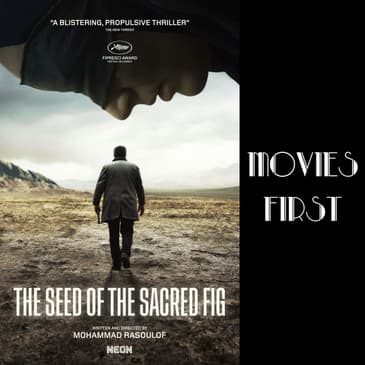
What happens when a filmmaker risks everything to expose the truth. The story behind Iran's Oscar nominated The Seed of the Sacred fig shows us exactly how art becomes resistance, even when it comes at a devastating personal cost. That's such a powerful way to frame this film, especially considering the director Mohammed Rasulov had to shoot it in secret and is now living in exile. You know what's fascinating about this The film uses this brilliant metaphor of a sacred fig tree, a species that literally strangles other trees to death, to represent how Iran's theocratic regime slowly suffocates personal freedoms, and just like that fig tree, we watch this family's life get increasingly constricted. The timing of this film is particularly striking, isn't it set against the backdrop of the twenty twenty two protests after Gina Masa Meeni's death in custody. Exactly, and Rasulov actually incorporated real footage from those protests into the film. We're following this lawyer Iman who gets what seems like a dream promotion to the Revolutionary Court. Better pay bigger house, separate bedrooms for his daughters, but then everything starts unraveling. HM, tell me more about how the family dynamics play into the larger political narrative. Well, you've got these two daughters, Rizvan who's twenty one, and her younger sister Sana, representing this new generation pushing against restrictions. Their parents are constantly trying to make them conform, be conservative, stay safe. Then there's this gun that Iman receives with his promotion. His wife Najma is immediately uncomfortable with it being in their home. The way the film handles that tension between protection and control is really compelling. Every family decision becomes political. And what's really chilling is when Iman discovers the true reason for his promotion. He's expected to rubber stamp death sentences without proper trials. Then the gun disappears, and suddenly everything they've built is threatened. The system that was supposed to reward them becomes this noose tightening around their necks. The performances must really carry that emotional weight, especially so Hila Golistani as Najmeh watching her family get torn apart. Oh Man, her performance is incredible. You can see every internal struggle play out on her face, trying to be devout while questioning everything she believed in. And when her daughter's friend Sadov gets caught up in the protests and ends up injured, you can. Feel Najemea's whole worldview starting to crack. That's what makes this film so powerful. It shows how political oppression affects every aspect of daily life. You know what's really stayed with me the way the film shows how systems of oppression force people to become complicit in their own subjugation. Iman isn't some villain, He's just a father trying to provide for his family. But the system corrupt even that basic impulse. Well, that certainly explains why the film won the Special Jury prize it can and is now up for an Oscar. And here's the thing, Rasulov can't even celebrate these achievements. He's been sentenced to eight years in prison by Iranian authorities and had to flee his country. The very system he's critiquing in the film is literally playing out in his real life. So what do you think this film tells us about the role of art in resistance movements. It shows us that sometimes the most powerful political statements aren't made through speeches or protests, but through storytelling that helps us understand the human cost of oppression. When you watch this family trying to navigate impossible choices, suddenly those news headlines about Iran become deeply personal. The claustrophobic feeling of the film really drives that home. You can't escape the pressure these characters are under. Right, and that's what makes this film so important. Right now, It's not just about Iran. It's about how authoritarian control works everywhere, how it seeps into every aspect of family life, how it turns ordinary people into either victims or accomplices. The fact that Rasulov risked everything to tell this story shows just how crucial these narratives are. That's quite a testament to the power of cinema as a tool for social change. And you know what, that's exactly why films like this matter so much. They help us understand not just what's happening in places like Iran, but how fragile freedom really is and how quickly it can be strangled, just like that sacred fig tree. If we're not paying attention. We would put this on the to see list and give it a score of eight point five out of ten. You've been listening to movies first available at Apple Podcasts, Spotify, iHeart Radio, or your favorite podcast player. You can also stream on demand at bytes dot com. This has been another quantity podcast production from nights dot com.