
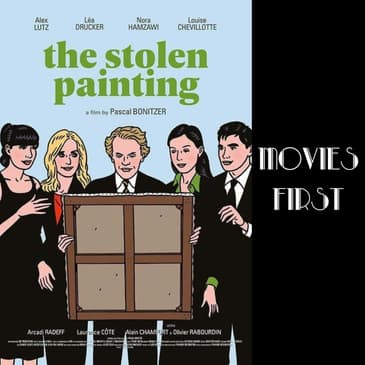
Alex highlights the film's intricate exploration of Keller's moral dilemma, as he grapples with the painting's dark heritage and the pressure from the original owners' relatives. The stakes rise as various players in the art market engage in manipulative schemes to inflate the painting's value, painting a vivid picture of the art world's duplicitous nature. The film's sharp balance of comedy and drama, expertly crafted by director Pascal Bontiset, who weaves together multiple narratives, including the dynamic between Masson and his intern Aurore, portrayed by Louise Cheviolotte.
Listeners will appreciate the film's rich character portrayals, particularly Lutz’s condescending Masson, Drucker’s warm Bettina, and Arkadi Radef’s honest yet overwhelmed Keller. The film succeeds in delivering a wild ride filled with unexpected twists, all while maintaining a coherent narrative that culminates in a satisfying conclusion. With a commendable rating of 7.5 out of 10, *Stolen Painting* provides not only engaging entertainment but also a meaningful commentary on art ethics, historical justice, and personal integrity. Join Alex as he dissects this film that artfully navigates the intersection of human nature and the legacy of art history.
https://www.bitesz.com/podcast/movies-first
Become a supporter of this podcast: https://www.spreaker.com/podcast/movies-first.
To access the Movies First reviews archive visit our website at www.bitesz.com/podcast/movies-first
00:00:00 --> 00:00:02 Alex First: The discovery of a lost masterpiece sets the
00:00:02 --> 00:00:05 stage for an intriguing exploration of art
00:00:05 --> 00:00:08 world dynamics and moral complexities
00:00:08 --> 00:00:11 in stolen painting. The story
00:00:11 --> 00:00:14 begins when Andre Masson, a conceited Paris
00:00:14 --> 00:00:16 auctioneer played by Alex Lutz, receives
00:00:16 --> 00:00:19 correspondence about an Egon Schiele
00:00:19 --> 00:00:21 painting discovered in an unexpected
00:00:21 --> 00:00:24 location. The artwork has
00:00:24 --> 00:00:26 surfaced in the possession of Martin Keller,
00:00:27 --> 00:00:29 a 30 year old chemical plant worker who lives
00:00:29 --> 00:00:32 modestly with his widowed mother. With the
00:00:32 --> 00:00:34 news delivered through Keller's attorney,
00:00:34 --> 00:00:37 Suzanne Egerman, the
00:00:37 --> 00:00:40 revelation prompts Masson to immediately
00:00:40 --> 00:00:42 contact his former spouse and fellow art
00:00:42 --> 00:00:45 expert Bettina, portrayed by Leah
00:00:45 --> 00:00:48 Drucker. Their professional relationship,
00:00:48 --> 00:00:50 though complicated by their past marriage,
00:00:50 --> 00:00:53 maintains a foundation of mutual respect
00:00:54 --> 00:00:56 and expertise. Together they
00:00:56 --> 00:00:59 travel to authenticate the painting, only to
00:00:59 --> 00:01:02 uncover its dark provenance. It's one
00:01:02 --> 00:01:05 of countless artworks stolen by Nazi
00:01:05 --> 00:01:07 forces from Jewish families during the
00:01:07 --> 00:01:09 Holocaust. Having vanished from records in
00:01:09 --> 00:01:12 1939. This discovery
00:01:12 --> 00:01:14 creates a significant moral quandary for
00:01:14 --> 00:01:17 Keller, who wants no association with the
00:01:17 --> 00:01:19 painting's troubled history. However, the
00:01:19 --> 00:01:22 situation becomes more complex with when the
00:01:22 --> 00:01:24 relatives of the original owners present
00:01:24 --> 00:01:27 alternative perspectives and possibilities
00:01:28 --> 00:01:30 behind the scenes, various parties begin
00:01:30 --> 00:01:32 orchestrating schemes to manipulate the
00:01:32 --> 00:01:35 painting's market value, revealing the often
00:01:35 --> 00:01:38 duplicitous nature of the high end art uh,
00:01:38 --> 00:01:41 market. The film, while inspired by actual
00:01:41 --> 00:01:44 events, creates fictional characters to tell
00:01:44 --> 00:01:46 its story. Director Pascal
00:01:46 --> 00:01:49 Bontiset crafts a sophisticated narrative
00:01:49 --> 00:01:52 that that balances sharp comedy with serious
00:01:52 --> 00:01:54 dramatic elements. The plot weaves together
00:01:54 --> 00:01:56 multiple storylines, including the
00:01:56 --> 00:01:59 challenging dynamic between Masson and his
00:01:59 --> 00:02:02 new intern Aurore, played by Louise
00:02:02 --> 00:02:05 Cheviolotte. Aurore's character brings
00:02:05 --> 00:02:07 additional depth to the story through her own
00:02:07 --> 00:02:10 complicated background. She's estranged from
00:02:10 --> 00:02:12 her mother and maintains a delicate
00:02:12 --> 00:02:14 relationship with her father who helps
00:02:14 --> 00:02:16 support her financially. The character
00:02:16 --> 00:02:19 portrayals are ah, particularly noteworthy.
00:02:19 --> 00:02:22 Alex Lutz captures Masson's condescending
00:02:22 --> 00:02:24 attitude and professional arrogance,
00:02:24 --> 00:02:27 especially in his interactions with Aurora.
00:02:27 --> 00:02:30 Lea Drucker brings gravitas and warmth to
00:02:30 --> 00:02:33 Bettina, who has successfully moved forward
00:02:33 --> 00:02:36 with her life post divorce while maintaining
00:02:36 --> 00:02:38 her professional acumen. Arkadi
00:02:38 --> 00:02:41 Radef delivers a compelling performance as as
00:02:41 --> 00:02:44 Martin Keller, portraying him as an honest
00:02:44 --> 00:02:47 but overwhelmed individual thrust into
00:02:47 --> 00:02:50 a world he neither understands nor
00:02:50 --> 00:02:53 desires to join. The film excels in
00:02:53 --> 00:02:54 its depiction of the art world's power
00:02:54 --> 00:02:57 dynamics and the various ways individuals
00:02:57 --> 00:02:59 attempt to influence outcomes for their
00:02:59 --> 00:03:02 benefit. The narrative becomes
00:03:02 --> 00:03:04 increasingly complex as different parties
00:03:04 --> 00:03:07 employ various strategies of smoke and and
00:03:07 --> 00:03:09 mirrors to affect the painting's valuation.
00:03:10 --> 00:03:12 Director Bontiser maintains audience
00:03:12 --> 00:03:14 engagement through a series of unexpected
00:03:14 --> 00:03:17 plot twists and revelations, all while
00:03:17 --> 00:03:19 keeping the various narrative threads
00:03:19 --> 00:03:22 coherent. As the story progresses,
00:03:22 --> 00:03:25 it transforms into what critics describe as a
00:03:25 --> 00:03:27 wild ride, but one where all elements
00:03:27 --> 00:03:29 ultimately converge in a satisfying
00:03:29 --> 00:03:32 conclusion. The film successfully
00:03:32 --> 00:03:34 balances its entertainment value with with
00:03:34 --> 00:03:37 thoughtful commentary on art world ethics,
00:03:37 --> 00:03:40 historical justice, and personal integrity.
00:03:41 --> 00:03:43 It explores how different characters
00:03:43 --> 00:03:46 navigate moral challenges while pursuing
00:03:46 --> 00:03:48 their own interests, whether financial,
00:03:48 --> 00:03:51 professional, or personal. The
00:03:51 --> 00:03:53 film's sophisticated handling of its themes
00:03:53 --> 00:03:56 and strong performances earned it an M M
00:03:56 --> 00:03:59 rating and a commendable 7 1/2 out of 10
00:03:59 --> 00:04:02 rating from critics. It succeeds in
00:04:02 --> 00:04:04 delivering both engaging entertainment and
00:04:04 --> 00:04:06 meaningful commentary on the intersection of
00:04:06 --> 00:04:09 art history and human nature, while
00:04:09 --> 00:04:11 maintaining its narrative momentum through to
00:04:11 --> 00:04:12 its conclusion.
00:04:13 --> 00:04:15 Voice Over Guy: You've been listening to movies first
00:04:15 --> 00:04:18 available at Apple Podcasts, Spotify,
00:04:18 --> 00:04:21 iHeartRadio, or your favourite podcast
00:04:21 --> 00:04:23 player. You can also stream on
00:04:23 --> 00:04:24 demand at bitesz.com
00:04:24 --> 00:04:26 Voice Over Guy: This has been another quality podcast
00:04:26 --> 00:04:28 production from bitesz. com.