
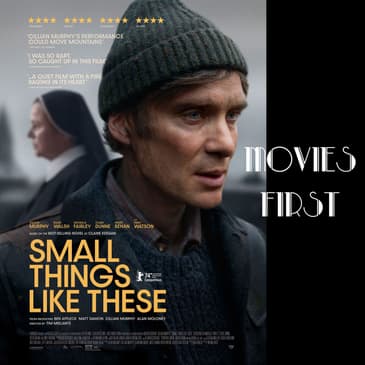
Listeners will be moved by the film's ability to tackle such devastating subject matter while maintaining artistic integrity. The discussion highlights how the film's restrained storytelling allows its emotional weight to resonate, particularly through Bill's regular deliveries to the convent and the chilling portrayal of the mother superior by Emily Watson, who embodies the chilling institutional power dynamics.
The episode also explores the film's technical brilliance, from the evocative cinematography by Frank Van den Eeden to the meticulous period detail that immerses viewers in the 1980s setting. The tension builds subtly, leading to the poignant discovery of Sarah, a pregnant woman held in confinement, showcasing the film's commitment to authenticity without sensationalism.
Scoring a remarkable 8.5 out of 10, *Small Things Like These* is lauded for its ability to transform a historical story into a relevant commentary on contemporary issues of oppression and complicity. The hosts encourage listeners to reflect on their own moral obligations in the face of injustice, making this film a crucial part of understanding a dark chapter in Irish history.
**Highlights:**
- **Powerful Performances:** Murphy and Watson deliver compelling portrayals that deepen the narrative's emotional impact.
- **Technical Excellence:** The cinematography and production design authentically evoke the period while enhancing the storytelling.
- **Relevant Themes:** The film prompts critical conversations about individual responsibility and the societal complicity in systems of oppression.
Join us for an insightful discussion on *Small Things Like These*, a film that challenges viewers to confront the past and reflect on their actions in the present.
For more film reviews and discussions, subscribe to *Movies First* on your favorite podcast platform!
https://www.bitesz.com/podcast/movies-first
Become a supporter of this podcast: https://www.spreaker.com/podcast/movies-first--2648009/support.
To access the Movies First reviews archive visit our website at www.bitesz.com/podcast/movies-first
The Magdalen Laundries of Ireland imprisoned over thirty thousand women between nineteen twenty two and nineteen ninety six. And today we're exploring a powerful film that brings this dark history into focus through one man's moral awakening five four three two one here music. This is movies first. The way small things like these handle such devastating historical material while maintaining its artistic integrity is remarkable. Silly and Murphy's performance as Bill Furlong speaks volumes even in complete silence. You know what's fascinating about the setting. It's nineteen eighty five Ireland, but the film shows how these institutions were still operating well into recent memory. Murphy plays this coal merchant who's supporting five daughters, but his own past as the child of an unmarried mother gives him this unique perspective on the injustices he uncovers. That connection between his personal history and the present really drives the narrative. The scenes with young Bill, especially that Christmas moment when he can't get a simple puzzle. It's heartbreaking and its simplicity. Well, what really struck me was learning that these laundries weren't just targeting fallen women, as they claimed, we're talking about victims of abuse, rape, incest. The film shows how the entire community was complicit in the system through their silence, and. Emily Watson's portrayal of the Mother Superior really captures that institutional power dynamic. The way she tries to normalize these horrors with religious authority is chilling. Speaking of performances, the technical aspects of the film are extraordinary. The cinematographer Frank find and Eden uses light in this really powerful way, these shards of winter sunlight catching Murphy's face during moments of moral crisis. That attention to period detail really creates an immersive experience. The production design, the costumes, it all feels authentically nineteen eighty five without being showy about it. You know what's particularly effective the way the film builds tension through Bill's regular deliveries to the convent. It starts with these subtle observations until he discovers Sarah, this pregnant woman locked in an outbuilding. The film doesn't sensationalize these moments, it lets them land with their full weight. That restraint in the storytelling really amplifies the emotional impact. How do you think the film manages to make such a historical story feel so urgently relevant today. Well, it's showing us how systems of oppression rely on ordinary people looking the other way. When Bill's wife Eileen urges him to focus on their own family, or when the local pub owner warns him not to rock the boat, these are the same kinds of rationalizations people still use today to avoid confronting injustice. The slow pacing really allows those moral questions to resonate. Every small decision takes on this enormous weight. And here's what's fascinating about Bill's position. He's got this relative privilege as a successful businessman, but the film explores how that security comes with moral obligations. It's asking us what we would risk to do the right thing. That's exactly where the film's title becomes so meaningful, these small choices that end up having profound consequences. You know. The winter setting adds another layer two. The approaching Christmas season creates this stark contrast between Christian values and the brutal reality of what's happening in the convent. It's like the whole town is participating in this collective denial. The way They balance that larger message with such intimate storytelling really sets this film apart. Every technical element serves to deepen our emotional connection to Bill's struggle. And ultimately that's what makes this film so powerful. It takes this massive historical injustice and makes it deeply personal through one man's story. It's not just about the past, it's about how we respond to injustice in our own time. That really seems to be the heart of it, examining how ordinary people either resist or enable systems of oppression through their daily choices. Looking ahead, I think this film is going to be a crucial part of how we process this dark chapter in Irish history. It's already generating important conversations about institutional power and collective responsibility. The small things we do or don't do in the face of injustice really do shape the world we live in. We think this is a film well worth seeing, and we give it an eight point five out of ten. You've been listening to movies first available at Apple Podcasts, Spotify, iHeart Radio, or your favorite podcast player. You can also stream on demand at bytes dot com. This has been another quality podcast production from nights dot Com.