
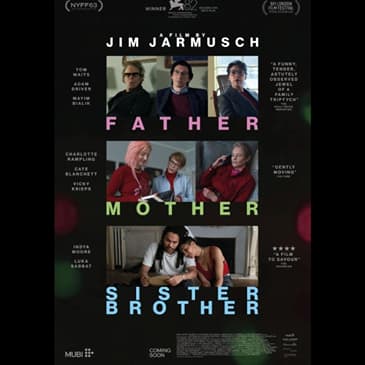
The hosts dissect the first vignette featuring Jeff and Emily visiting their enigmatic father in New Jersey. They discuss the relatable dynamics between the siblings and their father, highlighting the subtle manipulation and emotional defenses at play. The uncomfortable silences and the father's unexpected actions reveal deeper layers of character that Jarmusch masterfully crafts.
Moving to the second vignette set in Dublin, Chris and Jessica reflect on the strained relationships between a mother and her two adult daughters, emphasizing the pressure to meet expectations and the facades they maintain. The poignant details, such as the recurring motif of the Rolex watch, serve as a reminder of the characters' struggles to project an image of success amidst their personal challenges.
The final vignette takes the hosts to Paris, where siblings Sky and Billy grapple with the aftermath of their parents' death in a plane crash. This segment resonates with emotional depth, showcasing their bond as they navigate grief and uncertainty. The introduction of Madame Gaultier adds complexity to their situation, while the presence of the Rolex watch ties the narratives together in a meaningful way.
Chris and Jessica commend Jarmusch for his ability to craft a film that focuses on the quiet struggles of everyday life, emphasizing that it's not about dramatic moments, but rather the subtleties of human interactions. While the film's slow pace and deliberate silences may not appeal to everyone, the hosts encourage those who appreciate character-driven narratives to give it a chance.
With a score of 7.5 out of 10, this episode invites listeners to experience *Father, Mother, Sister, Brother*, a film that challenges viewers to reflect on family identity and the masks we wear. Join Chris and Jessica as they unpack the intricacies of this thought-provoking piece that lingers long after viewing.
https://www.bitesz.com/podcast/movies-first
Become a supporter of this podcast: https://www.spreaker.com/podcast/movies-first.
To access the Movies First reviews archive, visit o
To access the Movies First reviews archive visit our website at www.bitesz.com/podcast/movies-first
This episode includes AI-generated content.
00:00:00 --> 00:00:03 Chris: Okay, so here's something to chew on. Jim
00:00:03 --> 00:00:05 Jarmusch's latest film, Father, Mother,
00:00:05 --> 00:00:07 Sister, Brother, is like a family reunion
00:00:07 --> 00:00:09 where no one really wants to be there, but
00:00:09 --> 00:00:12 everyone shows up anyway. It's awkward, it's
00:00:12 --> 00:00:14 quiet, and somehow it's completely
00:00:14 --> 00:00:15 captivating.
00:00:16 --> 00:00:17 Jessica: Oh, uh, uh. That's such a perfect way to
00:00:17 --> 00:00:20 describe it. Jarmusch has this way of making
00:00:20 --> 00:00:22 the mundane feel profound, doesn't he?
00:00:23 --> 00:00:26 I mean, this film is essentially three
00:00:26 --> 00:00:28 separate stories about family dynamics, but
00:00:28 --> 00:00:30 it's the silences and the small details that
00:00:30 --> 00:00:31 really stick with you.
00:00:32 --> 00:00:34 Chris: Exactly. And what's fascinating is how he
00:00:34 --> 00:00:37 structures it as a triptych. Three vignettes
00:00:37 --> 00:00:39 that are loosely connected by recurring
00:00:39 --> 00:00:42 motifs, like the Rolex watches and
00:00:42 --> 00:00:44 those skateboarders in slow motion.
00:00:44 --> 00:00:46 It's not a traditional narrative, but it
00:00:46 --> 00:00:48 works because it feels so intentional.
00:00:49 --> 00:00:52 Jessica: And let's not forget the performances. Every
00:00:52 --> 00:00:54 actor brings such depth to their role, even
00:00:54 --> 00:00:57 when they're not saying much. It's like
00:00:57 --> 00:00:59 they're speaking volumes with just a glance
00:00:59 --> 00:01:02 or a pause. But let's dive into the
00:01:02 --> 00:01:05 first vignette. Jeff and Emily visiting
00:01:05 --> 00:01:07 their dad in New Jersey. What stood out to
00:01:07 --> 00:01:08 you there?
00:01:09 --> 00:01:12 Chris: Oh, uh, where do I even start? First off,
00:01:12 --> 00:01:14 the dynamic between Jeff and Emily is so
00:01:14 --> 00:01:16 relatable. You've got Jeff, who's divorced
00:01:16 --> 00:01:19 and still financially supporting their dad,
00:01:19 --> 00:01:21 and Emily, who's married with kids and
00:01:21 --> 00:01:23 clearly feeling guilty about not helping
00:01:23 --> 00:01:25 more. And then there's their dad, who's this
00:01:25 --> 00:01:28 enigmatic figure living in a cluttered house
00:01:28 --> 00:01:30 by the lake, claiming to be broke but clearly
00:01:30 --> 00:01:31 hiding something.
00:01:32 --> 00:01:35 Jessica: Right, like the Rolex on his wrist that he
00:01:35 --> 00:01:38 insists is fake. And then there's the
00:01:38 --> 00:01:41 car under the tarp. He's not as down and out
00:01:41 --> 00:01:44 as he wants them to believe. But why do you
00:01:44 --> 00:01:46 think he's putting on this act? Is it
00:01:46 --> 00:01:48 manipulation, or is there something deeper
00:01:48 --> 00:01:49 going on?
00:01:50 --> 00:01:51 Chris: That's the million dollar question, isn't it?
00:01:52 --> 00:01:55 I think it's a bit of both. On one hand, he
00:01:55 --> 00:01:57 might be trying to guilt his kids into giving
00:01:57 --> 00:02:00 him money, but on the other hand, it feels
00:02:00 --> 00:02:02 like a defense mechanism, like he's trying to
00:02:02 --> 00:02:04 maintain some kind of control over the
00:02:04 --> 00:02:07 situation. And then there's the silence.
00:02:08 --> 00:02:10 Those long, awkward pauses that make you
00:02:10 --> 00:02:13 squirm in your seat. It's so uncomfortable,
00:02:13 --> 00:02:15 but it's also so real.
00:02:16 --> 00:02:19 Jessica: Oh, absolutely. And then when the
00:02:19 --> 00:02:21 siblings leave and the dad suddenly springs
00:02:21 --> 00:02:23 into action, cleaning up the house, hopping
00:02:23 --> 00:02:26 into his car, it's like he's been playing a
00:02:26 --> 00:02:29 role the whole time. It's such a small
00:02:29 --> 00:02:30 moment, but it says so much about his
00:02:30 --> 00:02:31 character.
00:02:32 --> 00:02:34 Chris: And that's what Jarmusch does so well.
00:02:34 --> 00:02:37 He doesn't spell things out for you. He lets
00:02:37 --> 00:02:40 you sit with the ambiguity. And speaking of
00:02:40 --> 00:02:42 ambiguity, let's move on to the second
00:02:42 --> 00:02:45 vignette in Dublin. This one's about a mother
00:02:45 --> 00:02:48 and her. Huh, Two adult daughters. And it's
00:02:48 --> 00:02:50 just as tense, but in a completely different
00:02:50 --> 00:02:51 way.
00:02:51 --> 00:02:54 Jessica: Oh, the tea scene, it's so
00:02:54 --> 00:02:57 formal, so stiff, and you can
00:02:57 --> 00:02:59 just feel the unspoken tension in the room.
00:03:00 --> 00:03:02 The mother, played by Charlotte Rampling,
00:03:03 --> 00:03:05 is the successful author, who clearly has
00:03:05 --> 00:03:08 very high expectations for her daughters. And
00:03:08 --> 00:03:11 the daughters, Lilith and Timothea, uh, are
00:03:11 --> 00:03:12 just trying to navigate their own lives while
00:03:12 --> 00:03:14 dealing with their mother's judgment.
00:03:15 --> 00:03:17 Chris: And then there's Lilith, who's clearly
00:03:17 --> 00:03:19 struggling financially, but still shows up
00:03:19 --> 00:03:22 wearing a Rolex. Again with the Rolex.
00:03:23 --> 00:03:26 She claims it's fake, but it's such a
00:03:26 --> 00:03:28 pointed detail. It's like she's trying to
00:03:28 --> 00:03:31 project this image of success to her mother,
00:03:31 --> 00:03:33 even though she can't even afford an Uber
00:03:33 --> 00:03:33 ride home.
00:03:34 --> 00:03:36 Jessica: And then there's Timothea, uh, who's the
00:03:36 --> 00:03:39 successful daughter. But even she seems to be
00:03:39 --> 00:03:41 putting on a facade. She's just been promoted
00:03:41 --> 00:03:43 at work, but you get the sense that she's not
00:03:43 --> 00:03:45 as confident or put together as she wants
00:03:45 --> 00:03:48 everyone to believe. It's like everyone in
00:03:48 --> 00:03:50 this family is performing for each other and
00:03:50 --> 00:03:51 no one's being real.
00:03:52 --> 00:03:54 Chris: And that's what makes this vignette so
00:03:54 --> 00:03:56 heartbreaking. It's not just about the
00:03:56 --> 00:03:59 strained relationships. It's about the
00:03:59 --> 00:04:01 pressure to live up to these expectations
00:04:01 --> 00:04:04 that no one can meet. It's so
00:04:04 --> 00:04:07 relatable, but also so painful to
00:04:07 --> 00:04:07 watch.
00:04:08 --> 00:04:10 Jessica: And then we get to the final vignette in
00:04:10 --> 00:04:12 Paris, which for me was the most emotional of
00:04:12 --> 00:04:15 the three. This one's about sky and
00:04:15 --> 00:04:17 Billy, siblings who are dealing with the
00:04:17 --> 00:04:19 aftermath of their parents death in a plane
00:04:19 --> 00:04:22 crash. It's quieter than the other two
00:04:22 --> 00:04:24 stories, but it's also the most poignant.
00:04:25 --> 00:04:28 Chris: Absolutely. Sky and Billy have this really
00:04:28 --> 00:04:30 beautiful bond, and you can tell they're
00:04:30 --> 00:04:32 leaning on each other to get through their
00:04:32 --> 00:04:34 grief, but at the same time,
00:04:34 --> 00:04:37 there's this sense of uncertainty, like, what
00:04:37 --> 00:04:40 do they do now? Their parents were these
00:04:40 --> 00:04:42 adventurous, larger than life figures, and
00:04:42 --> 00:04:45 now they're gone, leaving behind all this
00:04:45 --> 00:04:47 stuff that sky and Billy don't know what to
00:04:47 --> 00:04:47 do with.
00:04:48 --> 00:04:50 Jessica: And then there's the landlord, Madame
00:04:50 --> 00:04:52 Gaultier, who adds another layer to the
00:04:52 --> 00:04:55 story. She tells them their parents owed
00:04:55 --> 00:04:57 three months rent, but also reveals that she
00:04:57 --> 00:04:58 stopped the insurance company from taking
00:04:58 --> 00:05:01 their belongings. It's such a small moment,
00:05:01 --> 00:05:03 but it says so much about the complexities of
00:05:03 --> 00:05:04 human relationships.
00:05:05 --> 00:05:07 Chris: And again, the Rolex watch makes an
00:05:07 --> 00:05:10 appearance. This time, it's an old
00:05:10 --> 00:05:13 watch that belonged to their father, found in
00:05:13 --> 00:05:16 a box of belongings. It's such
00:05:16 --> 00:05:19 a poignant detail, and it ties all
00:05:19 --> 00:05:21 three stories together in this subtle but
00:05:21 --> 00:05:22 meaningful way.
00:05:23 --> 00:05:25 Jessica: And then there are the skateboarders. Did you
00:05:25 --> 00:05:27 notice how they show up in each vignette,
00:05:27 --> 00:05:30 always in slow motion? It's such a
00:05:30 --> 00:05:33 random detail, but it adds this dreamlike
00:05:33 --> 00:05:36 quality to the film. It's like Jarmush is
00:05:36 --> 00:05:37 reminding us that life is happening all
00:05:37 --> 00:05:40 around these characters, even as they're
00:05:40 --> 00:05:41 stuck in their own little worlds.
00:05:42 --> 00:05:44 Chris: And that's what makes this film so special.
00:05:44 --> 00:05:46 It's not about big dramatic moments.
00:05:47 --> 00:05:49 It's about the quiet, everyday struggles that
00:05:49 --> 00:05:52 we all face. It's about family identity
00:05:52 --> 00:05:54 and the masks we wear to protect ourselves.
00:05:54 --> 00:05:57 It's not an easy watch, but it's a deeply
00:05:57 --> 00:05:58 rewarding one.
00:05:58 --> 00:06:01 Jessica: But let's be real, it's not for everyone.
00:06:02 --> 00:06:04 The slow pace, the awkward silences, the lack
00:06:04 --> 00:06:07 of resolution. It's all very deliberate,
00:06:07 --> 00:06:09 but it can be off putting if you're not in
00:06:09 --> 00:06:12 the right mindset. This is not a movie you
00:06:12 --> 00:06:14 watch for entertainment. It's a movie you
00:06:14 --> 00:06:17 watch to think, to feel, to
00:06:17 --> 00:06:18 reflect.
00:06:19 --> 00:06:22 Chris: Exactly. It's a film that demands your
00:06:22 --> 00:06:23 patience and attention.
00:06:23 --> 00:06:25 But if you're willing to give it that, it
00:06:25 --> 00:06:28 rewards you with these beautifully crafted
00:06:28 --> 00:06:31 character studies. It's not an easy watch,
00:06:31 --> 00:06:34 but it's a meaningful one. So
00:06:34 --> 00:06:36 the big question, should people see this
00:06:36 --> 00:06:37 movie?
00:06:37 --> 00:06:40 Jessica: That's a tough one, I'd say. If you're a
00:06:40 --> 00:06:43 fan of Jim Jarmusch or you enjoy films that
00:06:43 --> 00:06:45 focus on character and atmosphere over plot,
00:06:46 --> 00:06:48 then yes, absolutely. But if you're looking
00:06:48 --> 00:06:51 for something fast paced or action packed,
00:06:51 --> 00:06:52 this is not the film for you.
00:06:53 --> 00:06:56 Chris: I agree. It's a select audience film, as you
00:06:56 --> 00:06:59 said earlier, for me, the performances
00:06:59 --> 00:07:02 alone are worth watching. Every actor brings
00:07:02 --> 00:07:04 so much depth to their role, and you can tell
00:07:04 --> 00:07:07 they're fully committed to Jarmusch's vision.
00:07:07 --> 00:07:08 But again, it's not for everyone.
00:07:09 --> 00:07:11 Jessica: So, final verdict?
00:07:11 --> 00:07:14 Chris: I'd give it a solid 7.5 out of 10.
00:07:15 --> 00:07:17 It's well made, thought provoking, and
00:07:18 --> 00:07:20 beautifully acted. But it's also a bit of a
00:07:20 --> 00:07:23 slow burn. Not everyone will have the
00:07:23 --> 00:07:25 patience for it, but for those who do, it's
00:07:25 --> 00:07:26 a, uh, rewarding experience.
00:07:27 --> 00:07:30 Jessica: Couldn't have said it better myself. So there
00:07:30 --> 00:07:33 you have it. Father, mother, Sister
00:07:33 --> 00:07:35 Brother is a film that's as much about what's
00:07:35 --> 00:07:38 unsaid as what's said. If you're in the mood
00:07:38 --> 00:07:40 for something quiet, introspective and a
00:07:40 --> 00:07:43 little uncomfortable, give it a shot. But if
00:07:43 --> 00:07:46 not, well, there's always the latest action
00:07:46 --> 00:07:47 blockbuster.
00:07:47 --> 00:07:49 Voice Over Guy: You've been listening to movies first
00:07:50 --> 00:07:52 available at Apple Podcasts, Spotify,
00:07:52 --> 00:07:55 iHeartRadio or your favourite podcast
00:07:55 --> 00:07:57 player. You can also stream on
00:07:57 --> 00:07:59 demand@bytes.com this
00:07:59 --> 00:08:01 Chris: has been another quality podcast production
00:08:01 --> 00:08:03 from bytes.com.