
**Episode Summary:**
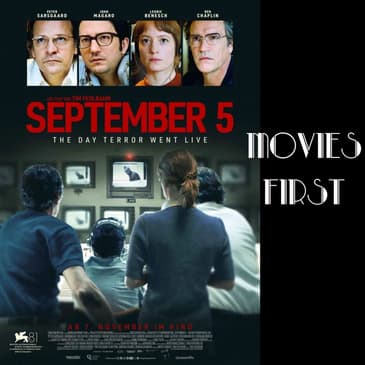
In this poignant episode of Movies First, host Alex First leads a compelling discussion on the harrowing film *September 5th*, which chronicles the tragic events of the 1972 Munich Olympics. The film offers a unique perspective by focusing on the American TV network ABC, which found itself at the center of a terrorist attack that claimed the lives of 11 Israeli athletes and coaches. The narrative follows Jeffrey Mason, played by John Magaro, a young producer grappling with the chaos as he transitions from sports coverage to live news reporting amidst the unfolding crisis. The critics delve into the film's exploration of the ethical dilemmas faced by journalists during a catastrophic event, highlighting the tension between maintaining professional boundaries and the urgency to inform the public.
**Key Points:**
- **Historical Significance:** The film serves as a powerful reminder of a dark chapter in Olympic history, portraying the complexities of live reporting during a terrorist attack.
- **Production Excellence:** The meticulous attention to detail, including the use of authentic broadcast equipment and actual footage, enhances the film's authenticity and emotional impact.
- **Character Dynamics:** The performances of the cast, particularly Magaro, Chaplin, and Sarsgaard, bring depth to the narrative, showcasing the internal struggles of the crew as they navigate unprecedented challenges.
- **Ethical Questions:** The film raises critical discussions about the responsibilities of journalists in crisis situations, balancing the need for information with sensitivity to the victims involved.
As the episode unfolds, the critics reflect on the film's emotional weight and its ability to resonate with viewers, both those who experienced the events firsthand and those learning about them for the first time. With a high rating of 8.5 out of 10, *September 5th* is described as a gritty and gripping portrayal of a day that transformed sports coverage into a sobering reality of news reporting. Tune in for an insightful exploration of this impactful film and its relevance in today's media landscape.
**Listen and Subscribe:**
For more thought-provoking movie discussions and reviews, subscribe to *Movies First* on Apple Podcasts, Spotify, iHeartRadio, or your favorite podcast player. Stream on demand at bitesz.com for more quality podcast productions.
**Final Thoughts:**
Join us as we reflect on the complexities of *September 5th*, a film that challenges our understanding of journalism, ethics, and the human cost of tragedy. Stay tuned for more cinematic explorations in upcoming episodes!
www.bitesz.com/show/movies-first
Become a supporter of this podcast: https://www.spreaker.com/podcast/movies-first-film-reviews-insights--2648009/support.
To access the Movies First reviews archive visit our website at www.bitesz.com/podcast/movies-first
[00:00:00] September 5th 1972 marked a tragic turning point in Olympic history when the athletes' village in Munich became the site of a horrific terrorist attack during the 20th Summer Olympics. 5, 4, 3, 2, 1 Cue music. This is Movies First.
[00:00:21] Terrorists affiliated with militant organisation, Black September captured and killed 11 Israeli athletes and coaches. The movie September 5th recounts this devastating event from the unique perspective of American TV network ABC, which was covering the games. This Olympics held particular significance as it was the first to be broadcast live worldwide via satellite.
[00:00:48] The film centres on Geoffrey Mason, portrayed by John Magaro, a young and ambitious producer eager to prove himself to his mentor Marvin Badar, Ben Chaplin, and their boss, the renowned TV executive Rune Arledge, Peter Sarsgaard. As the story unfolds, Mason finds himself at the control panel when shots ring out, shocking the globe.
[00:01:12] The sports coverage team suddenly finds themselves thrust into the role of news reporters covering a terrorist attack in real time. This shift in roles creates significant tension within the network, as Arledge fights to keep the sports division, which is on the ground in Munich, in control of the unfolding story rather than handing it over to the news division, which would typically cover such events remotely.
[00:01:40] The film vividly portrays the internal and external pressures faced by the crew as they scramble to bring the world the unfolding events. With the help of German interpreter Marianne Gebhardt, played by Leonie Benesch, they navigate the complexities of reporting on this unprecedented situation.
[00:02:01] Live pictures capture hooded gorillas on a hotel balcony and hostages in extreme peril, raising poignant questions about the ethics of live reporting in such extreme circumstances. The production values of September 5th are particularly noteworthy, featuring a remarkable blend of actual broadcast footage from the time and dramatised recreations of the events.
[00:02:25] This attention to detail extends even to the authentic broadcast equipment used during filming, demonstrating the filmmakers' commitment to historical accuracy. The performances of the cast bring depth and authenticity to the story. Magaro's portrayal of Mason captures the character's dynamism and competence in the face of unprecedented challenges.
[00:02:49] Chaplin's Badar serves as a voice of caution, focused on ensuring they maintain appropriate boundaries in their reporting. Sasgard embodies the leadership qualities of Arledge, while Benesch's interpretation of Gebhardt adds crucial perspective as someone acutely aware of Germany's complex historical context. The film raises critical ethical questions about journalism and live coverage.
[00:03:15] The crew must constantly grapple with decisions about what to show and what to withhold, balancing their responsibility to inform the public with sensitivity to the victims and the potential impact their broadcast might have on the unfolding situation. These dilemmas are particularly poignant given that the sports team had never faced anything remotely similar in their careers.
[00:03:41] Director Tim Failbaum, who co-wrote the script with Moritz Binder and Alex David, masterfully weaves together the various elements of this complex story. The film explores not only the immediate crisis, but also the political implications, both in terms of international relations and the internal dynamics of network television. For viewers who lived through the actual events, the film serves as a powerful reminder of this dark chapter in Olympic history.
[00:04:10] For younger generations or those previously unaware of this tragedy, it provides an eye-opening account of how this terrorist attack became a pivotal moment in both sports and broadcasting history. While September 5th is described as a deeply affecting and distressing film to watch, its impact is undeniable.
[00:04:31] The reviewer notes becoming quite emotional during the viewing, highlighting the film's success in conveying the gravity and human cost of the events. Despite its challenging subject matter, the film is praised as undeniably gritty and gripping, earning a high score of 8.5 out of 10.
[00:04:52] The film stands as a powerful testament to a moment when sports coverage transformed into news coverage of the most tragic kind. Through its meticulous recreation of events, strong performances and thoughtful exploration of ethical dilemmas, September 5th offers viewers a compelling examination of a day that forever changed both Olympic history and the nature of live television coverage.
[00:05:20] You've been listening to Movies First. Available at Apple Podcasts, Spotify, iHeartRadio or your favourite podcast player. You can also stream on demand at Bytes.com. This has been another quality podcast production from Bytes.com. . . .