
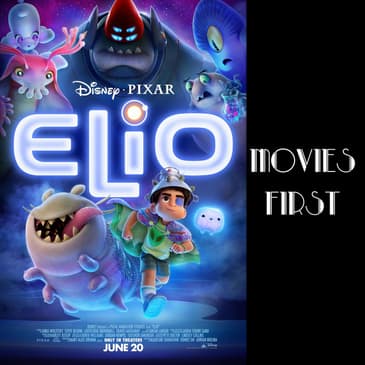
00:00:00 --> 00:00:02 Chris: You know what blows my mind? We're living in
00:00:02 --> 00:00:04 an age where kids movies are tackling
00:00:04 --> 00:00:07 existential loneliness so profound
00:00:07 --> 00:00:09 that their main characters are literally
00:00:09 --> 00:00:11 begging aliens to abduct them.
00:00:11 --> 00:00:13 Jessica: That's such a fascinating observation about
00:00:13 --> 00:00:16 this film. The way they've woven deep themes
00:00:16 --> 00:00:18 of isolation and belonging into what could
00:00:18 --> 00:00:21 have been just another space adventure really
00:00:21 --> 00:00:22 caught me off guard.
00:00:23 --> 00:00:25 Chris: Well, let's dig into what makes this story so
00:00:25 --> 00:00:27 unique. Here's an 11 year old orphan
00:00:27 --> 00:00:30 voiced brilliantly by Jonas Kibryab,
00:00:31 --> 00:00:33 who feels so disconnected from Earth that
00:00:33 --> 00:00:35 he's actively seeking extraterrestrial
00:00:35 --> 00:00:37 intervention. That's some pretty heavy
00:00:37 --> 00:00:40 emotional territory for an animated film.
00:00:40 --> 00:00:43 Jessica: The choice of Kibrab for the role was really
00:00:43 --> 00:00:45 inspired. The way he captures both
00:00:45 --> 00:00:48 vulnerability and determination in Elio's
00:00:48 --> 00:00:50 character adds so many layers to those lonely
00:00:50 --> 00:00:50 moments.
00:00:51 --> 00:00:53 Chris: You know what's interesting? The film
00:00:53 --> 00:00:55 actually mirrors some pretty significant
00:00:55 --> 00:00:57 statistics about children in non traditional
00:00:57 --> 00:01:00 family structures. We're seeing more kids
00:01:00 --> 00:01:02 than ever being raised by extended family
00:01:02 --> 00:01:04 members, and the story of Elio and his Aunt
00:01:04 --> 00:01:07 Olga really taps into that reality.
00:01:08 --> 00:01:10 Jessica: Hmm. Um, that's a really good point about the
00:01:10 --> 00:01:13 changing family dynamics. How do you think
00:01:13 --> 00:01:15 Zoe Saldana's performance as Aunt Olga
00:01:15 --> 00:01:16 contributes to that narrative?
00:01:18 --> 00:01:20 Chris: Well, Saldana brings this fascinating
00:01:20 --> 00:01:22 military precision to the role, which creates
00:01:22 --> 00:01:24 this perfect tension between duty and
00:01:24 --> 00:01:27 emotional connection. But what really caught
00:01:27 --> 00:01:28 my attention was how they used the clone
00:01:28 --> 00:01:31 subplot as this brilliant metaphor for
00:01:31 --> 00:01:33 identity and acceptance.
00:01:34 --> 00:01:36 Jessica: That clone element definitely adds an
00:01:36 --> 00:01:38 interesting psychological layer to the story.
00:01:38 --> 00:01:41 It's almost like a sci fi version of how kids
00:01:41 --> 00:01:42 test boundaries with their caregivers.
00:01:44 --> 00:01:44 Chris: Exactly.
00:01:44 --> 00:01:46 And speaking of testing boundaries, let's
00:01:46 --> 00:01:49 talk about Brad Garrett's Lord Grigon.
00:01:49 --> 00:01:51 The way they position this intergalactic
00:01:51 --> 00:01:54 warlord as both a threat to peace and a
00:01:54 --> 00:01:57 struggling father is pretty sophisticated
00:01:57 --> 00:01:58 storytelling for a family film.
00:01:59 --> 00:02:00 Jessica: The parallel between these two family
00:02:00 --> 00:02:02 dynamics really drives home the universal
00:02:02 --> 00:02:04 nature of these relationship struggles,
00:02:05 --> 00:02:05 doesn't it?
00:02:06 --> 00:02:08 Chris: You know, it reminds me of some recent
00:02:08 --> 00:02:10 studies about how children process complex
00:02:10 --> 00:02:13 emotions through storytelling. The
00:02:13 --> 00:02:15 whole communiverse concept serves as this
00:02:15 --> 00:02:18 elaborate metaphor for finding your place in
00:02:18 --> 00:02:20 an increasingly interconnected world.
00:02:21 --> 00:02:23 Jessica: Though I have to say, it feels like they
00:02:23 --> 00:02:24 could have pushed those metaphors further.
00:02:25 --> 00:02:27 The resolution seemed a bit too neat for such
00:02:27 --> 00:02:28 complex themes.
00:02:29 --> 00:02:31 Chris: That's a fair criticism. Like,
00:02:32 --> 00:02:34 um, consider how they handled the friendship
00:02:34 --> 00:02:37 between Elio and Glordon. While
00:02:37 --> 00:02:40 it's genuinely touching, there was potential
00:02:40 --> 00:02:43 for a deeper exploration of how shared
00:02:43 --> 00:02:46 outsider experiences can bridge even the
00:02:46 --> 00:02:48 widest gaps, in this case,
00:02:48 --> 00:02:50 literal light years.
00:02:51 --> 00:02:52 Jessica: The visual design of all Those different
00:02:52 --> 00:02:55 Alien species was incredible, though. Uh, it
00:02:55 --> 00:02:57 really emphasized the message about diversity
00:02:57 --> 00:02:58 and acceptance.
00:02:59 --> 00:03:01 Chris: Well, here's what I find particularly
00:03:01 --> 00:03:04 relevant about that aspect. In an era
00:03:04 --> 00:03:06 where kids are increasingly connected to
00:03:06 --> 00:03:09 global communities through technology, the
00:03:09 --> 00:03:11 film's message about finding understanding
00:03:11 --> 00:03:14 across vast differences feels especially
00:03:14 --> 00:03:15 timely.
00:03:16 --> 00:03:18 Jessica: So do you think the 6 1/2 out of 10 rating
00:03:18 --> 00:03:20 really captures the film's impact,
00:03:20 --> 00:03:22 considering all these layers we've discussed?
00:03:23 --> 00:03:26 Chris: You know what? I think that rating reflects
00:03:26 --> 00:03:28 its position as a solid but not
00:03:28 --> 00:03:30 groundbreaking entry and the animated film
00:03:30 --> 00:03:33 landscape. While it doesn't push boundaries
00:03:33 --> 00:03:35 the way some recent animated features have,
00:03:36 --> 00:03:38 it still manages to address some pretty
00:03:38 --> 00:03:40 profound themes about belonging and family
00:03:41 --> 00:03:43 in a way that resonates with both kids and
00:03:44 --> 00:03:44 adults.
00:03:45 --> 00:03:47 Jessica: That's such a thoughtful way to look at it.
00:03:48 --> 00:03:50 Even if it didn't completely revolutionize
00:03:50 --> 00:03:52 the genre, it's still contributing something
00:03:52 --> 00:03:54 meaningful to the conversation about how we
00:03:54 --> 00:03:56 help children process complex emotions.
00:03:57 --> 00:03:59 Chris: And maybe that's the real value here,
00:03:59 --> 00:04:02 creating a space where families can talk
00:04:02 --> 00:04:04 about these big feelings of disconnection and
00:04:04 --> 00:04:07 belonging. In a world where kids are
00:04:07 --> 00:04:09 increasingly dealing with complex family
00:04:09 --> 00:04:11 structures and social pressures, having these
00:04:11 --> 00:04:13 conversation starters is pretty valuable,
00:04:14 --> 00:04:16 even if the package they come in isn't
00:04:16 --> 00:04:16 perfect.