
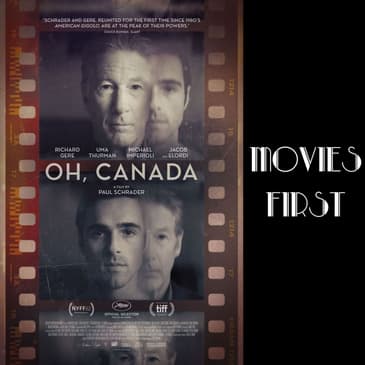
Listeners will be captivated by the film's ambitious technical choices, including the use of multiple aspect ratios and a blend of black and white with color, designed to enhance the storytelling. However, the hosts discuss how these artistic flourishes may overshadow the emotional core of the narrative, leaving audiences grappling with the weight of Fife's confessions amidst a flurry of stylistic distractions.
The episode also examines the film's deeper themes, such as the moral implications of Fife's revelations, from draft dodging during the Vietnam War to infidelity and the impact of his choices on those he loves. While the narrative is rich with potential for reflection, the discussion highlights the film's tendency to interrupt itself with mundane scenes that diminish the gravity of its revelations.
Scoring a moderate 6.5 out of 10, *O Canada* is portrayed as a film that, despite its flaws, prompts meaningful conversations about truth, legacy, and the burdens we leave behind. With intriguing casting choices and a meta-narrative that challenges viewers, this episode invites you to ponder whether the film succeeds as a viewing experience or serves better as a topic of discussion.
**Highlights:**
- **Complex Confessions:** Fife's confessions reveal deep moral dilemmas and personal failures.
- **Technical Ambition:** The use of different aspect ratios and visual styles aims to enhance storytelling but may detract from emotional impact.
- **Thought-Provoking Themes:** The film raises questions about honesty, legacy, and the consequences of revealing uncomfortable truths.
Join us for a compelling discussion on *O Canada*, a film that challenges the boundaries of narrative and invites audiences to reflect on the nature of truth and redemption. For more film reviews and discussions, subscribe to *Movies First* on your favorite podcast platform!
https://www.bitesz.com/podcast/movies-first
Become a supporter of this podcast: https://www.spreaker.com/podcast/movies-first--2648009/support.
To access the Movies First reviews archive visit our website at www.bitesz.com/podcast/movies-first
00:00:00
Deathbed confessions usually come in whispers, but in Paul Schrader's new film,
00:00:04
they're captured in four different aspect ratios with two different actors
00:00:07
playing the same tormented soul. Now that's what I call going out with a bang.
00:00:11
Five, four, three, two, one.
00:00:17
Here music. This is Movies First.
00:00:20
You know what's fascinating about this approach?
00:00:23
It's like watching someone deliberately demolish their own legacy in real time.
00:00:28
With Richard Gear and Jacob Allordy tag-teaming the destruction.
00:00:32
Well, speaking of destruction, this reunion between Schrader and Gear
00:00:38
took 45 years to happen. Their last collaboration was American Jigalo in 1980.
00:00:43
And instead of glamour, they're diving deep into the murky waters of mortality and truth?
00:00:49
It's quite the departure from their previous work. The story structure here is particularly bold.
00:00:56
A documentary filmmaker being documented while he essentially confesses his sins.
00:01:00
That's what makes it so meta, right? Here's Leonard Fife, played by Gear,
00:01:06
who spent decades getting others to spill their secrets,
00:01:10
and now he's turning the tables on himself.
00:01:12
But, and here's where it gets really interesting. He insists his wife of 30 years
00:01:19
has to be there for every revelation.
00:01:21
Oh, that's just brutal.
00:01:24
Uma Thurman plays the wife, Emma, and she has to sit there while her dying husband reveals he's
00:01:29
been lying to her for their entire relationship. Like, who does that to someone they love?
00:01:34
You know what's really fascinating about this whole project? It actually emerged from real life
00:01:40
tragedy. Schrader's friend, author Russell Banks, was ill when he wrote the book This Is Based On.
00:01:46
He wanted to call it Canada, but couldn't because another book had that title.
00:01:50
So now we've got, oh, Canada instead. The technical choices are pretty ambitious too,
00:01:57
using different aspect ratios for different time periods, mixing black and white with color.
00:02:02
But from what we're hearing, these artistic flourishes might be getting in the way of the story.
00:02:07
Right, it's like they're so focused on the presentation that they sometimes lose sight of
00:02:12
the emotional core. And then there's this really strange choice where they occasionally
00:02:17
insert gear into scenes with his younger self played by a Lordy. It's jarring and pulls you right out
00:02:22
of the narrative. Well, that makes me wonder, what's the point of all these technical gymnastics if
00:02:28
they're not serving the story? Like, we've got this powerful narrative about truth and redemption,
00:02:34
but it's getting buried under all these stylistic choices. Exactly. And let's talk about what's
00:02:40
actually being confessed here. We're dealing with draft dodging during Vietnam, abandon children,
00:02:46
multiple affairs. It's heavy stuff. But instead of letting these revelations land with their full weight,
00:02:52
the film keeps interrupting itself with scenes of fight, going to the bathroom or falling asleep.
00:02:58
That's such a missed opportunity. These are the kind of revelations that could really make us think
00:03:04
about how we all construct our personal narratives. You know? And here's what I find really compelling.
00:03:11
This idea that fight is choosing to unveil all this on his deathbed. It's like he's ensuring he
00:03:16
won't have to deal with the fallout. But everyone else will be left caring these uncomfortable truths.
00:03:21
So in a way, even his final act of supposed honesty might actually be another form of manipulation?
00:03:28
Precisely. And that's what makes this film so frustrating. It's got all these fascinating layers
00:03:34
to explore, but it keeps getting in its own way. The six and a half out of ten rating feels like it's
00:03:40
reflecting that tension between ambition and execution. Though I have to say, the casting choices are
00:03:45
intriguing. Elordie apparently brings this likeability to young five that helps us understand how
00:03:51
he could have gotten away with so much for so long. You know what this reminds me of? It's like when
00:03:56
someone decides to clear their conscience, but they do it in a way that ensures everyone else has
00:04:01
to carry the burden of their truth long after they're gone. The film might be messy, but maybe that
00:04:07
messiness reflects something authentic about how we deal with truth and mortality.
00:04:12
That's a really generous way of looking at it, though I wonder if audiences will be quite so
00:04:16
forgiving when they're trying to follow all these narrative threads and aspect ratio changes?
00:04:20
Well, maybe that's the ultimate irony. A film about a documentary filmmaker that might actually work
00:04:28
better as a topic of discussion than as a viewing experience. Sometimes the conversation about art
00:04:35
can be more revealing than the art itself. You're being listening to movies first.
00:04:40
Available at Apple Podcasts. Spotify. I have radio. All your favorite podcast player. You can
00:04:46
also stream on demand at bytes.com. This has been another quantity podcast production from sites.com.