
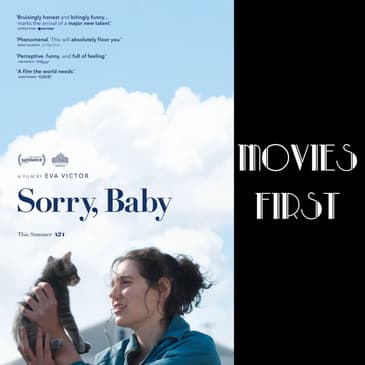
The episode highlights the emotional depth of the film, particularly a gripping scene where Agnes hyperventilates in her car, capturing the rawness of her struggles. Chris and Jessica explore the film's unique ability to balance serious themes of identity, sexuality, and trauma with moments of humor, emphasizing how Victor skillfully weaves these elements into everyday interactions. The supporting cast, including John Carroll Lynch as the empathetic Pete and Lucas Hedges as Agnes's neighbor Gavin, further elevates the film, bringing warmth and authenticity to their roles.
Listeners will appreciate how *Sorry Baby* transforms ordinary experiences into extraordinary storytelling, showcasing the subtle changes in Agnes's character over time. Chris and Jessica commend the film for its confident narrative structure and its ability to resonate with audiences on a profound level, marking it as a significant contribution to independent cinema. With a solid rating of 8.5 out of 10, *Sorry Baby* stands out as a vital voice in filmmaking, reminding us of the power of intimate and honest storytelling.
https://www.bitesz.com/podcast/movies-first
Become a supporter of this podcast: https://www.spreaker.com/podcast/movies-first.
To access the Movies First reviews archive visit our website at www.bitesz.com/podcast/movies-first
00:00:00 --> 00:00:01 Chris: Independent films often get labeled as
00:00:01 --> 00:00:04 pretentious or inaccessible. But
00:00:04 --> 00:00:06 every once in a while, a movie comes along
00:00:06 --> 00:00:08 that completely shatters those assumptions.
00:00:09 --> 00:00:11 Today we're exploring one that's changing how
00:00:11 --> 00:00:13 we think about debut features.
00:00:13 --> 00:00:16 Jessica: That's quite a statement. What makes this one
00:00:16 --> 00:00:16 so different?
00:00:17 --> 00:00:20 Chris: Well, it's this remarkable film called
00:00:20 --> 00:00:23 Sorry Baby. And what's fascinating is
00:00:23 --> 00:00:26 how the director, Eva Victor, manages to
00:00:26 --> 00:00:28 wear multiple hats. She wrote,
00:00:28 --> 00:00:31 directed and stars in it.
00:00:31 --> 00:00:34 You know how first time filmmakers often try
00:00:34 --> 00:00:37 too hard. This one just flows
00:00:37 --> 00:00:39 naturally. Hmm.
00:00:39 --> 00:00:42 Jessica: Uh, tell me more about how she balances all
00:00:42 --> 00:00:43 those roles.
00:00:43 --> 00:00:46 Chris: So the film follows Agnes, Victor's character
00:00:46 --> 00:00:49 in this quiet university town. And it's
00:00:49 --> 00:00:51 structured in these incredibly clever
00:00:51 --> 00:00:54 chapters with titles like the Year with the
00:00:54 --> 00:00:56 Baby and get this, the
00:00:56 --> 00:00:59 Year with the Good Sandwich. But what's
00:00:59 --> 00:01:01 really interesting is how it weaves between
00:01:01 --> 00:01:04 present day and flashbacks without feeling
00:01:04 --> 00:01:04 forced.
00:01:05 --> 00:01:07 Jessica: You know what's fascinating about that kind
00:01:07 --> 00:01:10 of narrative structure? It can either make or
00:01:10 --> 00:01:11 break a film completely.
00:01:12 --> 00:01:15 Chris: Exactly right. And here's where Victor shows
00:01:15 --> 00:01:18 her genius. She uses these chapters
00:01:18 --> 00:01:21 to explore Agnes's relationship with her best
00:01:21 --> 00:01:24 friend Liddy, played by Naomi Ackey, who's
00:01:24 --> 00:01:27 moved to New York. There's this, well, this
00:01:27 --> 00:01:29 palpable sense of distance growing between
00:01:29 --> 00:01:30 them that just hits you in the gut.
00:01:31 --> 00:01:33 Jessica: That kind of friendship evolution must
00:01:33 --> 00:01:34 resonate with a lot of viewers.
00:01:35 --> 00:01:37 Chris: Oh man. Especially when you see how it
00:01:37 --> 00:01:40 intersects with the academic drama. Like
00:01:40 --> 00:01:42 Agnes becomes a professor at her university.
00:01:42 --> 00:01:45 But there's this other character, Natasha,
00:01:45 --> 00:01:48 who's absolutely seething because she wanted
00:01:48 --> 00:01:50 the position. And then boom.
00:01:50 --> 00:01:53 Natasha drops this revelation that just rocks
00:01:53 --> 00:01:54 Agnes's world.
00:01:55 --> 00:01:56 Jessica: So how does the film handle these intense
00:01:56 --> 00:01:57 emotional moments?
00:01:58 --> 00:02:00 Chris: Well, there's this incredible scene where
00:02:00 --> 00:02:02 Agnes is literally hyperventilating in her
00:02:02 --> 00:02:05 car, has to pull over and, um,
00:02:05 --> 00:02:08 it's just raw and real. And then there's this
00:02:08 --> 00:02:10 jury selection scene that somehow manages to
00:02:10 --> 00:02:13 be both deeply serious and slightly amusing.
00:02:13 --> 00:02:15 You know, like those weird moments in real
00:02:15 --> 00:02:17 life where everything feels absurd.
00:02:18 --> 00:02:19 Jessica: That's such a delicate balance to achieve.
00:02:20 --> 00:02:22 Finding humor in serious moments without
00:02:22 --> 00:02:23 undermining them.
00:02:24 --> 00:02:26 Chris: Right. And Victor nails it.
00:02:26 --> 00:02:29 She's exploring sexuality, identity and
00:02:29 --> 00:02:32 trauma, but never in a heavy handed way.
00:02:32 --> 00:02:35 It's all woven into these small everyday
00:02:35 --> 00:02:37 moments that just land.
00:02:38 --> 00:02:40 Jessica: Let's talk about the supporting cast.
00:02:40 --> 00:02:42 Sometimes they can really elevate this kind
00:02:42 --> 00:02:43 of intimate story.
00:02:44 --> 00:02:47 Chris: Oh man, they're phenomenal. Naomi
00:02:47 --> 00:02:49 Aki as Liddy brings this incredible warmth
00:02:49 --> 00:02:52 and strength to every scene. And there's this
00:02:52 --> 00:02:54 character, Pete, played by John Carroll
00:02:54 --> 00:02:57 Lynch. He appears as this good Samaritan
00:02:57 --> 00:02:59 figure. And his performance is so authentic,
00:02:59 --> 00:03:01 it almost feels documentary.
00:03:01 --> 00:03:04 Jessica: Like that kind of naturalistic acting can be
00:03:04 --> 00:03:06 harder to pull off than more dramatic
00:03:06 --> 00:03:06 performances.
00:03:08 --> 00:03:10 Chris: Exactly. And what's fascinating is how
00:03:10 --> 00:03:12 even Agnes's casual relationship with her
00:03:12 --> 00:03:15 neighbor Gavin, played by Lucas Hedges, feels
00:03:15 --> 00:03:18 completely true to life. There's no
00:03:18 --> 00:03:20 manufactured drama, just real human
00:03:20 --> 00:03:21 interaction.
00:03:22 --> 00:03:23 Jessica: You know what makes these kinds of films
00:03:23 --> 00:03:26 stand out? When they can make the
00:03:26 --> 00:03:28 ordinary feel extraordinary.
00:03:29 --> 00:03:32 Chris: That's exactly what this film does. Like the
00:03:32 --> 00:03:34 way it handles time passing. You see how
00:03:34 --> 00:03:36 events have shaped Agnes through subtle
00:03:36 --> 00:03:39 changes in her behavior, her interactions.
00:03:40 --> 00:03:42 Victor's performance is so layered that each
00:03:42 --> 00:03:44 viewing reveals something new.
00:03:44 --> 00:03:47 Jessica: Well, it sounds like this film is really
00:03:47 --> 00:03:49 pushing boundaries in terms of storytelling.
00:03:49 --> 00:03:52 Chris: And here's the thing, it's not trying to be
00:03:52 --> 00:03:54 experimental for the sake of it. The
00:03:54 --> 00:03:56 structure, the performances, the way it
00:03:56 --> 00:03:59 handles complex themes, it all serves the
00:03:59 --> 00:04:01 story. It's like Victor understood that
00:04:01 --> 00:04:04 sometimes the quietest stories can speak
00:04:04 --> 00:04:05 the loudest.
00:04:05 --> 00:04:07 Jessica: That's quite remarkable for a debut feature
00:04:08 --> 00:04:10 to have that level of confidence and
00:04:10 --> 00:04:10 restraint.
00:04:12 --> 00:04:13 Chris: You know what's really going to be
00:04:13 --> 00:04:16 interesting? Seeing what Victor
00:04:16 --> 00:04:19 does next. Because this film, it's
00:04:19 --> 00:04:21 not just good for a first feature, it's good
00:04:21 --> 00:04:24 period. It's the kind of debut that makes
00:04:24 --> 00:04:26 you excited about the future of independent
00:04:26 --> 00:04:26 cinema.
00:04:27 --> 00:04:29 Jessica: Sounds like we might be witnessing the
00:04:29 --> 00:04:31 emergence of a significant new voice in
00:04:31 --> 00:04:31 filmmaking.
00:04:32 --> 00:04:35 Chris: Absolutely right. And in a landscape where
00:04:35 --> 00:04:36 everything seems to be getting bigger and
00:04:36 --> 00:04:39 louder, it's refreshing to see someone
00:04:39 --> 00:04:41 succeed by trusting in the power of intimate,
00:04:41 --> 00:04:44 honest storytelling. That's what makes
00:04:45 --> 00:04:47 Sorry Baby not just a great film, but an
00:04:47 --> 00:04:50 important one. We're giving Sorry Baby a
00:04:50 --> 00:04:52 score of 8.5 out of 10.
00:04:52 --> 00:04:54 Voice Over Guy: You've been listening to Movies First
00:04:55 --> 00:04:57 available. at Apple Podcasts, Spotify,
00:04:58 --> 00:05:00 iHeartRadio or your favourite podcast
00:05:00 --> 00:05:02 player. You can also stream on
00:05:02 --> 00:05:05 demand at bitesz.com this has been another
00:05:05 --> 00:05:08 quality podcast production from bitesz.com