
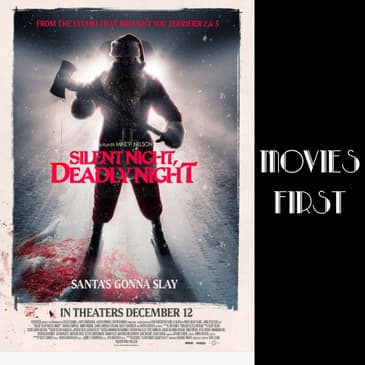
Listeners will be captivated by the film's departure from typical slasher tropes, focusing instead on the psychological depth of its characters. Chris and Jessica discuss how the romantic subplot with Pamela adds layers of tragedy, as viewers watch Billy's potential path to redemption unravel amidst his descent into chaos. They reflect on the film's emphasis on mental health and the long-lasting effects of childhood experiences, contrasting it with the original 1984 version known for its shock value.
The hosts highlight the film's visual storytelling, juxtaposing the cheerful holiday setting with dark events that unfold, creating a powerful atmosphere that resonates with audiences. They draw connections to a broader tradition of subversive Christmas films, noting how this version elevates the genre by exploring themes of trauma and control through the symbolic Santa suit.
As they wrap up the discussion, Chris and Jessica emphasize the film's challenge to conventional horror and holiday narratives, illustrating that even the darkest tales can offer profound insights into human nature and the complexities of trauma. With a score of 7 out of 10, this episode invites listeners to reconsider their perceptions of horror films and the deeper meanings they can convey.
https://www.bitesz.com/podcast/movies-first
Become a supporter of this podcast: https://www.spreaker.com/podcast/movies-first.
To access the Movies First reviews archive visit our website at www.bitesz.com/podcast/movies-first
To access the Movies First reviews archive visit our website at www.bitesz.com/podcast/movies-first
This episode includes AI-generated content.
00:00:00 --> 00:00:02 Chris: Horror movies have this incredible power to
00:00:02 --> 00:00:04 transform our cherished symbols into
00:00:04 --> 00:00:06 nightmares. And nowhere is that more evident
00:00:06 --> 00:00:09 than in what happens when filmmakers get
00:00:09 --> 00:00:10 their hands on Santa Claus.
00:00:11 --> 00:00:13 Jessica: Looking at this reimagining of Silent Night,
00:00:13 --> 00:00:16 Deadly Night, it's fascinating how they've
00:00:16 --> 00:00:18 built such a complex psychological thriller
00:00:18 --> 00:00:20 around a figure that normally represents pure
00:00:20 --> 00:00:21 joy in giving.
00:00:22 --> 00:00:24 Chris: You know what really sets this apart from
00:00:24 --> 00:00:27 typical slasher films? The way they
00:00:27 --> 00:00:29 handle Billy Chapman's origin story.
00:00:29 --> 00:00:32 Here's this 8 year old kid who witnesses his
00:00:32 --> 00:00:35 parents being murdered by someone in a Santa
00:00:35 --> 00:00:37 suit. That's the kind of trauma that
00:00:37 --> 00:00:39 completely rewires a person's brain.
00:00:41 --> 00:00:43 Jessica: And the film really dives deep into how that
00:00:43 --> 00:00:46 childhood trauma manifests in adult Billy,
00:00:46 --> 00:00:48 doesn't it? The addition of Charlie,
00:00:48 --> 00:00:50 this voice in his head, adds such an
00:00:50 --> 00:00:52 interesting psychological layer.
00:00:53 --> 00:00:55 Chris: Well, that's exactly what makes this more
00:00:55 --> 00:00:57 than just another holiday horror film.
00:00:58 --> 00:01:00 Charlie becomes this sort of twisted moral
00:01:00 --> 00:01:03 compass for Billy. Like imagine,
00:01:03 --> 00:01:05 having your conscience actually pushing you
00:01:05 --> 00:01:07 toward violence instead of away from it.
00:01:08 --> 00:01:10 Jessica: The m way Billy tries to maintain some
00:01:10 --> 00:01:12 semblance of normalcy while struggling with
00:01:12 --> 00:01:14 these violent urges is pretty compelling.
00:01:15 --> 00:01:17 Getting that job at the store, trying to
00:01:17 --> 00:01:19 build a relationship with Pamela.
00:01:20 --> 00:01:20 Right.
00:01:21 --> 00:01:23 Chris: And speaking of Pamela, the romantic subplot
00:01:23 --> 00:01:25 adds this whole other dimension of tragedy.
00:01:26 --> 00:01:29 Here's this potential path to redemption, but
00:01:29 --> 00:01:30 we're watching it unfold while knowing
00:01:30 --> 00:01:32 Billy's already started his killing spree.
00:01:33 --> 00:01:35 It's like watching a train wreck in slow
00:01:35 --> 00:01:35 motion.
00:01:36 --> 00:01:38 Jessica: So what do you make of how they've updated
00:01:38 --> 00:01:41 this from the 1984 original?
00:01:41 --> 00:01:43 It seems like they've really emphasized the
00:01:43 --> 00:01:46 psychological aspects over pure shock value.
00:01:48 --> 00:01:50 Chris: Oh, man. That's exactly what makes this
00:01:50 --> 00:01:52 version stand out. Instead of just going for
00:01:52 --> 00:01:55 the gore, they've created this complex study
00:01:55 --> 00:01:57 of how trauma can echo through someone's
00:01:57 --> 00:01:59 entire life. The original was controversial
00:01:59 --> 00:02:01 for its violence, but this one's actually
00:02:01 --> 00:02:03 trying to say something about mental health
00:02:03 --> 00:02:05 and the impact of childhood experiences.
00:02:06 --> 00:02:08 Jessica: The visual contrast between the cheerful
00:02:08 --> 00:02:10 holiday setting and the dark events unfolding
00:02:11 --> 00:02:13 create such a powerful atmosphere too.
00:02:14 --> 00:02:16 Chris: You know what's really interesting? This film
00:02:16 --> 00:02:18 actually fits into this larger tradition of
00:02:19 --> 00:02:21 subversive Christmas movies like
00:02:21 --> 00:02:24 We've Got Home Alone, with its surprisingly
00:02:24 --> 00:02:27 violent undertones and Bad Santa pushing
00:02:27 --> 00:02:29 boundaries. But this takes that subversion to
00:02:29 --> 00:02:30 an entirely different level.
00:02:31 --> 00:02:33 Jessica: Well, the way they use the Santa suit as a
00:02:33 --> 00:02:36 symbol of both trauma and power is pretty
00:02:36 --> 00:02:38 brilliant. It's like Billy's trying to
00:02:38 --> 00:02:40 reclaim control through this twisted version
00:02:40 --> 00:02:41 of the figure that destroyed his life.
00:02:42 --> 00:02:45 Chris: And let's talk about how Mark Acheson's voice
00:02:45 --> 00:02:47 performance as Charlie adds this whole other
00:02:47 --> 00:02:50 dimension. The way he delivers those lines
00:02:50 --> 00:02:52 makes you feel like you're actually inside
00:02:52 --> 00:02:54 Billy's fractured psyche.
00:02:54 --> 00:02:56 Jessica: The father, daughter relationship between
00:02:56 --> 00:02:58 Pamela and Mr. Sims really emphasizes what
00:02:58 --> 00:03:01 Billy lost, doesn't it? It's like this
00:03:01 --> 00:03:03 constant reminder of the normal life he could
00:03:03 --> 00:03:04 have had.
00:03:04 --> 00:03:06 Chris: That's what makes the horror so effective
00:03:06 --> 00:03:09 here. It's not just about the kills.
00:03:09 --> 00:03:11 It's about understanding how someone can be
00:03:11 --> 00:03:13 shaped by their experiences in such
00:03:13 --> 00:03:16 devastating ways. The film really
00:03:16 --> 00:03:18 forces us to think about how trauma can
00:03:18 --> 00:03:19 ripple through generations.
00:03:20 --> 00:03:22 Jessica: Looking toward the future of horror films, do
00:03:22 --> 00:03:24 you think we'll see more of these
00:03:24 --> 00:03:26 psychological approaches to traditional
00:03:26 --> 00:03:27 slasher formats?
00:03:28 --> 00:03:30 Chris: Well, I think this film shows there's
00:03:30 --> 00:03:32 definitely an appetite for horror that goes
00:03:32 --> 00:03:35 deeper than surface level scares. When you
00:03:35 --> 00:03:37 combine the visceral thrills of a slasher
00:03:37 --> 00:03:40 film with genuine psychological insight, you
00:03:40 --> 00:03:42 get something that really sticks with
00:03:42 --> 00:03:44 audiences. It's like holding up a dark mirror
00:03:44 --> 00:03:46 to society's collective trauma.
00:03:46 --> 00:03:48 Jessica: The way they've managed to balance the horror
00:03:48 --> 00:03:50 elements with this deeper exploration of
00:03:50 --> 00:03:52 mental health issues really sets a new
00:03:52 --> 00:03:54 standard for the genre.
00:03:54 --> 00:03:57 Chris: You know, as we wrap this up, I think what's
00:03:57 --> 00:03:59 most striking about this film is how it
00:03:59 --> 00:04:02 challenges our assumptions about both horror
00:04:02 --> 00:04:05 movies and holiday films. It shows that even
00:04:05 --> 00:04:07 the darkest stories can have something
00:04:07 --> 00:04:10 meaningful to say about human nature and the
00:04:10 --> 00:04:13 way we process trauma. So,
00:04:13 --> 00:04:15 summing up clearly, it won't be
00:04:15 --> 00:04:18 everyone's cup of tea. Still, for what it
00:04:18 --> 00:04:20 is, the film has merit. And that has
00:04:20 --> 00:04:22 everything to do with the script. In the
00:04:22 --> 00:04:25 first instance. Rated MA it scores a
00:04:25 --> 00:04:26 7 out of 10.
00:04:27 --> 00:04:29 Voice Over Guy: You've been listening to movies first
00:04:29 --> 00:04:32 available at Apple Podcasts, Spotify,
00:04:32 --> 00:04:35 iHeartRadio Radio, or your favorite podcast
00:04:35 --> 00:04:36 player. You can also stream
00:04:36 --> 00:04:38 ondemand@bytes.com.
00:04:38 --> 00:04:40 Chris: This has been another quality podcast
00:04:40 --> 00:04:42 production from bytes. Com.