
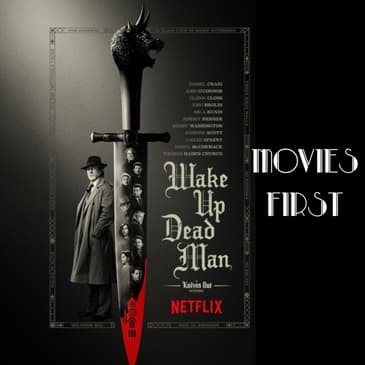
Listeners will be captivated as Chris and Jessica discuss the power dynamics at play, particularly with Josh Brolin's Monsignor Wicks, who runs the parish like a personal empire. They highlight the film's ensemble cast, featuring Glenn Close, Jeremy Renner, Kerry Washington, and others, creating a rich tapestry of characters that embody various forms of suffering and redemption.
The episode also examines how director Rian Johnson masterfully uses the church setting to delve into themes of faith, doubt, and collective guilt, especially with the murder occurring in front of a congregation that becomes both witnesses and suspects. Chris and Jessica reflect on the clever symbolism and the tension brought forth by Daniel Craig's Benoit Blanc, navigating the intersection of earthly justice and divine judgment.
With a score of 8 out of 10, this episode invites listeners to ponder the complex layers of morality, redemption, and the human condition, all while enjoying the sophisticated mystery and dark humor that the Knives Out series is known for.
https://www.bitesz.com/podcast/movies-first
Become a supporter of this podcast: https://www.spreaker.com/podcast/movies-first.
To access the Movies First reviews archive visit our website at www.bitesz.com/podcast/movies-first
To access the Movies First reviews archive visit our website at www.bitesz.com/podcast/movies-first
This episode includes AI-generated content.
00:00:00 --> 00:00:02 Chris: Murder mysteries in churches are nothing new.
00:00:02 --> 00:00:05 But what if the priest himself was an ex
00:00:05 --> 00:00:07 boxer with a history of violence?
00:00:08 --> 00:00:10 That's the fascinating premise behind the
00:00:10 --> 00:00:13 latest Knives out film that's got everyone
00:00:13 --> 00:00:14 talking.
00:00:15 --> 00:00:17 Jessica: The setting alone is brilliant. Our lady of
00:00:17 --> 00:00:20 Perpetual Fortitude. Even the name drips
00:00:20 --> 00:00:22 with dark irony when you consider what
00:00:22 --> 00:00:24 happens within those hallowed walls.
00:00:25 --> 00:00:27 Chris: You know what's really compelling about this
00:00:27 --> 00:00:29 setup? Josh o' Connor plays Father
00:00:29 --> 00:00:32 Duplentice, a priest who literally had to
00:00:32 --> 00:00:34 face a religious tribunal for punching a
00:00:34 --> 00:00:36 deacon. Talk about carrying your past
00:00:36 --> 00:00:37 sins with you.
00:00:38 --> 00:00:41 Jessica: Hmm. And then you've got Josh Brolin as
00:00:41 --> 00:00:44 Monsignor Wicks, basically running the parish
00:00:44 --> 00:00:46 like his personal kingdom. The power
00:00:46 --> 00:00:48 dynamic there must be incredible to watch.
00:00:49 --> 00:00:52 Chris: Well, what's fascinating is how Johnson uses
00:00:52 --> 00:00:54 this religious setting to explore themes of
00:00:54 --> 00:00:57 power and corruption. Monsignor Wickes meets
00:00:57 --> 00:00:59 his end during a service. You couldn't ask
00:00:59 --> 00:01:01 for a more symbolic moment of divine
00:01:01 --> 00:01:02 intervention.
00:01:03 --> 00:01:05 Jessica: Speaking of symbolism, the cast they've
00:01:05 --> 00:01:07 assembled is like a perfect congregation of
00:01:08 --> 00:01:10 Glenn Close as the all seeing church
00:01:10 --> 00:01:13 administrator, Jeremy Renner as this
00:01:13 --> 00:01:15 mysterious, disgruntled doctor.
00:01:16 --> 00:01:18 Chris: And don't forget Kerry Washington as this
00:01:18 --> 00:01:20 tightly wound lawyer paired with Darryl
00:01:20 --> 00:01:22 McCormick as her failed politician
00:01:22 --> 00:01:25 stepbrother. It's like Johnson is creating
00:01:25 --> 00:01:28 this microcosm of society within the church
00:01:28 --> 00:01:28 walls.
00:01:29 --> 00:01:31 Jessica: That's exactly what makes these Knives out
00:01:31 --> 00:01:34 films so compelling, the way they use these
00:01:34 --> 00:01:36 enclosed spaces to examine larger social
00:01:36 --> 00:01:39 issues. How does that play out in a religious
00:01:39 --> 00:01:39 setting?
00:01:40 --> 00:01:43 Chris: Well, you've got this fascinating
00:01:43 --> 00:01:45 intersection of faith and doubt.
00:01:46 --> 00:01:48 Think about it. Andrew Scott plays a
00:01:48 --> 00:01:51 struggling author. Cailee Spaeny is a
00:01:51 --> 00:01:53 disabled cellist. And Thomas Hayden
00:01:53 --> 00:01:56 Church is this groundskeeper named Samson.
00:01:57 --> 00:01:58 Each character seems to represent different
00:01:58 --> 00:02:00 forms of suffering or redemption.
00:02:01 --> 00:02:04 Jessica: Oh, and bringing Daniel Craig's Benoit Blanc
00:02:04 --> 00:02:06 into a religious setting, that's gotta create
00:02:06 --> 00:02:08 some interesting tensions between earthly
00:02:08 --> 00:02:09 justice and divine judgment.
00:02:10 --> 00:02:12 Chris: You know what's really clever about this
00:02:12 --> 00:02:15 setup? The murder happens during a service,
00:02:15 --> 00:02:18 which means everyone was present, everyone
00:02:18 --> 00:02:21 was watching, and yet somehow this
00:02:21 --> 00:02:24 crime still occurred. It's like
00:02:24 --> 00:02:25 Johnson is playing with the idea of
00:02:25 --> 00:02:26 collective guilt.
00:02:27 --> 00:02:29 Jessica: That must make Mila Kunis's job as police
00:02:29 --> 00:02:32 chief particularly challenging. Investigating
00:02:32 --> 00:02:34 a crime where the entire congregation are
00:02:34 --> 00:02:36 both witnesses and suspects.
00:02:36 --> 00:02:38 Chris: And let's talk about how this fits into the
00:02:38 --> 00:02:41 larger Knives out universe. We've gone from
00:02:41 --> 00:02:44 a family estate to a Greek island and now to
00:02:44 --> 00:02:47 this small town church. Each setting brings
00:02:47 --> 00:02:49 its own unique moral complications.
00:02:50 --> 00:02:52 Jessica: So what do you think about the decision to
00:02:52 --> 00:02:53 give it both a theatrical release and a
00:02:53 --> 00:02:56 Netflix run? That seems like a vote of
00:02:56 --> 00:02:57 confidence in the final product.
00:02:58 --> 00:03:00 Chris: Well, it makes perfect sense when you
00:03:00 --> 00:03:03 consider the visual elements at play. These
00:03:03 --> 00:03:06 Gothic church spaces, the religious imagery,
00:03:06 --> 00:03:09 the way Johnson typically uses architecture
00:03:09 --> 00:03:12 to frame his mysteries. It's definitely
00:03:12 --> 00:03:14 something that deserves to be seen on the big
00:03:14 --> 00:03:14 screen first.
00:03:15 --> 00:03:17 Jessica: The religious symbolism must add such rich
00:03:17 --> 00:03:20 layers to the mystery. Even the title
00:03:20 --> 00:03:23 Wake Up Dead man has these haunting biblical
00:03:23 --> 00:03:24 undertones.
00:03:24 --> 00:03:27 Chris: Exactly. And that's what makes this
00:03:27 --> 00:03:29 potentially the most complex Knives out yet.
00:03:30 --> 00:03:32 It's not just about solving a murder. It's
00:03:32 --> 00:03:35 about exploring faith, redemption, and the
00:03:35 --> 00:03:38 price of forgiveness. When your victim is a
00:03:38 --> 00:03:41 religious leader and your prime suspect is a
00:03:41 --> 00:03:44 priest with a violent past, every
00:03:44 --> 00:03:45 clue carries extra weight.
00:03:46 --> 00:03:48 Jessica: Sounds like Johnson has managed to maintain
00:03:48 --> 00:03:50 that perfect balance between sophisticated
00:03:50 --> 00:03:53 mystery and dark comedy that made the first
00:03:53 --> 00:03:55 two films so successful.
00:03:56 --> 00:03:58 Chris: And that's really the genius of these films.
00:03:58 --> 00:04:01 They work on multiple levels. You can enjoy
00:04:01 --> 00:04:04 them as clever whodunits, but they also offer
00:04:04 --> 00:04:07 these deeper explorations of human nature and
00:04:07 --> 00:04:10 social dynamics. Setting this one
00:04:10 --> 00:04:12 in a church just adds another fascinating
00:04:12 --> 00:04:15 layer to unpack. We're giving Wake
00:04:15 --> 00:04:18 Up Dead Man a knives out mystery. A score of
00:04:18 --> 00:04:19 8 out of 10.