
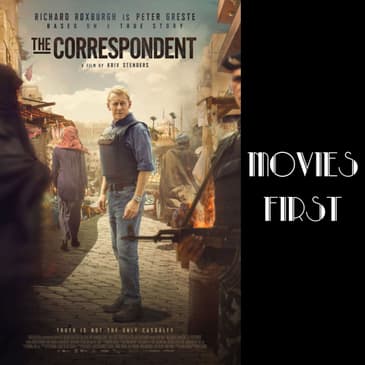
The episode highlights Richard Roxburgh's powerful portrayal of Greste, capturing the surreal and oppressive environment of imprisonment, where psychological warfare becomes just as formidable as physical confinement. We delve into the complex dynamics between Greste and his fellow journalists, particularly the tension with Fahmy, played by Julian Maroun, illustrating how extreme circumstances can strain even the strongest professional bonds.
Listeners will find the inclusion of Kate Peyton's tragic story particularly haunting, adding depth to Greste's narrative and emphasizing the dangers journalists face globally. The familial aspect of Greste's ordeal, with his brother Andrew and parents playing crucial roles, underscores the far-reaching impact of political imprisonments beyond the prison walls.
We also discuss the character of Alaa Abd El-Fattah, portrayed by Mojean Aria, whose wisdom and resilience provide a poignant reflection on resistance against oppression. The film serves as a stark reminder of the ongoing challenges to press freedom, with current statistics revealing hundreds of journalists imprisoned worldwide.
Scoring a compelling 9 out of 10, *The Correspondent* is not just a personal story but a universal call to action, emphasizing the critical importance of defending journalism as a cornerstone of democracy. Join us for an insightful discussion that will deepen your understanding of the precarious state of press freedom today!
https://www.bitesz.com/podcast/movies-first
Become a supporter of this podcast: https://www.spreaker.com/podcast/movies-first
To access the Movies First reviews archive visit our website at www.bitesz.com/podcast/movies-first
What happens when a routine Christmas assignment turns into four hundred days of hell. The story of journalist Peter Grest's imprisonment in Egypt challenges everything we think we know about press freedom in the modern world. The timing of his arrest in twenty thirteen is what really gets me. Just a few weeks of holiday coverage for Al Jazeera, and suddenly he's facing trumped up charges that could put him away for seven years. You know what's particularly chilling about this case. The Egyptian authorities basically criminalized journalism itself. They charged Grest and his colleagues with fabricating the truth, which is really just code for reporting things we don't like. And the way the correspondent portrays this through Richard Rocksburg's performance really brings home how surreal it must have felt. Here's this veteran journalist suddenly treated like an enemy of the state. Well, what's fascinating is how the film shows the psychological warfare at play. These weren't just physical prison walls. It was the constant uncertainty, the arbitrary rules, the isolation. And yet Grest managed to maintain his sanity through four hundred days of this psychological torture. The relationships between the three and prison journalists really tell another story entirely, don't they. The way they sometimes turned on each other under pressure. It's so human, right, and that's what makes this story so compelling. The tension between grest and Fami, played by Julian Maroon, shows how even the strongest professional bonds can crack under extreme pressure. But then you have these moments of connection, like the backgammon games with Baher Mohammad. Speaking of connections, the way they weave in Kate Peyton's story is particularly haunting. That two thousand and five incident in Mogadishu where she was killed while working with grest It adds this whole other layer of trauma to his experience. You know what's really interesting about that the film uses these memories of Peyton as a way to explore the broader danger's journalist's face, Like here's Greste in prison for doing his job while carrying the weight of having lost a colleague to violence in the field. The family element really grounds the whole story, doesn't it. His brother Andrew becoming his lifeline in Egypt, his parents flying in It shows how these political imprisonments ripple out far beyond the cell walls. And let's talk about that young activist Ala ab del Fatta, the way mojian Aria portrays him this wise beyond his year's figure, offering guidance while facing his own unjust imprisonment. It's like this mirror showing different facets of resistance. What do you think it says about the state of global journalism that cases like this are still happening today. Well, that's the thing. Gresta's case isn't some historical anomaly. According to the Committee to Protect Journalists, there were three hundred and sixty three journalists in prison worldwide as of December twenty twenty two. We're seeing similar tactics used in numerous countries to silence independent reporting. So if we look at the broader impact of this film, it's really about more than just one journalist's story exactly. It's about how quickly the machinery of state power can be turned against those who dare to question it. And you know what's particularly relevant, The role of international pressure in securing Gresta's release shows both the power and limitations of global advocacy. The way they portray the legal proceedings really drives that home, the absurdity of the evidence, the clear political motivations. And here's something that really stuck with me. Throughout his ordeal, Gresta never stopped being a journalist. He was analyzing, documenting, processing, everything that was happening to him. It's like his professional identity became both his armor and his purpose. That's such a powerful observation about resilience, how sometimes holding on to who you are is the key to survival. Looking toward the future, what the story really highlights is the ongoing battle for press freedom. Every time a journalist is imprisoned, it's not just about that individual, it's about the public's right to know the truth. Well, that's what makes this film so timely, even years after Grest's release. It's a warning about how fragile press freedom can be, even in our interconnected world. And perhaps that's the most crucial takeaway that defending journalism isn't just about protecting individual reporters. It's about preserving our collective right to understand what's really happening in the world around us. You've been listening to movies first available at Apple Podcasts, Spotify, iHeart Radio, or your favorite podcast player. You can also stream on demand at bytes dot com. This has been another quantity podcast production from nights dot com.