
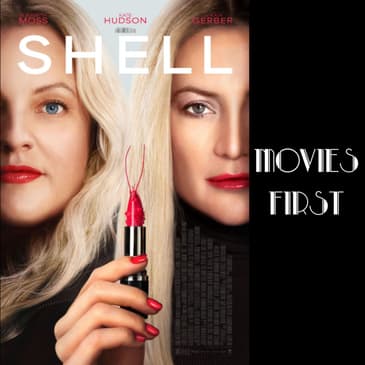
Listeners will find themselves reflecting on the film's portrayal of a wellness company, helmed by Kate Hudson’s character, who epitomizes the deceptive allure of eternal youth. The narrative highlights the absurdity of spending an average of $225,000 on beauty products over a lifetime, while showcasing the predatory nature of luxury wellness retreats that promise transformation at a steep price.
Chris and Jessica dissect the film's transition from psychological horror to schlock horror in its final act, questioning whether it missed a vital opportunity to address the genuine psychological distress associated with beauty standards. They emphasize the deliberate casting choices, with Moss and Hudson representing the struggle between authenticity and the manufactured perfection promoted by the wellness industry, now valued at $4.4 trillion globally.
The conversation touches on the societal pressures that render beauty a currency, illustrated poignantly through Samantha's psoriasis, which symbolizes her unmarketability in a cutthroat industry. With alarming statistics revealing that women with visible skin conditions are 30% less likely to secure public-facing roles, the hosts underscore the desperation that drives individuals to seek out dubious beauty treatments.
Ultimately, *Shell* serves as a cautionary tale about the systemic enforcement of beauty standards and the societal norms that make such treatments feel obligatory. While the film may falter in execution, its message resonates deeply, reflecting the terrifying reality of a culture that equates beauty with survival. With a score of 5.5 out of 10, this episode invites listeners to confront the real monsters lurking behind the veneer of beauty treatments and wellness culture.
https://www.bitesz.com/podcast/movies-first
Become a supporter of this podcast: https://www.spreaker.com/podcast/movies-first.
To access the Movies First reviews archive visit our website at www.bitesz.com/podcast/movies-first
To access the Movies First reviews archive visit our website at www.bitesz.com/podcast/movies-first
This episode includes AI-generated content.
00:00:00 --> 00:00:02 Chris: The beauty industry hit $430 billion in
00:00:02 --> 00:00:05 global sales last year. And yet a new film
00:00:05 --> 00:00:08 suggests this obsession with eternal youth
00:00:08 --> 00:00:10 might be killing us. Literally.
00:00:11 --> 00:00:13 The movie, Shell takes aim at our collective
00:00:13 --> 00:00:16 desperation to stay young. And wow, does
00:00:16 --> 00:00:18 it hit some uncomfortable truths.
00:00:19 --> 00:00:20 Jessica: You know what's fascinating about this
00:00:20 --> 00:00:23 timing. It's coming right after Demi Moore's
00:00:23 --> 00:00:26 the Substance, which also explores the dark
00:00:26 --> 00:00:28 side of beauty treatments. There's
00:00:28 --> 00:00:30 clearly something in the cultural zeitgeist
00:00:30 --> 00:00:31 right now.
00:00:32 --> 00:00:33 Chris: Well, that's exactly what caught my
00:00:33 --> 00:00:36 attention. How both films tap into this
00:00:36 --> 00:00:39 growing anxiety about aging and Shell
00:00:39 --> 00:00:41 really drives it home. With Elisabeth moss
00:00:41 --> 00:00:43 playing this 40 something actress who's
00:00:43 --> 00:00:45 basically being erased from Hollywood.
00:00:45 --> 00:00:48 Jessica: Hm. The way they handle her character's story
00:00:48 --> 00:00:51 is particularly brutal. Being overlooked for
00:00:51 --> 00:00:54 someone she used to babysit. That's like
00:00:54 --> 00:00:56 watching your own replacement being grown in
00:00:56 --> 00:00:56 real time.
00:00:57 --> 00:00:59 Chris: Oh, man. And here's where it gets really
00:00:59 --> 00:01:02 interesting. This wellness company, Shell,
00:01:02 --> 00:01:05 run by Kate Hudson's character, who's
00:01:05 --> 00:01:07 supposedly 68 but looks decades
00:01:07 --> 00:01:10 younger. It's like they're selling the
00:01:10 --> 00:01:12 impossible dream, right? Studies show the
00:01:12 --> 00:01:14 average American woman spends about
00:01:14 --> 00:01:17 $225 on face
00:01:17 --> 00:01:19 products alone over. Over her lifetime.
00:01:20 --> 00:01:22 Jessica: Well, that's a staggering number. And
00:01:22 --> 00:01:24 what's really telling is how the film
00:01:24 --> 00:01:27 portrays this wellness company as both savior
00:01:27 --> 00:01:30 and predator. Like M those luxury
00:01:30 --> 00:01:32 retreats that charge $10 a week for
00:01:32 --> 00:01:33 transformation.
00:01:34 --> 00:01:36 Chris: Exactly. And you know what makes this story
00:01:37 --> 00:01:40 so compelling? The protagonist actually
00:01:40 --> 00:01:42 gets what she wants. At first,
00:01:43 --> 00:01:45 Samantha starts looking better, feeling
00:01:45 --> 00:01:48 better, even lands this amazing role.
00:01:49 --> 00:01:51 But then, well, that's when things start
00:01:51 --> 00:01:52 getting really dark.
00:01:53 --> 00:01:55 Jessica: So what do you think about how they handled
00:01:55 --> 00:01:58 the horror elements? Because it seems like
00:01:58 --> 00:02:00 they might have lost their way in the final
00:02:00 --> 00:02:00 act.
00:02:02 --> 00:02:03 Chris: yeah. That's where things get complicated.
00:02:04 --> 00:02:06 Instead of sticking with the psychological
00:02:06 --> 00:02:08 horror of beauty standards, they apparently
00:02:08 --> 00:02:11 went full schlock horror. But here's
00:02:11 --> 00:02:14 what's interesting. Recent studies show that
00:02:14 --> 00:02:17 about 18% of people who get certain cosmetic
00:02:17 --> 00:02:20 procedures report experiencing serious
00:02:20 --> 00:02:21 psychological distress afterward.
00:02:22 --> 00:02:24 Jessica: The way you put that really highlights how
00:02:24 --> 00:02:26 they might have missed an opportunity to
00:02:26 --> 00:02:28 explore the real horror of beauty standards
00:02:28 --> 00:02:30 without resorting to supernatural elements.
00:02:31 --> 00:02:33 Chris: And let's talk about the casting choices.
00:02:33 --> 00:02:36 Because they're so deliberate, you've
00:02:36 --> 00:02:39 got Elisabeth Moss, known for these complex
00:02:39 --> 00:02:42 roles, playing against Kate Hudson as this
00:02:42 --> 00:02:45 wellness guru. It's like watching the
00:02:45 --> 00:02:47 battle between authenticity and
00:02:47 --> 00:02:49 manufactured perfection play out on screen.
00:02:50 --> 00:02:52 Jessica: Well, that's particularly relevant given how
00:02:52 --> 00:02:54 the wellness industry has exploded into a
00:02:54 --> 00:02:57 $4.4 trillion market globally.
00:02:57 --> 00:02:59 They're not just selling beauty anymore.
00:02:59 --> 00:03:00 They're selling optimization.
00:03:02 --> 00:03:03 Chris: You know what really strikes me about this
00:03:03 --> 00:03:05 whole story? The way it shows beauty as a
00:03:05 --> 00:03:08 form of currency, like Samantha's
00:03:08 --> 00:03:10 psoriasis becomes this physical manifestation
00:03:10 --> 00:03:13 of her unmarketability in Hollywood.
00:03:13 --> 00:03:16 And recent data shows that women with visible
00:03:16 --> 00:03:18 skin conditions are, 30% less likely to be
00:03:18 --> 00:03:20 hired for public facing roles.
00:03:21 --> 00:03:23 Jessica: That statistic is heartbreaking. And it
00:03:23 --> 00:03:25 really shows why someone might feel desperate
00:03:25 --> 00:03:27 enough to try anything, even something
00:03:27 --> 00:03:29 they're suspicious of.
00:03:29 --> 00:03:32 Chris: Right, and here's where Shell really nails
00:03:32 --> 00:03:34 something important. The way these beauty
00:03:34 --> 00:03:37 standards are systemically enforced. It's
00:03:37 --> 00:03:39 not just about individual choice when your
00:03:39 --> 00:03:41 entire career depends on looking a certain
00:03:41 --> 00:03:41 way.
00:03:42 --> 00:03:44 Jessica: The film seems to be suggesting that the real
00:03:44 --> 00:03:46 horror isn't in the treatment's side effects,
00:03:46 --> 00:03:48 but in the system that makes them feel
00:03:48 --> 00:03:49 necessary in the first place.
00:03:50 --> 00:03:53 Chris: Exactly. And even though the execution might
00:03:53 --> 00:03:55 be flawed, Shell is tapping into something
00:03:55 --> 00:03:58 very real. Studies show that women's
00:03:58 --> 00:04:01 peak earning potential typically hits around
00:04:01 --> 00:04:04 age 40, while men's continues to rise until
00:04:04 --> 00:04:07 55. The beauty industry isn't just
00:04:07 --> 00:04:09 selling products, it's selling survival.
00:04:10 --> 00:04:12 Jessica: That really puts the whole, beauty is pain
00:04:12 --> 00:04:15 saying in a different light, doesn't it?
00:04:16 --> 00:04:17 We're not just talking about physical
00:04:17 --> 00:04:18 discomfort anymore.
00:04:19 --> 00:04:21 Chris: Looking ahead, I think what makes Shell
00:04:21 --> 00:04:22 particularly relevant is how it's
00:04:22 --> 00:04:24 highlighting this collision between wellness
00:04:24 --> 00:04:27 culture and beauty standards. We're
00:04:27 --> 00:04:29 seeing this huge rise in tweakments among
00:04:29 --> 00:04:32 younger and younger people. The Average age
00:04:32 --> 00:04:34 for first time Botox users has dropped from
00:04:34 --> 00:04:37 35 to 21 in just the last
00:04:37 --> 00:04:37 decade.
00:04:38 --> 00:04:40 Jessica: Well, that's truly concerning, especially
00:04:40 --> 00:04:42 when you consider how these standards keep
00:04:42 --> 00:04:44 getting more and more extreme.
00:04:45 --> 00:04:47 Chris: And maybe that's ultimately what Shell is
00:04:47 --> 00:04:50 warning us about. Not just the dangers of
00:04:50 --> 00:04:52 beauty treatments gone wrong, but the horror
00:04:52 --> 00:04:55 of a society that makes them feel mandatory.
00:04:56 --> 00:04:58 Even if the film stumbles in its execution,
00:04:59 --> 00:05:01 that message feels more relevant than ever.
00:05:01 --> 00:05:04 Jessica: You know, sometimes an imperfect mirror still
00:05:04 --> 00:05:06 shows us exactly what we need to see.
00:05:07 --> 00:05:09 Chris: yeah, and in this case, what we're seeing
00:05:09 --> 00:05:11 might be scarier than any horror movie could
00:05:11 --> 00:05:14 show us. The real monster isn't in the
00:05:14 --> 00:05:16 treatment chair. It's in the society that put
00:05:16 --> 00:05:19 us there in the first place. Unfortunately,
00:05:19 --> 00:05:21 in the end, Shell doesn't live up to its
00:05:21 --> 00:05:23 promise as a movie. And we give it a score of
00:05:23 --> 00:05:25 five and a half out of ten.