
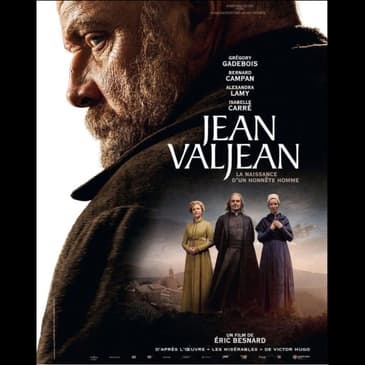
Chris and Jessica discuss how the film intricately portrays Valjean's backstory, revealing the emotional and physical toll of his 19 years in prison. They emphasize the layered performance by Gadabois, which captures Valjean's brokenness and vulnerability, making him a character you can't help but root for. The episode highlights the stark contrast between Valjean's desperate world and the Bishop's quiet strength, showcasing how understanding suffering can lead to radical acts of kindness.
The hosts appreciate the film's deliberate pacing, allowing viewers to fully absorb the emotional weight of each moment. They commend Eric Bernard's direction and Laurent Delon’s stunning cinematography, which together create an immersive atmosphere that enhances the storytelling. The haunting score by Christophe Julian is also noted for its ability to complement the film's emotional landscape without overpowering it.
Chris and Jessica also touch on the supporting characters, including the Bishop's sister and the maid, whose contrasting perspectives add depth to the narrative. They discuss how the maid's fear and suspicion juxtapose the Bishop's courage and kindness, highlighting the complex dynamics of compassion in a divided world.
With a score of 7.5 to 8 out of 10, this episode invites listeners to consider *Jean Valjean* not just as a companion piece to Les Miserables, but as a powerful story in its own right. Join Chris and Jessica as they reflect on this beautifully crafted film that resonates with themes of hope, redemption, and the enduring impact of kindness. Don’t forget to bring tissues—this one is bound to tug at your heartstrings.
https://www.bitesz.com/podcast/movies-first
Become a supporter of this podcast: https://www.spreaker.com/podcast/movies-first.
To access the Movies First reviews archive visit our website at www.bitesz.com/podcast/movies-first
To access the Movies First reviews archive visit our website at www.bitesz.com/podcast/movies-first
This episode includes AI-generated content.
00:00:00 --> 00:00:02 Chris: Okay, so here's something to think about.
00:00:02 --> 00:00:04 What if one act of kindness could completely
00:00:04 --> 00:00:07 change the course of someone's life? That's
00:00:07 --> 00:00:09 the question this film asks, and it's one of
00:00:09 --> 00:00:11 the most compelling stories I've seen in a
00:00:11 --> 00:00:11 long time.
00:00:12 --> 00:00:15 Jessica: That's such a powerful way to frame it. And
00:00:15 --> 00:00:16 when you think about Jean Valjean's story,
00:00:16 --> 00:00:18 it's almost hard to believe how much hinges
00:00:18 --> 00:00:21 on that one moment with the Bishop. It's like
00:00:21 --> 00:00:23 the entire trajectory of his life pivots in
00:00:23 --> 00:00:24 an instant.
00:00:24 --> 00:00:27 Chris: Exactly. The film really digs into that
00:00:27 --> 00:00:30 pivotal moment, but it also gives us so much
00:00:30 --> 00:00:32 more. It's not just about Valjean's
00:00:32 --> 00:00:34 transformation. It's about the years of
00:00:34 --> 00:00:36 suffering and anger that lead up to it.
00:00:37 --> 00:00:39 Gregory Getebois does such an incredible job
00:00:39 --> 00:00:42 of showing us who Valjean is before he
00:00:42 --> 00:00:43 becomes the man we know from Les Miserables.
00:00:43 --> 00:00:44 Um.
00:00:44 --> 00:00:47 Jessica: Oh, absolutely. Gadabois performance
00:00:47 --> 00:00:50 is so layered. You can see the toll that
00:00:50 --> 00:00:52 19 years in prison has taken on him.
00:00:52 --> 00:00:55 Physically, emotionally, mentally.
00:00:56 --> 00:00:59 He's not just angry, he's broken.
00:00:59 --> 00:01:01 And yet there's this glimmer of something
00:01:01 --> 00:01:04 deeper, something that makes you root for him
00:01:04 --> 00:01:05 even when he's at his lowest.
00:01:06 --> 00:01:08 Chris: And let's not forget how the film sets the
00:01:08 --> 00:01:11 stage for his release. It's December
00:01:11 --> 00:01:14 1815, and Valjean is walking into a
00:01:14 --> 00:01:17 world that doesn't want him. He's tired,
00:01:17 --> 00:01:20 hungry and completely alone. The
00:01:20 --> 00:01:23 way the villagers shun him, it's brutal.
00:01:23 --> 00:01:25 You can feel his desperation in every scene.
00:01:26 --> 00:01:28 Jessica: That desperation is so palpable.
00:01:29 --> 00:01:31 And then, just when it seems like he's hit
00:01:31 --> 00:01:33 rock bottom, he meets the Bishop.
00:01:34 --> 00:01:36 Bernard Kampon plays him with such quiet
00:01:36 --> 00:01:39 strength, doesn't he? There's this calm,
00:01:39 --> 00:01:41 almost otherworldly kindness to him that
00:01:41 --> 00:01:42 feels so genuine.
00:01:43 --> 00:01:45 Chris: Kampan is perfect in that role. The
00:01:45 --> 00:01:48 Bishop is such a fascinating character
00:01:48 --> 00:01:50 because his kindness isn't just surface
00:01:50 --> 00:01:52 level, it's deeply rooted in his own
00:01:52 --> 00:01:55 experiences. The film actually
00:01:55 --> 00:01:57 explores his backstory, which I thought was
00:01:57 --> 00:02:00 such a smart choice, losing the
00:02:00 --> 00:02:03 love of his life. It's a tragedy that shapes
00:02:03 --> 00:02:04 everything he does.
00:02:05 --> 00:02:07 Jessica: That backstory adds so much depth to his
00:02:07 --> 00:02:10 character. It's not just that he's kind,
00:02:10 --> 00:02:12 it's that he understands suffering in a way
00:02:12 --> 00:02:15 that most people don't. And that's why he's
00:02:15 --> 00:02:17 able to see past Valjean's anger and
00:02:17 --> 00:02:20 mistrust. He sees a man who's been broken by
00:02:20 --> 00:02:22 the world, but still has the potential for
00:02:22 --> 00:02:22 redemption.
00:02:23 --> 00:02:25 Chris: And that's what makes the Bishop's act of
00:02:25 --> 00:02:28 grace so powerful. When Valjean
00:02:28 --> 00:02:31 steals the silverware, you expect the bishop
00:02:31 --> 00:02:34 to react like everyone else, to condemn him,
00:02:34 --> 00:02:37 to call the authorities. But instead, he
00:02:37 --> 00:02:39 forgives him. And, uh, not only that, he
00:02:39 --> 00:02:41 gives him the candlesticks too. It's such a
00:02:41 --> 00:02:43 radical act of kindness.
00:02:43 --> 00:02:46 Jessica: It really is. And it's not just about
00:02:46 --> 00:02:48 forgiveness. It's about giving Valjean a
00:02:48 --> 00:02:51 second chance. The bishop is essentially
00:02:51 --> 00:02:54 saying, I believe in you, even if you don't
00:02:54 --> 00:02:57 believe in yourself. That's such a profound
00:02:57 --> 00:02:59 message, and you can see how much it shakes
00:02:59 --> 00:03:02 Valjean. He doesn't know how to process that
00:03:02 --> 00:03:03 kind of compassion.
00:03:04 --> 00:03:06 Chris: That moment is the turning point for Valjean.
00:03:06 --> 00:03:08 It's the spark that sets him on the path to
00:03:08 --> 00:03:11 becoming the man we know from Les Miserables.
00:03:11 --> 00:03:14 And the film handles it so beautifully. Eric
00:03:14 --> 00:03:16 Bernard, the writer and director, really
00:03:16 --> 00:03:19 takes his time with these characters. He lets
00:03:19 --> 00:03:21 the story breathe, which makes the emotional
00:03:21 --> 00:03:22 beats hit even harder.
00:03:23 --> 00:03:25 Jessica: The pacing is so deliberate, and it works so
00:03:25 --> 00:03:28 well. This isn't a film that rushes to get to
00:03:28 --> 00:03:31 the next plot point. It's a character study.
00:03:31 --> 00:03:33 And it gives you the time to really sit with
00:03:33 --> 00:03:34 these moments and feel their weight.
00:03:36 --> 00:03:38 It's not just about what happens. It's about
00:03:38 --> 00:03:40 how it happens and why it matters.
00:03:41 --> 00:03:44 Chris: And the atmosphere. Laurent Delon's
00:03:44 --> 00:03:47 cinematography is just stunning. The moody,
00:03:47 --> 00:03:50 almost oppressive visuals really drive home
00:03:50 --> 00:03:52 the bleakness of Valjean's world. It's like
00:03:52 --> 00:03:54 the setting becomes a character in its own
00:03:54 --> 00:03:56 right, adding to the weight of the story.
00:03:57 --> 00:04:00 Jessica: Totally. And Christophe Julian's score
00:04:00 --> 00:04:03 complements that perfectly. It's haunting,
00:04:03 --> 00:04:06 understated, but so effective. It
00:04:06 --> 00:04:09 never overpowers the story, it just enhances
00:04:09 --> 00:04:11 it, adding another layer of emotion.
00:04:12 --> 00:04:15 You feel the tension, the sorrow,
00:04:15 --> 00:04:18 the hope. It's all there in the music.
00:04:19 --> 00:04:22 Chris: Speaking of layers, the production design is
00:04:22 --> 00:04:24 incredible. Bertrand Seitz and Madeline
00:04:24 --> 00:04:27 Fontaine deserve so much credit for their
00:04:27 --> 00:04:29 work. The sets, the costumes,
00:04:30 --> 00:04:33 everything feels so authentic, so lived in.
00:04:33 --> 00:04:35 You can almost smell the dampness of the
00:04:35 --> 00:04:37 graveyard, feel the chill in the air.
00:04:38 --> 00:04:40 Jessica: That authenticity really immerses you in the
00:04:40 --> 00:04:43 story. It's not just a film you watch,
00:04:43 --> 00:04:46 it's a film you experience. And that's
00:04:46 --> 00:04:48 a testament to the entire team's dedication
00:04:48 --> 00:04:50 to bringing this world to life.
00:04:51 --> 00:04:52 Chris: Let's talk about the supporting characters
00:04:52 --> 00:04:55 for a moment. Isabelle Carre as the bishop's
00:04:55 --> 00:04:56 sister. What did you think?
00:04:57 --> 00:05:00 Jessica: I thought she was wonderful. Her character is
00:05:00 --> 00:05:02 so gentle, so accepting. She
00:05:02 --> 00:05:04 doesn't have a lot of dialogue, but her
00:05:04 --> 00:05:06 presence is felt in every scene she's in.
00:05:07 --> 00:05:09 She's like the quiet strength behind the
00:05:09 --> 00:05:10 Bishop.
00:05:10 --> 00:05:13 Chris: And then there's the maid, played by
00:05:13 --> 00:05:16 Alexandra Lamey. She's such an interesting
00:05:16 --> 00:05:19 character, fearful, resentful and not
00:05:19 --> 00:05:22 afraid to show it. Her dagger eyes, as the
00:05:22 --> 00:05:24 review put it, really do speak volumes.
00:05:25 --> 00:05:28 Jessica: She's a great foil to the Bishop. While he
00:05:28 --> 00:05:30 represents compassion and forgiveness, she
00:05:30 --> 00:05:33 represents fear and suspicion. And
00:05:33 --> 00:05:35 honestly, you can't blame her.
00:05:36 --> 00:05:38 Here's the strange man with a criminal past
00:05:38 --> 00:05:41 suddenly living under their roof. It's a lot
00:05:41 --> 00:05:41 to take in.
00:05:42 --> 00:05:45 Chris: That contrast between the bishop and the maid
00:05:46 --> 00:05:48 really highlights the radical nature of his
00:05:48 --> 00:05:51 actions. It's easy to be kind when
00:05:51 --> 00:05:53 there's no risk involved. But the
00:05:53 --> 00:05:56 Bishop's kindness comes with a
00:05:56 --> 00:05:59 cost. He's putting himself and his
00:05:59 --> 00:06:02 household in potential danger, and
00:06:02 --> 00:06:03 he does it anyway.
00:06:04 --> 00:06:05 Jessica: That's what makes his character so
00:06:05 --> 00:06:08 compelling. He's not just kind,
00:06:08 --> 00:06:11 he's courageous. And that courage
00:06:11 --> 00:06:13 inspires Valjean to find his own strength,
00:06:14 --> 00:06:15 his own humanity.
00:06:16 --> 00:06:18 Chris: It's a powerful message and one that feels
00:06:18 --> 00:06:21 especially relevant today. In a world
00:06:21 --> 00:06:24 that often feels so divided, so cynical,
00:06:25 --> 00:06:28 this film reminds us of the transformative
00:06:28 --> 00:06:29 power of compassion.
00:06:30 --> 00:06:31 Jessica: Couldn't agree more.
00:06:32 --> 00:06:35 So let's answer the big question. Is this
00:06:35 --> 00:06:36 movie worth seeing?
00:06:36 --> 00:06:39 Chris: Without a doubt. It's a beautifully crafted
00:06:39 --> 00:06:42 film with stellar performances, a gripping
00:06:42 --> 00:06:44 story and a message that resonates.
00:06:45 --> 00:06:48 If you're a fan of Les Miserables or just
00:06:48 --> 00:06:50 great storytelling in general, this is a
00:06:50 --> 00:06:51 must watch.
00:06:52 --> 00:06:55 Jessica: I'm with you on that. It's not just a
00:06:55 --> 00:06:57 companion piece to Les Miserables, it's a
00:06:57 --> 00:07:00 powerful story in its own right. I'd
00:07:00 --> 00:07:03 give it a solid 7.5 out of 10, maybe
00:07:03 --> 00:07:04 even an 8.
00:07:04 --> 00:07:06 Chris: Same here. It's the kind of film that stays
00:07:06 --> 00:07:09 with you long after the credits roll. And
00:07:09 --> 00:07:11 isn't that what great cinema is all about?
00:07:11 --> 00:07:12 Jessica: Absolutely.
00:07:13 --> 00:07:15 Well, there you have it, folks. If you're
00:07:15 --> 00:07:17 looking for a film that's thought provoking,
00:07:17 --> 00:07:19 emotional and beautifully made, this one's
00:07:19 --> 00:07:21 for you. Don't miss it.
00:07:21 --> 00:07:23 Chris: And hey, bring tissues. Trust me, you'll need
00:07:23 --> 00:07:23 them.
00:07:24 --> 00:07:26 Jessica: You've been listening to movies first
00:07:26 --> 00:07:29 available at Apple Podcasts, Spotify,
00:07:29 --> 00:07:32 iHeartRadio or your favourite podcast
00:07:32 --> 00:07:32 player.
00:07:32 --> 00:07:35 Chris: You can also stream on demand@bytes.com
00:07:35 --> 00:07:37 this has been another quality podcast
00:07:37 --> 00:07:40 production from bytes.com M.