
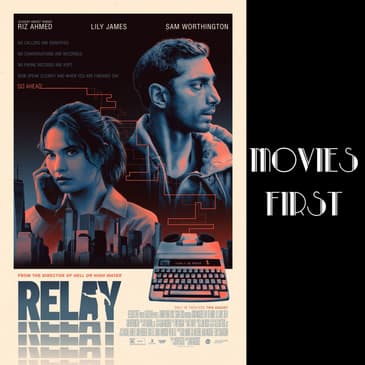
Jessica delves into the film's real-world parallels, particularly the biotechnology subplot involving modified wheat and hidden cancer risks, drawing unsettling comparisons to historical corporate cover-ups. The portrayal of Sarah’s transformation from a determined whistleblower to a desperate escapee powerfully illustrates the psychological toll these corporations can inflict. With statistics indicating that a staggering 85% of whistleblowers leave their industries, the film's depiction of surveillance and intimidation resonates deeply.
Listeners will appreciate the moral complexity surrounding Tom's character—whether he is aiding truth-tellers or merely facilitating corporate cover-ups. The slow-burn tension crafted by director David McKenzie culminates in a devastating moment that challenges viewers to reflect on the implications of silence and accountability. Riz Ahmed's performance adds depth, conveying a heavy burden of past deals while emphasizing the isolation inherent in this world.
With a commendable rating of 8 out of 10, *Relay* not only entertains but also provokes critical questions about the cost of truth in corporate America. Join Chris and Jessica as they dissect this timely film that challenges us to rethink the systems of silence and the true price of accountability in our modern landscape.
https://www.bitesz.com/podcast/movies-first
Become a supporter of this podcast: https://www.spreaker.com/podcast/movies-first
To access the Movies First reviews archive visit our website at www.bitesz.com/podcast/movies-first
00:00:00 --> 00:00:02 Chris: Corporate whistleblowers face an average 82%
00:00:02 --> 00:00:05 drop in lifetime earnings after coming
00:00:05 --> 00:00:08 forward. But what happens in the shadowy
00:00:08 --> 00:00:10 world where fixers negotiate their silence?
00:00:11 --> 00:00:14 The new thriller Relay pulls back the curtain
00:00:14 --> 00:00:16 on this hidden ecosystem.
00:00:16 --> 00:00:18 Jessica: You know what's fascinating about this film?
00:00:19 --> 00:00:21 It completely changed how I think about
00:00:21 --> 00:00:23 corporate accountability. The way they show
00:00:23 --> 00:00:25 this complex web between whistleblowers,
00:00:25 --> 00:00:28 corporations, and these mysterious middlemen
00:00:28 --> 00:00:29 is absolutely chilling.
00:00:30 --> 00:00:32 Chris: Well, what really got me was how they built
00:00:32 --> 00:00:35 Tom's character as this IT expert who's
00:00:35 --> 00:00:38 created this perfect system. The way he uses
00:00:38 --> 00:00:40 technology to maintain complete anonymity.
00:00:40 --> 00:00:40 Jessica: Hmm.
00:00:40 --> 00:00:43 Chris: Hm. It's like watching a master chess player
00:00:43 --> 00:00:45 set up an endgame before the first move.
00:00:46 --> 00:00:48 Jessica: That's exactly what makes it so compelling.
00:00:49 --> 00:00:51 The whole telephone relay service thing is
00:00:51 --> 00:00:53 brilliant, especially when you consider how
00:00:53 --> 00:00:56 many real world fixers probably use similar
00:00:56 --> 00:00:56 methods.
00:00:57 --> 00:00:59 Chris: Speaking of real world parallels, the
00:00:59 --> 00:01:02 biotechnology storyline about modified wheat
00:01:02 --> 00:01:05 with hidden cancer risks, uh, it feels
00:01:05 --> 00:01:07 eerily similar to some actual cases.
00:01:08 --> 00:01:10 Like, remember that whole thing with the
00:01:10 --> 00:01:11 tobacco companies in the 90s?
00:01:12 --> 00:01:13 Jessica: Oh, my gosh, yes.
00:01:15 --> 00:01:17 And the way they portrayed Sarah's journey
00:01:17 --> 00:01:19 from determined whistleblower to someone just
00:01:19 --> 00:01:21 desperate to escape really shows how these
00:01:21 --> 00:01:24 corporations systematically break people
00:01:24 --> 00:01:24 down.
00:01:25 --> 00:01:27 Chris: You know what's interesting? Studies show
00:01:27 --> 00:01:30 that about 85% of corporate whistleblowers
00:01:30 --> 00:01:33 end up leaving their industry entirely.
00:01:33 --> 00:01:36 The psychological warfare we see in the film,
00:01:36 --> 00:01:39 the surveillance, the intimidation, it's all
00:01:39 --> 00:01:40 documented in real cases.
00:01:41 --> 00:01:43 Jessica: Well, that makes Sam Worthington's character
00:01:43 --> 00:01:46 even more terrifying. Like, these aren't just
00:01:46 --> 00:01:49 movie villains. These types of corporate
00:01:49 --> 00:01:50 enforcers actually exist.
00:01:51 --> 00:01:54 Chris: Um, and what's really clever is
00:01:54 --> 00:01:56 how director David McKenzie uses that slow
00:01:56 --> 00:01:59 burn tension to build up to that devastating
00:01:59 --> 00:02:02 moment when Tom breaks his own protocols.
00:02:03 --> 00:02:05 It's like watching a perfect system crash in
00:02:05 --> 00:02:06 slow motion.
00:02:06 --> 00:02:08 Jessica: So what do you think about how they handled
00:02:08 --> 00:02:11 the moral complexity of Tom's role? Is he
00:02:11 --> 00:02:13 helping these whistleblowers or just enabling
00:02:13 --> 00:02:14 corporate cover ups?
00:02:15 --> 00:02:17 Chris: That's the brilliant tension at the heart of
00:02:17 --> 00:02:20 the film. Like these fixers operate in
00:02:20 --> 00:02:22 this gray area where they're simultaneously
00:02:22 --> 00:02:24 protecting and silencing truth tellers.
00:02:25 --> 00:02:27 The statistics show that only about 10% of
00:02:27 --> 00:02:29 corporate whistleblowers ever see their
00:02:29 --> 00:02:31 claims fully addressed.
00:02:31 --> 00:02:34 Jessica: The way they revealed Tom's backstory really
00:02:34 --> 00:02:36 adds another layer to that moral ambiguity,
00:02:37 --> 00:02:37 doesn't it?
00:02:38 --> 00:02:40 Chris: Absolutely fascinating how they waited to
00:02:40 --> 00:02:42 show us what drove him to become a fixer.
00:02:43 --> 00:02:45 And, and Riz Ahmed's performance, the way he
00:02:45 --> 00:02:48 conveys so much while saying so little. It's
00:02:48 --> 00:02:50 like watching someone carry the weight of
00:02:50 --> 00:02:52 every deal he's ever brokered.
00:02:52 --> 00:02:54 Jessica: Well, the visual storytelling really
00:02:54 --> 00:02:57 emphasizes that isolation too. Those
00:02:57 --> 00:02:59 contrasts between empty spaces and gleaming
00:02:59 --> 00:03:01 corporate towers. It's such a perfect
00:03:01 --> 00:03:02 metaphor.
00:03:03 --> 00:03:05 Chris: You know what really sticks with me is how
00:03:05 --> 00:03:08 relevant this feels right now. With major
00:03:08 --> 00:03:10 tech whistleblowers making headlines and
00:03:10 --> 00:03:12 debates about corporate accountability
00:03:12 --> 00:03:15 everywhere, Relay taps into something very
00:03:15 --> 00:03:18 real about power and silence in our modern
00:03:18 --> 00:03:18 world.
00:03:19 --> 00:03:21 Jessica: That's probably why it's resonating with so
00:03:21 --> 00:03:23 many people. It's asking these bigger
00:03:23 --> 00:03:24 questions about the price of truth in
00:03:24 --> 00:03:25 corporate America.
00:03:26 --> 00:03:28 Chris: And when you look at the technical aspects,
00:03:28 --> 00:03:31 the documentation, the protocols, the
00:03:31 --> 00:03:34 emphasis on following instructions. Exactly,
00:03:34 --> 00:03:37 it's shows how these systems of silence are
00:03:37 --> 00:03:39 engineered to be practically unbreakable
00:03:40 --> 00:03:42 until human connection breaks through.
00:03:43 --> 00:03:46 Jessica: Mhm. And that's what makes the finale so
00:03:46 --> 00:03:49 powerful. Watching all those carefully
00:03:49 --> 00:03:50 constructed walls come crashing down.
00:03:52 --> 00:03:54 Chris: Looking at the bigger picture, this film
00:03:54 --> 00:03:56 really challenges us to think about how we
00:03:56 --> 00:03:59 handle corporate accountability. Like
00:03:59 --> 00:04:01 are these compromise solutions actually
00:04:01 --> 00:04:04 making things worse in the long run? The
00:04:04 --> 00:04:05 data suggests that despite increased
00:04:05 --> 00:04:08 whistleblower protections, the number of
00:04:08 --> 00:04:10 corporate cover ups hasn't really decreased.
00:04:11 --> 00:04:12 Jessica: Well, that's what makes this such an
00:04:12 --> 00:04:15 important film for our time. It's not just
00:04:15 --> 00:04:17 entertaining, it's asking questions we really
00:04:17 --> 00:04:18 need to be thinking about.
00:04:19 --> 00:04:21 Chris: And that's why I think our 8 out of 10 rating
00:04:21 --> 00:04:24 is spot on. It's managed to take
00:04:24 --> 00:04:27 these complex issues about power, truth
00:04:27 --> 00:04:29 and human connection and wrap them in a
00:04:29 --> 00:04:31 thriller that keeps you thinking long after
00:04:31 --> 00:04:32 it's over.