
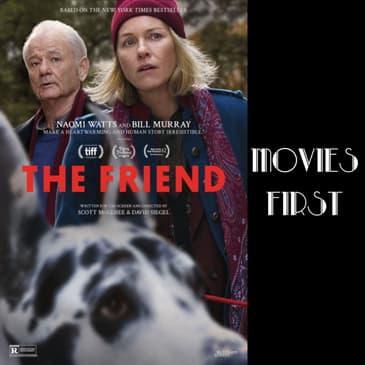
The discussion dives into the intricacies of Walter's relationships, including those with his ex-wife and daughter, and how these connections ripple through the narrative without overshadowing the central theme of grief. Jessica points out the clever use of Apollo's physicality as a metaphor for loss—his imposing presence demands attention and reflects the emotional weight that cannot be ignored. The challenges Iris faces in a no-pets apartment, particularly her interactions with the building's janitor, played by Felix Solis, add layers of tension and compassion, showcasing society's often clumsy response to grief.
Listeners will appreciate the authentic portrayal of the bond that develops between Iris and Apollo, rooted in shared loss and gradual understanding. The film’s production design mirrors this transformation, as Iris’s apartment evolves from a cat-friendly haven to a space that accommodates Apollo, symbolizing her own journey through grief. Chris and Jessica ponder why this story resonates so deeply, noting its universal themes of unexpected healing and the irony of finding solace in what we initially resist.
With a rating of 7 out of 10, this episode invites listeners to reflect on how loss can lead to unforeseen connections and new beginnings, proving that sometimes the most meaningful relationships arise from the most inconvenient circumstances. Tune in for an insightful discussion that beautifully captures the essence of navigating grief through the eyes of a Great Dane.
https://www.bitesz.com/podcast/movies-first
Become a supporter of this podcast: https://www.spreaker.com/podcast/movies-first-film-reviews-insights--2648009/support.
To access the Movies First reviews archive visit our website at www.bitesz.com/podcast/movies-first
00:00:00 --> 00:00:01 Chris: What happens when the one being left behind
00:00:01 --> 00:00:04 to grieve isn't human at all? Today
00:00:04 --> 00:00:06 we're exploring a film that turns the typical
00:00:06 --> 00:00:09 story of loss completely sideways by focusing
00:00:09 --> 00:00:11 on a Great Dane who's lost his owner.
00:00:12 --> 00:00:14 Jessica: That's such an unusual angle to explore grief
00:00:14 --> 00:00:17 through, especially considering this was
00:00:17 --> 00:00:18 adapted from a novel where none of the
00:00:18 --> 00:00:20 characters even had names.
00:00:21 --> 00:00:22 Chris: You know what's fascinating about the
00:00:22 --> 00:00:25 adaptation process? The screenwriters
00:00:25 --> 00:00:27 have had to essentially build these
00:00:27 --> 00:00:29 characters from scratch. Since the novel
00:00:29 --> 00:00:31 existed mostly in the narrator's imagination,
00:00:32 --> 00:00:34 they ended up creating this incredible
00:00:34 --> 00:00:36 dynamic between Naomi Watts as Iris and
00:00:36 --> 00:00:38 Bill Murray as Walter.
00:00:38 --> 00:00:41 Jessica: Well, speaking of Bill Murray, even though he
00:00:41 --> 00:00:43 appears briefly, his presence really haunts
00:00:43 --> 00:00:45 every frame of the film, doesn't it?
00:00:46 --> 00:00:49 Chris: That's exactly right. Murray brings this
00:00:49 --> 00:00:51 magnetic quality to Walter that makes his
00:00:51 --> 00:00:53 absence feel so much heavier throughout the
00:00:53 --> 00:00:56 story. He plays this brilliant but deeply
00:00:56 --> 00:00:58 flawed writing professor who's left behind
00:00:58 --> 00:01:01 this complicated web of relationships. An
00:01:01 --> 00:01:04 ex wife, a daughter, a widow,
00:01:04 --> 00:01:07 and of course, this enormous Great Dane named
00:01:07 --> 00:01:08 Apollo.
00:01:09 --> 00:01:11 Jessica: And the way they handle that complexity is so
00:01:11 --> 00:01:14 interesting, especially how they show the
00:01:14 --> 00:01:16 ripple effects of suicide without making it
00:01:16 --> 00:01:18 the central focus of the story.
00:01:19 --> 00:01:21 Chris: You know what really strikes me about that?
00:01:21 --> 00:01:23 The way they use Apollo's physical presence
00:01:24 --> 00:01:26 as this perfect metaphor for grief itself.
00:01:27 --> 00:01:30 Like you literally can't ignore or hide a
00:01:30 --> 00:01:33 Great Dane. It's right there, taking up
00:01:33 --> 00:01:35 space, demanding attention. Just like the
00:01:35 --> 00:01:36 emotional weight of loss.
00:01:37 --> 00:01:40 Jessica: That reminds me the practical challenges
00:01:40 --> 00:01:43 of having this enormous dog in a no pets
00:01:43 --> 00:01:45 apartment create such interesting tension.
00:01:46 --> 00:01:48 How did they handle those scenes with the
00:01:48 --> 00:01:49 building's janitor?
00:01:50 --> 00:01:53 Chris: Oh, man. Felix Solis absolutely
00:01:53 --> 00:01:55 nails that role. Instead of making the
00:01:55 --> 00:01:57 janitor, this one dimensional antagonist,
00:01:57 --> 00:01:59 they created this character who becomes
00:01:59 --> 00:02:02 almost like a Greek chorus, struggling
00:02:02 --> 00:02:03 between enforcing rules and showing
00:02:03 --> 00:02:06 compassion. It's like he represents society's
00:02:06 --> 00:02:08 often awkward response to grief.
00:02:09 --> 00:02:11 Jessica: The way they show the developing bond between
00:02:11 --> 00:02:14 Iris and Apollo feels so authentic too.
00:02:14 --> 00:02:17 It's not some instant magical connection, but
00:02:17 --> 00:02:19 something that grows gradually through their
00:02:19 --> 00:02:19 shared loss.
00:02:20 --> 00:02:23 Chris: And that's what makes it so powerful. Right?
00:02:23 --> 00:02:26 Here's Iris editing Walter's correspondence,
00:02:27 --> 00:02:29 literally swimming in his words and memories,
00:02:29 --> 00:02:32 while simultaneously creating this new
00:02:32 --> 00:02:34 connection with Apollo. It's like she's
00:02:34 --> 00:02:37 having this ongoing conversation with the
00:02:37 --> 00:02:39 past while building a bridge to her future.
00:02:40 --> 00:02:42 Jessica: Well, that must have been particularly
00:02:42 --> 00:02:45 challenging to portray on screen, especially
00:02:45 --> 00:02:47 since the original novel was so internal and
00:02:47 --> 00:02:48 abstract.
00:02:49 --> 00:02:51 Chris: You're absolutely right. And what's
00:02:51 --> 00:02:53 remarkable is how they managed to externalize
00:02:53 --> 00:02:55 all that internal struggle. Like when
00:02:55 --> 00:02:58 Apollo just lies there, head down, waiting by
00:02:58 --> 00:03:00 the door. It's heartbreaking precisely
00:03:00 --> 00:03:03 because it's so true to how dogs actually
00:03:04 --> 00:03:05 process loss. No
00:03:05 --> 00:03:07 anthropomorphizing needed.
00:03:08 --> 00:03:09 Jessica: The production design really adds to that
00:03:09 --> 00:03:12 authenticity, doesn't it? The way
00:03:12 --> 00:03:15 Iris apartment gradually transforms to
00:03:15 --> 00:03:17 accommodate Apollo speaks volumes about her
00:03:17 --> 00:03:18 own transformation.
00:03:19 --> 00:03:22 Chris: That's such a crucial detail. The M space
00:03:22 --> 00:03:25 becomes this visual representation of how
00:03:25 --> 00:03:27 grief changes us. At first
00:03:27 --> 00:03:30 it's this perfectly organized, cat friendly
00:03:30 --> 00:03:32 space. But as Apollo becomes part of her
00:03:32 --> 00:03:35 life, it evolves into something different.
00:03:36 --> 00:03:38 Not better or worse, just fundamentally
00:03:38 --> 00:03:40 changed. Just like Iris herself.
00:03:42 --> 00:03:44 Jessica: So what do you think makes this story
00:03:44 --> 00:03:46 resonate so deeply with audiences?
00:03:47 --> 00:03:48 Chris: I think it's because it captures something
00:03:48 --> 00:03:51 universal about how healing rarely follows
00:03:51 --> 00:03:54 the path we expect. Here's this woman,
00:03:54 --> 00:03:57 who's not even a dog person, breaking the
00:03:57 --> 00:03:59 rules of her building to care for this
00:03:59 --> 00:04:02 enormous dog she never wanted. And through
00:04:02 --> 00:04:04 that unexpected connection, both she and
00:04:04 --> 00:04:07 Apollo find a way forward. It's like the
00:04:07 --> 00:04:10 universe has this strange sense of humor,
00:04:10 --> 00:04:13 giving us exactly what we need in the form of
00:04:13 --> 00:04:14 what we think we don't want.
00:04:15 --> 00:04:18 Jessica: That's beautifully put. It's really about how
00:04:18 --> 00:04:20 loss can transform into something new, isn't
00:04:20 --> 00:04:21 it?
00:04:22 --> 00:04:24 Chris: Exactly. And maybe that's the most profound
00:04:24 --> 00:04:27 thing about this film. It shows us how grief
00:04:27 --> 00:04:29 can lead us to places we never expected to
00:04:29 --> 00:04:32 go. And how sometimes the most meaningful
00:04:32 --> 00:04:34 connections in our lives come disguised as
00:04:35 --> 00:04:37 inconveniences or obligations.
00:04:38 --> 00:04:41 Through Iris and Apollo's story, we see how
00:04:41 --> 00:04:43 loss doesn't just end things. It can
00:04:43 --> 00:04:45 also be the beginning of something we never
00:04:45 --> 00:04:48 could have imagined. We're giving the friend
00:04:48 --> 00:04:49 a score of 7 out of 10.