
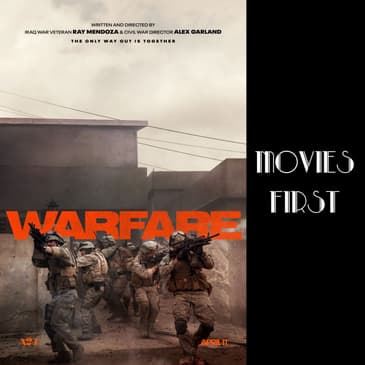
Listeners will be fascinated by the film's authenticity, stemming from the collaboration between Garland and Ray Mendoza, a former Navy SEAL who was present during the actual events. Their partnership as co-writers and co-directors ensures a commitment to realism, as they refuse to embellish the harrowing experiences faced by the soldiers. From the film's opening sequences, viewers are thrust into the tension-filled atmosphere, observing the soldiers' meticulous preparations and the palpable dread that accompanies their mission.
The episode delves into the film's technical prowess, highlighting how the sound design and cinematography work in tandem to create an immersive experience that mirrors the claustrophobic nature of urban warfare. The portrayal of local civilians caught in the crossfire adds to the emotional weight, emphasizing the complexities of combat situations.
With exceptional performances from the cast, *Warfare* brings the psychological and physical demands of military life to the forefront, leaving viewers with a sobering glimpse into the realities faced by soldiers in modern combat zones. Scoring an impressive 9 out of 10, this film is not just another war movie; it stands as a document of real events told with remarkable precision and impact, avoiding the glorification of war while presenting a difficult yet necessary portrayal of combat experiences.
Join us for this intense discussion on *Warfare*, a film that challenges audiences to confront the harsh truths of military engagement. For more film reviews and discussions, subscribe to *Movies First* on your favorite podcast platform!
https://www.bitesz.com/podcast/movies-first
Become a supporter of this podcast: https://www.spreaker.com/podcast/movies-first--2648009/support.
Transcript
Alex Garland's latest film "Warfare" delivers a raw, unflinching portrayal of a real military incident that occurred on November 19, 2006, in Ramadi, Iraq. The story follows a group of Navy SEALs, accompanied by Iraqi scouts and Marines, on what should have been a routine surveillance mission in Al Qaeda-controlled territory. Their primary objective was to secure safe passage for ground forces scheduled to move through the area the following day, but the straightforward operation would soon become anything but routine.
The film's authenticity stems from an unexpected collaboration. Ray Mendoza, a former Navy SEAL who was present during the actual incident, transitioned to working as a Hollywood stunt coordinator specializing in choreographing gunfight sequences. He met Garland while working on "Civil War," where he served as a consultant designing battle scenes, including the climactic White House assault. During the filming of "Civil War," Mendoza shared his Ramadi experience with Garland, leading to their partnership as co-writers and co-directors on "Warfare."
The narrative focuses on Op 1, one of three teams deployed for the mission. Positioned on the second floor of an apartment building, the team includes medic and sniper Elliott Miller (Cosmo Jarvis), leading petty officer Sam (Joseph Quinn) - whose real name was Joe Hildebrand, communications officer Ray Mendoza (D'Pharaoh Woon-A-Tai), and team leader Erik (Will Poulter). Their position became crucial as events unfolded during that fateful night.
The filmmakers established strict guidelines for themselves, refusing to embellish or dramatize events for theatrical effect. This commitment to authenticity is immediately apparent in the film's opening sequences, where viewers are effectively embedded with the soldiers. Through the lens of a long-necked machine gun positioned at a wall opening, we observe the opposite building while video surveillance equipment monitors the surroundings. The tension is amplified by the presence of local civilians - a family discovered sleeping in the house chosen as the operation's base - who are held under guard and instructed to remain silent with visible hands.
The film's technical execution creates an unprecedented level of immersion. The soldiers, dressed in full battle gear, maintain communication via walkie-talkies while monitoring video surveillance feeds. Every detail contributes to the mounting tension as minutes tick by, creating an atmosphere of constant anticipation and dread. The waiting becomes as nerve-wracking as the action, mirroring the real experience of combat operations.
What sets "Warfare" apart is its visceral approach to combat storytelling. The film maintains a relentless intensity, bringing viewers uncomfortably close to the reality of modern urban warfare. The experience is deliberately challenging, with the filmmakers working to recreate the claustrophobic feeling of being surrounded and trapped under enemy fire. Every detail, from the disciplined responses of the soldiers to their moments of fear and frustration, contributes to an unprecedented level of authenticity.
The film's impact is strengthened by exceptional performances from the entire cast, who help convey the psychological and physical demands of combat. The sound design and cinematography work in concert to create an immersive experience that many viewers might find overwhelming - a testament to the film's effectiveness in portraying the harsh realities of war. The screams, the fear, and the intensity of battle create an indelible mark on viewers, offering a sobering glimpse into the realities faced by military personnel in modern combat zones.
While the viewing experience can be emotionally taxing - at times pushing audiences to their comfort limits - the film's unwavering commitment to truth gives it substantial weight and significance. This isn't just another war movie; it's a document of real events told with remarkable precision and impact. The filmmakers succeed in their mission to avoid glorifying war while presenting an honest, albeit difficult, portrayal of combat experience. The result is a remarkable achievement in military filmmaking that scores a well-deserved 9 out of 10, leaving viewers with lasting impressions that extend far beyond the closing credits.