
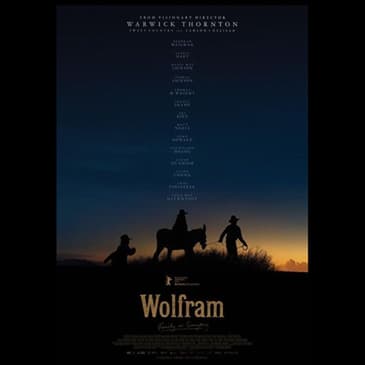
The hosts follow the film’s intertwined stories, from the entitled Casey and his young offsider Frank to the troubled Kennedy and his son Philomac, a teenager caught between his Indigenous heritage and a white society that seeks to diminish him. At the heart of the film are Max and Kid, half-siblings aged nine and six, who have been forced to work in the mines and risk everything to escape with Philomac.
Chris and Jessica also explore the film’s broader portrait of injustice through Chinese immigrants Shi and Jimmy, and Pansy, played by Deborah Mailman, whose desperate bid for freedom adds another moving thread to the story. Performances by Errol Shand, Thomas M. Wright, Deborah Mailman, and Peter Jackson bring depth to this difficult material, while Thornton’s striking cinematography makes the Australian landscape both breathtaking and unforgiving.
Rooted in the family histories of writer David Tranter and director Warwick Thornton, Wolfram is a companion piece to Sweet Country, shifting the focus toward women’s experiences. The hosts praise its emotional force and importance, while acknowledging that its disturbing subject matter and occasional pacing lulls make it a challenging watch.
Scoring 8 out of 10, this episode recommends Wolfram as a beautifully made, deeply affecting film that may be hard to watch but is difficult to forget.
https://www.bitesz.com/podcast/movies-first
Become a supporter of this podcast: https://www.spreaker.com/podcast/movies-first.
To access the Movies First reviews archive, visit our website at www.bitesz.com/podcast/movies-first
To access the Movies First reviews archive visit our website at www.bitesz.com/podcast/movies-first
This episode includes AI-generated content.
00:00:00 --> 00:00:02 Chris: Okay, so here's something to chew on. In
00:00:02 --> 00:00:05 the 1930s, kids as young as six
00:00:05 --> 00:00:07 were forced to work in mines in Australia.
00:00:08 --> 00:00:11 Six years old. That's the kind of reality
00:00:11 --> 00:00:14 Warwick Thornton's Wolfram dives into. And
00:00:14 --> 00:00:16 let me tell you, it's not an easy watch.
00:00:17 --> 00:00:20 Jessica: Six years old. That's just heartbreaking.
00:00:20 --> 00:00:23 I knew the film was heavy, but I didn't
00:00:23 --> 00:00:25 realize it tackled something that extreme.
00:00:25 --> 00:00:27 What's the story behind it?
00:00:28 --> 00:00:30 Chris: Well, it's set in this fictional outback
00:00:30 --> 00:00:32 mining town called Henry during the early
00:00:32 --> 00:00:35 1930s. The town's name, by the way,
00:00:35 --> 00:00:38 is a quirky nod to a grumpy cat Thornton used
00:00:38 --> 00:00:41 to have. But there's nothing quirky about the
00:00:41 --> 00:00:43 story. It's about greed, exploitation,
00:00:43 --> 00:00:46 and the brutal realities of colonialism.
00:00:46 --> 00:00:48 The central focus is on the mining of
00:00:48 --> 00:00:51 Wolfram, which is another name for tungsten,
00:00:51 --> 00:00:54 a material used to harden steel. The mining
00:00:54 --> 00:00:56 itself becomes this metaphor for the
00:00:56 --> 00:00:59 destruction and dehumanization that greed
00:00:59 --> 00:00:59 brings.
00:01:00 --> 00:01:02 Jessica: That's such a stark contrast. The
00:01:02 --> 00:01:05 personal touch of naming the town after a cat
00:01:05 --> 00:01:07 versus the harshness of the story.
00:01:08 --> 00:01:09 So who are the main players in this?
00:01:10 --> 00:01:13 Chris: The story weaves together several threads,
00:01:13 --> 00:01:15 but it starts with Casey, played by Errol
00:01:15 --> 00:01:18 Shand. He's this entitled, arrogant
00:01:18 --> 00:01:20 man who. Who arrives in Henry with his young
00:01:20 --> 00:01:23 offsider Frank to stake a claim in the
00:01:23 --> 00:01:25 mines. Casey is the kind of character you
00:01:25 --> 00:01:28 detest from the moment he appears. Shan
00:01:28 --> 00:01:31 plays him with this chilling confidence, like
00:01:31 --> 00:01:32 he knows he can get away with anything.
00:01:33 --> 00:01:35 Jessica: That sounds like a character you love to
00:01:35 --> 00:01:37 hate. What about Frank?
00:01:37 --> 00:01:38 Is he just as bad?
00:01:39 --> 00:01:42 Chris: Frank is more of a follower. He's young,
00:01:42 --> 00:01:45 impressionable, and clearly under Casey's
00:01:45 --> 00:01:47 thumb. But the real emotional core of the
00:01:47 --> 00:01:50 story lies elsewhere, with Kennedy and his
00:01:50 --> 00:01:53 son Philomac. Kennedy is an old friend of
00:01:53 --> 00:01:55 Casey's, and they end up staying with him.
00:01:56 --> 00:01:59 He's a deeply troubled man, paranoid and
00:01:59 --> 00:02:01 drowning in alcohol. And his relationship
00:02:01 --> 00:02:03 with Philemac is just heartbreaking.
00:02:04 --> 00:02:07 Jessica: Philomec's the half indigenous teenager,
00:02:07 --> 00:02:09 right? I read that their relationship is more
00:02:09 --> 00:02:11 like a master servant dynamic.
00:02:12 --> 00:02:14 Chris: M. Exactly. Kennedy treats Philemac
00:02:14 --> 00:02:17 horribly, and you can see how it's affected
00:02:17 --> 00:02:19 him. Philemac is caught between two worlds.
00:02:20 --> 00:02:22 His indigenous heritage and the white society
00:02:22 --> 00:02:25 that constantly tries to diminish him.
00:02:25 --> 00:02:28 Pedreia Jackson, who plays Philemak, does an
00:02:28 --> 00:02:31 incredible job. You can feel his pain,
00:02:31 --> 00:02:34 his anger, and his longing to reconnect with
00:02:34 --> 00:02:34 his roots.
00:02:35 --> 00:02:37 Jessica: And then there are the two kids, Max and
00:02:37 --> 00:02:40 Kid. And they're running away from something
00:02:40 --> 00:02:40 too, right?
00:02:41 --> 00:02:44 Chris: Yes. Max is nine And Kid is six
00:02:44 --> 00:02:46 and they've been forced to work as child
00:02:46 --> 00:02:49 laborers in the mines. Their story is
00:02:49 --> 00:02:52 absolutely gut wrenching. They're half
00:02:52 --> 00:02:54 siblings and their bond is so touching. You
00:02:54 --> 00:02:56 can tell they're all each other has in the
00:02:56 --> 00:02:58 world. They end up crossing paths with
00:02:58 --> 00:03:00 Philomec and the three of them decide to
00:03:00 --> 00:03:01 escape together.
00:03:02 --> 00:03:04 Jessica: That sounds like such a dangerous journey.
00:03:05 --> 00:03:06 Are they being chased?
00:03:06 --> 00:03:09 Chris: Oh, absolutely. Casey, Frank and
00:03:09 --> 00:03:12 Kennedy are all in hot pursuit and the
00:03:12 --> 00:03:15 tension is unbearable at times. You're
00:03:15 --> 00:03:17 constantly on edge, wondering if they're
00:03:17 --> 00:03:19 going to get caught. Along the way, they
00:03:19 --> 00:03:22 encounter these Chinese immigrants, Shi and
00:03:22 --> 00:03:24 his nephew Jimmy, who are working their own
00:03:24 --> 00:03:27 claim. Their presence adds another layer
00:03:27 --> 00:03:30 to the story, showing how racism and
00:03:30 --> 00:03:33 exploitation weren't limited to just one
00:03:33 --> 00:03:33 group.
00:03:34 --> 00:03:36 Jessica: It sounds like Thornton is really shining a
00:03:36 --> 00:03:38 light on the broader scope of injustice
00:03:38 --> 00:03:41 during that time. But is it all just
00:03:41 --> 00:03:44 darkness and despair or are there moments of
00:03:44 --> 00:03:44 hope?
00:03:45 --> 00:03:47 Chris: There are glimmers of hope, but they're hard
00:03:47 --> 00:03:49 won. The film doesn't shy away from the
00:03:49 --> 00:03:52 brutality of the time, but it also shows the
00:03:52 --> 00:03:54 resilience of these characters. They're
00:03:54 --> 00:03:56 fighting for their dignity, for their
00:03:56 --> 00:03:57 survival.
00:03:57 --> 00:03:59 And there's something deeply moving about
00:03:59 --> 00:04:00 that I've heard.
00:04:00 --> 00:04:03 Jessica: The cinematography is stunning. Is it true
00:04:03 --> 00:04:05 that the landscape feels like its own
00:04:05 --> 00:04:06 character in the film?
00:04:07 --> 00:04:10 Chris: Absolutely. Thornton has this incredible eye
00:04:10 --> 00:04:13 for capturing the Australian outback. The
00:04:13 --> 00:04:15 rich browns of the earth, the way the light
00:04:15 --> 00:04:18 filters through the dust. It's breathtaking.
00:04:18 --> 00:04:21 But it's not just beautiful, it's also harsh
00:04:21 --> 00:04:23 and unforgiving, which mirrors the story
00:04:23 --> 00:04:24 perfectly.
00:04:24 --> 00:04:26 Jessica: That's one of the things I love about
00:04:26 --> 00:04:29 Thornton's work. He doesn't just show you a
00:04:29 --> 00:04:31 place, he makes you feel it.
00:04:31 --> 00:04:34 So what about the performances? Besides Errol
00:04:34 --> 00:04:36 Shand, who else stood out to you?
00:04:37 --> 00:04:40 Chris: Thomas M. Wright as Kennedy is phenomenal.
00:04:40 --> 00:04:43 He's so skittish and unpredictable. You
00:04:43 --> 00:04:45 never know what he's going to do next. It's
00:04:45 --> 00:04:48 unsettling, but also captivating. And
00:04:48 --> 00:04:50 Deborah Mailman as Pansy? She's
00:04:50 --> 00:04:52 heartbreaking. Pansy is a woman who's been
00:04:52 --> 00:04:55 treated horribly in the mines and she's
00:04:55 --> 00:04:57 desperate to escape. Her story is one of the
00:04:57 --> 00:04:59 most moving parts of the film.
00:05:00 --> 00:05:02 Jessica: I've always loved Deborah Mailman.
00:05:03 --> 00:05:05 She has this way of bringing so much depth to
00:05:05 --> 00:05:08 her characters. Did her storyline connect
00:05:08 --> 00:05:09 with the Others?
00:05:09 --> 00:05:12 Chris: Yes, it all ties together. By the end,
00:05:12 --> 00:05:14 Pansy is trying to escape with her partner
00:05:14 --> 00:05:17 Zhang, and their journey intersects with the
00:05:17 --> 00:05:18 Others in unexpected ways.
00:05:19 --> 00:05:21 The film does an amazing job of weaving these
00:05:21 --> 00:05:24 threads together to create a complete picture
00:05:24 --> 00:05:24 of the time period.
00:05:25 --> 00:05:28 Jessica: And this is all based on historical truths,
00:05:28 --> 00:05:30 right? I read that it's connected to
00:05:30 --> 00:05:31 Thornton's own family history.
00:05:32 --> 00:05:35 Chris: That's right. The story is loosely based on
00:05:35 --> 00:05:37 the family heritage of writer David Tranter,
00:05:37 --> 00:05:39 whose great grandmother worked as a child
00:05:39 --> 00:05:42 miner in the desert. Thornton's great
00:05:42 --> 00:05:45 grandmother did the same. So this is a deeply
00:05:45 --> 00:05:47 personal project for both of them. It's
00:05:47 --> 00:05:50 actually a companion piece to their 2017 film
00:05:50 --> 00:05:52 Sweet country, which focused on the male side
00:05:52 --> 00:05:55 of events. Wolfrum shifts the focus to the
00:05:55 --> 00:05:58 female perspective, but you don't need to
00:05:58 --> 00:06:00 have seen Sweet country to appreciate this
00:06:00 --> 00:06:00 one.
00:06:01 --> 00:06:03 Jessica: That makes it even more powerful knowing
00:06:03 --> 00:06:06 it's rooted in their own family stories.
00:06:06 --> 00:06:09 So here's the big should people see
00:06:09 --> 00:06:10 this movie?
00:06:11 --> 00:06:14 Chris: Absolutely. But with a warning. It's not
00:06:14 --> 00:06:16 an easy watch. It's heavy, it's
00:06:16 --> 00:06:18 disturbing, and it's going to stay with you
00:06:18 --> 00:06:21 long after the credits roll. But it's also
00:06:21 --> 00:06:24 beautifully made with incredible performances
00:06:24 --> 00:06:27 and a story that needs to be told. If you're
00:06:27 --> 00:06:29 willing to sit with the discomfort, it's well
00:06:29 --> 00:06:30 worth your time.
00:06:31 --> 00:06:32 Jessica: And you'd rate it?
00:06:33 --> 00:06:36 Chris: I'd give it an 8 out of 10. It's not perfect.
00:06:36 --> 00:06:38 There are a few moments where the pacing
00:06:38 --> 00:06:41 drags, but overall it's a powerful,
00:06:41 --> 00:06:43 important film that I think everyone should
00:06:43 --> 00:06:43 see.
00:06:44 --> 00:06:47 Jessica: Thanks for that. I think I'm going to need to
00:06:47 --> 00:06:49 mentally prepare myself before watching it,
00:06:49 --> 00:06:52 but I'm definitely adding it to my list. It
00:06:52 --> 00:06:54 sounds like one of those films that's hard to
00:06:54 --> 00:06:56 watch but impossible to forget.
00:06:57 --> 00:06:59 Chris: That's exactly what it is.
00:06:59 --> 00:07:01 And honestly, those are the films that stick
00:07:01 --> 00:07:04 with you the most. The ones that challenge
00:07:04 --> 00:07:06 you and make you think. Let me know what you
00:07:06 --> 00:07:07 think when you see it.
00:07:07 --> 00:07:10 Jessica: I will. Thanks for walking me through it.
00:07:10 --> 00:07:12 Sounds like I'm in for a pretty intense
00:07:12 --> 00:07:13 experience. M.